
The Supreme Court set aside the High Court’s order and quashed the summoning of the appellant under the SC/ST Act, holding that the statutory phrase “any place within public view” demands that the alleged caste-based insult be made where members of the public can witness or hear it.
Background & Facts
The Dispute
- The appellant, Ramkrishna Chauhan, was the Manager of Krishna Public School.
- Respondent No. 2, a parent, alleged that his son was injured in a quarrel on 24 January 2020 and that the appellant assaulted him with lathis, sticks and fists, using caste-based abuses.
- The matter gave rise to criminal proceedings under both the Indian Penal Code and the Scheduled Castes and Scheduled Tribes (Prevention of Atrocities) Act, 1989.
Key Facts
- 25 January 2020: FIR No. 37 of 2020 lodged by Respondent No. 2, charging offences under IPC §§147, 323, 342, 504 and SC/ST Act §§3(1)(r), 3(1)(s).
- 24 January 2020: Incident allegedly occurred in the school office, later identified as “room A”.
- 17 March 2020: Chargesheet filed against the appellant and co-accused.
- 8 August 2022: Special Judge took cognizance, registering the case as Sessions Case No. 642 of 2022 and issuing a summoning order.
- 25 January 2020: FIR No. 39 of 2020 lodged by the appellant’s wife, alleging offences under IPC §§323, 504, 506; chargesheet filed on 27 April 2020; cognizance taken on 3 December 2020.
- Site Plan: Prepared by the Investigating Officer on 25 February 2020, identifying the place of occurrence as an enclosed room “A” with no windows or public access.
- Witness Statements: Four private witnesses (teachers) recorded under Section 161 CrPC testified to a scuffle but did not state they were inside the room or heard any caste-based slur.
Procedural History
- 17 March 2020: Chargesheet filed.
- 8 August 2022: Special Judge’s order taking cognizance (Sessions Case No. 642 of 2022).
- 2023: Appellant filed Criminal Appeal No. 930 of 2023 before the Allahabad High Court under Section 14A(1) of the SC/ST Act.
- 10 April 2023: High Court dismissed the appeal, holding a prima facie case existed.
- 20 August 2026: Supreme Court delivered the present judgment, allowing the appeal.
Relief Sought
The appellant sought quashing of the summoning order dated 8 August 2022 and dismissal of the proceedings against him under Sections 3(1)(r) and 3(1)(s) of the SC/ST Act.
The Legal Issue
Does the material on record disclose the essential ingredients of Sections 3(1)(r) and 3(1)(s) of the Scheduled Castes and Scheduled Tribes (Prevention of Atrocities) Act, specifically whether the alleged caste-based abuse was uttered in a place “within public view”?
Arguments Presented
For the Appellant
- The site plan shows the incident occurred inside an enclosed room with no windows, negating “public view”.
- FIR and charge sheet are silent on any specific caste-based slur uttered by the appellant.
- Witnesses were not present inside the room and did not hear any caste-based language; their presence in the school premises does not satisfy the “public view” requirement.
- Citing Karuppudayar v. State and Hitesh Verma v. State of Uttarakhand, the appellant argued that “public view” demands openness to the public.
For the Respondent
- The FIR, charge sheet and statements collectively establish a prima facie case of caste-based insult.
- The High Court held that the occurrence within school premises sufficed for “public view”.
- The respondent contended that the prosecution’s material was sufficient to infer that the abuse was made in a setting observable by the public.
The Court's Analysis
The Court began by reproducing the statutory language of Sections 3(1)(r) and 3(1)(s), emphasizing the phrase “any place within public view”. It then examined the jurisprudence on this phrase, particularly Karuppudayar and Hitesh Verma, which define “public view” as a place open where members of the public can witness or hear the utterance.
"It could thus be seen that, to be a place ‘within public view’, the place should be open where the members of the public can witness or hear the utterance made by the accused to the victim. If the alleged offence takes place within the four corners of the wall where members of the public are not present, then it cannot be said that it has taken place at a place within public view."
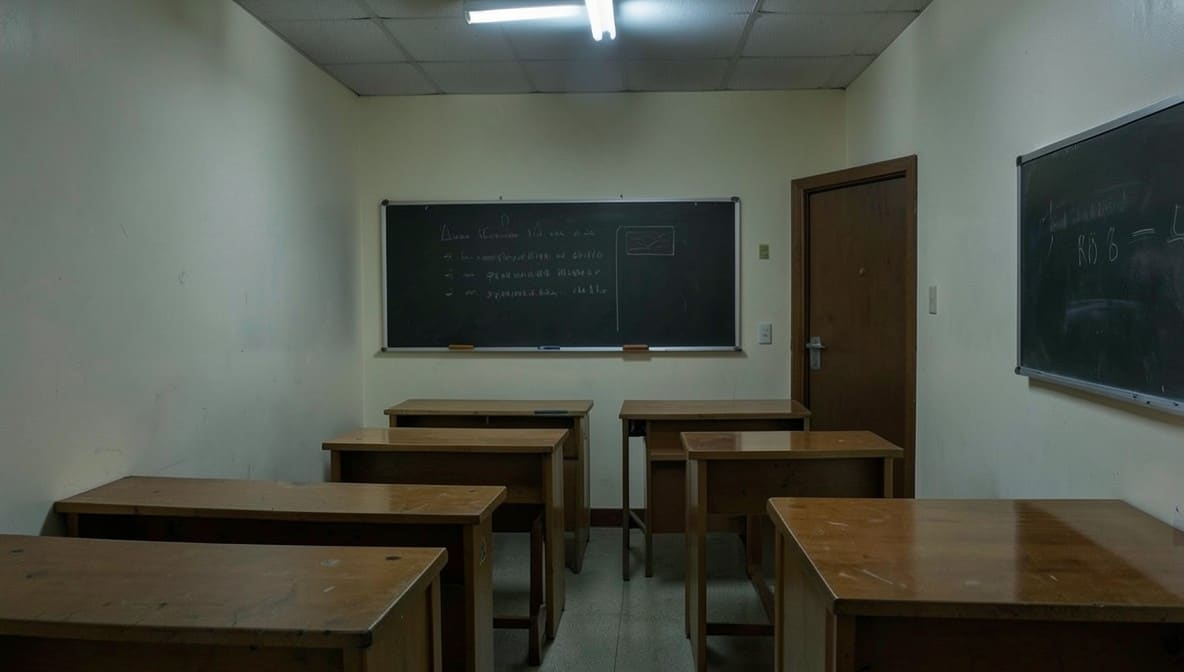
Applying this test, the Court noted that the site plan dated 25 February 2020 identified the location as room “A”, an enclosed space with no windows or public access. The prosecution’s evidence did not demonstrate that any member of the public was present inside the room at the time of the alleged utterance.
The Court further observed that the FIR and charge sheet lacked any specific allegation that the appellant used caste-based words. The only allegation was a general claim of caste-based abuse, which, without concrete verbal evidence, fails to satisfy the statutory requirement.
The witness statements recorded under Section 161 CrPC corroborated the occurrence of a scuffle but did not indicate that the witnesses heard any caste-based slur, nor that they were inside the room. Their mere presence in the school premises was insufficient to establish “public view”.
Consequently, the Court held that the essential ingredient of “public view” was not borne out of the material on record. The High Court’s finding that the incident occurred within public view could not be sustained.
The Verdict
The appeal is allowed. The Supreme Court set aside the High Court judgment dated 10 April 2023, quashed the summoning order dated 8 August 2022, and dismissed the proceedings against the appellant under Sections 3(1)(r) and 3(1)(s) of the SC/ST Act. The proceedings relating to the remaining IPC offences continue.
What This Means For Similar Cases
The “Public View” Test Is Strictly Evidential
- Prosecutors must produce evidence that the alleged caste-based utterance was made where members of the public could actually hear or see it.
- An enclosed room, even within a public institution, does not satisfy the requirement unless the prosecution can show public presence inside.
Specific Allegations of Caste-Based Language Are Mandatory
- FIRs and charge sheets must expressly allege the exact caste-based words used by the accused.
- General or vague references to “caste-based abuse” are insufficient to establish a prima facie case under Sections 3(1)(r) and 3(1)(s).
Site Plans and Physical Layout Matter
- Investigating officers should document the precise location of the alleged offence.- Defence can rely on such plans to demonstrate the absence of public view.
Burden of Proof Remains on Prosecution
- At the stage of taking cognizance, the court need not conduct a detailed evidentiary analysis, but the basic statutory ingredients must be evident on record.
- Failure to meet the “public view” criterion results in dismissal of the SC/ST Act charges, though other offences may proceed.
Practical Checklist for Counsel
- Verify that the FIR specifies caste-based slurs verbatim.
- Obtain and scrutinise site plans to confirm the setting.
- Ensure witness statements address whether they heard or saw the alleged utterance.
- Anticipate the “public view” test and prepare arguments accordingly.





