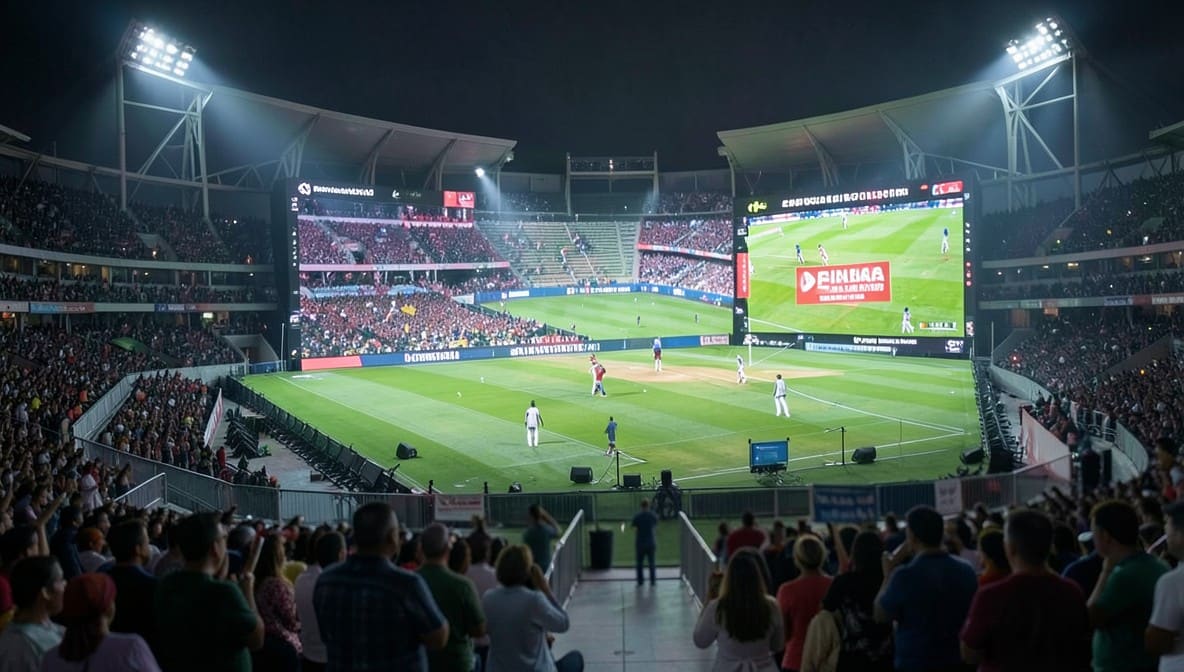
The Income Tax Appellate Tribunal, Delhi, has definitively held that payments made for live sports broadcasting rights do not constitute royalty under Section 9(1)(vi) of the Income-tax Act, 1961, thereby exempting such payments from TDS obligations under Section 195. This ruling resolves a long-standing ambiguity in the taxation of digital and broadcast content rights and provides critical clarity for media and sports entities.
Background & Facts
The Dispute
The dispute arose from payments made by the assessee, Lex Sportel Vision P. Ltd., to overseas rights holders for the acquisition of "Live Rights" to broadcast sporting events, including cricket matches. The Assessing Officer (AO) treated these payments as royalty under Section 9(1)(vi) of the Income-tax Act, 1961, and disallowed Rs. 32,53,98,959/- under Section 40(a)(i) for failure to deduct TDS under Section 195. The AO contended that the transmission of live events involved the use of a "process" - namely, satellite transmission - and thus fell within the definition of royalty.
Key Facts
- The assessee entered into agreements with overseas entities, including M/s Sri Lanka Cricket, for the exclusive broadcast rights to live sporting events during the assessment year 2018-19.
- The agreements explicitly bifurcated consideration between "Live Rights" and "Non-Live Rights" (e.g., highlights, replays, archival footage).
- Payments for "Live Rights" were made to non-resident rights holders outside India.
- The AO invoked Section 195 and Section 40(a)(i) to disallow the entire amount of Rs. 32,53,98,959/- on the ground that TDS was not deducted.
- The assessee filed appeals before the CIT(A)/NFAC, relying on a prior ITAT Delhi decision in ITA No. 2397/Del/2023 (dated 26.12.2023), which had ruled in its favor on identical facts.
- The CIT(A) accepted the assessee’s contention and deleted the disallowance, holding that live rights do not constitute royalty.
Procedural History
- 27.04.2021: Assessment order passed by the Assessing Officer under Section 143(3), disallowing Rs. 32,53,98,959/- under Section 40(a)(i).
- 24.09.2025: CIT(A)/NFAC order dated 24.09.2025 (DIN: ITBA/NFAC/S/250/2025-26/1081109317(1)) allowing the appeal and deleting the disallowance.
- 26.12.2023: ITAT Delhi Bench 'D' delivered its decision in ITA No. 2397/Del/2023 (same assessee, same AY), holding that live rights are not royalty.
- 27.04.2026: Revenue filed this appeal before ITAT Delhi Bench 'E'.
- 27.04.2026: Hearing concluded; order pronounced on the same day.
The Parties' Positions
For the Revenue
The Revenue contended that:
- The transmission of live events involves the use of a technical process (satellite uplinking, signal encoding, bandwidth allocation), which qualifies as a "process" under Section 9(1)(vi).
- The bifurcation of consideration in the agreement is a mere formality and should be ignored; the payment is part of a "bouquet of rights" that includes copyrighted material.
- The CIT(A) erred in relying on a prior ITAT decision, as it was not binding on this bench.
- The disallowance under Section 40(a)(i) was legally justified due to non-compliance with TDS obligations.
For the Assessee
The assessee contended that:
- "Live Rights" are not copyright under Section 9(1)(vi); they are merely the right to transmit an event as it happens, not to reproduce or adapt a copyrighted work.
- The payments are not for the use of any "process"; the satellite infrastructure is owned and operated by third parties, not the rights holders.
- The ITAT Delhi Bench 'D' had already decided the identical issue in favor of the assessee in ITA No. 2397/Del/2023, and the CIT(A) correctly applied the principle of consistency.
- The Delhi High Court had dismissed the Revenue’s appeal against M/s Sri Lanka Cricket in ITA No. 4/2026, affirming the non-taxability of live rights.
Relief Sought
The Revenue sought to:
- Set aside the CIT(A) order dated 24.09.2025.
- Restore the disallowance of Rs. 32,53,98,959/- under Section 40(a)(i).
- Uphold the applicability of Section 195 and the obligation to deduct TDS on payments for "Live Rights".
The Legal Issue
The central question was whether payments made for the right to broadcast live sporting events constitute "royalty" under Section 9(1)(vi) of the Income-tax Act, 1961, and whether such payments attract TDS obligations under Section 195.
Arguments Presented
For the Appellant/Petitioner
The Revenue relied on a broad interpretation of "process" under Section 9(1)(vi), arguing that the technological infrastructure used to transmit live signals constitutes a process over which the overseas rights holder exercises control. It cited general principles of tax avoidance and urged the tribunal to disregard contractual bifurcation as artificial. It also contended that the prior ITAT decision was not binding under the doctrine of stare decisis.
For the Respondent/State
The assessee relied on multiple precedents, including CIT v. Delhi Race Club, Cricket Australia v. ACIT, and ESPN Star Sports v. ACIT, all of which held that live broadcasting rights are not copyright and do not involve the use of a process. It emphasized that the rights holder does not own or operate the transmission medium and that the payment is for access to an event, not for the use of a technical system. It also highlighted the Delhi High Court’s dismissal of the Revenue’s appeal against M/s Sri Lanka Cricket as conclusive on the issue.
The Court's Analysis
The tribunal conducted a detailed review of the statutory definition of royalty under Section 9(1)(vi), which includes payments for the use of any patent, invention, model, design, secret formula, trademark, or "process". The court noted that the term "process" must be interpreted in the context of intellectual property rights and not as any general technical procedure.
"The payments in dispute are made to overseas rights holder. The said payments are neither made to any satellite operators nor for use of any satellite. Thus, the payments in dispute are not made for use of any 'process' as defined u/s 9(1)(vi) of the Act and can't be charged to tax as 'Royalty' in the hands of the overseas rights holders."
The tribunal affirmed the reasoning in ITA No. 2397/Del/2023, which had exhaustively examined the nature of live rights and concluded that they do not involve the transfer or use of any intellectual property or technical process owned by the overseas entity. The court emphasized that the mere fact that transmission requires technology does not make the payment a royalty. The rights holder merely sells access to an event; the infrastructure is provided by third-party broadcasters.
The tribunal further noted that the Delhi High Court’s dismissal of the Revenue’s appeal against M/s Sri Lanka Cricket in ITA No. 4/2026 was a judicial affirmation of the same legal position. It held that the CIT(A) was correct in relying on the binding precedent of the coordinate bench and in rejecting the Revenue’s attempt to re-litigate the same issue.
The court also rejected the Revenue’s argument that the bifurcation of consideration was a sham, noting that the agreements clearly separated live and non-live rights, and the Department had not demonstrated any factual inconsistency.
The Verdict
The Revenue’s appeal was dismissed. The ITAT upheld the CIT(A)’s order dated 24.09.2025, confirming that payments for "Live Rights" are not royalty under Section 9(1)(vi) of the Income-tax Act, 1961. Consequently, the disallowance of Rs. 32,53,98,959/- under Section 40(a)(i) stands deleted, and no TDS obligation arises under Section 195 on such payments. The order was pronounced on 27.04.2026.
What This Means For Similar Cases
Live Rights Are Not Royalty
- Practitioners can now confidently advise clients that payments for live sports, concerts, or events are not taxable as royalty under Section 9(1)(vi), provided the agreement clearly separates live from non-live rights.
- The burden is on the Revenue to prove that the overseas entity owns or controls the transmission process - not merely that transmission occurs.
TDS Obligations Under Section 195 Do Not Apply
- No TDS is required to be deducted on payments made to non-residents for live broadcasting rights.
- Assessees who previously withheld TDS on such payments may claim refunds or adjustments in subsequent assessments.
Precedent Binding Across Benches
- Decisions of coordinate benches on identical facts are binding in practice, even if not strictly binding under law. Tribunals are expected to follow consistent interpretations to avoid arbitrariness.
- The Delhi High Court’s dismissal of the Revenue’s appeal against M/s Sri Lanka Cricket reinforces the finality of this position in the jurisdiction.
Documentation Is Critical
- Agreements must clearly bifurcate consideration between live rights and other rights (e.g., highlights, replays, intellectual property).
- Assessees should maintain records of third-party infrastructure usage to demonstrate that the rights holder does not control the transmission process.