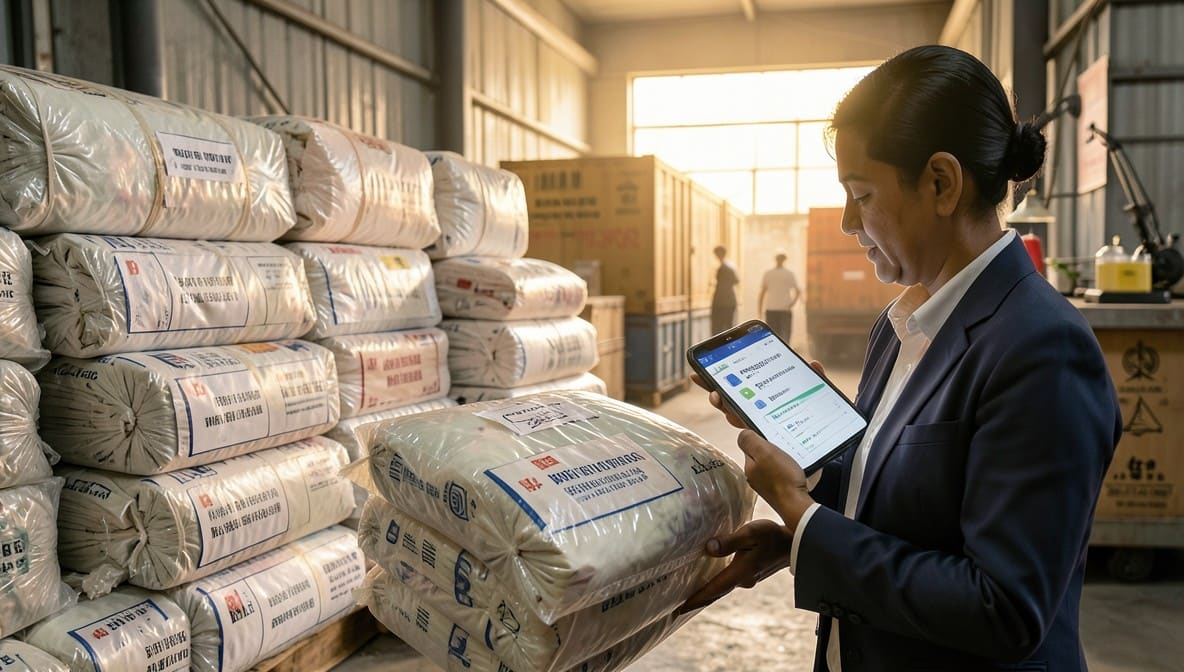
The Customs, Excise and Service Tax Appellate Tribunal (CESTAT), Allahabad, dismissed a departmental appeal challenging the provisional release of imported medical gloves, holding that misclassification, labelling deficiencies, and import through a non-notified port did not justify detention when no duty evasion or public health risk was established. The judgment underscores that provisional release cannot be denied on technical grounds alone when statutory conditions are met and the goods fall under a low-risk category.
Background & Facts
The Dispute
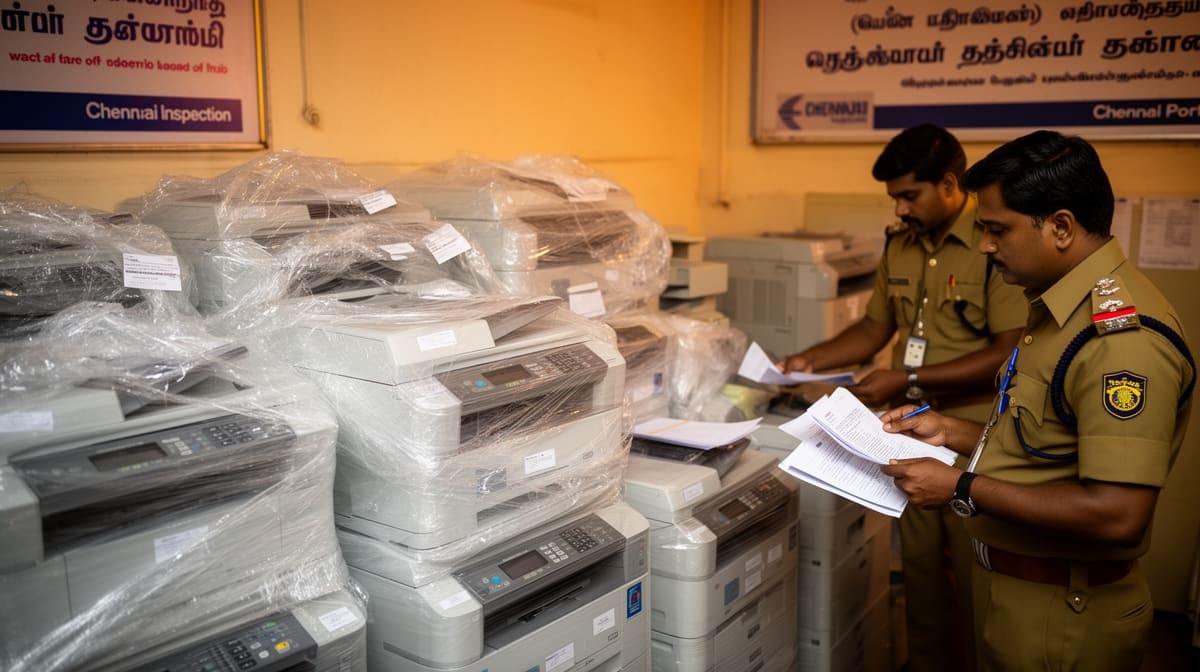
The Respondent, M/s Rajat International, imported 'Non-sterile non-measurable powdered latex examination gloves (Class A)' under Customs Tariff Heading (CTH) 40151900 from Malaysia. The goods were detained by the Customs Commissionerate at ICD Dadri on three grounds: (a) misclassification under CTH 40151200, (b) non-compliance with labelling requirements under the Medical Devices Rules, 2017 (MDR, 2017), and (c) import through a non-notified port under Rule 43A of the Drugs and Cosmetics Rules, 1945.
Key Facts
- 15.03.2025: Respondent filed Bill of Entry No. 3983911 for import of gloves under CTH 40151900.
- 20.08.2025: Goods arrived at ICD Dadri, with Nhava Sheva as the port of discharge.
- 29.08.2025: Respondent sought clarification for detention via email.
- 01.09.2025: Central Drugs Standard Control Organization (CDSCO) informed that ICD Dadri was not a notified port for such imports under Rule 43A.
- 09.09.2025: Goods examined by Shed Officer; proposed classification under CTH 40151200.
- 10.09.2025: Drug Inspector from CDSCO inspected goods and drew samples.
- 22.09.2025: Deputy Commissioner referred consignment to Joint Commissioner (SIIB) for action, noting non-compliance with Rule 43A and absence of NOC under MDR, 2017.
- 30.10.2025: Noida Customs confirmed detention due to port restriction and lack of NOC.
- 03.11.2025: Seizure order passed under Section 110 of the Customs Act, 1962.
- 24.11.2025: Allahabad High Court disposed of Writ Petition No. 6657 of 2025, directing decision on provisional release application by 03.12.2025.
- 03.12.2025: Joint Commissioner rejected provisional release application.
- 02.04.2026: Commissioner (Appeals) allowed provisional release subject to Bond and Bank Guarantee of Rs. 3,00,000.
- 15.04.2026: Re-examination conducted; labelling found on bulk packaging (panchnama dated 15.04.2026).
Procedural History
- 20.08.2025: Bill of Entry filed.
- 03.11.2025: Seizure order under Section 110.
- 24.11.2025: High Court disposed of Writ Petition No. 6657 of 2025.
- 03.12.2025: Joint Commissioner rejected provisional release.
- 02.04.2026: Commissioner (Appeals) allowed provisional release.
- 21.05.2026: Appeal and Stay Application filed by Department before CESTAT.
- 28.05.2026: CESTAT dismissed appeal and stay application.
Relief Sought
The Appellant (Department) sought to set aside the Commissioner (Appeals)'s order dated 02.04.2026, arguing that the goods were misclassified, lacked proper labelling, and were imported through a non-notified port. The Respondent sought dismissal of the appeal, contending that the detention was unjustified as no duty evasion or health risk was involved.
The Legal Issue
The central question was whether the provisional release of imported medical gloves could be denied on grounds of (a) misclassification, (b) non-compliance with labelling requirements, or (c) import through a non-notified port, when no duty evasion or public health risk was established.
Arguments Presented
For the Appellant (Department)
- Misclassification: The goods were powdered examination gloves, appropriately classifiable under CTH 40151200, not CTH 40151900. The Respondent misclassified the goods to avoid NOC from the Assistant Drug Controller (ADC) under MDR, 2017.
- Labelling Non-Compliance: The test report dated 19.11.2025 from Central Drugs Testing Laboratory, Chennai, stated that the samples lacked batch number, manufacturing date, manufacturer's name, and expiry date, violating MDR, 2017.
- Non-notified Port Import: The goods were imported through ICD Dadri, a non-notified port under Rule 43A of the Drugs and Cosmetics Rules, 1945. Nhava Sheva was merely the gateway port, and the actual import occurred at ICD Dadri.
- Health Risk: Provisional release of unapproved medical devices posed a serious risk to public health.
For the Respondent
- Labelling Compliance: Labelling was affixed on bulk packaging, as confirmed during re-examination on 15.04.2026. The Department suppressed this evidence.
- Revenue Neutrality: The dispute was academic and revenue-neutral, as the Respondent had discharged customs duty of Rs. 9,03,135. No duty evasion or short payment was alleged.
- Port Restriction: Nhava Sheva, a notified port, was the port of discharge. ICD Dadri was only the clearance location. The Tribunal's precedent in M/s CC, ICD, TKD, New Delhi v. Roshanlal Aggarwal and Sons Pvt. Ltd. (2009) supported this contention.
- Exemption for Class-A Devices: As per G.S.R. 777(E) dated 14.10.2022, Class-A (non-sterile, non-measuring) devices were exempt from Chapters IV, V, VII, VIII, and XI of MDR, 2017, subject to registration under Chapter IIIB. The Respondent was duly registered.
- No Health Risk: The goods were low-risk Class-A devices, and the Department failed to prove any actual health risk.
The Court's Analysis
The Tribunal examined the three grounds raised by the Appellant and rejected each:
-
Misclassification: Even if the Department's classification under CTH 40151200 was accepted, there was no differential duty or restriction on the goods. The issue of classification was academic and revenue-neutral, as no duty evasion was alleged. The Tribunal declined to adjudicate this matter, as it was pending in a Show Cause Notice.
-
Labelling Non-Compliance: The Tribunal noted that the Commissioner (Appeals) had observed labelling on bulk packaging. The Department's reliance on the test report dated 19.11.2025 was misplaced, as the report did not account for labelling on bulk packages. The re-examination conducted on 15.04.2026 confirmed labelling compliance, but the Department suppressed this evidence. The Tribunal held that the labelling argument lacked merit.
"The Appellant has relied upon the test report dated 19.11.2025 of the samples which were sent to Central Drugs Testing Laboratory, Chennai which mentions that no labelling is mentioned on the sample. Commissioner (Appeals) while considering this averment has stated that the CDSCO inspector while collecting sample ought to have recorded that the labelling was apparent on the bulk packing but he has failed to do so."
-
Non-notified Port Import: The Tribunal relied on the precedent in M/s CC, ICD, TKD, New Delhi v. Roshanlal Aggarwal and Sons Pvt. Ltd., holding that goods imported by sea into India were deemed imported through Nhava Sheva, the port of discharge. ICD Dadri was merely the clearance location. The Tribunal also noted that CDSCO had previously granted NOCs for imports through the same port, undermining the Department's argument.
"The case of the respondent is squarely covered by the said judgment."
The Tribunal further observed that the Department failed to prove any public health risk from releasing the goods, which were low-risk Class-A devices. The Respondent had fulfilled all statutory requirements, and earlier consignments of similar goods had been released without objection.
The Verdict
The CESTAT dismissed the appeal and the stay application filed by the Appellant-Revenue. The Tribunal upheld the Commissioner (Appeals)'s order dated 02.04.2026, directing the provisional release of the imported goods. The Department was directed to release the goods forthwith within 7 days from the receipt of the order.
What This Means For Similar Cases
Provisional Release Cannot Be Denied on Technical Grounds Alone
- Practitioners must argue that provisional release under Section 110A of the Customs Act, 1962 cannot be denied merely on technical grounds like misclassification, labelling deficiencies, or port restrictions when no duty evasion or public health risk is established.
- The Tribunal emphasized that revenue neutrality and compliance with statutory conditions are critical factors in determining provisional release.
Evidentiary Burden on the Department
- The Department must substantiate allegations of non-compliance with concrete evidence. Suppression of material evidence, such as the panchnama dated 15.04.2026, can be fatal to the Department's case.
- Mere reliance on test reports or procedural lapses without proving actual harm (e.g., health risk) may not suffice to justify detention.
Precedent on Port Restrictions
- Importers can rely on the precedent in M/s CC, ICD, TKD, New Delhi v. Roshanlal Aggarwal and Sons Pvt. Ltd. to argue that goods imported by sea are deemed imported through the port of discharge, even if cleared at a non-notified location.
- The Tribunal's observation that CDSCO had previously granted NOCs for imports through the same port weakens the Department's argument on port restrictions.