
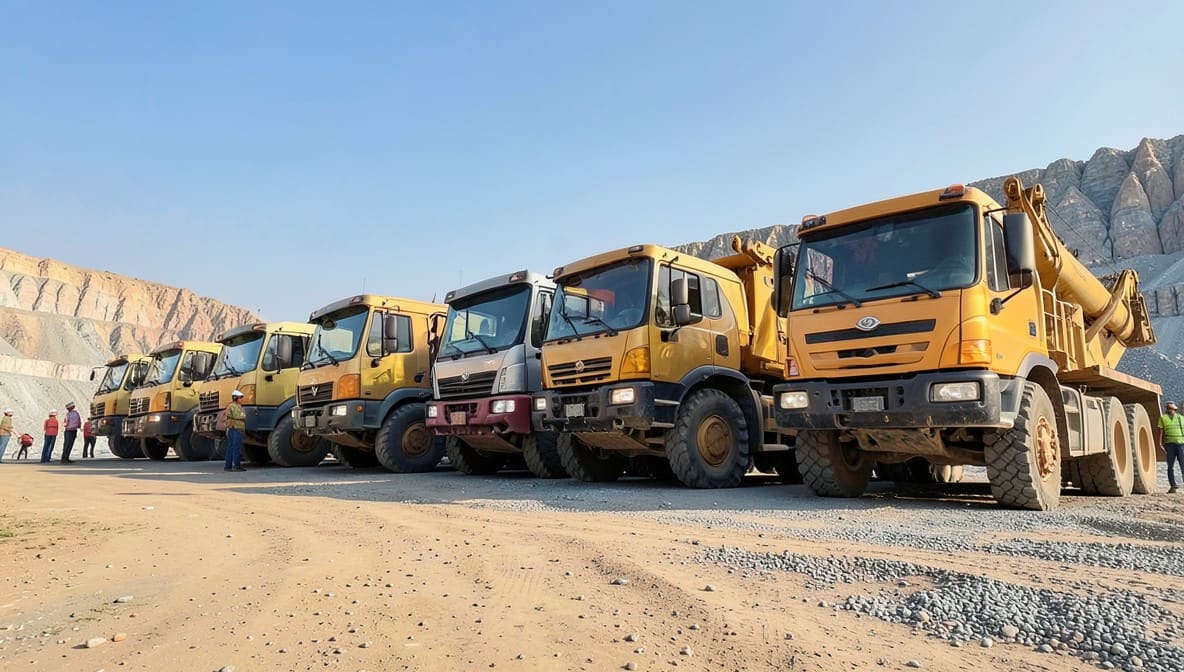
The Supreme Court has clarified that interim custody of seized property under Sections 451 and 457 of the CrPC must be determined by a prima facie assessment of possession and use, not merely by registration certificates. This ruling resolves a dispute over vehicles purchased using company funds but registered in a director’s name.
Background & Facts
The Dispute
The appellant, Krishnan Narayanan, was a director of M/s Pure Minerals (engaged in granite quarrying) and held an 80% shareholding in M/s Earth Stein Private Limited (the respondent company). The subject vehicles - one Bolero City Pick-up, three Excavators, and one Ashok Leyland Tipper - were purchased between 2014 and 2022 in the name of M/s Pure Minerals.
Key Facts
- On 31.05.2023, the appellant visited the residence of S.R. Kumar, owner of M/s Parakrish Mineral Enterprises Pvt. Ltd., to recover dues for granite supply. He alleged intimidation and coercion to sign blank papers, later used to forge his resignation from the respondent company on 16.06.2023.
- On 31.08.2023, the respondents allegedly committed criminal trespass into M/s Pure Minerals’ granite factory and forcibly took the subject vehicles.
- An FIR (Crime No. 353/2023) was registered on 17.09.2023 based on the appellant’s complaint under Section 406 IPC (criminal breach of trust).
- The respondents countered with FIR No. 354/2023, alleging misappropriation of ₹1,73,11,894 from the respondent company by the appellant, who allegedly used these funds to purchase the vehicles in the name of M/s Pure Minerals.
- On 20.11.2023, the appellant filed another FIR (Crime No. 102/2024) regarding the alleged intimidation, forgery, and dues from M/s Parakrish Mineral Enterprises Pvt. Ltd.
- A closure report for Crime No. 353/2023 was filed on 14.08.2024 as a ‘mistake of fact’, but the case was reopened, and a chargesheet was filed on 09.02.2025. During investigation, the police seized the vehicles from the respondent company’s factory on 07.02.2025.
- Crime No. 102/2024 was also closed as a ‘mistake of fact’ on 17.04.2025, with the dismissal of the protest petition upheld by the High Court. An SLP against this order is pending before a coordinate bench of the Supreme Court.
Procedural History
- 11.02.2025: Appellant filed Criminal Miscellaneous Petition No. 218/2025 before the Trial Court seeking interim custody of the vehicles. Dismissed on 26.03.2025 due to a pending Writ Petition by the respondents before the High Court.
- 24.07.2025: Respondent company filed Criminal Petition No. 7896/2025 before the High Court after its Criminal Misc. Petition No. 384/2025 was dismissed on 16.05.2025.
- 18.09.2025: High Court passed a common order dismissing the appellant’s Criminal Petition No. 3712/2025 and allowing the respondent company’s Criminal Petition No. 7896/2025, granting interim custody of the vehicles to the respondent company.
The Parties' Positions
- Appellant’s Contention: The High Court erred in not following Sunder Bhai Ambalal Desai v. State of Gujarat (2002), which held that seized vehicles should be released to the ostensible owner as per the registration certificate under Section 451 CrPC. The appellant argued that the resignation and undertaking were forged and that the closure report did not attain finality due to re-investigation.
- Respondent’s Contention: The vehicles were purchased using the respondent company’s funds, and the appellant’s resignation and undertaking were voluntary. The seizure was illegal as the final report (Crime No. 08/2024) had attained finality, and the vehicles were in the respondent company’s possession and use.
Relief Sought
The appellant sought quashing of the High Court’s order dated 18.09.2025 and interim custody of the vehicles pending trial.
The Legal Issue
The central question was whether, under Sections 451 and 457 of the CrPC, interim custody of seized property should be granted based solely on registration certificates or on a prima facie assessment of possession, use, and other attending circumstances.
Arguments Presented
For the Appellant
- Relied on Sunder Bhai Ambalal Desai v. State of Gujarat to argue that the vehicles should be released to the owner as per the registration certificate.
- Contended that the High Court erred in holding that the closure report had attained finality, as further investigation led to a positive chargesheet.
- Argued that the resignation and undertaking were fraudulently obtained, and separate proceedings were pending on these disputes.
For the Respondent
- Submitted that the appellant suppressed the fact that the vehicles were purchased using the respondent company’s funds.
- Argued that the resignation and share transfer were voluntary, evidenced by the appellant encashing the cheque issued for the share transfer.
- Contended that the seizure was illegal as the final report (Crime No. 08/2024) had attained finality, and the vehicles were in the respondent company’s possession pursuant to the appellant’s undertaking.
- Emphasized that the respondent company had discharged the hypothecation instalments for the vehicles from its account.
The Court's Analysis
The Court examined Sections 451 and 457 CrPC, which vest discretion in the Court to determine interim custody of seized property to prevent waste, misuse, or deterioration. The provisions do not adjudicate title but ensure the property remains available for trial.
"The words ‘may make such order as it thinks fit’ in the section, vest the court with a discretion to dispose of the property in any of the three modes specified in the section. But the exercise of such discretion is inherently a judicial function... keeping in view the class and nature of the property and the material before it."
The Court relied on N. Madhavan v. State of Kerala (1979) and Sunder Bhai Ambalal Desai (2002), which emphasized that the exercise of discretion under Section 451 CrPC must be expeditious, judicious, and based on sound principles of reason and justice.
The Court held that registration certificates alone are not conclusive for interim custody. It noted the following circumstances weighing against the appellant:
- Pending criminal proceedings alleging misappropriation of company funds for purchasing the vehicles.
- The vehicles were seized from the respondent company’s operational site, where they were in continued use pursuant to the appellant’s written undertaking.
- The appellant encashed the cheque for share transfer, which undermined his claim of coercion.
- The respondent company had discharged the hypothecation instalments for the vehicles from its account.
The Court clarified that its observations were confined to interim custody and did not adjudicate the merits of ownership, misappropriation, or the validity of the resignation and share transfer.
The Verdict
The Supreme Court dismissed the appeal, affirming the High Court’s order granting interim custody of the vehicles to M/s Earth Stein Private Limited. The Court held that the respondent company was best entitled to interim possession based on continued use, payment of EMI instalments, and the appellant’s undertaking. The observations were limited to interim custody and did not express any opinion on the merits of the rival claims.
What This Means For Similar Cases
Registration Certificates Are Not Conclusive
- Courts must conduct a prima facie assessment of possession, use, and other circumstances under Sections 451 and 457 CrPC.
- Registration is evidentiary but not determinative of interim custody.
Possession and Use Trump Formal Title
- Continued possession, payment of financial obligations (e.g., EMIs), and written undertakings are critical factors.
- Courts must prevent misuse or deterioration of seized property while ensuring its availability for trial.
Discretion Must Be Exercised Judicially
- The exercise of discretion under Section 451 CrPC must be based on reason, justice, and the material on record.
- Courts should avoid adjudicating title and focus on interim possession to preserve the property’s value.





