The Punjab & Haryana High Court has reaffirmed that a defendant’s denial of a loan transaction, even when supported by an allegation of fraud, cannot override documented evidence unless substantiated by independent proof. The judgment underscores the legal principle that the burden of proving fraud rests squarely on the party alleging it, and mere oral assertions without corroboration will not defeat a duly executed instrument.
Background & Facts
The Dispute
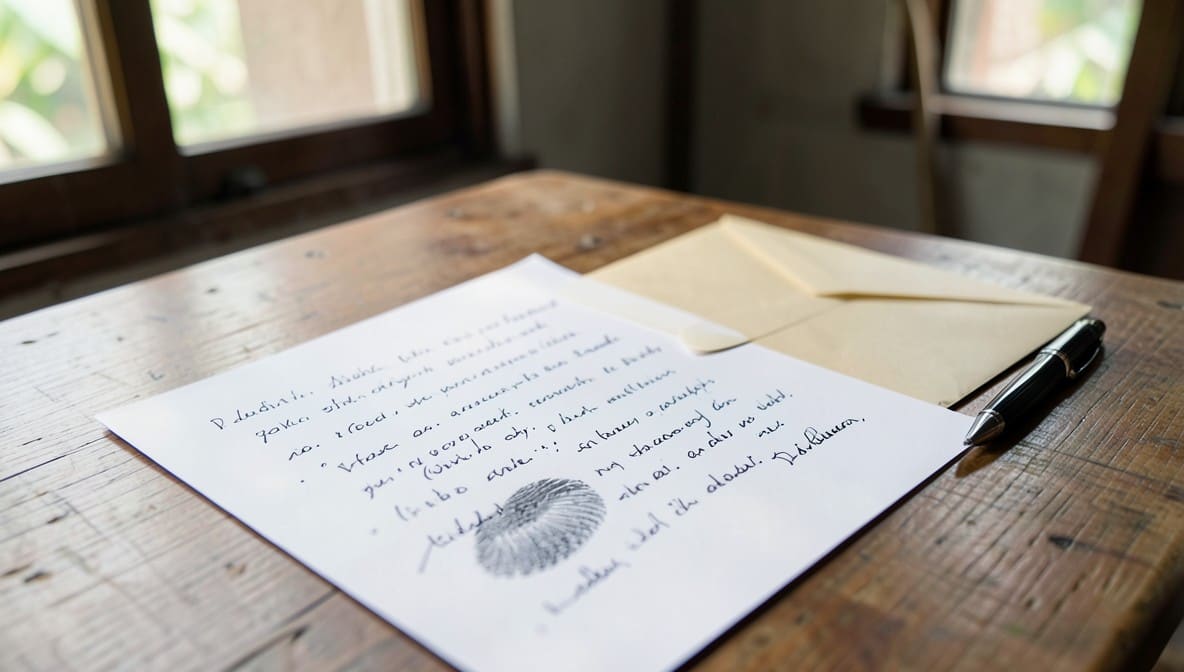
The respondent-plaintiff filed a civil suit seeking recovery of Rs. 3,63,000/-, comprising Rs. 3,00,000/- as principal and Rs. 63,000/- as interest, against the appellant-defendant. The claim arose from a loan allegedly advanced on 20.01.2011, evidenced by a pronote and receipt bearing the appellant’s thumb impressions. The appellant denied the transaction, claiming the thumb impressions were obtained on blank papers and later misused to fabricate the documents.
Key Facts
- The loan was advanced on 20.01.2011 in the presence of Satpal Singh.
- The appellant executed a pronote (Ex. P-1) and receipt (Ex. P-2) by affixing his thumb impressions.
- The documents were scribed by the respondent-plaintiff himself.
- The interest rate agreed upon was 1.50% per month.
- The appellant was an agriculturist; the respondent was a commission agent.
- The appellant alleged the respondent exploited their business relationship to obtain blank papers with thumb impressions and later filled them with loan terms.
- The respondent filed the suit on 27.09.2017.
Procedural History
- 20.01.2011: Loan advanced; pronote and receipt executed.
- Before 27.09.2017: Legal notice (Ex. PB) sent via postal receipt (Ex. P-4) demanding repayment; no response received.
- 27.09.2017: Civil Judge (Junior Division), Narwana, decreed the suit in favor of the plaintiff.
- 03.05.2023: District Judge, Jind, dismissed the first appeal filed by the appellant.
- 07.05.2026: Second appeal heard and dismissed by the Punjab & Haryana High Court.
The Parties' Positions
For the Plaintiff (Respondent): The loan was genuine, evidenced by the thumb-impressed pronote and receipt. The documents were duly executed, and the appellant’s failure to repay justified recovery. The evidence of PW-1 (plaintiff) and PW-2 (fingerprint expert) corroborated execution.
For the Defendant (Appellant): The thumb impressions were obtained on blank papers through misrepresentation. The pronote and receipt were forged. The suit was not maintainable as the plaintiff was an unlicensed moneylender. No loan was ever taken.
Relief Sought
The appellant sought reversal of the decrees passed by the lower courts and dismissal of the suit. The respondent sought enforcement of the decree for Rs. 3,63,000/- with interest.
The Legal Issue
The central question was whether the mere assertion of fraud, without independent evidence, can invalidate a document bearing a party’s thumb impression when the party failed to respond to a legal notice or take any step to challenge the alleged misuse.
Arguments Presented
For the Appellant
The appellant contended that the pronote and receipt were fabricated. He claimed his thumb impressions were obtained on blank papers during a prior transaction and later misused by the respondent. He argued the suit was not maintainable because the respondent was engaged in unlicensed moneylending. His testimony as DW-1 was the sole evidence supporting his claim of fraud.
For the Respondent
The respondent argued that the thumb impressions were not disputed and were corroborated by expert testimony. The legal notice sent prior to the suit was ignored, indicating awareness of the debt. The appellant’s conduct - failing to file a police complaint or challenge the notice - undermined his fraud allegation. The documents were properly executed and enforceable.
The Court's Analysis
The Court emphasized that the appellant did not deny the authenticity of his thumb impressions on the documents. The burden to prove fraud, therefore, lay entirely on him. The Court noted that the respondent’s testimony as PW-1, combined with the expert opinion of PW-2, established due execution of the pronote and receipt.
"The sole defence set up by the appellant-defendant was that his thumb impressions had been obtained on blank papers and, therefore, the pronote and receipt were the result of misrepresentation, fraud and fabrication. Since the plea of fraud was specifically raised by the appellant-defendant, the burden to prove the same squarely lay upon him."
The Court further observed that the appellant’s conduct was inconsistent with an innocent victim of fraud. He received a detailed legal notice on 27.09.2017 demanding repayment, yet took no action - neither replying, nor filing a police complaint, nor approaching any authority. The Court held:
"Had it truly been a case of fraud and fabrication, it was incumbent upon the defendant to raise his grievance immediately upon receipt of the notice and upon coming to know about alleged misuse of blank papers."
The absence of any corroborative evidence, coupled with the appellant’s passive conduct, rendered his allegations speculative. The lower courts’ findings were therefore upheld as based on a proper appreciation of evidence.
The Verdict
The appeal was dismissed. The decree of the Civil Judge (Junior Division), Narwana, dated 27.09.2017, and the order of the District Judge, Jind, dated 03.05.2023, were affirmed. The appellant is liable to pay Rs. 3,63,000/- to the respondent, comprising Rs. 3,00,000/- as principal and Rs. 63,000/- as interest. All pending applications stand disposed of.
What This Means For Similar Cases
Fraud Allegations Require Concrete Evidence
- Mere oral denials or self-serving statements by a party are insufficient to challenge a document bearing their thumb impression.
- Practitioners must advise clients that allegations of forgery or fraud must be supported by independent evidence - such as witness testimony, forensic reports, or contemporaneous complaints.
Silence After Legal Notice Is Fatal
- Failure to respond to a legal notice demanding repayment, especially when the document is facially valid, will be construed as acquiescence.
- Courts will view inaction as an admission of liability, particularly when no counter-complaint or police report was filed.
Thumb Impressions Carry Legal Weight
- Thumb impressions on financial documents are legally recognized as valid signatures under Indian evidence law.
- Once authenticated by expert testimony, the burden shifts to the opposing party to prove invalidity through credible evidence - not speculation.