The Bombay High Court has clarified that in cases of alleged Covid-19 deaths during employment, the standard of proof required is not proof beyond reasonable doubt but preponderance of probability. This ruling affirms the state’s duty to extend compassionate relief to families of frontline workers who succumbed to the pandemic while performing essential duties.
Background & Facts
The Dispute
The petitioner, Sharayu Khot, seeks compassionate employment and ex gratia compensation following the death of his father, Late Mr. Nayan Vasant Lakeshri, a Bus Conductor with Brihanmumbai Electricity Supply and Transport Undertaking (BEST). The petitioner contends that his father contracted Covid-19 during the course of his duties and died on 6th June 2020, making him eligible for benefits under BEST’s Administrative Order No. 407 of 2020 and Departmental Notification dated 10th June 2020.
Key Facts
- The petitioner’s father was employed with BEST for over 27 years as a Bus Conductor.
- He was on duty on 4th June 2020 and reported symptoms of dry cough, breathing difficulty, high fever, body ache, and loose motion.
- He was admitted to Seven Hills Hospital on 4th June 2020 with an SpO2 level of 73%.
- He had comorbidities: diabetes and hypertension, both for 8 - 9 years.
- He suffered a myocardial infarction on 6th June 2020 and was declared dead.
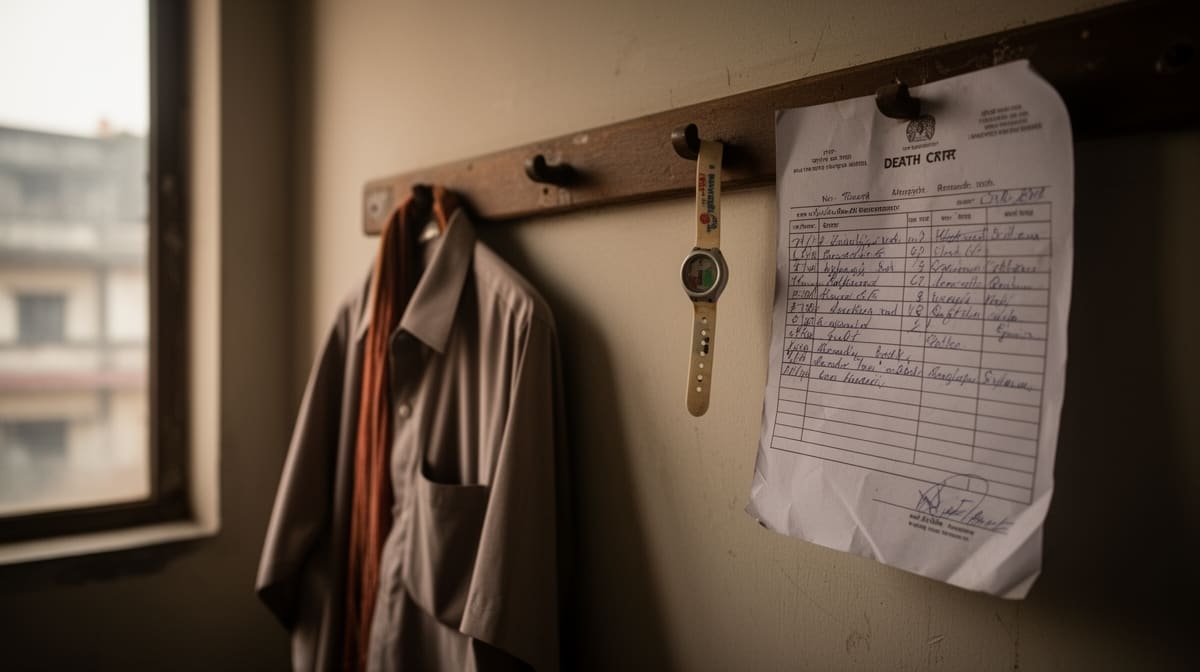
- The Medical Certificate of Cause of Death (No. 009139) dated 6th June 2020 listed: (a) Myocardial Infarction and (b) Suspected Case of Covid-19.
- No RTPCR test was conducted during his lifetime due to pandemic SOPs.
- The Post-Mortem Center noted: "Post Mortem not done. Cause of death given on the basis of inquest, history, external examination as per Circular No. DMER/Death Certificate/No. PM/Covid 19/35/2020."
- The petitioner applied for compassionate employment on 19th July 2020 and his mother submitted a similar request on 22nd July 2020.
- The application was rejected on 23rd November 2021, citing absence of RTPCR report and insufficient medical documentation.
- The BMC’s Dean Committee, in a communication dated 17th May 2022, concluded the death was not due to Covid-19 based solely on a normal X-ray report, ignoring the admission form and cause of death certificate.
Procedural History
- 4th June 2020: Petitioner’s father admitted to Seven Hills Hospital with suspected Covid-19 symptoms.
- 6th June 2020: Death declared; cause of death certified as Myocardial Infarction and Suspected Covid-19.
- 19th June 2020: First request for compassionate employment sent to BEST.
- 19th July 2020: Formal application submitted in prescribed format.
- 22nd July 2020: Mother’s supplementary request submitted.
- 23rd November 2021: Application rejected by BEST.
- 25th March 2023: Writ Petition No. 2411 of 2023 filed before Bombay High Court.
- 13th March 2026: Judgment reserved.
- 25th March 2026: Judgment pronounced.
Relief Sought
The petitioner seeks:
- Quashing of the rejection order dated 23rd November 2021.
- Compassionate employment under Administrative Order No. 407 of 2020.
- Ex gratia compensation of Rs. 50,00,000 under Departmental Notification dated 10th June 2020.
The Legal Issue
The central question was whether the preponderance of probability standard, established in prior precedent, applies to determine eligibility for compassionate employment and ex gratia compensation when a public servant dies during the pandemic without a confirmed RTPCR test, and whether the absence of such a test can justify denial of benefits.
Arguments Presented
For the Petitioner
The petitioner’s counsel, Ms. Madhavi Tavanandi, relied on Mayuri Krishna Jabare v. General Manager, BEST & Anr. (Writ Petition No. 2019 of 2022), where the Bombay High Court held that in cases of suspected Covid-19 deaths, the standard of proof is preponderance of probability, not proof beyond reasonable doubt. She submitted that the symptoms recorded in the hospital admission form - dry cough, fever, breathing difficulty, low SpO2 - and the certification of "suspected Covid-19" in the cause of death certificate, coupled with the deceased’s frontline role during lockdown, collectively establish a strong inference of Covid-19 as the proximate cause of death. She argued that the Dean Committee’s reliance on a normal X-ray report, issued two years after death and ignoring the admission records, was arbitrary and perverse.
For the Respondent
Mr. Vishal Talsania, counsel for BEST, contended that the cause of death was officially recorded as myocardial infarction, with Covid-19 only as a suspected condition. He emphasized that no RTPCR test was conducted, and the BMC’s Dean Committee, after reviewing all available documents, concluded there was no conclusive evidence of Covid-19. He cited Clause 3(v) and (vi) of the 10th June 2020 Notification, which required definitive medical certification of Covid-19 death, and argued that the petitioner failed to meet this threshold. He further noted that the Government Resolution dated 29th May 2020 limited the Rs. 50 lakh insurance cover to health workers, not transport staff.
The Court's Analysis
The Court examined the precedent set in Mayuri Krishna Jabare, which directly addressed the same factual matrix: a BEST employee dying during the pandemic with suspected Covid-19, no RTPCR test, and a cause of death certificate listing both myocardial infarction and suspected Covid-19. The Court reaffirmed that in such cases, the burden does not lie on the family to prove Covid-19 beyond doubt, but to establish that it is more probable than not.
"It would indeed be inhuman on the part of the Court to refrain from interfering in this case and fold its hands to decline relief to the heirs of the Petitioner's father, who died while answering the call of duty."
The Court noted that the petitioner’s father exhibited all classic symptoms of Covid-19 as documented in the hospital’s admission form. His comorbidities increased his vulnerability. The absence of an RTPCR test was not due to negligence but due to the SOPs issued by the Government of Maharashtra, which permitted death certification based on clinical and epidemiological grounds during the peak of the pandemic.
The Court found the Dean Committee’s opinion, based solely on a normal X-ray report and issued over two years after death, to be legally unsustainable. It ignored the primary medical records - the admission form and cause of death certificate - which were contemporaneous and prepared by treating physicians. The Court held that the Respondents’ reliance on technicalities to deny relief was contrary to the spirit of the Administrative Order and the Notification, both of which were designed to provide humane support to families of those who lost their lives in public service during the pandemic.
The Court further clarified that the 10th June 2020 Notification did not restrict eligibility to health workers alone; it applied to all employees of BEST who died due to Covid-19 while on duty. The petitioner’s father, as a bus conductor, was a frontline worker providing essential public transport during lockdown.
The Verdict
The petitioner succeeded. The Court quashed the rejection order dated 23rd November 2021. The Respondent No. 1 - BEST is directed to:
- Grant compassionate employment to the petitioner under Administrative Order No. 407 of 2020.
- Sanction and release Rs. 50,00,000 (Rupees Fifty Lakh only) as ex gratia compensation to the surviving heirs of the deceased.
- Complete both actions within 60 days of receipt of the authenticated copy of this order. No order as to costs.
What This Means For Similar Cases
Preponderance of Probability Is the Standard
- Practitioners must argue that in pandemic-related death claims, the standard is not RTPCR confirmation but a holistic assessment of symptoms, medical history, and context.
- Absence of a test cannot be the sole ground for denial if clinical evidence strongly suggests Covid-19.
Compassionate Employment Cannot Be Delayed by Bureaucratic Hurdles
- Employers must act expeditiously on compassionate applications when death occurs in service during a declared emergency.
- Delays exceeding one year, as in this case, are prima facie unreasonable and violate the spirit of administrative orders.
Ex Gratia Schemes Must Be Interpreted Broadly
- Notifications issued during crises should be construed liberally in favor of beneficiaries.
- Frontline workers in public transport, sanitation, and utilities are equally entitled to benefits as healthcare staff under such schemes.
Documentary Evidence Trumps Retrospective Opinions
- Contemporaneous medical records (admission forms, death certificates) carry greater weight than retrospective committee opinions.
- Committees must reference all available evidence; selective reliance on one report (e.g., X-ray) renders their conclusions invalid.
The Duty to Protect Families of Public Servants
- The state has a moral and legal obligation to support families of those who die in service during national emergencies.
- Courts will intervene where administrative inaction amounts to denial of justice to grieving families.