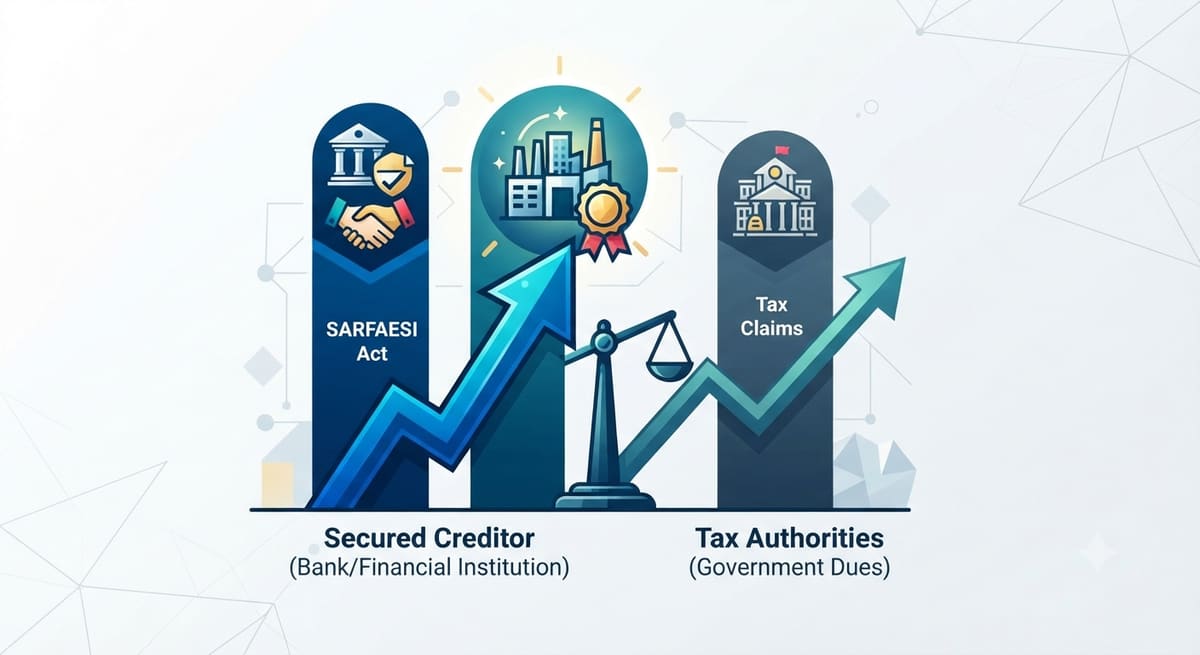
The Bombay High Court has issued a stern warning to the Income Tax Department, directing it to update its records to reflect the substantial reduction of a tax demand from Rs. 3.56 crores to Rs. 22 lakhs following appellate proceedings. The Court threatened to forfeit the Department’s claims as preferential creditors under the Presidency Towns Insolvency Act, 1909 if it fails to comply, highlighting systemic inefficiencies in record-keeping.
Background & Facts
The Dispute
The proceedings arise from two insolvency petitions filed before the Bombay High Court:
Insolvency Petition No. 28 of 2001: Filed by Uttamchand Devichand Shah (Petitioning Creditor) against Bansi Jairamdas Jaising and Anr. (Insolvents).
Insolvency Petition No. 82 of 2002: Filed by Suraj Prakash Khemchand (Petitioning Creditor) against Avinash Bansi Jaising and Anr. (Insolvents).
Both petitions involve the same insolvents and relate to the administration of their estates under the Presidency Towns Insolvency Act, 1909. The Income Tax Department (ITD) claimed a preferential creditor status for a demand of Rs. 3.56 crores raised by the assessing officer.
Key Facts
The original tax demand of Rs. 3.56 crores was raised by the assessing officer against the insolvents.
The demand was substantially reduced in appellate proceedings, and an order giving effect to this reduction was communicated to the assessee.
The reduced liability, as per the order giving effect, was approximately Rs. 22 lakhs across the three estates.
Despite the reduction, the ITD’s records continued to reflect the original demand of Rs. 3.56 crores as outstanding.
The assessee-insolvent addressed a letter dated 26th February, 2026 to the Assistant Commissioner of Income Tax (ACIT), Circle-23(1), Mumbai-400 012, seeking clarification.
Upon approaching the assessing officer, the assessee was directed to the Demand Management Facilitation Center.
The Facilitation Center responded mechanically, stating that there was no response from the assessee, without verifying the records.
Procedural History
Insolvency Petition No. 28 of 2001 and Insolvency Petition No. 82 of 2002 were filed before the Bombay High Court.
The Court, during earlier proceedings, noted the discrepancy in the ITD’s records and requested the revenue to ascertain the correct facts.
The assessee-insolvent addressed a letter to the ACIT on 26th February, 2026, but received no meaningful response.
The Court observed that the ITD’s records were not updated despite the appellate reduction of the demand.
On 10th July, 2026, the Court issued directions to the ITD to appear and clarify its position, failing which its claims as preferential creditors would be forfeited.
Relief Sought
The Court sought:
Confirmation from the ITD regarding the reduced demand of Rs. 22 lakhs.
Updation of the ITD’s records to reflect the appellate order.
Compliance with the Court’s directions to avoid forfeiture of preferential creditor claims.
The Legal Issue
The central question was whether the Income Tax Department, as a preferential creditor under the Presidency Towns Insolvency Act, 1909, could continue to claim the original demand of Rs. 3.56 crores despite its substantial reduction in appellate proceedings, and whether its failure to update records could result in forfeiture of its claims.
Arguments Presented
For the Insolvents
The insolvents contended that the ITD’s records were not updated despite the appellate order reducing the demand to Rs. 22 lakhs.
They argued that the ITD’s mechanical response to the assessee’s letter dated 26th February, 2026 demonstrated negligence and non-compliance with the appellate order.
They relied on the Presidency Towns Insolvency Act, 1909, which grants preferential status to certain creditors, but only if their claims are valid and updated.
For the Official Assignee
The Official Assignee, representing the estates, supported the insolvents’ position, emphasizing the need for accurate record-keeping by the ITD.
They highlighted the systemic inefficiency in the ITD’s processes, which could prejudice the insolvency proceedings.
The Court's Analysis
The Court expressed grave concern over the ITD’s failure to update its records despite the appellate reduction of the demand. It observed:
"The revenue without checking their records have mechanically issued this communication to the assessee saying that there is no response from the assessee-insolvent. This is very sad state of affairs where instead of the assessee succeeding substantially in the appellate proceedings and the department having given effect to the same, the records of the Income Tax Department are not updated and are shown outstanding of the original demand."
The Court emphasized that the ITD’s preferential creditor status under the Presidency Towns Insolvency Act, 1909 was contingent on the validity and accuracy of its claims. It noted that the ITD’s negligence in updating its records could not be excused, particularly when the assessee had taken proactive steps to clarify the position.
The Court also underscored the broader implications of such systemic inefficiencies, which could undermine the integrity of insolvency proceedings. It directed the ITD to appear before the Court and threatened to forfeit its claims if it failed to comply.
The Verdict
The Court issued the following directions:
The Income Tax Department was directed to appear before the Court on 7th August, 2026 to clarify its position regarding the reduced demand of Rs. 22 lakhs.
If the ITD failed to appear, it would be presumed to have forfeited all its claims as preferential creditors under the Presidency Towns Insolvency Act, 1909.
A copy of the order was directed to be sent to:
The Central Board of Direct Taxes (CBDT),
The Chief Commissioner of Income Tax, Mumbai, and
The concerned Jurisdictional Commissioner of Income Tax (ACIT), Circle-23(1), Mumbai-400 012.
What This Means For Similar Cases
Preferential Creditor Claims Are Conditional on Accurate Record-Keeping
The judgment establishes that preferential creditor status under the Presidency Towns Insolvency Act, 1909 is not absolute. Creditors, including government departments, must ensure their records are updated and accurate.
Failure to comply with judicial orders or maintain updated records can result in forfeiture of preferential claims, as threatened in this case.
Systemic Inefficiencies Can Prejudice Insolvency Proceedings
The Court’s observations highlight the prejudicial impact of systemic inefficiencies in government departments on insolvency proceedings.
Practitioners should proactively engage with creditors to ensure compliance with judicial orders and avoid mechanical responses that could undermine their claims.
Courts May Impose Strict Compliance Timelines
The Court’s direction to the ITD to appear on 7th August, 2026 underscores the importance of adhering to judicial timelines.
Non-compliance with Court orders, even by government departments, can lead to adverse consequences, including forfeiture of claims.
Actionable Takeaways for Practitioners:
Always verify the status of creditor claims, especially government demands, to ensure they reflect appellate reductions or judicial orders.
Address communications to the correct authorities and follow up diligently to avoid mechanical rejections.
In insolvency proceedings, preferential creditor status is not guaranteed and must be substantiated with updated records.
Courts may impose strict compliance deadlines, and non-adherence can result in forfeiture of claims.