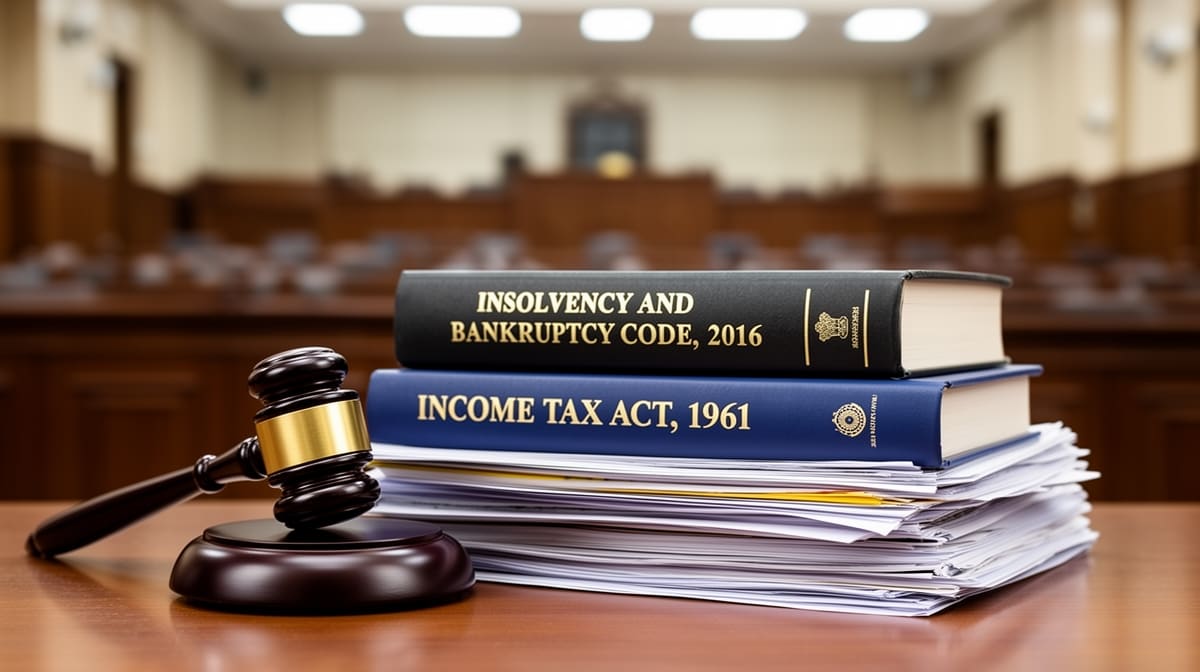
The approval of a resolution plan under the Insolvency and Bankruptcy Code, 2016, extinguishes all pre-existing statutory claims not expressly included in the plan. This landmark ruling by the Customs, Excise & Service Tax Appellate Tribunal reaffirms the primacy of the IBC framework over standalone tax recovery mechanisms, offering critical clarity to tax authorities and corporate debtors alike.
Background & Facts
The Dispute
The appellant, M/s. Aircel Ltd., was undergoing corporate insolvency resolution under the Insolvency and Bankruptcy Code, 2016. The Commissioner of Central Excise, Customs and Service Tax had issued an order demanding unpaid service tax dues for the period prior to the initiation of insolvency proceedings. The appellant challenged this order before the CESTAT, arguing that the approval of its resolution plan by the National Company Law Tribunal had legally extinguished all outstanding claims not incorporated into the plan.
Procedural History
- 2017: Original demand notice issued by Commissioner under Service Tax regime
- 2019: Corporate Insolvency Resolution Process initiated under IBC
- 2021: NCLT approved the Resolution Plan
- 2026: Appeal filed before CESTAT challenging the validity of the pre-IBC tax demand
Relief Sought
The appellant sought abatement of the appeal on the ground that the approved resolution plan had extinguished the disputed tax liabilities, rendering the demand legally unsustainable.
The Legal Issue
The central question was whether statutory tax demands arising prior to the approval of a resolution plan under Section 31 of the Insolvency and Bankruptcy Code survive post-approval if not expressly included in the plan.
Arguments Presented
For the Appellant
The appellant relied on the Supreme Court’s decision in Ghanashyam Mishra and Sons Pvt. Ltd. v. Edelweiss Asset Reconstruction Company Ltd., which held that claims not part of an approved resolution plan stand extinguished. It further cited the Karnataka High Court’s ruling in Patanjali Foods Ltd. v. Commissioner of Customs to argue that abatement applies to the underlying demands, not merely the appeals.
For the Respondent
The Respondent conceded that the resolution plan had been approved but contended that the Resolution Professional had sought to withdraw, creating uncertainty about finality. It argued that the extinguishment of claims could not be automatic until all procedural steps under IBC were conclusively completed.
The Court's Analysis
The Tribunal examined the language and intent of Section 31(1) of the IBC, which mandates that a resolution plan, once approved, becomes binding on all stakeholders, including the Central and State Governments. The Court emphasized that the 2019 amendment to Section 31 was clarificatory and retrospective, reinforcing that extinguishment of non-included claims has been effective since the Code’s inception.
"In the result, we answer the questions framed by us as under: (i) That once a resolution plan is duly approved by the Adjudicating Authority under subsection (1) of Section 31, the claims as provided in the resolution plan shall stand frozen and will be binding on the Corporate Debtor and its employees, members, creditors, including the Central Government, and State Government or any local authority..."
The Tribunal rejected the Respondent’s argument that procedural uncertainty invalidated the extinguishment. It held that the mere filing of a withdrawal application by the Resolution Professional does not undo the legal effect of the NCLT’s approval. The Supreme Court’s precedent in Ghanashyam Mishra was binding and had been uniformly followed by CESTAT benches nationwide.
The Court concluded that the statutory demand, being outside the approved resolution plan, was extinguished by operation of law. Continuing proceedings would violate the statutory scheme of the IBC and undermine its objective of corporate revival and creditor finality.
The Verdict
The appellant succeeded. The Court held that statutory tax demands not included in an approved IBC resolution plan are extinguished, and no proceedings may be continued against the corporate debtor for such claims. The appeal was disposed of accordingly.
What This Means For Similar Cases
Statutory Dues Are Extinguished by Operation of Law
- Practitioners must now treat any pre-IBC tax, cess, or duty claim as extinguished if absent from the approved resolution plan
- Tax authorities cannot initiate or continue recovery proceedings under any statute for such claims
- The burden shifts to the tax department to ensure claims are filed during the CIRP, not after approval
Finality of NCLT Orders Is Absolute
- Withdrawal applications by Resolution Professionals do not revive extinguished claims
- The approval date under Section 31 is the critical cutoff for claim validity
- Any attempt to challenge extinguishment post-approval must be raised before the NCLT, not appellate tribunals
IBC Overrides Other Regulatory Regimes
- The IBC’s priority over tax, customs, and labor laws is now firmly established
- Tax authorities must align their enforcement timelines with the CIRP schedule
- Legal strategies must prioritize inclusion of claims in the resolution plan, not post-approval litigation