The Bombay High Court has delivered a landmark ruling affirming that long-term contractual employees under the Pradhan Mantri Gram Sadak Yojana (PMGSY) cannot be denied regularization merely due to artificial breaks in service. The judgment establishes that sustained, integral work for over a decade, funded and controlled by the State, triggers a constitutional obligation to grant permanency.
Background & Facts
The Dispute
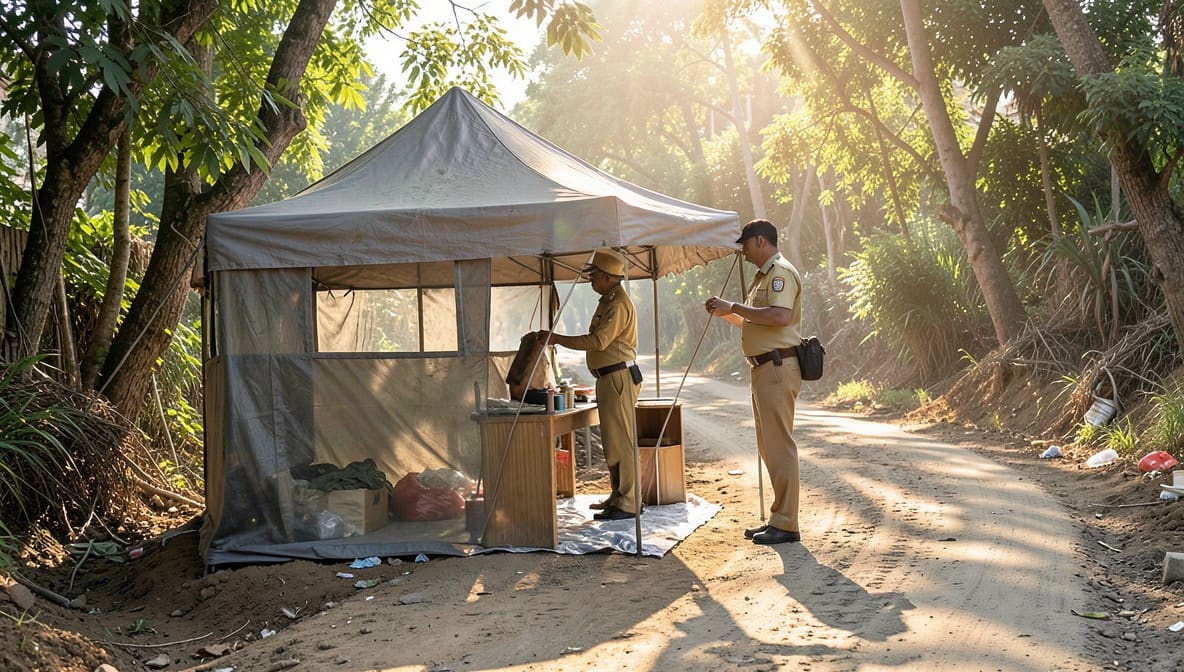
The petitioners, numbering over 70, were engaged on contractual basis by various State authorities - including Zilla Parishads, the Maharashtra Rural Roads Development Association, and the Superintending and Executive Engineers of PMGSY - to implement the Central Government’s rural road construction scheme launched on 25/12/2000. Despite performing core, perennial duties for periods exceeding 10 years, their services were periodically terminated and re-engaged under new contracts to prevent the accrual of regular service rights. The State’s practice of creating technical breaks was explicitly documented in Government Resolutions to avoid creating a claim for permanency.
Key Facts
- The PMGSY scheme is funded entirely by the Union of India and implemented through State machinery.
- The Maharashtra Rural Roads Development Association, the implementing society, is controlled, funded, and directed by the State Government.
- Petitioners held posts such as Junior Engineer, Civil Engineer Assistant, Senior Clerk, Peon, and Account Officer Gr-II.
- Appointment dates range from as early as 18/12/2006 to as late as 11/12/2014.
- Service tenure of individual petitioners spans between 7 to 17 years, with no substantial interruption.
- The State issued repeated Government Resolutions (e.g., dated 31/07/2018) acknowledging the perennial nature of the work and deliberately engineering breaks to deny permanency.
- Several petitioners were re-engaged within days or weeks of termination, performing identical duties without any break in function.
- The petitioners in Writ Petition No. 679/2021 lack complete service records, but their roles are substantively identical to those in the other petitions.
Procedural History
- 2006 - 2014: Petitioners appointed on contractual basis across districts of Nagpur, Akola, Wardha, Gadchiroli, Buldhana, Amravati, and others.
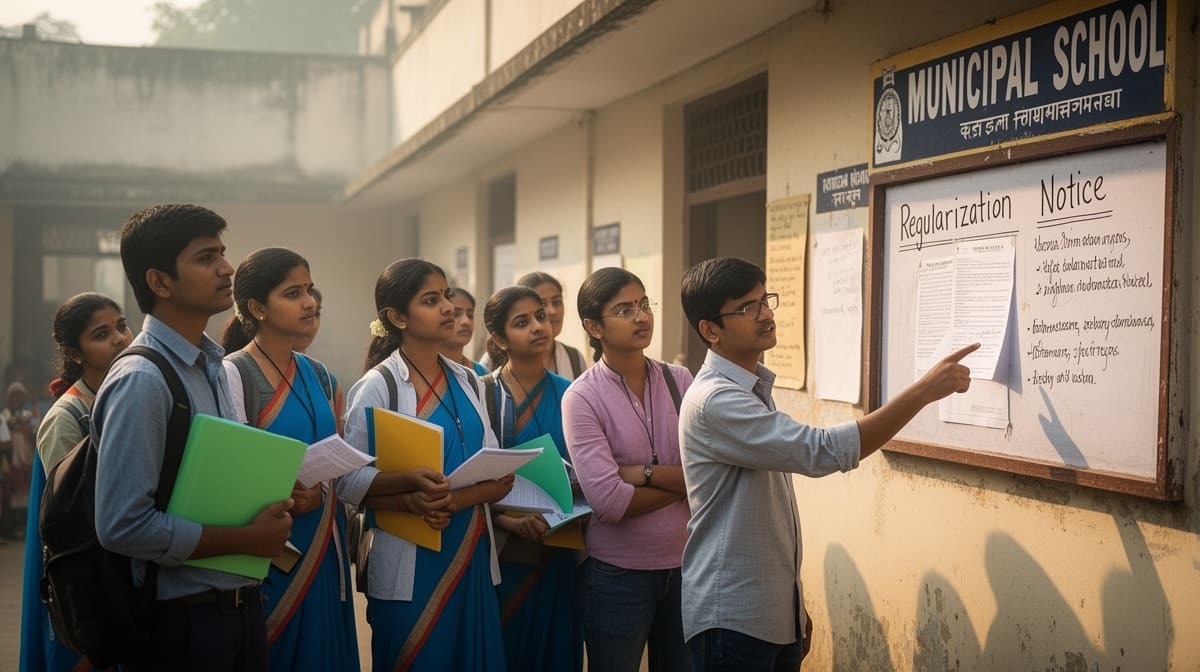
- 2016 - 2021: Multiple writ petitions filed before the Bombay High Court, Nagpur Bench, challenging non-regularization.
- 11.02.2026: Judgment delivered in Sunil S/o Uttamrao Palaskar v. State of Maharashtra (WP No. 861/2021), recognizing similar claims.
- 23.01.2026: Aurangabad Bench judgment in Mahesh s/o Chandrakant Bhagat v. State of Maharashtra (WP No. 3489/2015) held that PMGSY employees are entitled to regularization.
- 24.03.2026: Present batch of petitions heard together and decided by the Nagpur Bench.
The Parties' Positions
For the Petitioners: Argued that their employment was not temporary or part-time but integral to a State-funded, long-term infrastructure program. They relied on Jaggo v. Union of India (2024 SCC OnLine SC 3826) and Umadevi to distinguish backdoor appointments from legitimate, procedure-compliant service. They emphasized that the State’s use of artificial breaks was a subterfuge to evade constitutional obligations under Article 14 and 16.
For the Respondents: Contended that all appointments were strictly contractual, governed by ad hoc Government Resolutions, and that no statutory or service rule mandated regularization. They argued that Umadevi barred regularization unless appointments were made through proper procedure - which they claimed was not followed.
Relief Sought
The petitioners sought:
- Regularization of services with effect from their initial date of appointment.
- Payment of arrears of salary for the three years preceding the filing of the writ petition.
- Creation of permanent posts to absorb them in Zilla Parishads, State Government, or the Maharashtra Rural Roads Development Association.
- Consequential benefits including pension, increments, and seniority.
The Legal Issue
The central question was whether long-term contractual employees performing essential, perennial duties under a State-funded scheme, whose appointments followed transparent procedures and were not backdoor entries, are entitled to regularization under Article 14 and 16 of the Constitution, despite artificial breaks engineered by the State to deny permanency.
Arguments Presented
For the Petitioner
The petitioners relied on Jaggo v. Union of India (2024 SCC OnLine SC 3826), where the Supreme Court held that service extending beyond ten years, with no evidence of illegality or backdoor entry, cannot be dismissed as temporary merely because of contractual labels. They emphasized that their appointments were made through public advertisements, selection processes, and were not arbitrary. They cited Ajay Hasia v. Khalid Mujib Sehravardi to establish that the Maharashtra Rural Roads Development Association qualifies as a State under Article 12 due to complete State control, funding, and purpose. The State’s own Government Resolution dated 31/07/2018 admitted the work was perennial and breaks were artificial - thus constituting bad faith.
For the Respondent
The State argued that the petitioners were engaged under temporary, non-permanent posts created by executive order, with no statutory backing for regularization. They contended that Umadevi remains binding: unless appointments are made in accordance with constitutional norms and service rules, no right to permanency arises. They asserted that the petitioners’ claims were barred by delay and that regularization would disrupt administrative efficiency.
The Court's Analysis
The Court rejected the State’s reliance on Umadevi, distinguishing it on two critical grounds. First, in Umadevi, appointments were made without any procedure, often through influence or nepotism. Here, appointments were made through public advertisements, selection committees, and formal offer letters. Second, the Court noted that the State itself acknowledged the perennial nature of the work in its own Government Resolutions, revealing a deliberate strategy to circumvent constitutional obligations.
"The Government Resolution dated 31/07/2018 clearly shows that the technical breaks are given only with the view to see that no right of permanency is created. The Government has every apprehension that if no technical breaks are given, benefits of permanency will have to be given as the work is of perennial nature."
The Court held that such conduct by the State violates the principles of equality and non-arbitrariness under Article 14. The work performed by petitioners was not casual or intermittent but central to a national infrastructure mission. The Court affirmed the Aurangabad Bench’s reasoning in Mahesh s/o Chandrakant Bhagat that the Maharashtra Rural Roads Development Association is an instrumentality of the State under Article 12.
The Court further held that the doctrine of legitimate expectation applies: petitioners had a reasonable expectation of permanency after over a decade of continuous service. The State’s attempt to deny this through mechanical terminations and re-engagements was held to be an abuse of power.
The Verdict
The writ petitions are allowed. The respondents are directed to:
- Regularize the services of all petitioners with effect from their respective initial dates of appointment, with consequential benefits including seniority, increments, and pension eligibility.
- Pay arrears of salary for the three years preceding the filing of the petition, with bank interest, within six months from the date of judgment.
- Create permanent posts to absorb the petitioners in the Zilla Parishad, State Government, or the Maharashtra Rural Roads Development Association.
- Extend the above benefits to the petitioners in Writ Petition No. 679/2021 whose service records are incomplete, upon verification of their eligibility.
No order as to costs.
What This Means For Similar Cases
Artificial Service Breaks Cannot Defeat Constitutional Rights
- Practitioners must challenge any State practice of terminating and re-engaging employees at fixed intervals to avoid regularization.
- Evidence of repeated re-engagement within days of termination is prima facie proof of bad faith.
- Government Resolutions admitting the work is perennial are powerful admissions against the State.
PMGSY and Similar Schemes Are State Instrumentalities
- Entities created to implement centrally funded schemes (e.g., PMGSY, NRHM, MGNREGA) are now clearly classified as State under Article 12 if fully funded, controlled, and directed by the State.
- This opens the door for regularization claims across all such schemes.
- Legal notices should now routinely cite Ajay Hasia and Jaggo to establish State character.
Three-Year Arrears with Interest Are Mandatory
- The Court has fixed a clear precedent: arrears must be calculated for three years preceding the petition, with bank interest.
- This removes discretion from authorities and ensures uniformity.
- Practitioners should now routinely claim this specific relief in similar cases.