The Delhi High Court has reaffirmed that the right to personal liberty under Article 21 extends to accused persons facing prosecution under Section 138 of the Negotiable Instruments Act, particularly when advanced age and critical health conditions render personal attendance physically untenable. This ruling clarifies that coercive measures like non-bailable warrants cannot be issued as routine procedure without evaluating medical necessity and viable alternatives.
Background & Facts
The Dispute
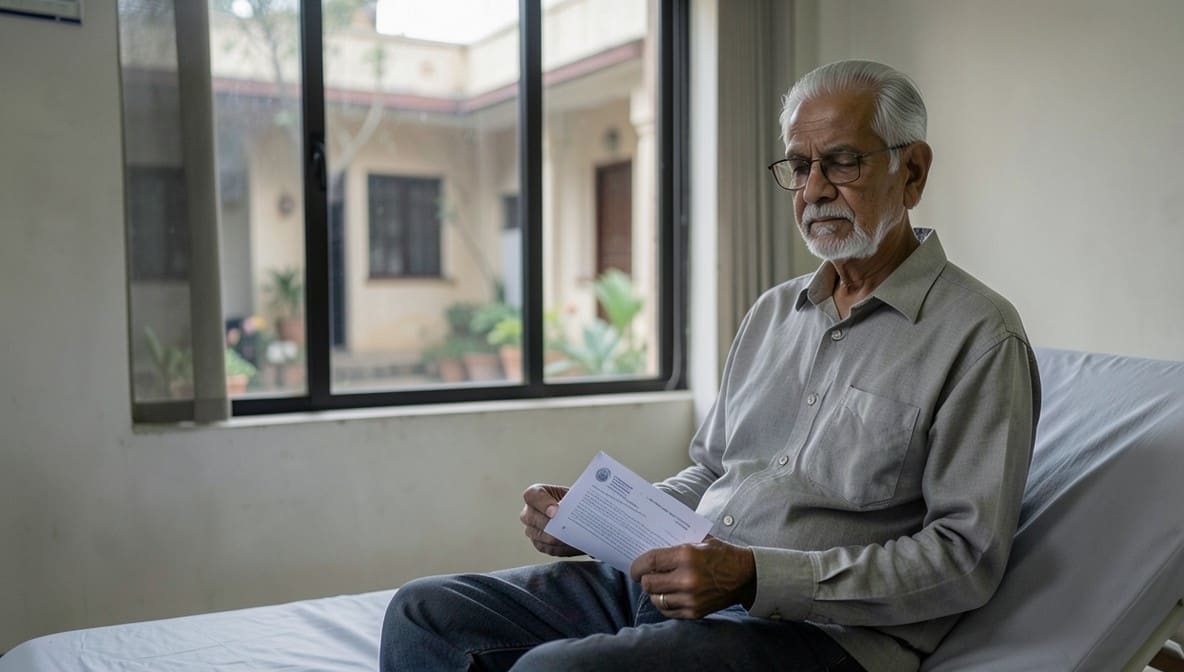
The petitioner, a man in his seventies, is facing prosecution under Section 138 of the Negotiable Instruments Act for alleged dishonour of cheques issued to Religare Finvest Limited. He applied for exemption from personal appearance before the Trial Court, citing severe and documented health complications including multiple coronary angioplasties and arterial stent insertions.
Procedural History
- 06.02.2026: Trial Court dismissed the petitioner’s application for exemption from personal appearance
- 06.02.2026: Non-bailable warrants were issued against the petitioner
- 24.02.2026: Petitioner approached the Delhi High Court under Article 227 seeking recall of warrants and exemption from personal attendance
Relief Sought
The petitioner sought recall of the non-bailable warrants and permanent exemption from personal appearance, requesting that his counsel represent him in court. He also urged the court to consider the Electronic Evidence and Video Conferencing Rules, 2025 as a viable alternative.
The Legal Issue
The central question was whether a Trial Court may issue non-bailable warrants against an elderly accused suffering from life-threatening cardiac conditions under Section 138 NI Act, without first considering medical evidence, alternative modes of participation, or the proportionality of coercive measures under Article 21.
Arguments Presented
For the Petitioner
Counsel argued that compelling personal appearance in such circumstances violates the right to life and personal liberty under Article 21, as established in Arnesh Kumar v. State of Bihar. They cited medical records confirming the petitioner’s frailty and risk of fatal complications during travel or prolonged court attendance. Reliance was placed on the Electronic Evidence and Video Conferencing Rules, 2025, which explicitly permit remote appearances in financial disputes.
For the Respondent
The complainant’s counsel did not oppose the recall of warrants but insisted that the petitioner must formally apply for exemption with an affidavit affirming his identity and willingness to be represented. He emphasized that no blanket exemption could be granted and reserved the right to oppose any future application, arguing that procedural fairness required formal compliance.
The Court's Analysis
The Court examined the balance between procedural compliance and fundamental rights. It held that while courts must ensure accused persons do not evade justice, coercive measures must be proportionate and last-resort. The issuance of non-bailable warrants without evaluating medical evidence or exploring technological alternatives was found to be arbitrary and violative of Article 21.
"The law does not demand the impossible. To compel a man with multiple stents and a history of angioplasty to travel to court, risking cardiac arrest, is not justice - it is cruelty dressed as procedure."
The Court emphasized that Section 138 proceedings are civil in nature with criminal consequences, and the triple test of necessity, proportionality, and least restrictive means must govern any decision to issue coercive process. It further noted that the Electronic Evidence and Video Conferencing Rules, 2025 provide a statutory framework for remote participation, making physical attendance unnecessary in most cases involving elderly or infirm accused.
The Verdict
The petitioner succeeded. The Delhi High Court recalled the non-bailable warrants and granted temporary exemption from personal appearance until the next hearing. It held that exemption from personal attendance must be granted where credible medical evidence establishes physical impossibility, provided the accused submits an affidavit affirming identity and representation by counsel.
What This Means For Similar Cases
Personal Appearance Is Not Automatic in Section 138 Cases
- Practitioners must now file medical affidavits alongside exemption applications in Section 138 NI Act cases involving elderly or chronically ill accused
- Courts cannot treat personal attendance as a default requirement - proportionality must be assessed
- Failure to consider medical evidence before issuing non-bailable warrants invites writ jurisdiction
Video Conferencing Is a Legally Recognized Alternative
- The Electronic Evidence and Video Conferencing Rules, 2025 are now binding in all Section 138 proceedings
- Courts must record reasons if they reject remote participation despite medical proof
- Defence counsel should routinely request video links as standard practice, not as an exception
Affidavit of Identity Is Sufficient Safeguard
- An affidavit affirming identity and consent to representation by counsel satisfies due process
- Complainants cannot insist on physical presence merely to delay proceedings
- Courts must not use personal attendance as a tool for procedural harassment