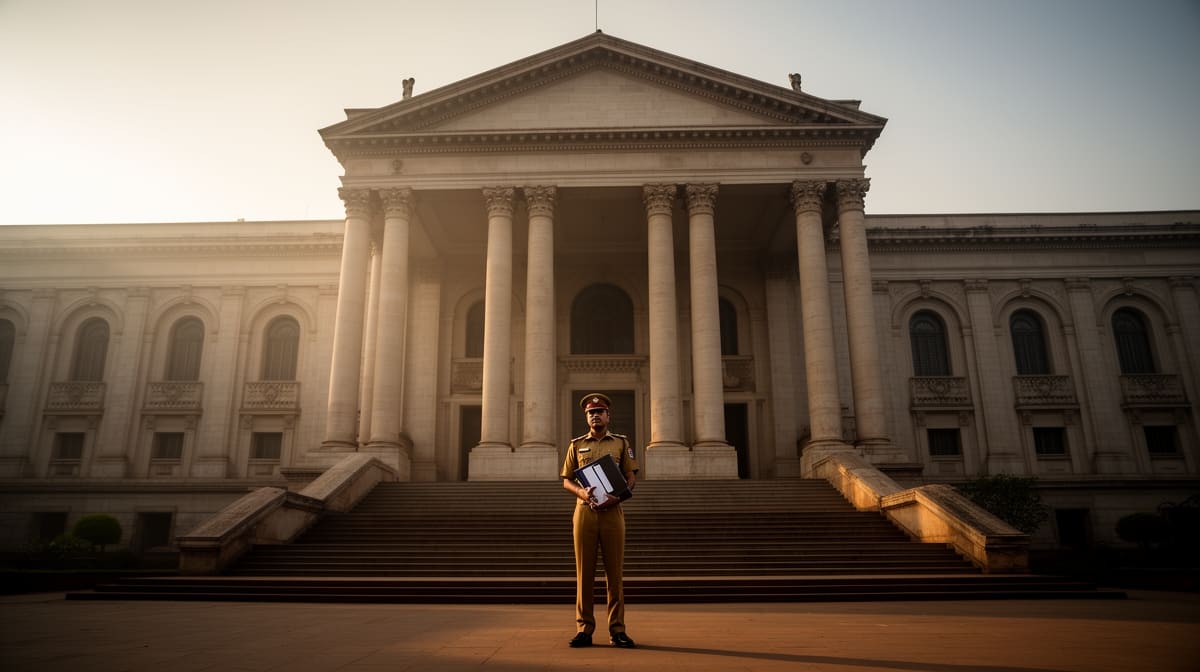
The Bombay High Court has issued a stern directive reinforcing that non-compliance with its orders on land acquisition payments will not be tolerated through bureaucratic delay. In a decisive move, the Court mandated personal appearance of senior officials if compliance remains unmet, establishing a clear precedent for enforcing judicial mandates in public administration.
Background & Facts
The Dispute
The petitioners, landowners from Vasai and surrounding areas, were entitled to compensation under the Right to Fair Compensation and Transparency in Land Acquisition, Rehabilitation and Resettlement Act, 2013. Despite multiple court orders affirming their entitlement, the respondents - Sub-Divisional Officer, Vasai, and the National Highways Authority of India (NHAI) - failed to disburse the awarded amounts.
Procedural History
- March 21, 2025: A coordinate Bench of the Bombay High Court issued a detailed order directing immediate payment of compensation to all petitioners, with a strict timeline.
- July 24, 2025: Another coordinate Bench extended the deadline by three weeks, noting the respondents’ assurances of imminent compliance.
- February 18, 2026: The matter was brought back before the Court after nearly eleven months of inaction, with no payments made and no substantive progress reported.
Relief Sought
The petitioners sought enforcement of the March 2025 order and contended that the respondents’ continued inaction amounted to contempt of court. They also requested personal accountability of responsible officials to deter future non-compliance.
The Legal Issue
The central question was whether officials responsible for implementing court orders can evade accountability by citing administrative delays or funding constraints, and whether personal appearance of such officials is a justifiable remedy for persistent non-compliance.
Arguments Presented
For the Petitioners
The petitioners’ counsel argued that the respondents had been given two clear opportunities to comply, yet no action had been taken. They cited State of Maharashtra v. Balasaheb to assert that court orders are not advisory and that delay tantamounts to defiance. They emphasized that the right to compensation under the Land Acquisition Act is a fundamental entitlement, and bureaucratic inertia violates Article 14 and Article 21 of the Constitution.
For the Respondent/State
The Additional Government Pleader and NHAI’s counsel conceded the delay but attributed it to inter-departmental coordination issues and pending fund allocation from the Union Ministry. They submitted that the delay was not malicious but structural, and requested further time without invoking personal liability.
The Court's Analysis
The Court rejected the argument that administrative inconvenience excuses non-compliance. It held that the judiciary’s authority is not contingent on the convenience of executive agencies. The Court observed that the respondents had been given ample opportunity and that the mere exchange of letters does not constitute compliance.
"It is unfortunate that the respondents are not taking seriously, the orders passed by this Court and only paper horses are being run from one office to another in a typical show of bureaucratic intransigence."
The Court emphasized that enforcement of judicial orders is not a matter of discretion but a constitutional obligation. It noted that the failure to pay compensation to displaced landowners perpetuates economic hardship and undermines public trust in the rule of law. The Court further held that personal presence of responsible officers is a proportionate and necessary measure to ensure accountability, especially where repeated extensions have been granted without result.
The Verdict
The petitioners prevailed. The Court held that non-compliance with its orders cannot be excused by administrative delays, and directed that if the compensation remains unpaid by March 11, 2026, the Sub-Divisional Officer and the NHAI Project Director must appear personally before the Court. Failure to appear will invite consequences under the Contempt of Courts Act, 1971.
What This Means For Similar Cases
Personal Accountability Is Now Enforceable
- Practitioners must now argue that failure to implement court orders justifies invoking personal liability of officials, not just institutional non-compliance.
- In land acquisition, compensation, or public welfare cases, requesting personal appearance of officials should be a standard prayer after two or more extensions.
- Courts may now treat repeated non-compliance as a prima facie contempt, even without a formal contempt petition.
Administrative Delays Are Not a Defense
- Claims of fund shortages, inter-departmental delays, or procedural bottlenecks are no longer sufficient to justify non-compliance.
- The burden shifts to the State to prove concrete, time-bound steps taken to overcome administrative hurdles - not mere assertions.
- Any delay beyond two court-ordered deadlines invites judicial scrutiny under Article 226 and potential contempt proceedings.
Enforcement Mechanisms Are Strengthened
- This judgment empowers petitioners to seek specific performance of court orders through personal attendance mandates.
- It sets a precedent for proactive monitoring in public law litigation, where courts may list matters for directions without requiring fresh petitions.
- Legal teams should now draft compliance affidavits with named officers, dates, and proof of action - not generic assurances.