The High Court of Himachal Pradesh has reaffirmed that proof of a prior demand for illegal gratification is an indispensable element for conviction under Sections 7 and 13(1)(d) of the Prevention of Corruption Act, 1988. The court dismissed the State’s appeal against the acquittal of a Patwari, emphasizing that mere recovery of tainted currency, even with forensic confirmation, cannot substitute for evidence of a demand made by the public servant.
Background & Facts
The Dispute
The respondent, Kailash Chand, a Patwari posted in Patwar Circle, Nahan, Himachal Pradesh, was accused of demanding a bribe of ₹3,000 from Nazakat Ali (PW-1), the informant, for entering a mutation of land ownership in favor of Jivnee, the informant’s mother. The alleged demand occurred on 07.01.2012, following repeated visits by the informant to the Patwarkhana for mutation entry. The prosecution alleged that the accused, in his official capacity, had refused to process the mutation unless paid the bribe.
Key Facts
- Jivnee inherited 3 Bighas and 14 Biswas of land in Village Bogrian, Tehsil Nahan, after her mother’s death.
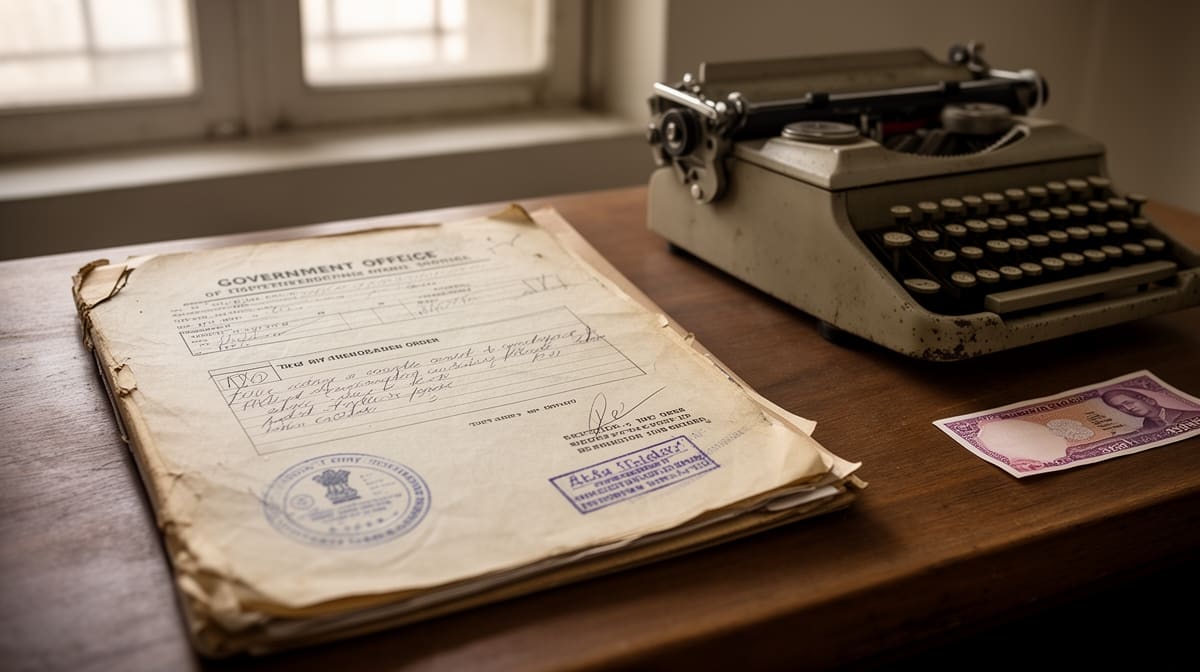
- Mutation entry in Jivnee’s name was recorded on 19.12.2011 and certified by the Kanungo on 23.12.2011, with sanction by the Assistant Collector on the same day.
- On 27.12.2011, Jivnee entered into a sale agreement with Salman Khan (informant’s son), thumb-marked by Jivnee and signed by Nazakat Ali (Ext.PW-1/D).
- The informant filed a complaint on 07.01.2012, alleging the accused demanded ₹3,000 for mutation entry, despite the mutation having been completed weeks earlier.
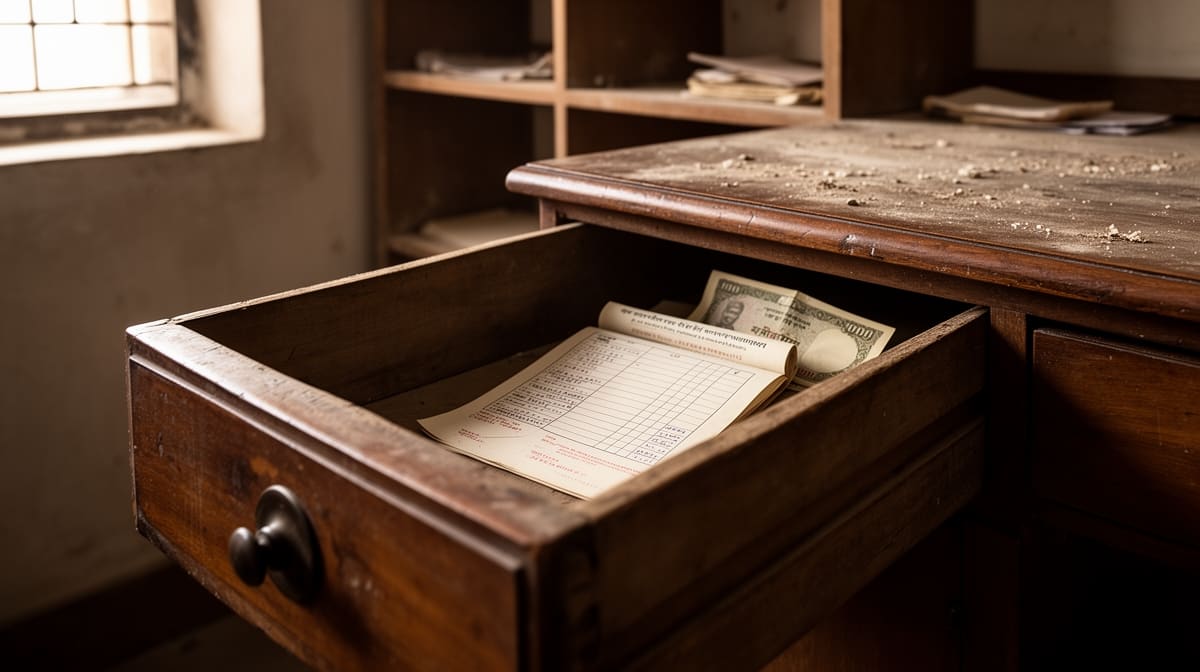
- A trap was conducted on 07.01.2012: ₹3,000 in currency notes (four ₹500 and ten ₹100 notes) were treated with Phenolphthalein powder and sodium carbonate solution.
- The currency notes were placed in the informant’s jacket pocket by Mehmood Khan (PW-2), the shadow witness.
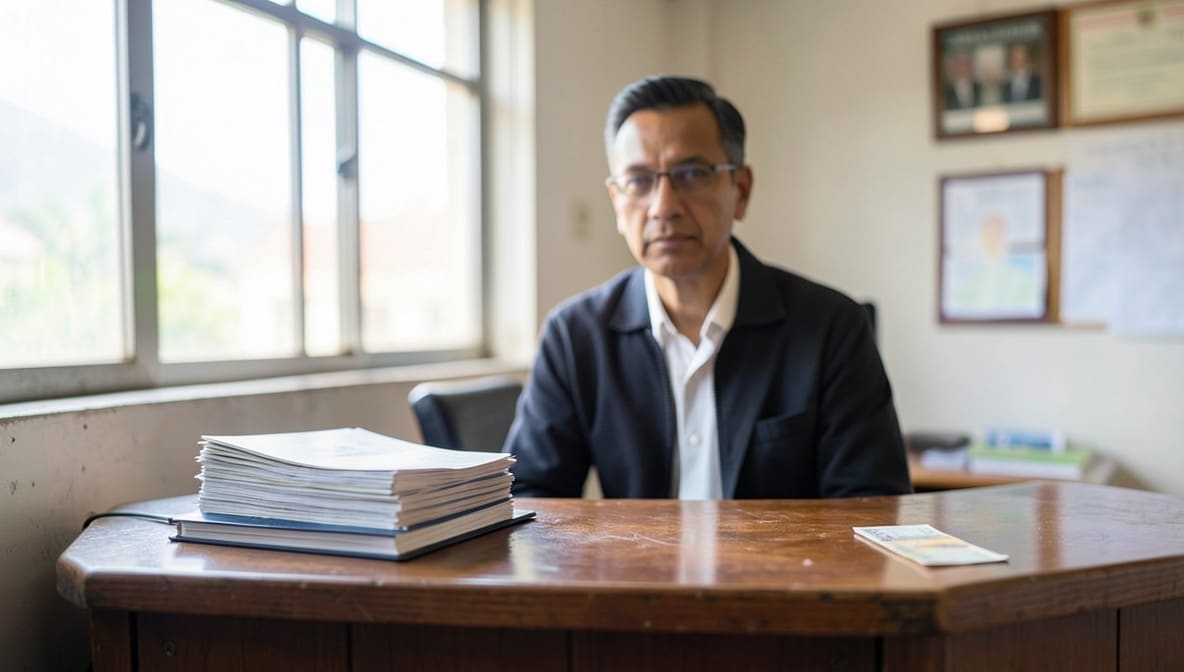
- The informant entered the Patwari’s office alone, placed the money on the file on the table, and exited.
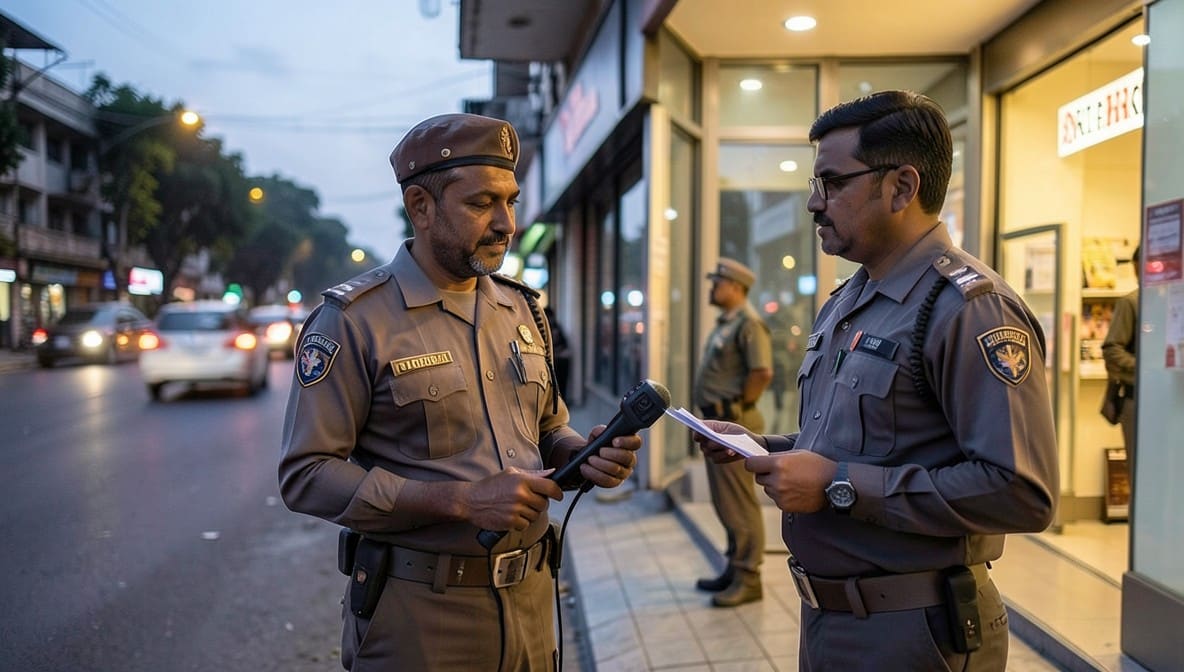
- The trap party entered upon a signal, found the accused outside the office, and recovered the currency notes from the table.
- The accused’s hands were washed with plain water (no color change); sodium carbonate was added, turning the wash pink.
- FSL analysis (Ext.PW-10/A) confirmed traces of Phenolphthalein and Sodium Carbonate on the hand wash.
- Audio analysis of a memory card (Ext.PW-7) claimed to contain a conversation on bribery, but voices were not identified or matched to the accused.
- The accused had no pending mutation work on 07.01.2012; the mutation was already sanctioned on 23.12.2011.
- The informant admitted in cross-examination that his mother had agreed to sell the land after mutation, and that the mutation was known to all co-sharers.
Procedural History
- 07.01.2012: Alleged bribe demand and trap conducted.
- 07.01.2012: FIR (Ext.PW-7/A) registered by Dy.SP Babita Rana (PW-10).
- 19.12.2011: Mutation entered by accused in revenue records.
- 23.12.2011: Mutation certified by Kanungo and sanctioned by Assistant Collector.
- 27.12.2011: Sale agreement executed between Jivnee and Salman Khan.
- 19.09.2013: Trial Court acquitted the accused, holding prosecution failed to prove demand and acceptance.
- 19.09.2013: Judgment of acquittal passed by Special Judge, Sirmour.
- 05.06.2026: High Court judgment on appeal.
The Parties' Positions
For the Appellant (State of H.P.)
The prosecution contended that the recovery of tainted currency from the accused’s office, coupled with the pink reaction of his hand wash and the FSL report, established guilt. It argued that the Trial Court erred in rejecting the testimonies of the informant and shadow witness without cogent reasons. The State relied on the presumption under Section 20 of the PC Act and claimed the accused failed to offer a plausible explanation for the presence of the money.
For the Respondent (Kailash Chand)
The accused maintained that he was not present in the office at the time the money was placed. He claimed he had stepped out to tend to his son’s wounds and was ambushed by the vigilance team. He asserted that the mutation had already been completed on 23.12.2011, leaving no occasion for a bribe demand. He challenged the authenticity of the audio recording and highlighted inconsistencies in witness statements.
Relief Sought
The State sought reversal of the acquittal, conviction of the accused under Sections 7 and 13(1)(d) read with 13(2) of the PC Act, and imposition of appropriate punishment. The respondent sought dismissal of the appeal and confirmation of the acquittal.
The Legal Issue
The central question was whether Section 7 and Section 13(1)(d) of the Prevention of Corruption Act, 1988 can be established without proof of a prior demand or request for illegal gratification by the public servant, where the mutation work had already been completed before the alleged bribe transaction.
Arguments Presented
For the Appellant
The State relied on State through CBI v. Dr. Anup Kumar Srivastava (2017) and Neeraj Dutta v. State (NCT of Delhi) (2023) to argue that recovery of tainted money, supported by forensic evidence, creates a strong inference of guilt. It contended that the Trial Court misappreciated the evidence by focusing on the absence of direct testimony about the demand, while ignoring the circumstantial chain: the money was placed on the table, recovered from the accused’s office, and his hands tested positive for the chemical marker. The State further argued that the accused’s failure to explain the presence of the money shifted the burden under Section 20 of the PC Act.
For the Respondent
The respondent relied on Aman Bhatia v. State (NCT of Delhi) (2025), P. Satyanarayana Murthy v. State of A.P. (2015), and Paritala Sudhakar v. State of Telangana (2025) to assert that demand is the sine qua non for conviction under Sections 7 and 13(1)(d). He emphasized that the mutation was completed on 23.12.2011, and the informant’s own admission that his mother had sold the land after mutation rendered the bribe allegation inherently improbable. He cited Suryabhan v. State of Maharashtra (1994) and Kanhaiyalal v. State of Rajasthan (1998) to show that no bribe can be demanded for work already done. He further challenged the audio evidence as unverified and the hand wash as explainable by the accused being asked to count the notes after recovery.
The Court's Analysis
The Court undertook a meticulous review of the evidence and the legal framework governing offences under the Prevention of Corruption Act. It began by reaffirming the settled principle that an appeal against acquittal must be interfered with only if the judgment is patently perverse, based on misreading of evidence, or if no reasonable person could have acquitted the accused.
"The legal position is no more res integra that the primary requisite of an offence under Section 13(1)(d) of the Act is proof of a demand or request of a valuable thing or pecuniary advantage from the public servant. In other words, in the absence of proof of demand or request from the public servant for a valuable thing or pecuniary advantage, the offence under Section 13(1)(d) cannot be held to be established."
The Court noted that the prosecution’s entire case rested on the assumption that the accused demanded a bribe for a mutation that had already been sanctioned on 23.12.2011. The informant himself admitted that the mutation was completed and that his mother had agreed to sell the land after the entry. The sale agreement dated 27.12.2011 further corroborated that the mutation was known and accepted by all parties.
The Court held that the recovery of tainted currency, even with forensic confirmation, cannot substitute for proof of demand. The hand wash turning pink was explained by the fact that the accused was asked by the vigilance team to pick up and count the notes after recovery - a fact admitted by multiple prosecution witnesses. The Court observed:
"Therefore, the witnesses to the spot have consistently stated that the money was counted by the accused, which provides an explanation for the hand wash turning pink, and no advantage can be derived from the hand wash of the accused."
The audio recording on the memory card was deemed inadmissible as no voice comparison was conducted to link the conversation to the accused. The Court emphasized that the prosecution failed to establish the meeting of minds between the bribe-giver and the bribe-taker.
The Court also rejected the State’s reliance on Section 20 of the PC Act, citing Paritala Sudhakar v. State of Telangana (2025), which holds that the presumption under Section 20 is triggered only if the demand is first established. Since demand was not proved, the presumption could not operate.
The Court concluded that the Trial Court’s view - that the prosecution had failed to prove the essential ingredient of demand - was not only reasonable but also consistent with multiple precedents. The Court found no perversity, no misreading of evidence, and no omission of material facts.
The Verdict
The appeal was dismissed. The acquittal of Kailash Chand under Sections 7 and 13(1)(d) read with 13(2) of the Prevention of Corruption Act, 1988, was upheld. The Court directed the respondent to furnish bail bonds of ₹25,000 with one surety of like amount to the satisfaction of the Trial Court within four weeks. The bail bond shall remain effective for six months, subject to the condition that if a Special Leave Petition is filed in the Supreme Court, the respondent shall appear before it upon notice. The records were directed to be sent back to the Trial Court forthwith.
What This Means For Similar Cases
Demand Is Non-Negotiable Under the PC Act
- Practitioners must now treat proof of demand as the foundational pillar in all prosecutions under Sections 7 and 13(1)(d) of the PC Act.
- Recovery of tainted money, even with forensic evidence, is insufficient without corroboration of a prior request or demand by the public servant.
- Prosecution must establish the timing of the demand relative to the official act - if the act is completed before the alleged bribe, the case collapses.
Judicial Scrutiny of Trap Evidence Is Mandatory
- Courts will not accept vague or unverified audio/video recordings as conclusive proof; voice identification and chain of custody are mandatory.
- Hand wash results are admissible only if the accused’s contact with the money is not explainable by post-recovery handling.
- Witnesses must be consistent on the sequence of events - contradictions on presence, timing, or actions will be fatal to the prosecution.
Acquittals in Corruption Cases Are Protected Unless Perverse
- Appellate courts must exercise restraint in interfering with acquittals, even if a contrary view is possible.
- The burden remains on the prosecution to prove every element beyond reasonable doubt; the accused need not prove innocence.
- Precedents like Suryabhan and Kanhaiyalal now form a clear doctrinal shield against prosecutions where the official act is completed before the alleged bribe.