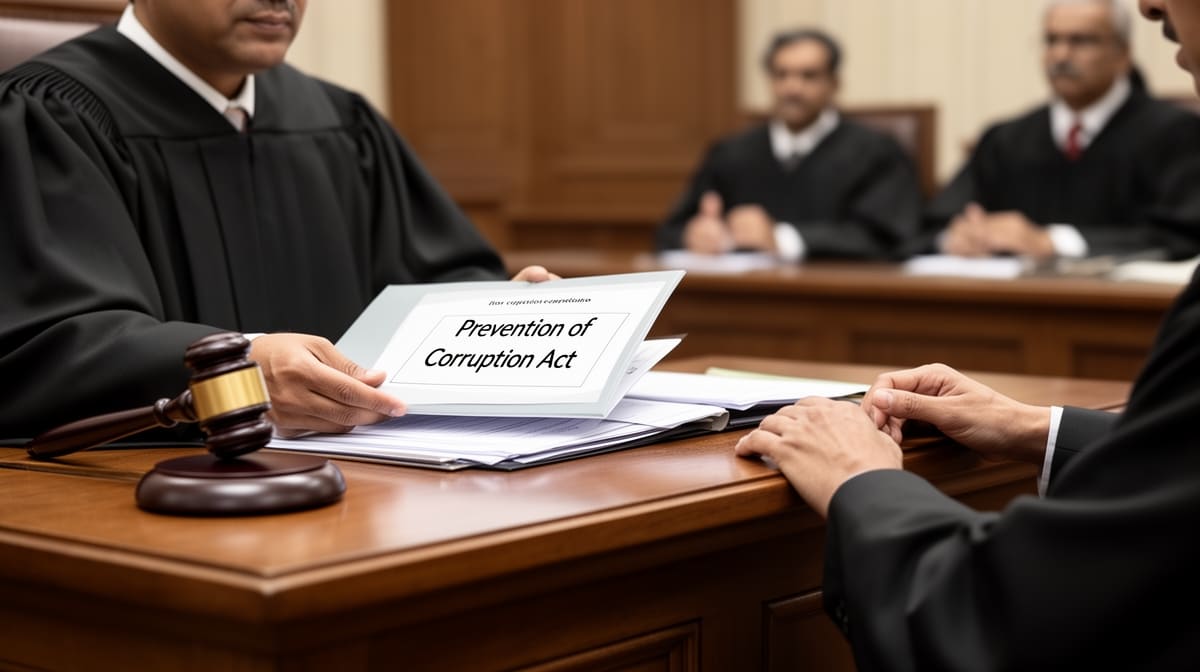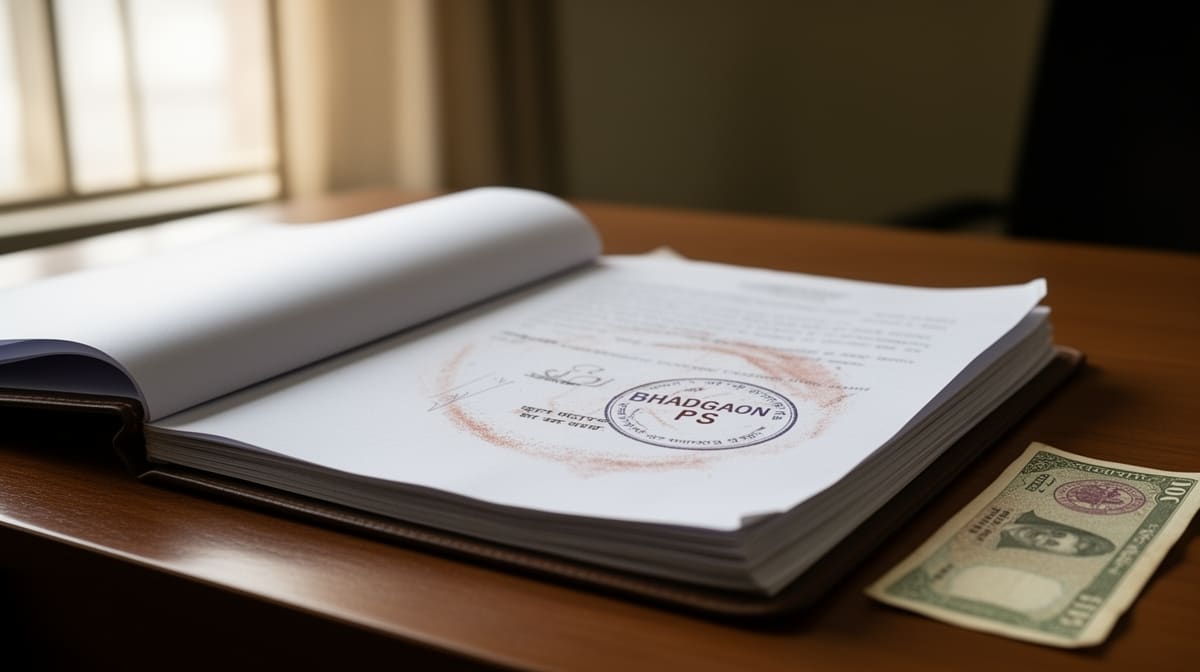
The Bombay High Court has reaffirmed that in prosecutions under the Prevention of Corruption Act, the absence of any legitimate motive or pending official work renders allegations of bribe demand inherently improbable. This judgment underscores that even seemingly corroborated trap evidence cannot sustain a conviction when the foundational premise of the offence is logically untenable.
Background & Facts
The Dispute
The prosecution alleged that Navnath Dipa Vetal, a constable at the District Special Branch in Ahmednagar, demanded a bribe of Rs. 200 for processing a passport application. The complainant paid Rs. 100 upfront and later, with the assistance of the Anti-Corruption Bureau (ACB), conducted a trap during which the accused allegedly accepted another Rs. 100. The trial court acquitted the accused, finding the prosecution’s case riddled with reasonable doubt.
Procedural History
- 22 December 2005: Complainant submitted passport application; file was forwarded to Pune Passport Office and Kotwali Police Station.
- 23 December 2005: ACB conducted trap based on complainant’s complaint; accused apprehended after alleged acceptance of Rs. 100.
- 24 December 2010: Additional Sessions Judge acquitted accused, citing lack of motive and unreliable evidence.
- 2011: State filed Criminal Appeal No. 526 of 2011 challenging acquittal.
- 2024: Accused filed Criminal Application No. 1151 of 2024 seeking disposal of pending proceedings.
Relief Sought
The State sought reversal of the acquittal and conviction of the accused under Sections 7 and 13(1)(d) read with 13(2) of the Prevention of Corruption Act, 1988. The accused sought dismissal of the appeal and confirmation of acquittal.
The Legal Issue
The central question was whether a bribe demand under the Prevention of Corruption Act can be established when the official had no pending work to influence, and the complainant had already received the service in question.
Arguments Presented
For the Appellant-State
The State argued that the testimony of PW1 (complainant) and PW2 (shadow pancha) was consistent on the demand and acceptance of Rs. 100. It relied on Dashrath v. State of Maharashtra to contend that the sanctioning authority had applied his mind and that the trial court erred in doubting the complainant’s credibility based on his father’s prior criminal record. The State emphasized that corroboration from independent witnesses and the panchanama validated the trap.
For the Respondent-Accused
The accused contended that the passport application had already been processed and forwarded to Pune and the Kotwali Police Station on 22 December 2005, leaving no scope for demand. He highlighted that both PW1 and PW2 admitted the accused had weak eyesight and handed the receipt book to the complainant to locate his own receipt. The tainted currency was recovered from the drawer, and the second pancha who allegedly recovered it was not examined. The defence argued this created a reasonable possibility of planting, and the trial court rightly applied the benefit of doubt.
The Court's Analysis
The Court undertook a meticulous review of the evidence and found that the prosecution’s case collapsed at its foundation: there was no pending work. The sanctioning authority (PW4) admitted that the file had already been dispatched to the Passport Office and the police station on the day before the trap. The Investigating Officer (PW3) corroborated this. Thus, the accused had no authority or incentive to demand a bribe.
"If this was the situation, then, as rightly held by the trial court, this authority ought to have refused to accord sanction by noting that there was no motive or work of complainant to offer bribe or for accused to accept the same."
The Court further noted that the complainant’s own testimony, coupled with the shadow pancha’s admissions, revealed that the accused, due to poor eyesight, had handed over the receipt book to the complainant. The complainant admitted the currency was placed in the drawer. The second pancha, who allegedly recovered the money, was not examined. This created a plausible scenario of planting.
The Court emphasized that the burden of proving guilt beyond reasonable doubt rests squarely on the prosecution, and where the motive is absent and the mechanism of the offence is vulnerable to fabrication, acquittal must be upheld. The trial court’s assessment of witness credibility and the possibility of collusion was not perverse but grounded in the record.
The Verdict
The State’s appeal was dismissed. The Court upheld the acquittal, holding that without any pending official work, no bribe demand can be reasonably inferred, and the prosecution failed to disprove the defence of planting. The criminal application was also disposed of.
What This Means For Similar Cases
Motive Is Not Optional, It Is Essential
- Practitioners must establish a clear nexus between the official’s duty and the alleged demand; absence of pending work negates the offence.
- Prosecutions based on traps must be scrutinized for logical consistency: if the service is already rendered, the demand is inherently suspect.
Documentary Evidence Overrides Oral Testimony
- When official records (e.g., file dispatch logs, communication exhibits) contradict witness accounts, they must prevail.
- Courts will not accept trap evidence if it contradicts contemporaneous documentation.
The Second Pancha’s Absence Is Fatal
- In trap cases, the recovery witness is critical. Failure to examine the person who recovered the currency creates a fatal gap in the chain of evidence.
- Defence of planting gains strength when the accused’s physical limitations (e.g., vision impairment) are admitted and the currency is recovered from a private drawer.