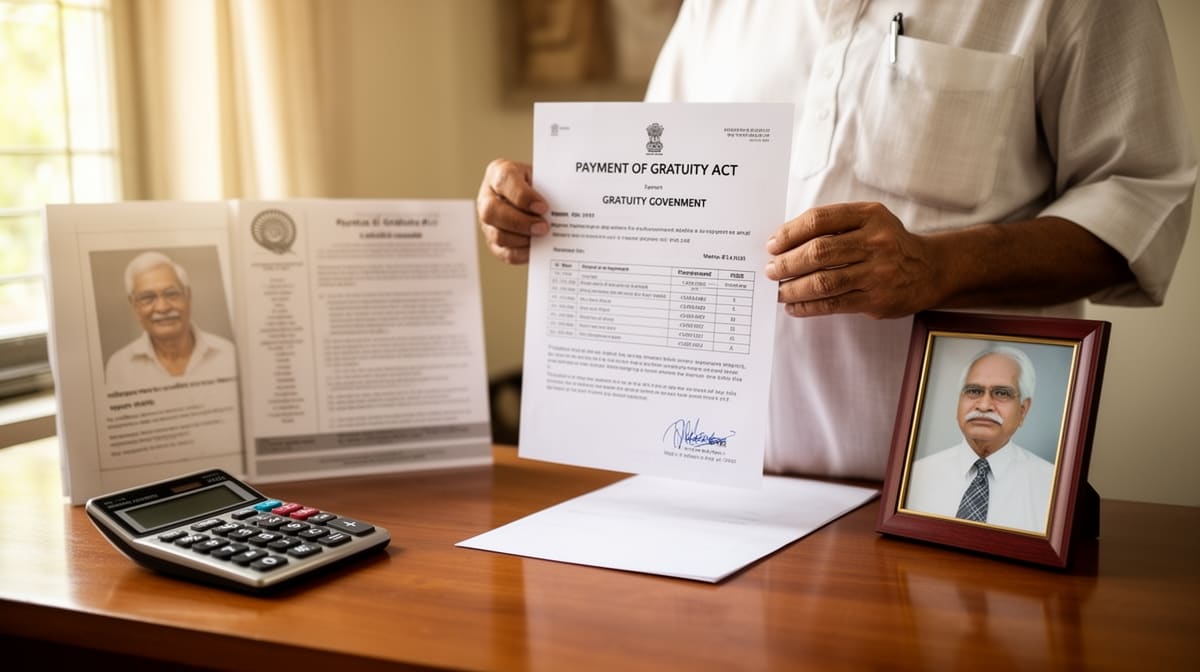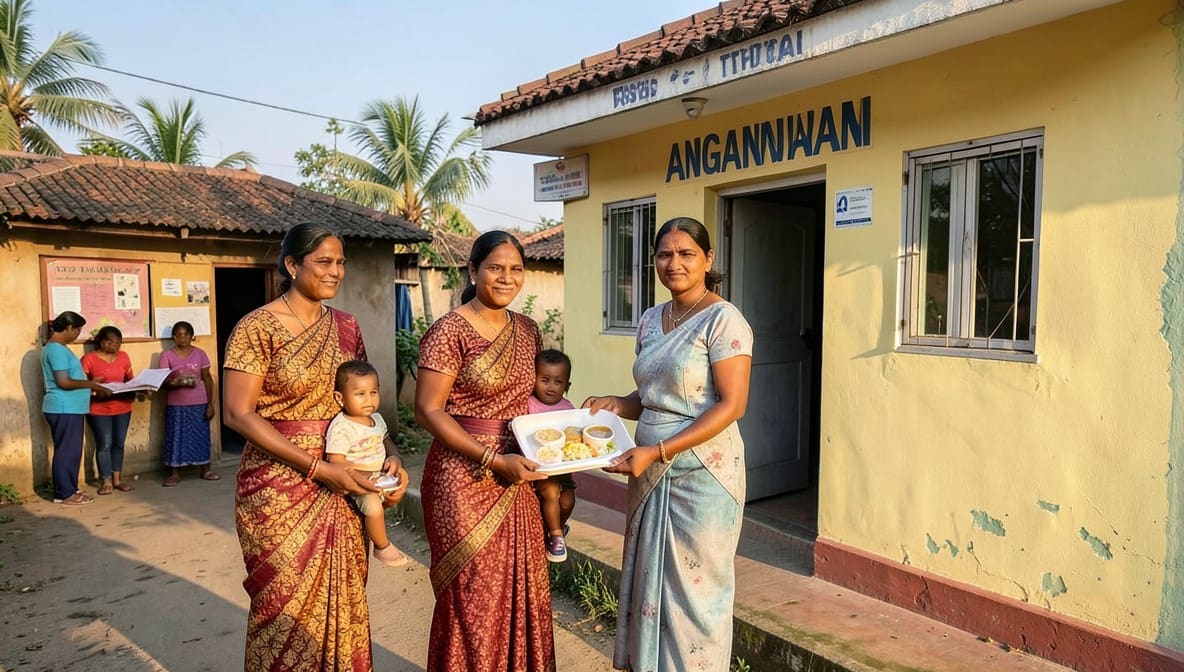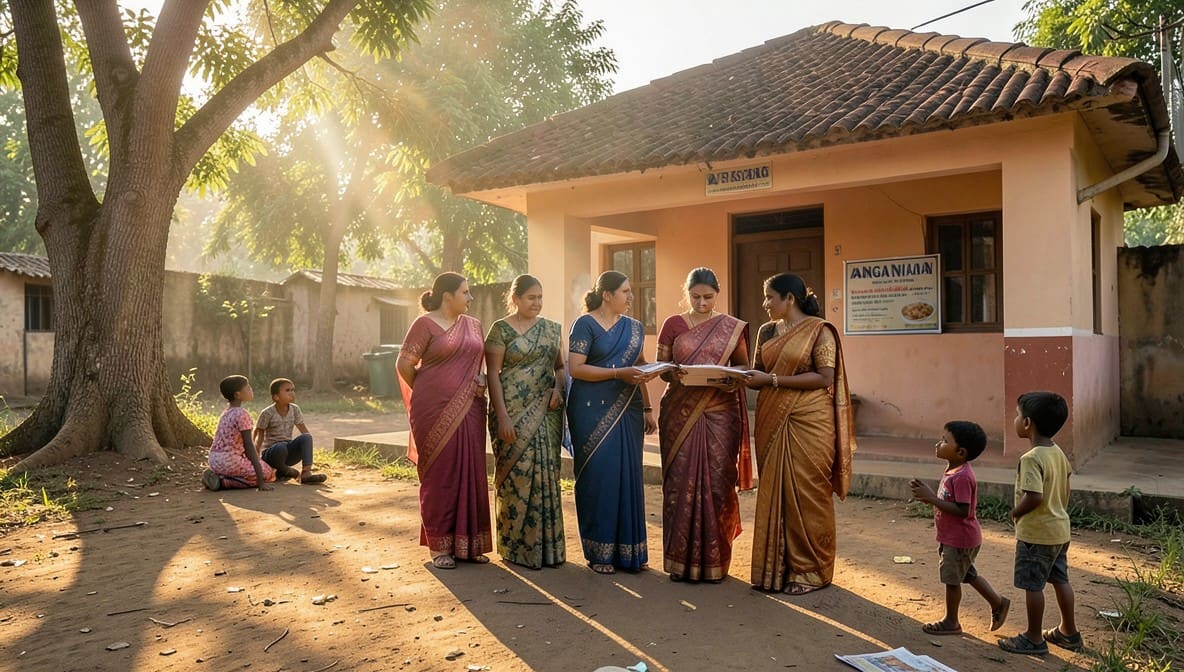
The Tripura High Court has affirmed that Anganwadi Workers and Helpers, despite being labeled as honorary workers, are employees under the Payment of Gratuity Act, 1972, and are entitled to gratuity upon retirement. This ruling aligns with the Supreme Court’s precedent in Maniben Maganbhai Bhariya and establishes that statutory recognition under the National Food Security Act, 2013, transforms their roles into formal employment for legal purposes.
Background & Facts
The Dispute
The dispute concerns the entitlement of Anganwadi Workers (AWWs) and Anganwadi Helpers (AWHs) in Tripura to gratuity upon superannuation at age 60. These workers, engaged under the Integrated Child Development Services (ICDS) Scheme, were denied gratuity by the State Government through an order dated 11.08.2023, which acknowledged only a monthly pension of Rs.750 for AWWs and Rs.500 for AWHs, or a one-time financial benefit of Rs.50,000 and Rs.30,000 respectively.
Key Facts
- AWWs and AWHs are engaged across 100+ Anganwadi Centres in Tripura, each typically staffed by two persons.
- Engagement began on varying dates between 1990 and 2020, with continuous service ranging from 10 to over 30 years.
- All workers attained retirement age between 2021 and 2023.
- In July 2023, over 60 workers submitted representations seeking gratuity under the Payment of Gratuity Act, 1972.
- The State Government, through the Director of Social Welfare and Social Education, rejected these claims on 11.08.2023, citing absence of a gratuity scheme.
- The Government of India’s guidelines under Mission Saksham Anganwadi and Poshan 2.0 classify AWWs/AWHs as "honorary workers".
- The State of Tripura issued Notification No. F:1(1-21)-ICDS/SWE/2018/5271 dated 17.01.2019, prescribing a uniform selection process for AWWs/AWHs.
- The selection process involves a formal interview board comprising Block Development Officers, Medical Officers, School Inspectors, and Child Development Project Officers.
- The State issued a common order dated 01.08.2015 for pension and one-time benefits to all AWWs/AWHs, treating them as a single class.
- The National Food Security Act, 2013, came into force in Tripura on 05.07.2013, granting statutory recognition to Anganwadi Centres.
- The Right of Children to Free and Compulsory Education (Tripura) Rules, 2011, mandate Anganwadi Centres to provide pre-school education.
Procedural History
- 17.01.2019: Tripura Government issues uniform guidelines for engagement of AWWs/AWHs under ICDS.
- 05.07.2013: National Food Security Act, 2013, enforced in Tripura.
- 01.08.2015: State issues common order for pension and one-time financial benefit to all AWWs/AWHs.
- 2021 - 2023: AWWs/AWHs retire upon attaining age 60.
- July 2023: Petitions submitted to Director, Social Welfare and Social Education, seeking gratuity.
- 11.08.2023: Director issues uniform order rejecting gratuity claims.
- 2023: Writ Petitions (WP(C) 624/2023, WP(C) 58/2024, WP(C) 59/2024) filed before Single Judge, High Court of Tripura.
- 09.05.2024: Single Judge allows writ petitions, holds AWWs/AWHs are employees under the Payment of Gratuity Act, 1972.
- 03.07.2024: Single Judge issues common judgment in WP(C) 58/2024 and WP(C) 59/2024, directing gratuity payment.
- 09.04.2026: Division Bench of Tripura High Court dismisses writ appeals.
The Parties' Positions
Appellants (State of Tripura and Officials): Argued that AWWs/AWHs are not employees but honorary workers paid honorarium, not wages. Contended that each Anganwadi Centre has fewer than 10 workers, disqualifying them under Section 1(3)(b) of the Act. Asserted that the Supreme Court’s judgment in Maniben is not binding as Tripura was not a party. Claimed gratuity imposition would create unaffordable financial liability.
Respondents (AWWs/AWHs): Contended that their roles are statutory under the National Food Security Act, 2013, and Right of Children to Free and Compulsory Education Act, 2009. Argued that honorarium is de facto wages, and the collective engagement under a unified scheme constitutes a single establishment. Relied on Maniben Maganbhai Bhariya v. District Development Officer as binding precedent.
Relief Sought
The respondents sought:
- Declaration that they are employees under the Payment of Gratuity Act, 1972.
- Payment of gratuity calculated as per Section 4 of the Act, based on last drawn wages and years of service.
- Interest at 7% per annum from 30 days after retirement until payment.
- Quashing of the order dated 11.08.2023 rejecting gratuity claims.
The Legal Issue
The central question was whether Anganwadi Workers and Helpers, engaged under a uniform statutory scheme and performing duties mandated by the National Food Security Act, 2013, qualify as "employees" under the Payment of Gratuity Act, 1972, despite being paid honorarium and lacking formal civil posts.
Arguments Presented
For the Appellant
The State contended that AWWs/AWHs are not employees because:
- They are paid honorarium, not wages, and are engaged on a "no work no pay" basis.
- Each Anganwadi Centre employs only two persons, falling below the threshold of 10 employees under Section 1(3)(b) of the Act.
- The Supreme Court’s judgment in Maniben arose from Gujarat’s specific scheme and is not binding on Tripura.
- The Ministry of Women and Child Development classifies them as "honorary workers" under Poshan 2.0.
- Granting gratuity would impose unmanageable financial burden, especially given the 90:10 funding ratio with the Union.
- Courts must not interfere in policy decisions involving fiscal implications.
For the Respondent
The AWWs/AWHs argued that:
- Their roles are statutorily recognized under the National Food Security Act, 2013, and the Right of Children to Free and Compulsory Education Act, 2009.
- The uniform selection process, centralized appointment orders, and common pension policy demonstrate a single establishment.
- The term "honorarium" is a semantic device to avoid statutory obligations; the payments are regular, periodic, and tied to duties - meeting the definition of "wages".
- The Supreme Court’s interpretation in Maniben is binding under Article 141 of the Constitution.
- The Act must be interpreted liberally to secure social justice for workers in the unorganized sector.
The Court's Analysis
The Division Bench of the Tripura High Court undertook a comprehensive statutory and constitutional analysis. It emphasized that the Payment of Gratuity Act, 1972, is a social welfare legislation meant to secure economic justice for workers, and must be interpreted beneficially.
"The Supreme Court in Maniben Maganbhai Bhariya held that Anganwadi Workers and Helpers, though termed as honorary, are in fact employees performing statutory duties under the National Food Security Act, 2013, and the honorarium paid to them constitutes wages under the Act."
The Court rejected the State’s argument that each Anganwadi Centre must be counted separately. It held that the State’s own notifications - particularly the 01.08.2015 order treating all AWWs/AWHs as a single class for pension and benefits - established a unified establishment. The Court cited Maniben’s observation that Anganwadi Centres are components of the State’s social infrastructure, not isolated units.
The Court further noted that the State of Tripura’s 17.01.2019 guidelines mirrored the structured recruitment process upheld in Maniben, including formal interviews, eligibility criteria, and merit-based selection. This demonstrated a level of control and regulation inconsistent with mere voluntary or honorary engagement.
"The absence of an identical scheme in Tripura as in Gujarat is irrelevant. What matters is the statutory recognition, uniform policy, and the nature of duties performed under a central law."
The Court dismissed the financial burden argument, holding that statutory rights cannot be denied on grounds of fiscal constraint. It reaffirmed that Article 141 makes Supreme Court judgments binding on all State Governments, regardless of party status.
The Court also distinguished State of Maharashtra v. Bhagwan, which cautioned against judicial interference in fiscal policy, by noting that Maniben did not create a new policy but interpreted an existing statute. Where the law clearly applies, courts are not only empowered but obligated to enforce it.
The Verdict
The writ appeals were dismissed. The Court upheld the judgment of the Single Judge and directed the State of Tripura to pay gratuity to all eligible Anganwadi Workers and Helpers who retired between 2021 and 2023, calculated as per Section 4 of the Payment of Gratuity Act, 1972, based on their last drawn wages and completed years of service. Interest at 7% per annum shall be paid from 30 days after the date of retirement until actual payment. The order dated 11.08.2023 rejecting gratuity claims is set aside. Compliance is to be completed within 12 weeks from the date of judgment.
What This Means For Similar Cases
Statutory Recognition Overrides "Honorary" Labels
- Practitioners must now argue that any worker performing duties mandated by a central statute (e.g., NFSA, RTE) cannot be denied statutory benefits merely because they are labeled "honorarium-based."
- The term "honorarium" is no longer a legal shield against wage-related protections under social security laws.
Unified Administrative Control Creates Single Establishment
- Where a State issues uniform recruitment, appointment, and benefit policies across multiple units, those units cannot be treated as separate establishments for threshold purposes under the Payment of Gratuity Act.
- This applies to other schemes like ASHA workers, Anganwadi Helpers, and community health workers under national programs.
Article 141 Binding Even Without Party Status
- State Governments cannot evade Supreme Court rulings by claiming non-party status. The judgment in Maniben is binding on all States.
- Courts will not entertain arguments that a precedent is inapplicable merely because the State was not before the Court.
Social Legislation Demands Liberal Interpretation
- Welfare statutes like the Payment of Gratuity Act, Minimum Wages Act, and Employees’ State Insurance Act must be interpreted in favor of workers.
- Where a term is ambiguous, the interpretation that preserves benefit must prevail.
Financial Constraints Are Not a Legal Defense
- Fiscal limitations cannot override statutory rights. The burden of funding, even under a 90:10 central-state sharing model, does not absolve the State of its legal obligations.
- Practitioners should challenge any denial of gratuity on grounds of "unaffordability" as legally untenable.