The Rajasthan High Court has clarified that in partition suits involving jointly held property, interim relief must preserve the entire subject matter to prevent irreparable prejudice and multiplicity of litigation. The judgment reinforces the equitable principle that courts at the interlocutory stage must not prematurely adjudicate title or partition claims, but must safeguard the status quo in its entirety.
Background & Facts
The Dispute
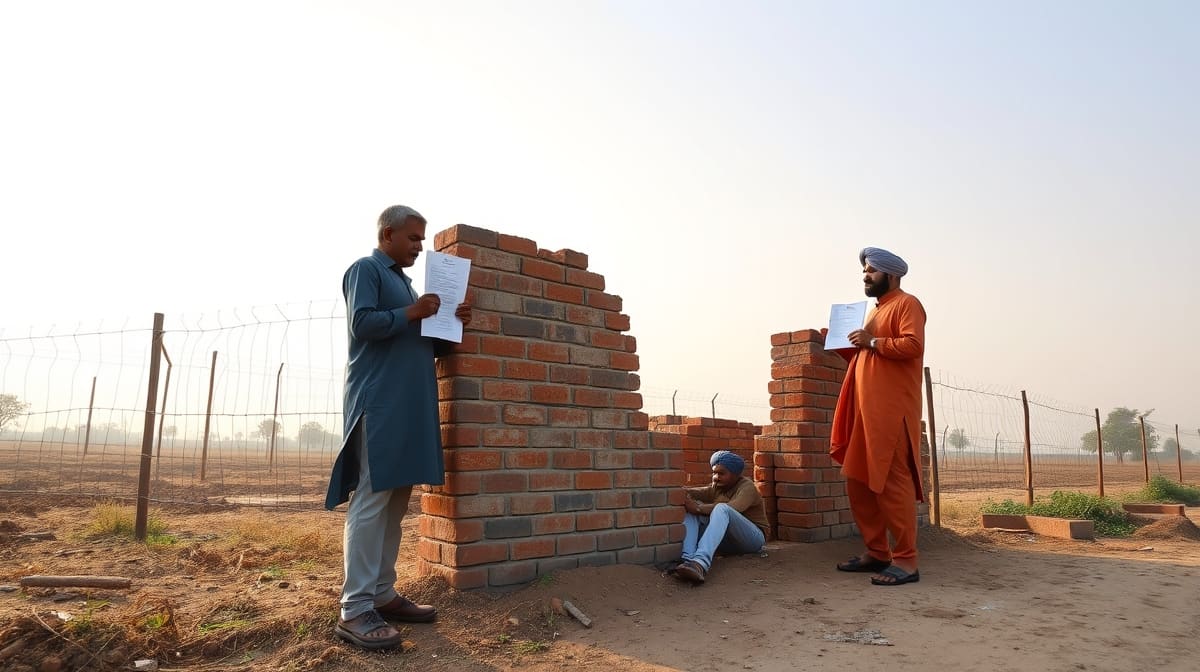
The plaintiff-petitioner, Govind Narayan, filed a suit for partition, declaration, and permanent injunction concerning two properties situated on Sikar Road, Jaipur: Khasra No. 78/3 (Schedule ‘A’, 2215.4 sq. yards) and Khasra No. 79/1 (Schedule ‘B’, 1210 sq. yards). Both properties were originally acquired jointly by Jagdish Narayan and Harsahai through a registered sale deed. The parties’ ancestors constructed buildings on the land and remained in joint possession. Jagdish Narayan died on 25.08.2020 and Harsahai on 05.10.2020, leaving no legal heirs. The plaintiff-petitioner and respondents-defendants Nos. 1 to 3 (Jagdish Narayan’s wife and sons) each claimed a 1/4th share in the properties.
Key Facts
- The plaintiff-petitioner resides in the disputed property with his family.
- The customary pagdi ceremony for Jagdish Narayan was performed in his favour; for Harsahai, in favour of respondent-defendant No. 2.
- After Harsahai’s death, respondent-defendant No. 2 produced a Will dated 31.12.2018, claiming Harsahai had bequeathed specific portions of the property.
- The Will references a purported consent decree dated 28.04.2008 (Case No. 11/2008) and a prior partition agreement dated 10.12.2007, allegedly executed between Jagdish Narayan and Harsahai.
- The plaintiff-petitioner alleges the 2008 decree was fraudulently obtained: Jagdish Narayan, suffering from mental illness since 1981 - 82, was not properly served, and his advocate allegedly acted without authority.
- The Will allocates portions of the property arbitrarily, including transferring part of Jagdish Narayan’s alleged share to respondent-defendant No. 6, Madhusudan Sharma.
- The disputed properties generate monthly rental income of Rs. 1,12,300, of which the plaintiff claims a 1/4th share.
- Tenants refused to pay rent to the plaintiff, allegedly under pressure from respondents.
- Respondents claim the properties were partitioned in 2008 and recorded in revenue records.
- The plaintiff asserts continuous joint possession and denies any knowledge or consent to partition.
Procedural History
- 10.12.2007: Alleged partition agreement between Jagdish Narayan and Harsahai.
- 28.04.2008: Consent decree passed in Civil Suit No. 11/2008, allegedly partitioning Khasra No. 79/1.
- 31.12.2018: Will executed by Harsahai, bequeathing specific portions of property.
- 25.08.2020: Death of Jagdish Narayan.
- 05.10.2020: Death of Harsahai.
- 2021: Plaintiff filed suit for partition and permanent injunction.
- 08.02.2021: Trial Court granted interim stay on entire suit property.
- 19.01.2021: Plaintiff filed application under Order 39 Rules 1 and 2 CPC for temporary injunction.
- 21.08.2023: Trial Court partly allowed injunction - restrained alienation only over Schedule ‘A’ in full and Schedule ‘B’ only to the extent of Jagdish Narayan’s share.
- 07.2023: Respondents filed appeal against the 21.08.2023 order.
- 22.07.2024: Appellate Court dismissed both appeals - upholding the trial court’s limited injunction.
- 14.04.2024: Writ Petition No. 14451/2024 filed before Rajasthan High Court.
- 27.04.2026: Arguments concluded.
- 30.04.2026: Judgment pronounced.
Relief Sought
The petitioner sought modification of the 22.07.2024 order to direct maintenance of status quo over the entire suit property (Schedule ‘A’ and Schedule ‘B’) until final disposal of the suit, arguing that partial injunction amounted to prejudging the merits and invited multiplicity of litigation.
The Legal Issue
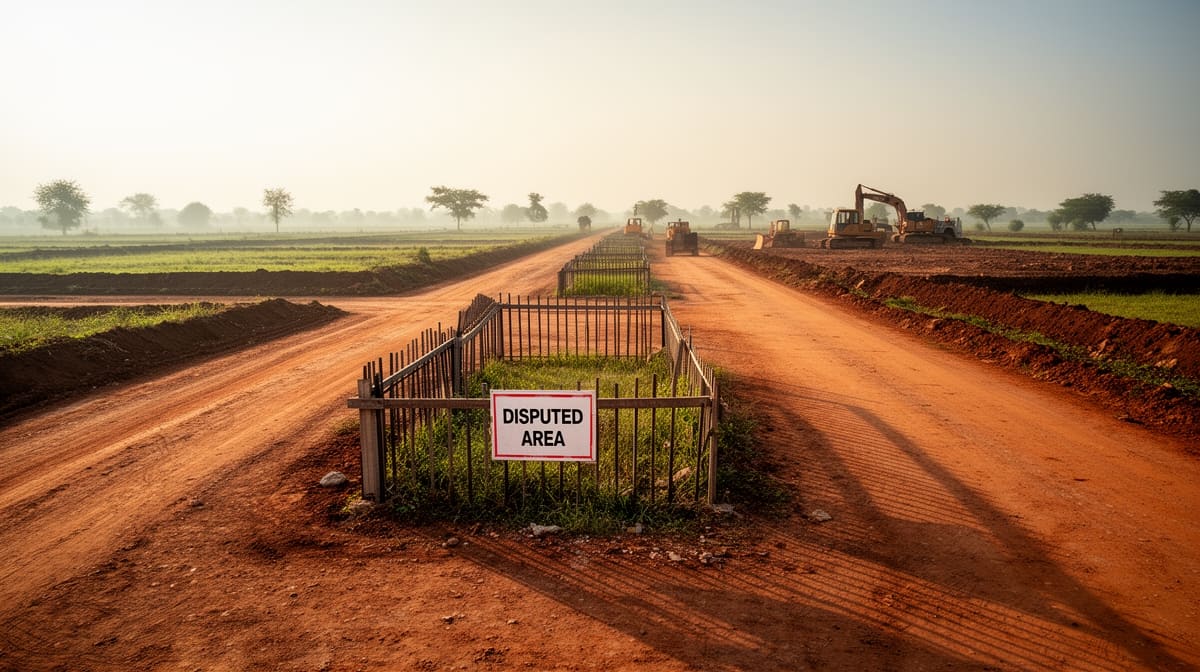
The central question was whether, at the interlocutory stage in a partition suit involving jointly held property with disputed title, the court may grant temporary injunction only over a portion of the property claimed to be the deceased’s share, or whether the entire property must be preserved to prevent irreparable harm and ensure effective final relief.
Arguments Presented
For the Petitioner
Counsel argued that the property remained undivided and joint, as evidenced by continuous possession, lack of registered partition, and failure to implement the 2008 decree. He relied on Section 17 of the Registration Act, 1908, which mandates registration of instruments effecting partition of immovable property. He contended that the alleged 2008 decree was void due to fraud and incapacity of Jagdish Narayan, and that the Will could not validly bequeath specific physical portions of an undivided joint property. He emphasized that partial injunction creates a de facto partition at the interim stage, violating the principle of preserving the status quo in its entirety. He cited S. S. S. R. v. S. S. R. to argue that courts must not prejudge title at the injunction stage.
For the Respondent
Counsel contended that the 2008 decree and revenue records established a valid partition, and that Harsahai’s Will lawfully disposed of his share. He argued that the petitioner had known of the partition since 2009 and had even entered into collaboration agreements. He claimed the petitioner was unlawfully collecting rent and withholding shares from other heirs, including respondent-defendant No. 7, Smt. Sunita. He asserted that the petitioner failed to establish a prima facie case, balance of convenience, or irreparable injury, and that the trial court’s limited injunction was appropriate.
The Court's Analysis
The Court observed that the properties in Schedule ‘A’ and Schedule ‘B’ originated from a common source and had remained in joint possession. It noted that while the trial and appellate courts found a prima facie case of partition in respect of Schedule ‘B’, they simultaneously acknowledged that Schedule ‘A’ had not been partitioned. The Court emphasized that at the interlocutory stage, the court’s duty is not to determine title but to preserve the subject matter of the suit.
"The learned Courts below erred in confining the injunction to only a portion of the suit property, thereby effectively accepting the defendants’ claim of partition at an interim stage, which is impermissible under settled law."
The Court held that the alleged partition through a consent decree dated 28.04.2008 was unregistered and, therefore, unenforceable under Section 17 of the Registration Act, 1908. It further noted that the Will attempted to bequeath specific physical portions of the property, which is legally untenable if the property remains undivided. The arbitrary allocation of land - including transferring part of Jagdish Narayan’s share to a third party - cast serious doubt on the genuineness of the partition and Will.
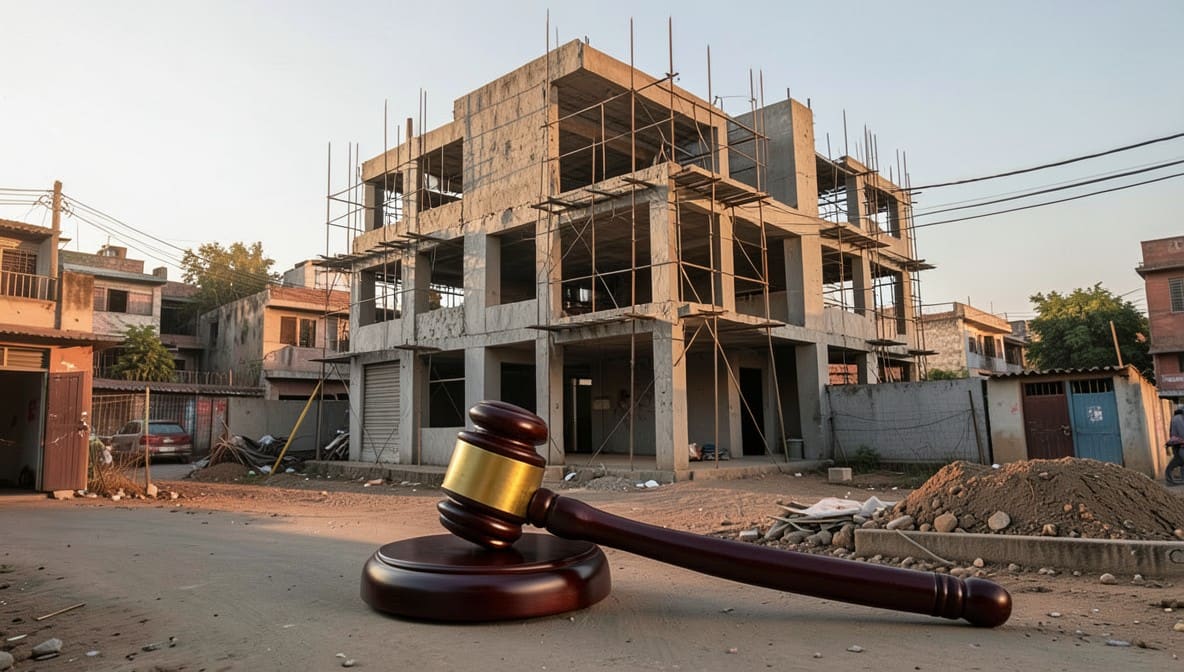
The Court stressed that any alienation or alteration of any part of the property during pendency of the suit could create third-party interests, complicate the final adjudication, and render the ultimate decree nugatory. The balance of convenience clearly favoured maintaining the status quo in its entirety. The Court rejected the notion that partial injunction was sufficient, holding that such piecemeal relief would amount to a premature adjudication of rights.
The Verdict
The writ petition was partly allowed. The order dated 22.07.2024 of the Additional District and Sessions Judge was modified to direct that both parties shall not alienate, transfer, or create any third-party interest in the entire property described in Schedule ‘A’ and in Schedule ‘B’ to the extent of Jagdish Narayan’s share, until final disposal of the suit. The direction is issued without prejudice to the merits of the case. All rights and contentions of the parties are kept open for adjudication at trial.
What This Means For Similar Cases
Status Quo Must Cover the Entire Joint Property
- Practitioners must seek and argue for injunction over the entire suit property in partition suits where joint ownership is alleged, even if some portions are claimed to have been partitioned.
- Courts cannot grant partial injunctions that effectively recognize a disputed partition at the interim stage.
- Any attempt to restrict injunction to a portion of the property invites appellate reversal on grounds of prejudging title.
Unregistered Partition Is Legally Ineffective
- A partition not reduced to a registered instrument under Section 17 of the Registration Act, 1908 cannot be enforced, even if reflected in revenue records or alleged consent decrees.
- Revenue records alone do not override the statutory requirement of registration for partition deeds.
- Courts must scrutinize the form and execution of alleged partitions - oral or unregistered agreements are insufficient to defeat joint ownership claims.
Will Cannot Bequeath Specific Portions of Undivided Property
- A testator may only bequeath his undivided share in joint property, not specific physical portions.
- A Will that allocates specific plots or buildings from an undivided estate is void ab initio unless the property has been lawfully partitioned.
- Such Will provisions are strong indicators of fraud or collusion and must be challenged on grounds of invalidity.