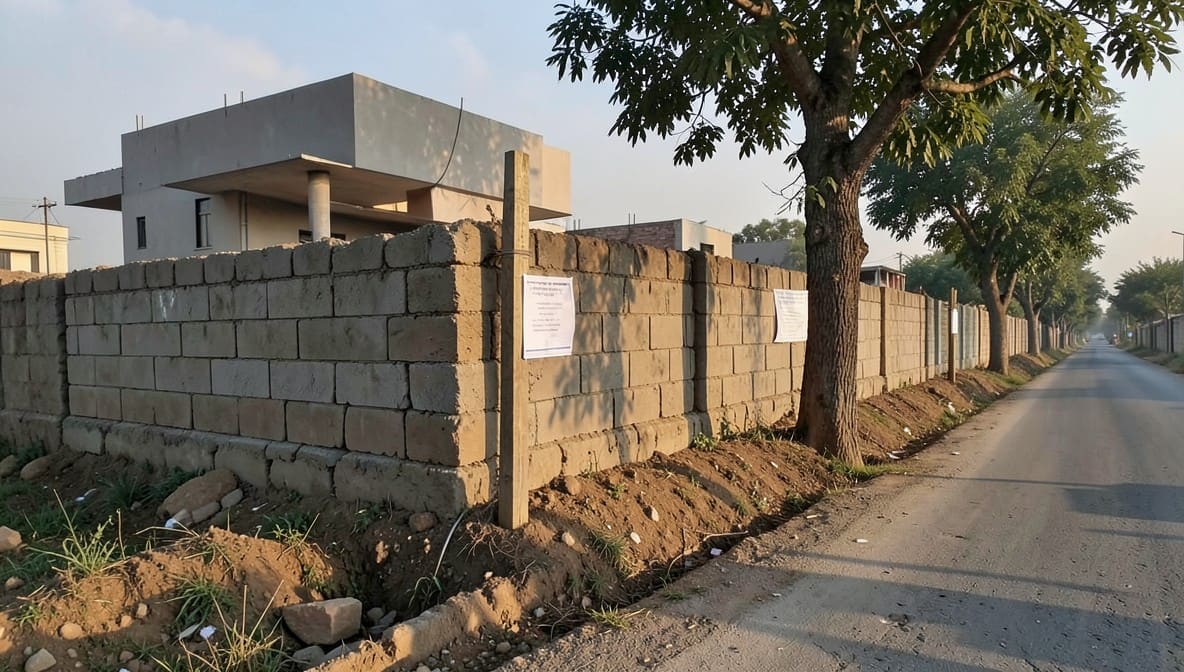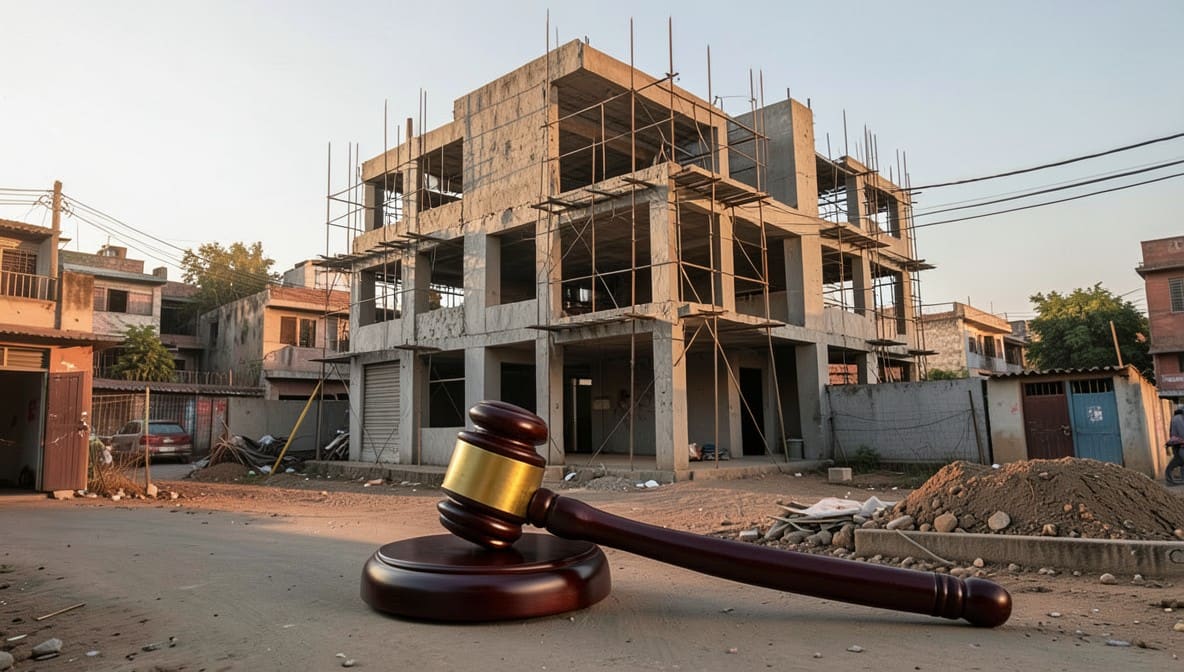
The Karnataka High Court, Kalaburagi Bench, delivered a nuanced order in a property dispute involving a partition suit, balancing the rights of parties by permitting construction on the disputed property while restraining alienation until the final adjudication of the suit. The judgment underscores the court's discretion to modify interim orders in light of changed circumstances and the equities involved.
Background & Facts
The Dispute
The petitioners, Ningamma and Gaddemma, instituted a suit (O.S. No. 65/2025) before the Principal Civil Judge and JMFC, Lingasugur, seeking partition and separate possession of their alleged share in the suit schedule property (TMC Plot No. 2-12-165, measuring 10 feet east-west and 15 feet north-south). The suit was contested by the respondents, including respondent No. 6, Shivakumar Reddy, who is the owner of S L V Mobile Centre.
Key Facts
- The petitioners filed I.A. No. 3 under Order XXXIX Rules 1 and 2 of the Code of Civil Procedure, 1908 (CPC) seeking a temporary injunction restraining respondent No. 6 from constructing on the suit property.
- The trial court allowed the injunction application on 25.06.2025, restraining respondent No. 6 from further construction.
- Aggrieved by the trial court's order, respondent No. 6 filed M.A. No. 12/2025 before the Senior Civil Judge and JMFC, Lingasugur.
- The first appellate court set aside the trial court's injunction order on 01.08.2025.
- The petitioners challenged the appellate court's order through the present writ petition under Article 227 of the Constitution of India.
Procedural History
- 25.06.2025: Trial court grants temporary injunction in I.A. No. 3 in O.S. No. 65/2025.
- 01.08.2025: First appellate court sets aside the injunction order in M.A. No. 12/2025.
- 03.06.2026: Present writ petition (WP No. 202564 of 2025) filed before the Karnataka High Court, Kalaburagi Bench.
The Parties' Positions
- Petitioners: Contended that the trial court's injunction order was justified to prevent irreparable harm and maintain the status quo pending the suit's outcome.
- Respondent No. 6: Argued that the construction was substantially complete and offered to subject the property to the suit's final outcome without claiming equities.
Relief Sought
The petitioners sought:
- Quashing of the impugned order dated 01.08.2025 passed in M.A. No. 12/2025.
- Confirmation of the trial court's order dated 25.06.2025 in I.A. No. 3.
- A writ of mandamus restraining respondent No. 6 from further construction or alienation of the suit property.
The Legal Issue
The central question was whether the High Court, in exercise of its supervisory jurisdiction under Article 227, could modify interim orders in a partition suit to balance the equities between parties, particularly when construction on the disputed property was substantially complete.
Arguments Presented
For the Petitioners
The petitioners relied on the principles governing temporary injunctions under Order XXXIX CPC, arguing that the trial court's order was justified to prevent respondent No. 6 from altering the status quo and causing irreparable prejudice. They contended that the first appellate court erred in setting aside the injunction without considering the merits of their claim.
For the Respondent No. 6
Respondent No. 6 submitted that the construction on the suit property was substantially complete, as evidenced by photographs filed in court. He offered to subject the property to the final outcome of the suit and not claim any equities arising from the construction, thereby mitigating the petitioners' concerns.
The Court's Analysis
The Court observed that the construction on the suit property was substantially complete, as evident from the photographs produced by respondent No. 6. While acknowledging the contentions of both parties, the Court exercised its discretion to modify the interim orders to achieve a just and equitable outcome.
The Court emphasized that Article 227 confers supervisory jurisdiction to ensure that subordinate courts do not exceed their authority or act arbitrarily. However, this jurisdiction is not appellate and does not permit re-appreciation of evidence or substitution of the lower court's findings. Instead, it is meant to correct grave errors of law or procedure.
"Under these circumstances, though several contentions have been urged by both sides in support of their respective claims, I deem it just and proper to dispose of this petition by modifying the order dated 25.06.2025 passed on I.A.No.3 in O.S.No.65/2025 as well as the impugned order dated 01.08.2025 passed in M.A.No.12/2025 and dispose of this petition by issuing certain directions to the parties as well as to the trial Court."
The Court balanced the equities by permitting respondent No. 6 to complete the existing construction while imposing strict conditions to protect the petitioners' interests. The directions ensured that the property would remain subject to the suit's final outcome and that respondent No. 6 would not alienate or encumber the property pending disposal of the suit.
The Verdict
The Court disposed of the writ petition with the following directions:
- The petition was allowed in part, and the orders dated 25.06.2025 (I.A. No. 3) and 01.08.2025 (M.A. No. 12/2025) were modified.
- Respondent No. 6 was permitted to complete the construction on the suit property, subject to the final outcome of the suit and without prejudice to the rights of the parties.
- Respondent No. 6 was restrained from putting up any additional or further construction on the suit property.
- Respondent No. 6 was directed not to alienate, encumber, dispose of, or create any third-party rights over the suit property until the disposal of the suit.
- The trial court was directed to dispose of O.S. No. 65/2025 within six months from the date of receipt of the High Court's order.
- All rival contentions on the merits of the case were kept open, and no opinion was expressed on them.
What This Means For Similar Cases
Balancing Equities in Interim Orders
This judgment highlights the High Court's discretion to modify interim orders under Article 227 to balance equities between parties, particularly in cases where construction on disputed property is substantially complete. Practitioners should note:
- Courts may permit completion of construction where denying the same would cause disproportionate hardship, provided the rights of the other party are adequately protected.
- The offer by a party to subject the property to the suit's final outcome can be a mitigating factor in the court's decision.
Conditions for Permitting Construction
- No Additional Construction: Courts may permit completion of existing construction but restrain further development to prevent escalation of the dispute.
- No Alienation or Encumbrance: Directions to restrain alienation or creation of third-party rights ensure that the property remains available for adjudication.
- Expeditious Disposal: Courts may direct trial courts to dispose of suits within a specified timeline to prevent undue delay.
Limits of Supervisory Jurisdiction
- Article 227 is not an appellate remedy. It is meant to correct jurisdictional errors or arbitrary actions by subordinate courts, not to re-appreciate evidence or substitute findings.
- Practitioners must frame their arguments to highlight grave errors of law or procedure, rather than mere dissatisfaction with the lower court's findings.