A significant precedent has been set by the High Court of Jammu & Kashmir and Ladakh, affirming that candidates who knowingly and voluntarily participate in a public selection process cannot later challenge its criteria after failing to qualify. This ruling reinforces the doctrine of estoppel in administrative law and clarifies the limits of judicial intervention in merit-based appointments.
Background & Facts
The Dispute
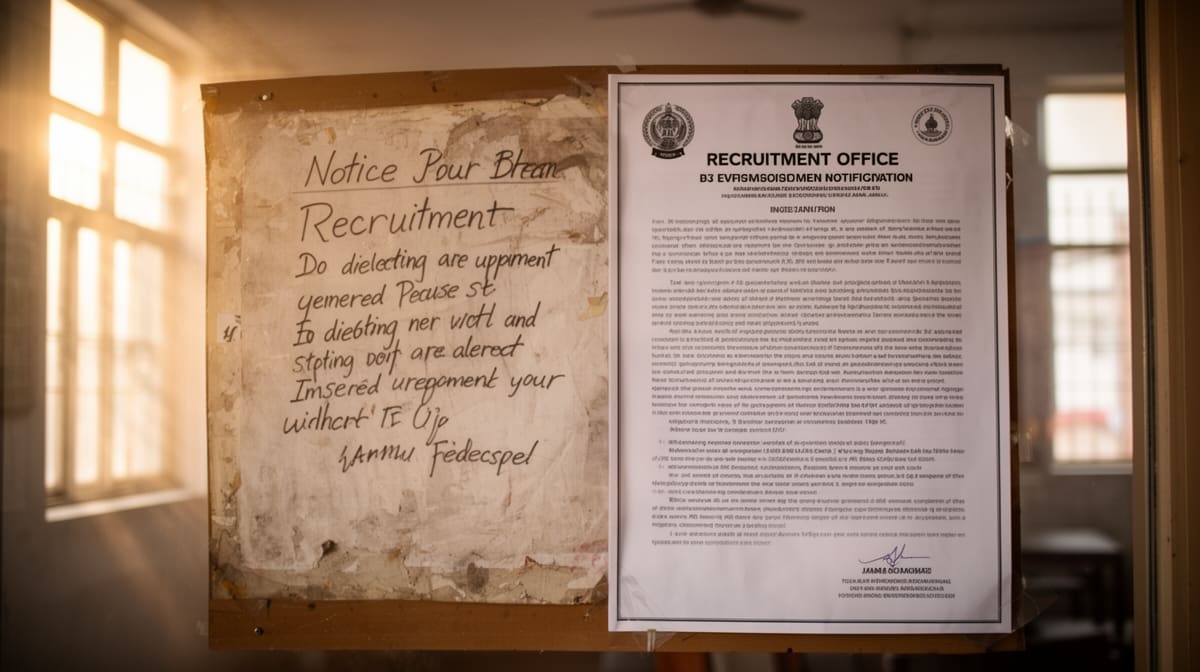
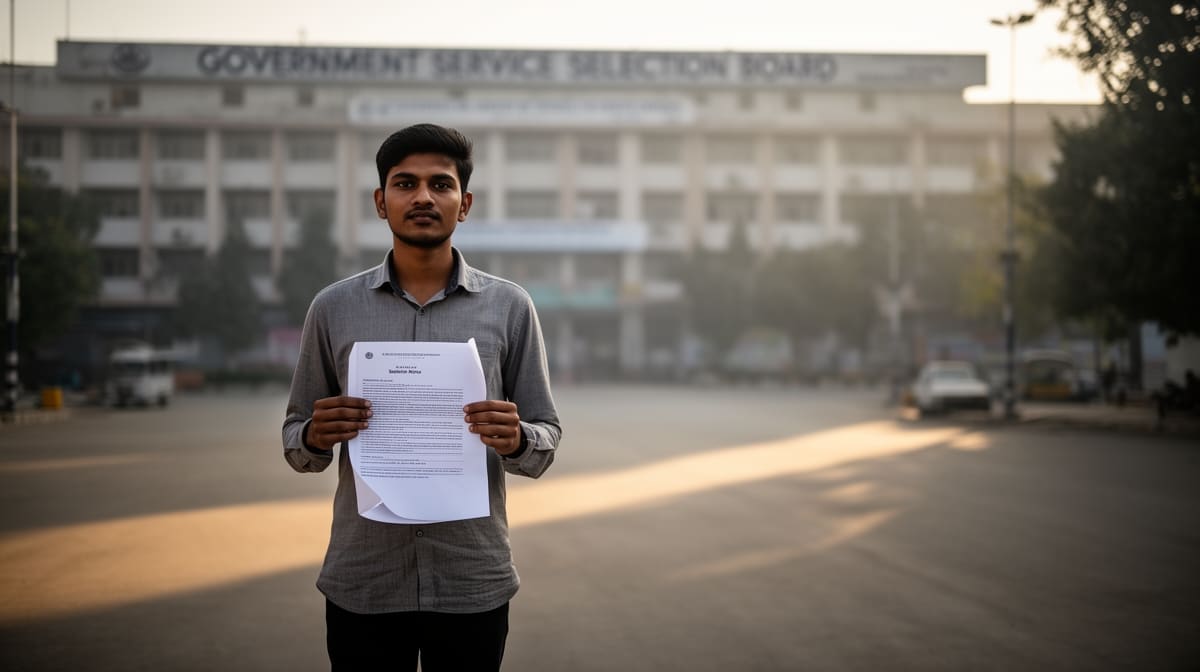
The petitioner, Johny, applied for the post of Patwari in District Anantnag under the Scheduled Caste category, as advertised in 2015. The original advertisement required only "graduation with knowledge of Urdu" as the essential qualification. However, in November 2017, the J&K Service Selection Board issued a new notification introducing a mandatory qualifying examination to test "working knowledge of Urdu," to be conducted after a preliminary MCQ-based written test. The petitioner did not object to this notification at the time and participated in both stages of the selection process.
Procedural History
- September 2015: Advertisement issued for Patwari posts, specifying graduation with knowledge of Urdu as qualification.
- November 2017: J&K SSB issued Notification No. SSB/Sel/Secy/2017/11832-46, introducing a qualifying Urdu proficiency exam with 40% (open) and 35% (reserved) cutoffs.
- February 2018: Petitioner appeared and qualified the MCQ-based written test.
- July 2018: Petitioner appeared in the Urdu proficiency exam but scored below the 35% threshold for SC category.
- December 2018: Final selection list published; no candidate selected under SC category due to non-qualification.
- 2019: Petitioner filed writ petition challenging the 2017 notification.
- 2020: Petition transferred to Central Administrative Tribunal, dismissed.
- 2026: Petition filed before High Court under Article 226.
Relief Sought
The petitioner sought to declare the 2017 notification illegal, arbitrary, and violative of Articles 14 and 16 of the Constitution, and to direct his inclusion in the selection list.
The Legal Issue
The central question was whether a candidate who voluntarily participates in a selection process, including a newly introduced qualifying examination, can later challenge the legality of that examination’s criteria after failing to meet the prescribed benchmark.
Arguments Presented
For the Petitioner
The petitioner contended that introducing the Urdu proficiency exam in 2017, after the initial advertisement in 2015, amounted to a mid-process change in selection criteria. He argued that this violated the principle of legitimate expectation and rendered the process arbitrary under Article 14. He further claimed that the requirement of a separate examination exceeded the statutory qualification of "knowledge of Urdu," thereby violating Article 16.
For the Respondent
The State countered that the 2017 notification was not a modification but the first formal articulation of the selection scheme. It clarified how "knowledge of Urdu" would be objectively assessed, consistent with the original advertisement. The notification was issued well before the MCQ test and provided full transparency. The petitioner had full knowledge of the criteria and chose to participate without protest.
The Court's Analysis
The Court examined the timeline and conduct of the petitioner to determine whether estoppel applied. It emphasized that the 2017 notification was not a change in the selection process but its first formalization. The original advertisement’s vague requirement of "knowledge of Urdu" was operationalized through a transparent, published scheme. The Court noted that the petitioner not only participated in the MCQ test but was shortlisted for the Urdu exam, indicating conscious acceptance of the process.
"A candidate who has participated in the selection process adopted under the 2015 Rules is estopped and has acquiesced himself from questioning it thereafter, as held by this Court in the case of Anupal Singh (supra)."
The Court relied on multiple precedents, including State of Uttar Pradesh v. Karunesh Kumar, Madan Lal v. State of J&K, and Union of India v. S. Vinodh Kumar, to affirm that participation without objection constitutes implied consent. The Court rejected the argument that the exam was ultra vires, noting that testing "working knowledge" was a reasonable method to verify the statutory requirement of "knowledge of Urdu." The Court also held that the petitioner’s delay in filing the petition - nearly a year after the final list - further undermined his claim.
The Verdict
The petition was dismissed. The Court held that a candidate who voluntarily participates in a selection process without objection cannot later challenge its criteria after failing to qualify. The petitioner’s failure to meet the qualifying threshold in the Urdu proficiency exam rendered him ineligible, and his subsequent challenge was barred by the doctrine of estoppel.
What This Means For Similar Cases
Participation Bars Post-Facto Challenges
- Practitioners must advise clients that filing a writ petition after failing a selection test is unlikely to succeed if the candidate participated without objection.
- Courts will not entertain challenges to selection criteria when the candidate had full notice and chose to proceed.
Clarity in Advertisements Is Key
- Public employers should clearly articulate selection criteria in initial advertisements, even if operational details are added later.
- Adding qualifying tests via subsequent notifications is permissible if issued before any test is conducted and without altering eligibility.
Estoppel Applies Even Without Fraud
- The doctrine of estoppel operates not only where there is deception but where a party gains an advantage by silence and later seeks to reverse position.
- This principle applies equally to reserved category candidates, who are not exempt from procedural compliance.