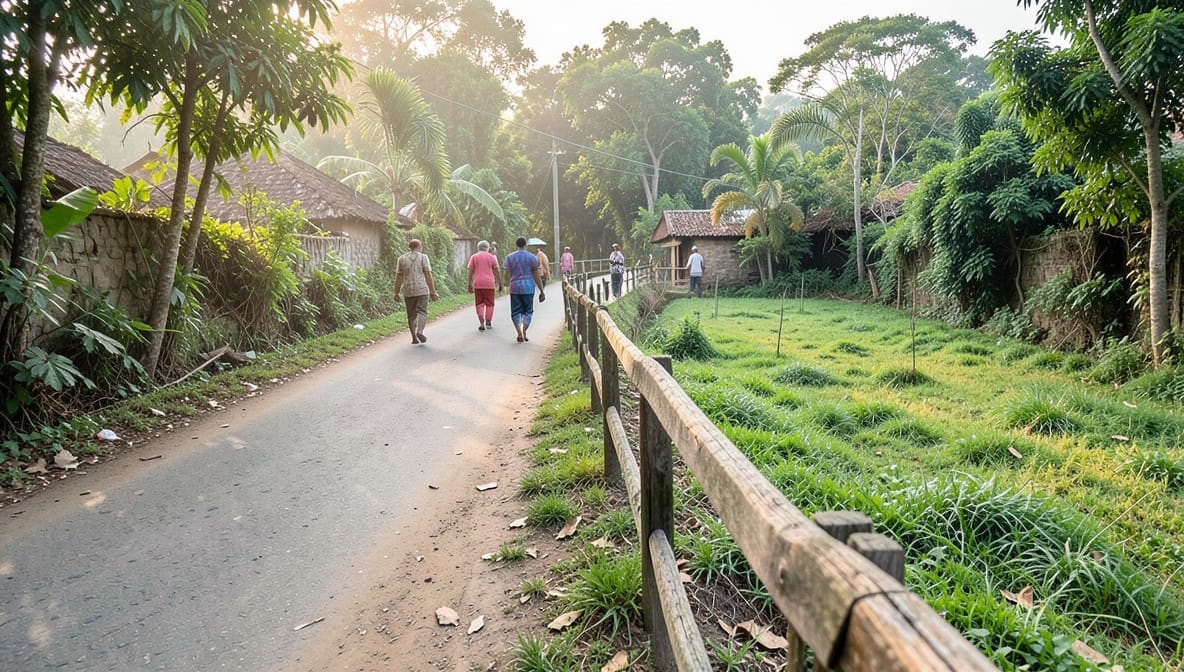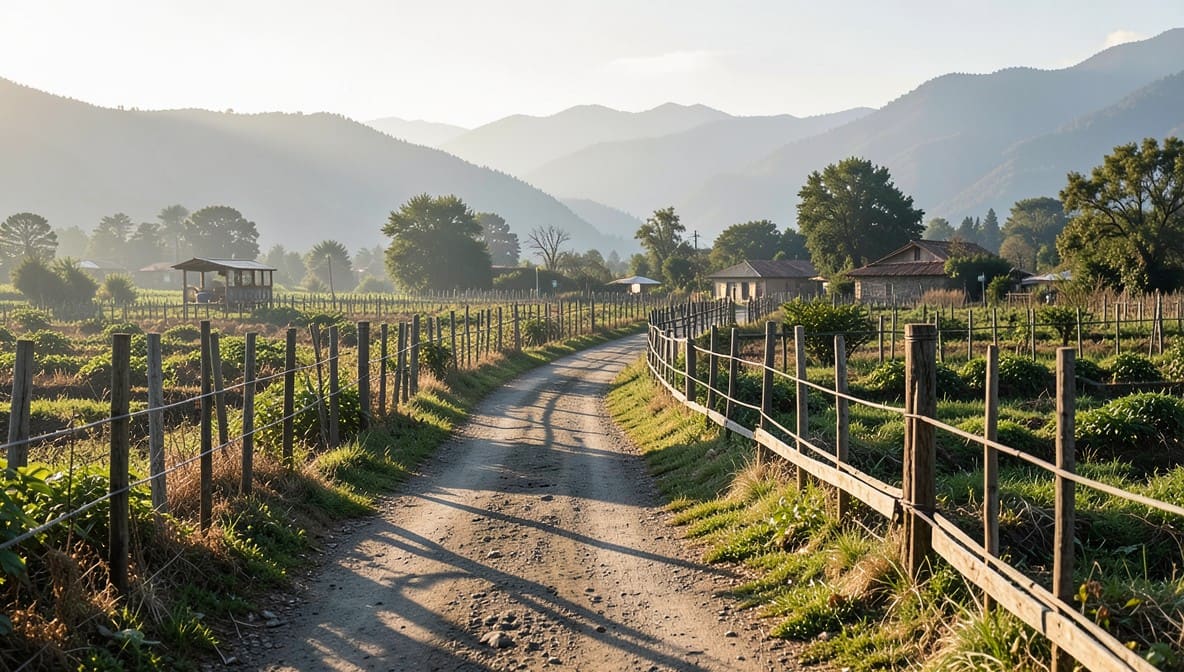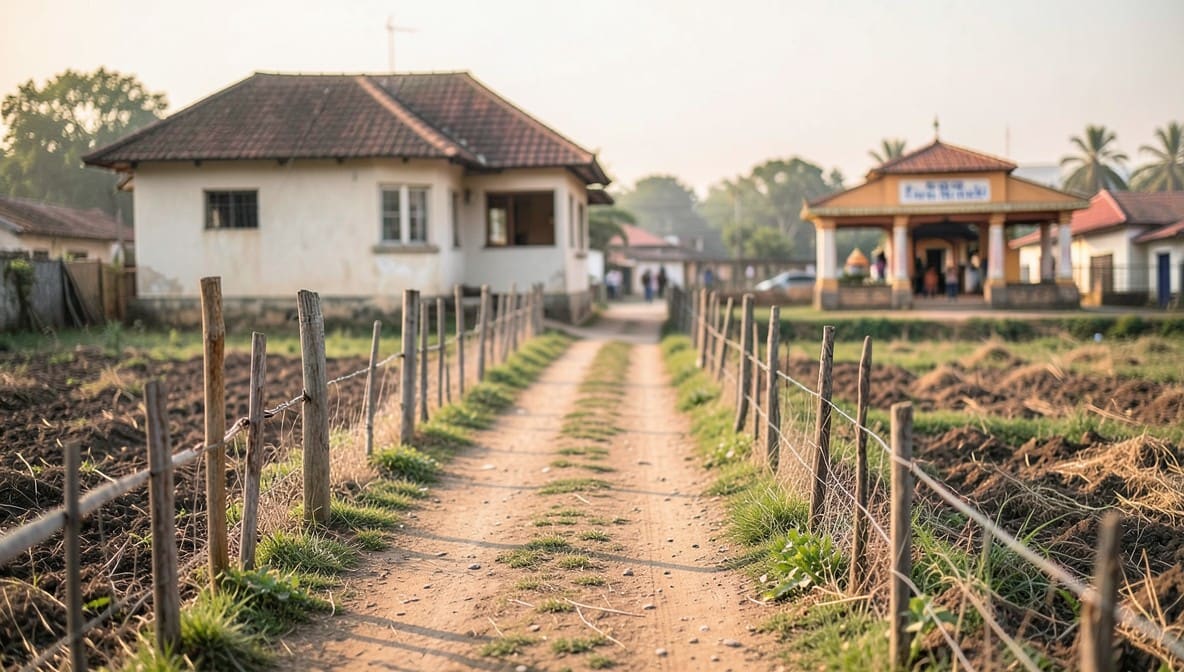
The Andhra Pradesh High Court has clarified that temporary use of Gramakantam land for access to a residential property does not create any legal easementary rights, even where such use appears necessary. This ruling reinforces the principle that community-owned panchayat land cannot be effectively appropriated through prolonged, unchallenged use, preserving its public character for collective benefit.
Background & Facts
The Dispute
A plot of land measuring Ac.0-03 cents out of Ac.2-28 cents in Survey No.227-1B, Duddukuru Village, Devarapalli Mandal, East Godavari District, is classified as Gramakantam land - land reserved for public use by the Gram Panchayat. The petitioners, residents of Door No.6-45 in Survey No.223, Ward No.10, have been using this plot as the sole passage to access their residential house. In September 2023, the Gram Panchayat issued a notice demanding the petitioners vacate the land, alleging encroachment. The petitioners had also erected a green fence on the land, which the Panchayat viewed as an attempt to assert proprietary control.
Key Facts
- The petitioners admitted the land in question is Gramakantam land but claimed use was out of absolute necessity.
- No alternative passage existed at the time the writ petition was filed.
- The green fence erected by the petitioners was deemed an act of encroachment and obstruction of public land.
- A partition deed dated 2018 divided the land north of the petitioners’ house among the 1st petitioner’s children, allegedly cutting off access from that side.
- The partition deed was duly registered with the Sub-Registrar’s office.
- The Gram Panchayat functions, including community events, are regularly held on Gramakantam land.
Procedural History
- 27.09.2023: Gram Panchayat issued notice to petitioners demanding removal of encroachment.
- 2024: Writ Petition No.1396 of 2024 filed before the Single Judge of the Andhra Pradesh High Court.
- 23.01.2024: Single Judge ordered that petitioners may continue using Ac.0-03 cents of Gramakantam land for ingress and egress, but directed removal of the green fence.
- 24.11.2025: Division Bench permitted intervenors (appellants) to file this appeal and directed the District Collector to conduct a factual inquiry into alternative access.
- 05.03.2026: District Collector submitted report confirming existence of an 11-foot-wide road on the northern side of the petitioners’ vacant land, currently blocked by a wooden fence.
- 20.04.2026: Judgment delivered by Division Bench.
Relief Sought
The appellants sought to set aside the Single Judge’s order permitting permanent use of Gramakantam land. They argued that such use would lead to de facto appropriation of public land and eventual claims of easement by prescription or necessity. The petitioners sought continuation of access without restriction.
The Legal Issue
The central question was whether temporary, necessity-based use of Gramakantam land for ingress and egress can give rise to a legally enforceable easementary right, either by prescription or by necessity, and whether such a right can override the public character of panchayat land.
Arguments Presented
For the Appellants
The appellants contended that Gramakantam land is held in trust for the collective benefit of all residents of the Gram Panchayat. Permitting exclusive use by a few, even temporarily, sets a dangerous precedent for encroachment and eventual privatization. They cited the District Collector’s report confirming an alternative 11-foot road exists, albeit obstructed by a wooden fence, and argued that the 2018 partition deed was strategically executed to manufacture a claim of necessity. They emphasized that easement by necessity is a doctrine of last resort and cannot be invoked where an alternative exists, even if temporarily blocked.
For the Respondents
The respondents argued that the northern road is inaccessible due to the partition of land among the petitioner’s children in 2018, which severed their legal right to use that route. They maintained that the green fence was merely a protective measure and not an assertion of ownership. They relied on the Single Judge’s finding that no other viable passage existed at the time of filing the writ petition and contended that denying access would violate their fundamental right to reasonable access to their home.
The Court's Analysis
The Court examined the nature of Gramakantam land under the Andhra Pradesh Panchayat Raj Act and recognized its status as public property meant for community use, including religious, cultural, and administrative functions. The Court rejected the notion that necessity alone can convert public land into a private right of way.
"The petitioners cannot as a matter of right claim right of ingress or egress over the Gramakantam land which may be required in future even for the purposes of construction. Even otherwise functions may be required to be organized on the Gramakantam land for the benefit of the residents of the Gram Panchayat."
The Court found the 2018 partition deed to be a plausible mechanism to artificially create a claim of necessity, noting that the petitioners had not challenged the partition’s validity. The existence of the 11-foot road, even if obstructed by a wooden fence, negated the claim of absolute necessity. The Court emphasized that easement by necessity arises only when access is physically impossible without the disputed route - not merely inconvenient.
The Court further held that allowing continued use, even if unopposed, cannot lead to prescription or implied easement over public land. The doctrine of prescription requires hostile, open, and continuous use over a statutory period - conditions incompatible with the nature of Gramakantam land.
The Verdict
The writ appeal was allowed. The judgment and order of the Single Judge dated 23.01.2024 were modified. The petitioners are permitted to use the Ac.0-03 cents of Gramakantam land for ingress and egress only on a temporary, non-exclusive basis. No easementary rights, whether by prescription or necessity, shall accrue. The Gram Panchayat retains full authority to use the land for any public purpose, including construction, at any time without notice or compensation. The wooden fence on the northern road must be removed to restore access. No costs were awarded.
What This Means For Similar Cases
Temporary Access Does Not Equal Permanent Right
- Practitioners must advise clients that even long-standing use of panchayat land for access does not create legal rights.
- Courts will not recognize easement by necessity if an alternative route exists, even if obstructed or inconvenient.
- Claims based on partition deeds must be scrutinized for potential manipulation to manufacture necessity.
Public Land Cannot Be Privatized by Use
- Gramakantam, village common land, and other panchayat-owned plots are immune to claims of adverse possession or implied easement.
- Any use must remain non-exclusive, non-permanent, and subject to revocation by the Gram Panchayat.
- Legal challenges to encroachment must be filed promptly; delay does not cure illegality.
Burden of Proof Shifts to Claimants of Necessity
- Claimants must prove physical impossibility of access, not mere inconvenience.
- Documentary evidence of alternative routes (survey maps, revenue records, municipal plans) must be obtained before asserting necessity.
- Oral testimony alone is insufficient to override official land records or Collector’s reports.