The Rajasthan High Court has clarified that compensation in motor accident claims must be recalculated using updated statutory guidelines, even when the accident occurred prior to their issuance. This judgment establishes a significant precedent for claimants seeking fair redress under evolving compensation frameworks.
Background & Facts
The Dispute
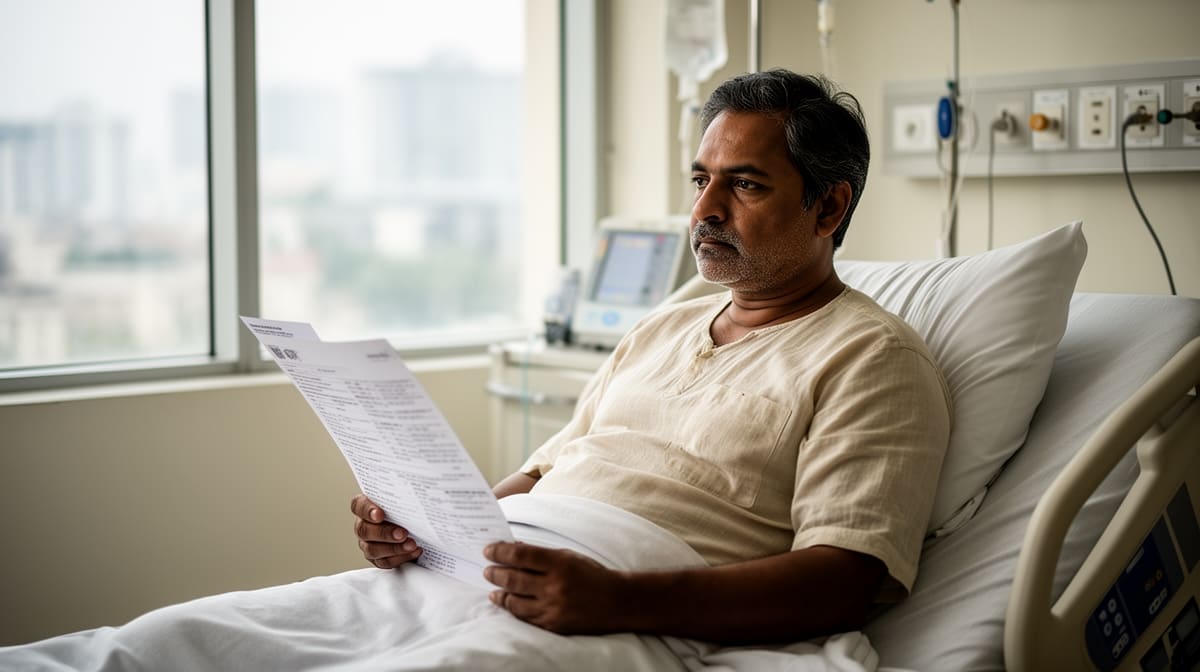
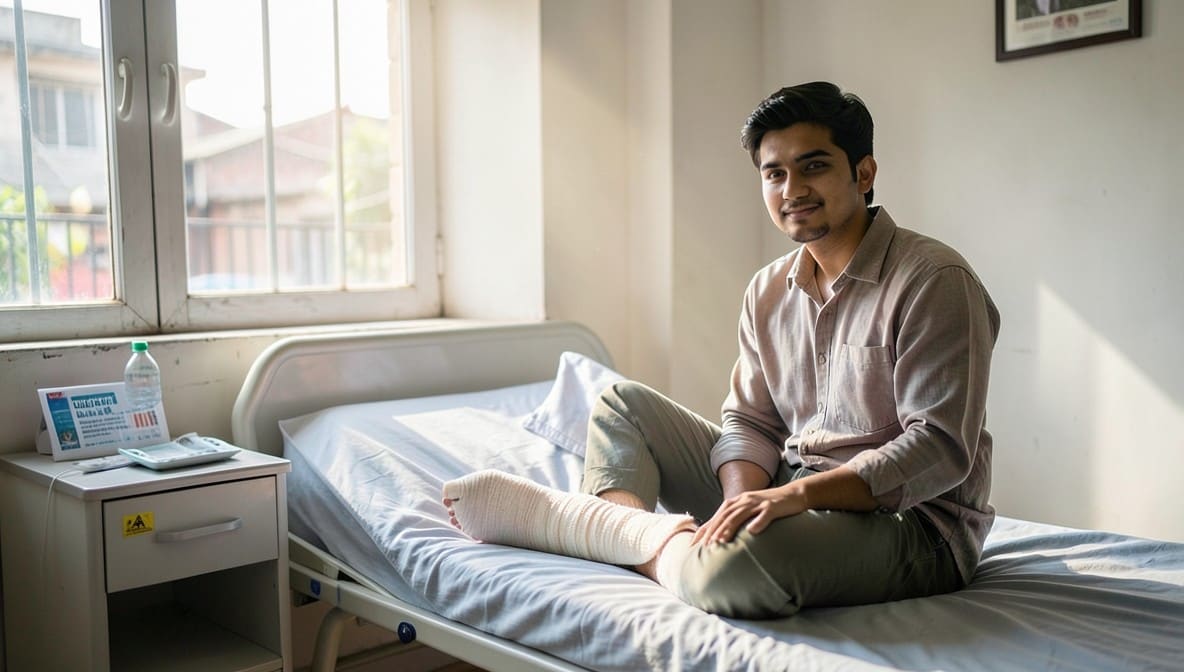
The appellant, Uda @ Udailal, sustained multiple injuries in a motor accident on 18 February 2002. He filed a claim before the Motor Accident Claims Tribunal, Bhilwara, seeking compensation for permanent disability and medical expenses. The Tribunal awarded him Rs.50,000, which the appellant contended was grossly inadequate given the severity of his injuries and the extent of his permanent disability.
Procedural History
- 18 February 2002: Accident occurred, resulting in permanent disability rated at 12%
- 2003: Claim filed before Motor Accident Claims Tribunal, Bhilwara
- 19 August 2004: Tribunal awarded Rs.50,000, without detailed computation
- 2005: Appeal filed before the High Court of Judicature for Rajasthan at Jodhpur
- 11 February 2026: Judgment delivered, with enhanced compensation
Relief Sought
The appellant sought enhancement of the compensation amount to reflect the RALSA Guidelines, 2024, which provide a structured methodology for calculating disability, hospitalization, and pain & suffering. He submitted a detailed re-computation based on these guidelines, requesting an additional Rs.60,630.
The Legal Issue
The central question was whether compensation in motor accident claims arising before the issuance of the RALSA Guidelines, 2024, may be recalculated using those guidelines to ensure just and adequate redress.
Arguments Presented
For the Appellant
Learned counsel argued that the Tribunal’s award of Rs.50,000 was arbitrary and failed to apply any recognized formula for calculating permanent disability or pain & suffering. He relied on the RALSA Guidelines, 2024, which provide a transparent, uniform methodology: Rs.35,000 as base amount for disability above 10%, Rs.4,500 per percentage point of disability, Rs.600 per day of hospitalization, and 15% of the total (excluding medical bills) for pain and suffering. He contended that these guidelines reflect current economic realities and judicial trends toward equitable compensation.
For the Respondent
No appearance was made by the respondents, and no counter-submissions were filed. The Court noted the absence of opposition as a factor favoring the appellant’s claim.
The Court's Analysis
The Court examined the nature of the injuries and the Tribunal’s failure to provide any reasoning for the award. It observed that the Tribunal’s award was not only low but also lacked any basis in established principles of compensation. The Court held that while the RALSA Guidelines, 2024, were issued after the accident, they are not a new law but a restatement of existing judicial principles aimed at standardizing compensation across the state.
"Ends of justice will be met, if the computation of the award in the present case is done in accordance with the RALSA Guidelines, 2024."
The Court emphasized that compensation in motor accident cases must be fair, reasonable, and reflective of the claimant’s actual loss. It accepted the appellant’s computation: Rs.89,000 for disability (Rs.35,000 + Rs.4,500 x 12), Rs.7,200 for hospitalization, and Rs.14,430 for pain and suffering (15% of Rs.96,200), totaling Rs.1,10,630. The Tribunal’s award of Rs.50,000 was found to be manifestly inadequate.
The Court further held that interest at 6% from the date of accident is mandatory under settled precedent, ensuring that claimants are not deprived of the time value of money.
The Verdict
The appellant won. The Court held that compensation must be recalculated using the RALSA Guidelines, 2024, even for accidents occurring before their issuance, to ensure substantive justice. It enhanced the award by Rs.60,630, directing the insurer to pay the enhanced amount within six weeks, with interest at 6% from the date of the accident.
What This Means For Similar Cases
Guidelines Can Be Applied Retroactively for Fairness
- Practitioners may now invoke RALSA Guidelines, 2024, or similar state-specific frameworks in pending or past claims, even if the accident predates the guidelines
- Tribunals and appellate courts must justify deviations from these standardized formulas
- Failure to apply such guidelines may be grounds for enhancement on appeal
Pain & Suffering Is a Separate, Quantifiable Head
- The Court explicitly recognized 15% of total non-medical compensation as a standard benchmark for pain and suffering for claimants aged 50 - 60
- This creates a rebuttable presumption: any award below this threshold must be supported by cogent reasoning
- Claimants must now itemize pain & suffering separately in submissions
Insurance Companies Must Proactively Reassess Settlement Offers
- Insurers can no longer rely on outdated or arbitrary settlement figures
- The judgment signals that courts will scrutinize lowball offers and apply current standards
- Legal teams should prepare detailed compensation matrices using RALSA-style formulas in all pending claims