The Bombay High Court has clarified that vehicle owners cannot evade liability by merely relying on insurance coverage when they permit unlicensed drivers to operate their vehicles. This judgment reinforces the duty of care owed by owners and establishes that breach of insurance policy conditions due to negligence in driver verification shifts full compensation liability to the owner.
Background & Facts
The Dispute
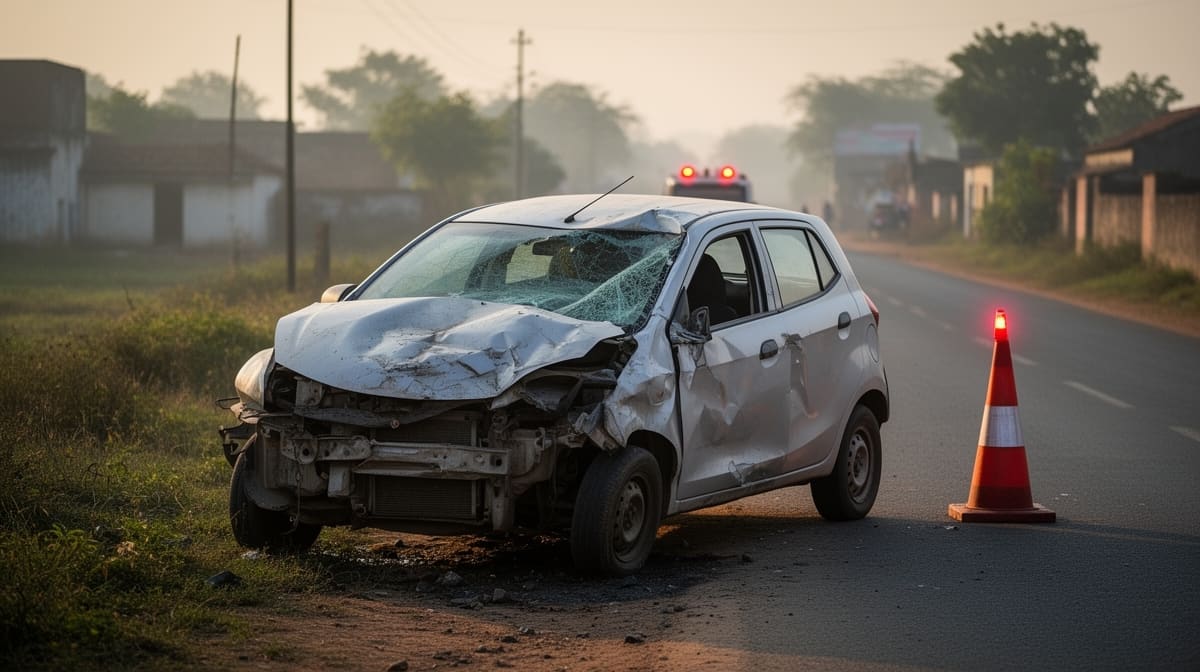
The case arose from a fatal road accident on 18 February 2006, when a jeep driven by an unlicensed individual lost control and collided with a tree, killing Dattatraya Gosavi. The deceased’s heirs filed a claim under Section 166 of the Motor Vehicles Act seeking compensation for wrongful death. The Motor Accident Claims Tribunal awarded Rs. 3,70,000, including Rs. 50,000 as No-Fault Liability (N.F.L.), and held the owner of the jeep liable. The insurance company was permitted to recover the N.F.L. amount from the owner, but only without interest.
Procedural History
- 18 February 2006: Fatal accident involving jeep bearing MH-12-BP-3279
- 2006: Claim petition filed before Motor Accident Claims Tribunal, Omerga
- 30 June 2011: Tribunal awarded compensation, held owner liable for failing to verify driver’s license
- 2011: First Appeal filed before Bombay High Court, Aurangabad Bench
Relief Sought
The appellant, owner of the jeep, sought to set aside the Tribunal’s order, arguing that there was no direct evidence of rash or negligent driving and that the insurance company should bear liability. He also challenged the interest calculation from the date of accident rather than the date of claim.
The Legal Issue
The central question was whether Section 166 of the Motor Vehicles Act imposes liability on the vehicle owner for failing to verify the driver’s license, and whether such failure constitutes a breach of insurance policy conditions that absolves the insurer of liability.
Arguments Presented
For the Appellant
The appellant’s counsel contended that no direct evidence proved the driver was rash or negligent. He argued that the vehicle was insured, the driver held what appeared to be a valid license (Exh.37), and the Tribunal erred in ignoring the insurance coverage. He further submitted that interest should accrue only from the date of the claim petition, not the date of accident, as per settled principles.
For the Respondent/State
The claimants and insurance company defended the Tribunal’s findings. The insurer relied on the R.T.O. deposition (Exh.51) proving the license was forged and that the owner had not verified its authenticity. They argued that breach of policy condition - permitting an unlicensed driver - exempted the insurer from liability under Section 149(2)(a)(ii) of the Motor Vehicles Act, making the owner personally liable.
The Court's Analysis
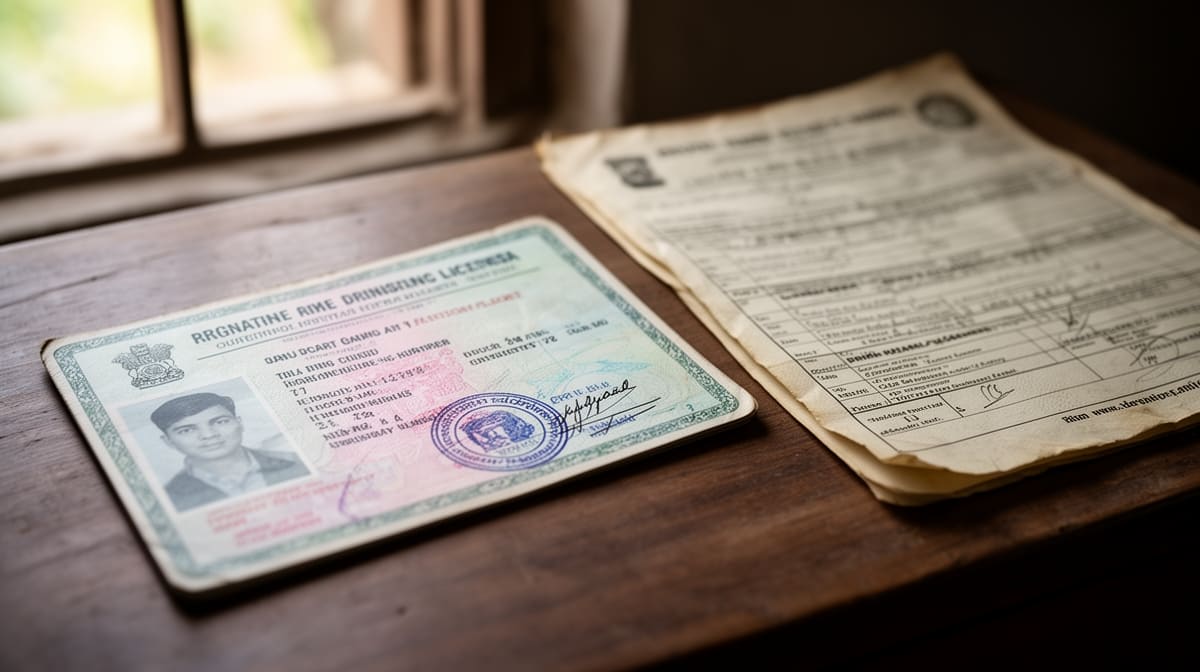
The Court examined the evidence chain, including the R.T.O. register extract and deposition by Rajesh Patil, which conclusively established that the driver’s license (Exh.37) was not issued by the R.T.O. The Court emphasized that ownership carries a duty of reasonable care in selecting a driver. The Tribunal’s finding that the owner failed to verify the license was not speculative but grounded in documentary evidence.
"Owner failed to verify whether driver possessed effective driving licence and as such noting that there was breach of condition of policy and held that insurance company is not liable."
The Court held that Section 149(2)(a)(ii) explicitly excludes insurer liability where the driver is unlicensed and the owner knew or ought to have known. The insurer’s defense was therefore valid. The Court further noted that while the Tribunal correctly apportioned liability, it erred in awarding interest from the date of accident. Interest under Section 168 must commence from the date of the claim petition, not the accident, to avoid unjust enrichment.
The Verdict
The appellant’s appeal was partly allowed. The Bombay High Court upheld the Tribunal’s finding of owner liability but modified the interest clause. The owner must now pay Rs. 3,70,000 with 9% interest from the date of the claim petition, and the insurer may recover Rs. 50,000 with interest from the owner.
What This Means For Similar Cases
Owner Verification Is a Legal Duty
- Practitioners must now argue that failure to verify a driver’s license constitutes negligence per se under Section 149(2)(a)(ii)
- Insurance companies can invoke this to deny claims where license authenticity is unverified
- Defense strategies should focus on R.T.O. records and license verification protocols
Interest Starts from Claim Date, Not Accident Date
- Section 168 mandates interest from the date of claim petition, not the date of accident
- Tribunals routinely err by starting interest earlier; this judgment provides binding precedent to correct such errors
- Claimants’ advocates must now specifically pray for interest from the date of filing
Insurance Policy Breach Overrides Coverage
- Even if a vehicle is insured, policy conditions are enforceable
- Unlicensed driving by an owner-permitted driver voids insurer liability
- Claims must be structured to prove owner’s knowledge or constructive notice of invalid license