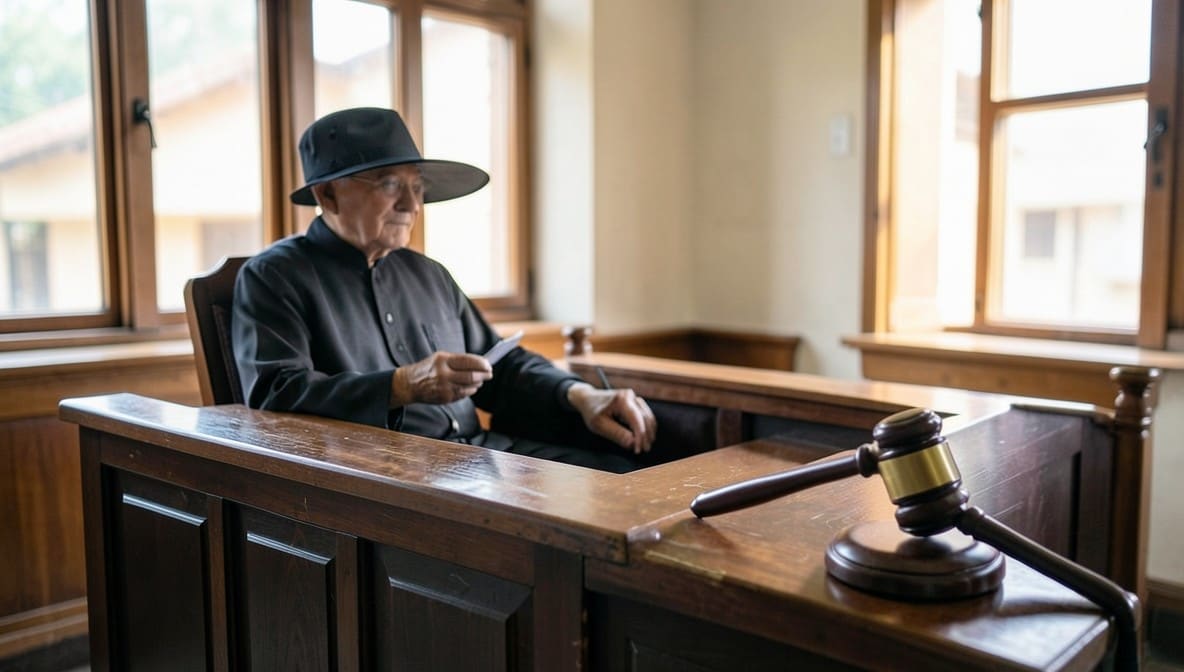
The Jammu & Kashmir High Court upheld the trial court’s refusal to reject a civil plaint on the ground that the respondent society was allegedly de-registered, clarifying that an Order VII Rule 11 application must be decided solely on the averments in the plaint and its annexures.
Background & Facts
The Dispute
The petitioners, Nitin Malhotra and Harish Choudhary, filed a revision petition challenging the order of the Additional District Judge, Jammu dated 10.03.2025, which dismissed their application under Order VII Rule 11 CPC seeking rejection of the plaint filed by Arya Pratinidhi Sabha J&K (the respondent). The plaint, instituted in February 2023, sought a permanent injunction restraining the petitioners from interfering with the functioning of Arya Samaj Mandir, Gandhi Nagar, Jammu.
Key Facts
- 29.12.2023: Letter from the Registrar of Societies stating that the respondent failed to apply for re-registration before 18.12.2021; consequently, the society was de-registered.
- 08.09.2023: Communication to Ms. Archana Kumari confirming de-registration effective 20.12.2021.
- 06.01.2004: Communication from the Assistant Director, Directorate of Industries and Commerce, Jammu indicating that Arya Samaj, Purana Hospital Road, Jammu was de-registered.
- 06.04.2004: RTI-derived information stating that Arya Pratinidhi Sabha, J&K was not registered under the Societies Registration Act, 1860 and was shown as non-operational.
- 18.12.2021: Statutory deadline for re-registration of societies under the J&K Societies Registration Act, 1998.
- 20.12.2021: Effective date of de-registration of Arya Pratinidhi Sabha, J&K.
- February 2023: The respondent instituted the civil suit seeking a permanent prohibitory injunction.
- 10.03.2025: Trial court dismissed the petitioners’ Order VII Rule 11 application.
- 21.04.2026: Court ordered the Assistant Director (Development), Department of Industries and Commerce, Jammu to appear and produce the original registration certificate (No. 99 of 1968 dated 16.10.1968).
- 14.07.2026: The revision petition was reserved.
- 07.08.2026: Judgment pronounced.
Procedural History
- 10.03.2025: Additional District Judge, Jammu dismissed the petitioners’ application under Order VII Rule 11 CPC.
- 28.02.2025 (approx.): Petitioners filed Revision Petition (CR No. 28/2025, CM No. 4983/2025).
- 21.04.2026: High Court directed production of registration records.
- 14.07.2026: Matter reserved for judgment.
- 07.08.2026: High Court delivered the judgment dismissing the revision petition.
Parties' Positions
- Petitioners argued that the respondent society, being de-registered, ceased to exist as a legal entity and therefore lacked locus standi to sue. They relied on communications dated 29.12.2023, 08.09.2023, and RTI responses to assert that the society was a non-entity.
- Respondent contended that the scope of Order VII Rule 11 is limited to the plaint and its annexures; the defendant’s defence, including questions of registration, is irrelevant at this stage. It also relied on the Jammu & Kashmir Re-organisation (Removal of Difficulties) Order, 2019, which deems certificates issued under the J&K Societies Registration Act as issued under the corresponding Central Act.
Relief Sought
The petitioners sought dismissal of the plaint on the ground that the respondent, being de-registered, had no locus standi, and consequently requested the High Court to set aside the trial court’s order and reject the plaint under Order VII Rule 11 CPC.
The Legal Issue
What is the proper scope of an application under Order VII Rule 11 of the Code of Civil Procedure when the defendant claims that the plaintiff lacks locus standi because the plaintiff society is allegedly de-registered or otherwise not a legal entity?
Arguments Presented
For the Petitioners
- Asserted that a society which has been de-registered under the Registrar of Societies cannot maintain a suit, citing the letters dated 29.12.2023 and 08.09.2023.
- Relied on the Right to Information Act communications to demonstrate the society’s non-operational status.
- Invoked Supreme Court precedents T. Arivandandam v. T.V. Satyal (1977) 4 SCC 467, Church of Christ Charitable Trust and Educational Charitable Society v. M/s Ponniamman Educational Trust AIR 2012 SC 3912, and P. Nazeer etc. v. Salafi Trust AIR 2022 SC 1580, arguing that a non-entity cannot sue.
For the Respondent
- Emphasised that Order VII Rule 11 applications must be decided solely on the pleadings in the plaint and the documents annexed thereto, per Church of Christ Charitable Trust and R.K. Roja v. U.S. Rayudu AIR 2016 SCW 3282.
- Submitted that the J&K Re-organisation (Removal of Difficulties) Order, 2019 makes the earlier registration certificate valid, negating any requirement for re-registration.
- Cited Sopan Sukhdeo Sable v. Assistant Charity Commissioner AIR 2004 SC 1801, affirming that the court cannot consider defence material when adjudicating an Order VII Rule 11 application.
The Court's Analysis
The Court began by reiterating the settled principle that an application under Order VII Rule 11 CPC is confined to the averments made in the plaint and the documents annexed to it. It quoted the Supreme Court’s observation in Church of Christ Charitable Trust that the written statement and any defence are immaterial for the purpose of rejecting a plaint.
"It is a trite law that an application seeking rejection of a plaint must be decided exclusively on the basis of the averments made in the plaint, read in conjunction with the documents annexed thereto."
The Court noted that the petitioners had attempted to introduce extraneous material - the society’s de-registration status, communications under the RTI Act, and the alleged lack of office-bearer authority of Shri Arun Kumar Gupta - none of which appear in the plaint. Accordingly, such material could not be entertained under Order VII Rule 11.
Further, the Court examined the effect of the Jammu & Kashmir Re-organisation (Removal of Difficulties) Order, 2019. It held that certificates issued under the J&K Societies Registration Act, 1998, are deemed to have been issued under the corresponding Central Act post-30.10.2019. Hence, the respondent’s registration, albeit old, remained valid for the purposes of the suit, and the petitioners’ contention that re-registration was mandatory was misplaced.
The Court also addressed the procedural aspect, emphasizing that factual disputes regarding the society’s legal status constitute a defence and must be resolved by framing issues and taking evidence, not by a summary dismissal under Order VII Rule 11. Citing R.K. Roja and Sopan Sukhdeo Sable, the Court affirmed that the power under Order VII Rule 11 can be exercised at any stage of the suit but only on the limited ground that the plaint, on its face, falls within the categories (a) to (f) of the rule.
Having found that the plaint did not disclose any of the statutory grounds for rejection and that the petitioners had failed to demonstrate a cause of action deficiency, the Court concluded that the trial court’s order dismissing the petitioners’ application was well-reasoned and in line with precedent. No interference was warranted.
The Verdict
The High Court dismissed the revision petition, upheld the trial court’s order dated 10.03.2025, and held that the plaintiff’s suit cannot be rejected on the basis of the defendant’s alleged lack of legal status. No monetary or injunctive relief was granted; the matter stands as decided.
What This Means For Similar Cases
Scope of Order VII Rule 11 Is Strictly Limited
- Practitioners must confine arguments to the plaint and its annexures; any defence or extraneous documentary evidence cannot be raised at this stage.
- Attempts to defeat a suit on the ground of the plaintiff’s locus standi, where such a claim is not pleaded in the plaint, will be rejected.
Re-registration Requirements Must Be Substantiated in the Plaint
- If a party wishes to rely on a society’s de-registration, the claim must be expressly pleaded in the plaint; otherwise, the court will ignore it under Order VII Rule 11.
- Post-2019 re-organisation provisions render many older registrations valid, reducing the relevance of re-registration arguments.
Factual Disputes Remain Defence Matters
- Disputed questions of fact concerning a party’s legal status are to be adjudicated by framing issues and taking evidence, not by a summary dismissal under Order VII Rule 11.
- Counsel should prepare for evidentiary proceedings when such factual controversies arise, rather than seeking a premature dismissal.