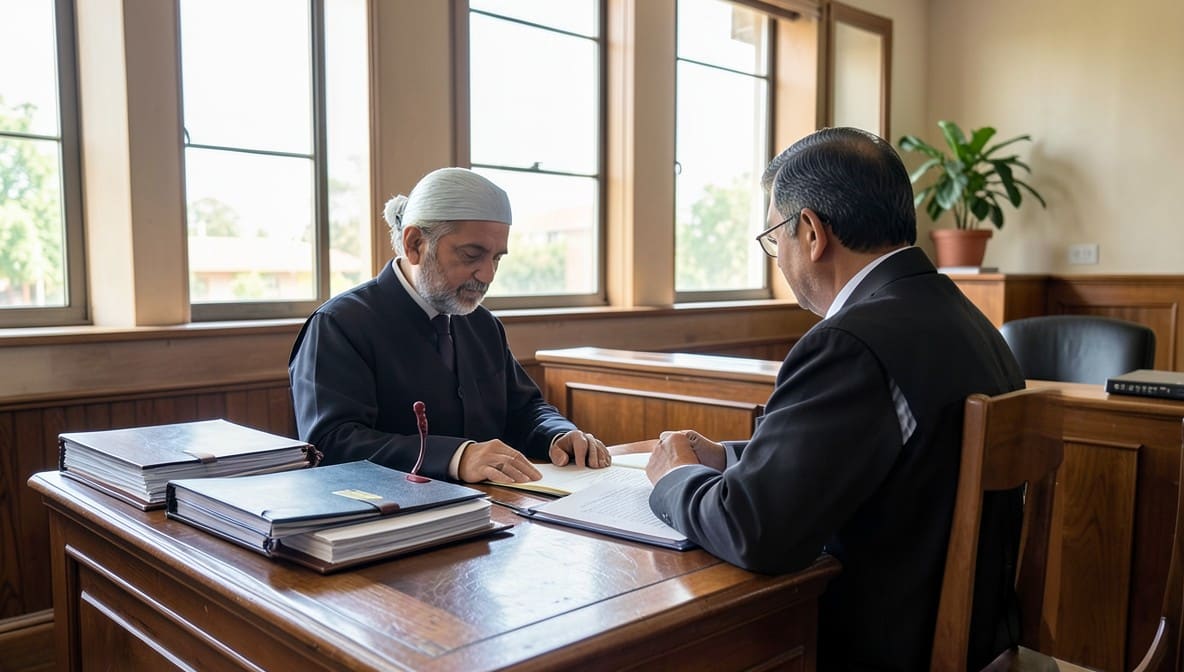
The Karnataka High Court has affirmed that trial courts possess broad discretion under Order 6 Rule 17 CPC to permit amendments to pleadings even after trial has commenced, provided the amendment is necessary to determine the real controversy between parties and avoids multiplicity of litigation. This ruling reinforces the procedural flexibility intended by the Code to ensure substantive justice over technicalities.
Background & Facts
The Dispute
The dispute concerns title and possession over immovable property situated in Bannami Village, Jewargi Taluk, Kalaburagi District. The respondents, as plaintiffs, filed Original Suit No. 178/2015 before the Civil Judge and JMFC, Jewargi, seeking a declaration of ownership and a perpetual injunction against the petitioners, who are the defendants. The plaintiffs claimed to be the absolute owners and in lawful possession of the suit property. The defendants denied both title and possession, asserting that the plaintiffs and their mother had previously relinquished their rights.
Key Facts
- The suit was instituted in 2015.
- The plaintiffs’ original plaint sought only a declaration of title and a perpetual injunction.
- No prayer for possession was included in the original pleading.
- The defendants filed a written statement contesting both ownership and possession.
- The case remained pending for nearly nine years.
- On 15.06.2022, the plaintiffs filed IA No. 11 seeking to amend the plaint by adding a new prayer for a decree of possession.
- The proposed amendment read: "A decree of possession may kindly be granted directing the defendants to deliver the possession of suit property shown in para No.2 of the plaint in favour of plaintiffs."
- The plaintiffs submitted an affidavit stating that if the court found them not in possession, dismissal of the suit on that ground would force them to file a separate suit for possession, leading to multiplicity of proceedings.
- The defendants opposed the amendment on grounds of delay, belated stage, withdrawal of implied admission, and limitation.
- The trial court allowed the amendment by order dated 21.02.2025.
- The petitioners challenged this order before the High Court under Article 227 of the Constitution.
Procedural History
- 2015: Original Suit No. 178/2015 filed by plaintiffs seeking declaration and perpetual injunction.
- 15.06.2022: IA No. 11 filed by plaintiffs seeking amendment to include prayer for possession.
- 21.02.2025: Trial Court allowed the amendment under Order 6 Rule 17 CPC.
- 2025: Writ Petition No. 201541 of 2025 filed before the Karnataka High Court, Kalaburagi Bench, challenging the amendment order.
- 02.06.2026: High Court heard the petition and passed final order.
The Parties' Positions
For the Petitioners (Defendants)
- The amendment was filed at a belated stage, after evidence had been recorded and the case was posted for arguments.
- The plaintiffs sought to withdraw implied admissions made in the original plaint regarding possession.
- The proposed amendment would alter the nature of the suit and introduce a new cause of action.
- The claim for possession is barred by limitation, as the suit was filed in 2015 and the prayer for possession was introduced only in 2022.
- Allowing the amendment would prejudice the defendants, who had prepared their defense based on the original pleadings.
For the Respondents (Plaintiffs)
- The amendment is necessary to determine the real controversy between the parties.
- Without the prayer for possession, the suit would be dismissed if possession is found to be with the defendants, forcing a fresh suit.
- The amendment does not change the core cause of action - the dispute remains over title and possession of the same property.
- The delay can be compensated by costs.
- The defendants retain full liberty to file additional written statements and lead evidence on limitation and possession.
Relief Sought
The petitioners sought quashing of the trial court’s order dated 21.02.2025 allowing the amendment. They also requested that the original plaint be restored and the prayer for possession be disallowed.
The Legal Issue
Can a trial court permit an amendment to a plaint under Order 6 Rule 17 CPC to add a prayer for possession after trial has commenced, where the amendment is necessary to avoid multiplicity of proceedings and does not alter the fundamental cause of action?
Arguments Presented
For the Appellant/Petitioner
The petitioners contended that Order 6 Rule 17 CPC prohibits amendments after trial has commenced unless the party proves due diligence in failing to raise the matter earlier. They relied on the principle that amendments cannot be allowed to introduce new causes of action or to withdraw admissions. They argued that the plaintiffs’ original pleadings implicitly admitted they were not in possession, and the amendment was an attempt to circumvent this. They further asserted that the claim for possession was time-barred under the Limitation Act, 1963, and that allowing the amendment would prejudice the defendants’ right to a fair trial.
For the Respondent/State
The respondents argued that the amendment was purely consequential and aimed at ensuring complete adjudication of the dispute. They cited the object of Order 6 Rule 17 CPC - to determine the real questions in controversy - and emphasized that the suit had been pending for nine years. They submitted that the defendants would not be prejudiced as they could file additional written statements and lead evidence on limitation and possession. They relied on Supreme Court precedents holding that technical objections to amendments must yield to the imperative of substantive justice.
The Court's Analysis
The High Court undertook a detailed examination of Order 6 Rule 17 CPC and its proviso, which permits amendments even after trial commencement if the party establishes that despite due diligence, the matter could not have been raised earlier. The Court noted that the plaintiffs’ original suit was framed to establish ownership and seek injunction, but the defendants’ defense squarely challenged possession - a fact that rendered the absence of a possession prayer a procedural gap, not a substantive omission.
"The proposed amendment is necessary in order to determine the real questions in controversy between the parties. Further the said amendment is just and proper for adjudication of the dispute."
The Court rejected the argument that the amendment amounted to withdrawal of admission, clarifying that the plaintiffs never admitted to non-possession - they merely did not plead it. The Court emphasized that the nature of the suit remained unchanged: the dispute was still over title and possession of the same property. The addition of a consequential relief did not alter the cause of action.
The Court also addressed the limitation objection, holding that the question of limitation would be decided by the trial court at the final stage, and that the amendment would not relate back to the date of the suit but would be deemed to have commenced from 15.06.2022, the date of the amendment application. This preserved the defendants’ right to raise limitation as a defense.
The Court further relied on Sampath Kumar v. Ayyakannu (AIR 2002 SC 3369), L.C. Hanumanthappa v. H.B. Shivakumar (2016) 1 SCC 332, and Life Insurance Corporation of India v. Sanjeev Builders (AIR 2022 SC 4256) to affirm that courts must prioritize avoidance of multiplicity of litigation. It cited Radhey Shyam v. Chhabi Nath (2015) 5 SCC 423 and Mohd. Ali v. V. Jaya (2022) 10 SCC 477 to underscore that interference under Article 227 is not warranted unless the trial court’s order is patently illegal or perverse.
The Court concluded that the trial court had exercised its discretion judiciously, balancing procedural fairness with substantive justice. The delay, while noted, was not fatal and could be compensated by costs.
The Verdict
The writ petition was dismissed. The High Court upheld the trial court’s order dated 21.02.2025 allowing the amendment to the plaint under Order 6 Rule 17 CPC. The Court clarified that the proposed amendment shall not relate back to the date of the suit but shall be deemed to have commenced from 15.06.2022. The question of limitation remains open for determination by the trial court at final disposal. The petitioners are granted liberty to file an additional written statement addressing the amended pleadings. Costs of Rs. 2,000 were awarded to the respondents. All other contentions, including merits of the claims, are kept open.
What This Means For Similar Cases
Amendments to Avoid Multiplicity Are Favored
- Practitioners may now confidently seek amendments to add consequential reliefs like possession, recovery, or damages even after trial begins, provided the core cause of action remains unchanged.
- Courts are expected to prioritize complete adjudication over technical objections, especially in long-pending suits.
- Delay alone is not a ground for rejection - costs may be imposed instead.
Limitation Remains a Live Defense
- The date of amendment, not the date of suit, governs limitation for new prayers.
- Defendants must raise limitation as a specific defense in their additional written statement.
- Courts will not presume limitation is barred merely because the prayer was added late.
Trial Courts Have Broad Discretion
- The burden is on the objecting party to show actual prejudice, not mere inconvenience.
- The right to file additional written statements and lead evidence on new pleadings must be expressly preserved.
- Article 227 jurisdiction will not be invoked to interfere with such discretionary orders unless there is a clear error of law or perversity.