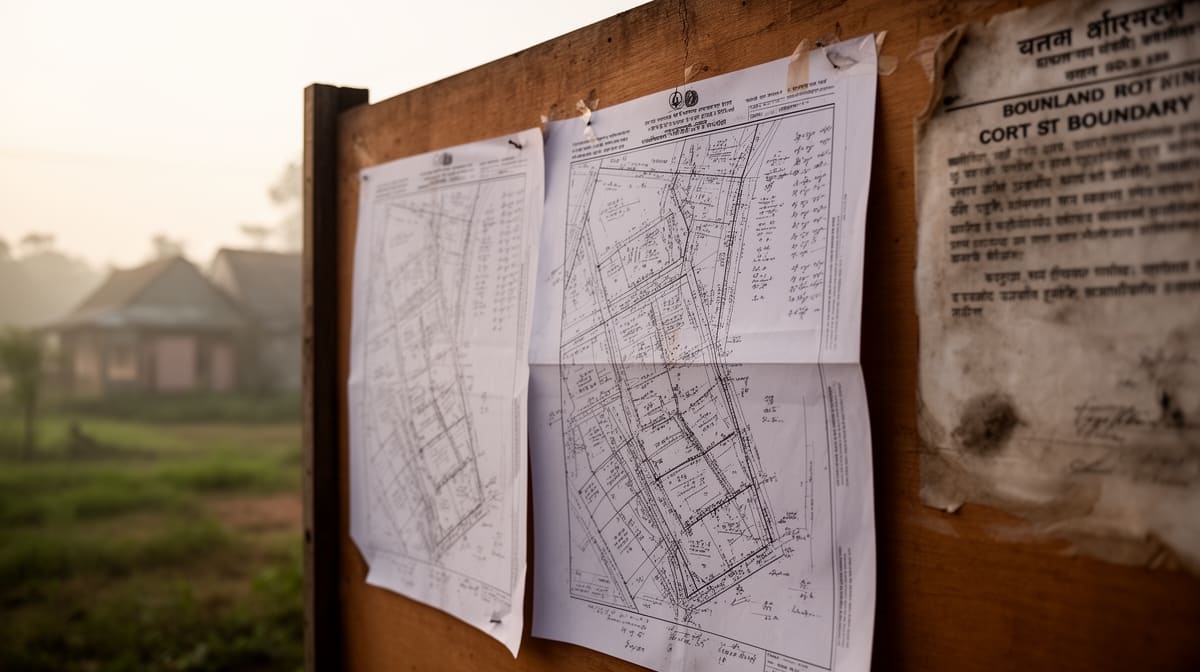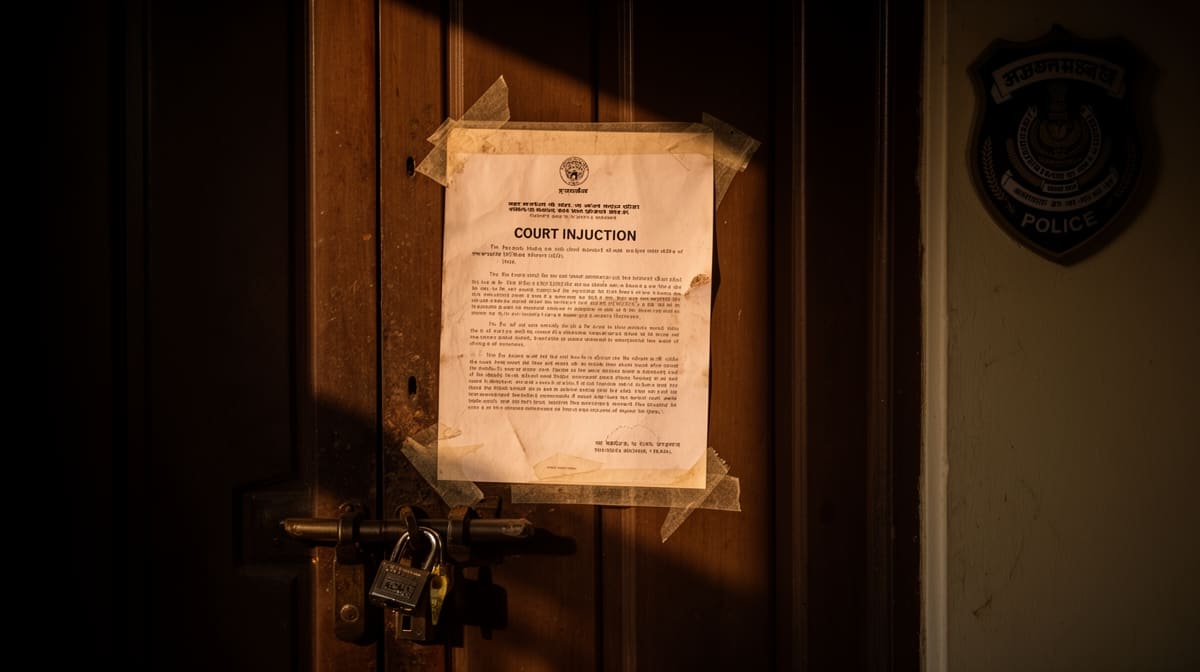
The Punjab and Haryana High Court has reaffirmed that violations of ex parte injunctions cannot be ignored merely due to procedural gaps in evidence. In a decisive ruling, the Court directed the trial court to adjudicate the pending contempt petition under Order 39 Rule 2A CPC within a strict timeline, emphasizing that justice delayed is justice denied in matters of possession and property rights.
Background & Facts
The Dispute
The petitioner, a hotel operator, filed a civil suit seeking permanent injunction against the respondents, who claimed ownership over the disputed premises. The petitioner asserted that he was a bona fide tenant in lawful possession and sought protection from unlawful interference. The respondents were served with notice but failed to appear in court.
Key Facts
- The petitioner filed the civil suit on an unspecified date prior to 13.02.2026
- On 13.02.2026, the Trial Court granted an ex parte injunction restraining respondents from dispossessing the petitioner, disconnecting utilities, or interfering with possession
- On 19.02.2026, respondents were proceeded against ex parte for non-appearance
- On or about 24.02.2026, respondents, accompanied by 10-12 henchmen, forcibly locked the premises and disconnected electricity
- The petitioner filed a complaint with the Commissioner of Police on 24.02.2026, which remained unaddressed
- The petitioner filed an application under Order 39 Rule 2A CPC for contempt of the injunction order, which remained pending
- The petitioner also filed applications under Section 151 CPC and Order 26 Rule 9 CPC seeking restoration of possession and appointment of a Local Commissioner to inventory belongings
Procedural History
- 13.02.2026: Ex parte injunction granted by Trial Court
- 19.02.2026: Respondents proceeded against ex parte
- 24.02.2026: Respondents forcibly locked premises and cut utilities; petitioner filed police complaint
- 09.03.2026: Trial Court dismissed applications under Section 151 CPC and Order 26 Rule 9 CPC, citing lack of photographic evidence and police response
- 16.03.2026: Present civil revision petition filed before the High Court under Article 227 of the Constitution
Relief Sought
The petitioner sought: (1) restoration of physical possession of the suit property; (2) appointment of a Local Commissioner to inventory belongings; (3) enforcement of the injunction order; and (4) adjudication of the pending contempt petition under Order 39 Rule 2A CPC.
The Legal Issue
The central question was whether a Trial Court may dismiss applications for restoration of possession and appointment of a Local Commissioner solely on the ground of insufficient documentary evidence, while a pending contempt petition under Order 39 Rule 2A CPC remains unadjudicated following a clear violation of an ex parte injunction.
Arguments Presented
For the Petitioner
Counsel contended that the Trial Court erred in ignoring documents already on record, including the police complaint and the injunction order. It was argued that the violation of an ex parte injunction constitutes a serious breach of judicial authority and that the Court’s duty under Section 151 CPC is to ensure compliance with its own orders. The petitioner emphasized that without a Local Commissioner’s report, the factual position of possession and inventory could not be established, especially where the respondents had taken forcible control.
For the Respondent
The respondents did not appear before the High Court and no submissions were made on their behalf.
The Court's Analysis
The Court observed that the ex parte injunction dated 13.02.2026 was a judicial order with binding effect, and its violation by the respondents was not a mere civil wrong but a contempt of court. The Trial Court’s dismissal of the applications under Section 151 CPC and Order 26 Rule 9 CPC on the ground of lack of photographs was found to be legally unsustainable. The Court noted that the documents submitted by the petitioner, including the police complaint and the injunction order, were part of the court file and could not be disregarded.
"The Court cannot turn a blind eye to a flagrant violation of its own order merely because the petitioner has not produced photographs. The existence of the injunction order and the fact of non-appearance by respondents are matters of record."
The Court further held that the appointment of a Local Commissioner is a discretionary power under Order 26 Rule 9 CPC, which must be exercised when the factual position is in dispute and cannot be otherwise ascertained. The Trial Court’s refusal to consider this application without examining the record was arbitrary.
The Court emphasized that the contempt petition under Order 39 Rule 2A CPC, which directly addresses the violation of the injunction, is the primary remedy. The dismissal of ancillary applications without addressing this core issue undermines the authority of the judiciary.
The Verdict
The petition was allowed. The High Court directed the Trial Court to decide the pending contempt petition under Order 39 Rule 2A CPC within six months from the date next fixed before it. The Trial Court was further directed to consider the petitioner’s application for appointment of a Local Commissioner under Order 26 Rule 9 CPC, in accordance with law, and to determine the inventory of belongings in the suit property. All other miscellaneous applications were disposed of as no further purpose would be served.
What This Means For Similar Cases
Contempt Proceedings Take Precedence Over Ancillary Relief
- Practitioners must prioritize filing contempt petitions under Order 39 Rule 2A CPC immediately upon violation of an ex parte injunction
- Courts cannot defer or dismiss contempt matters on technical grounds of evidence
- The pendency of a contempt petition renders ancillary applications under Section 151 CPC and Order 26 Rule 9 CPC not only relevant but necessary
Local Commissioner Appointment Is Not Discretionary When Facts Are Disputed
- A Local Commissioner must be appointed where possession is in dispute and physical inspection is required to ascertain factual status
- Failure to consider such an application due to absence of photographs or police reports is legally flawed
- Courts must rely on the entire record, not just selective evidence, when deciding procedural applications
Ex Parte Orders Are Not Paper Tigers
- Violation of ex parte injunctions carries the same legal weight as violations of final injunctions
- Non-appearance by respondents does not diminish the sanctity of the order
- Courts have a duty to enforce their own orders promptly, especially in cases involving commercial property and livelihood