The Andhra Pradesh High Court recently dismissed a civil revision petition challenging a trial court's order permitting a litigant to sue as an indigent person under Order 33 of the Code of Civil Procedure, 1908. The judgment reaffirms that the determination of indigency must consider whether payment of court fees would deprive the litigant of basic necessities, rather than merely assessing available assets or income.
Background & Facts
The Dispute
The respondent, Chaganti Srinivasa Rao, filed a pauper original petition (P.O.P. No. 3 of 2021) before the Principal Senior Civil Judge at Vijayawada, seeking cancellation of a sale deed executed by the petitioner, Alugola Ganesh. The respondent alleged that the petitioner obtained his signatures on documents under the false pretext of executing a mortgage deed, while in fact executing a sale deed. Unable to pay the court fee, the respondent sought permission to sue as an indigent person.
Key Facts
- The respondent claimed to have sustained heavy business losses and lacked means to pay court fees
- The petitioner contended that the respondent was engaged in real estate business and had sufficient means
- The respondent admitted in cross-examination that his daughter earns Rs. 13,000 per month and that he works as a daily wage laborer earning Rs. 300 per day
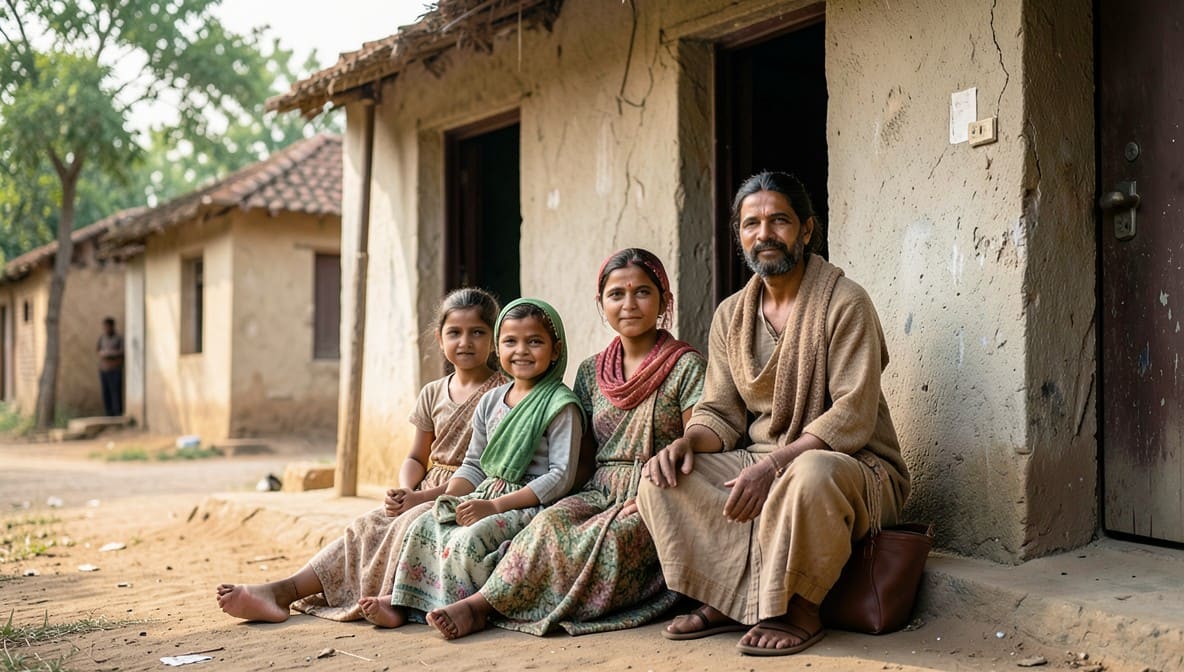
- The respondent resides with his wife and two children in Kankipadu
- The petitioner filed revenue records to prove that the respondent's wife owns land, but the respondent denied knowledge of whether the land was sold to discharge debts
Procedural History
- 03.02.2021: Respondent filed P.O.P. No. 3 of 2021 seeking permission to sue as an indigent person
- 13.04.2023: Principal Senior Civil Judge allowed the petition, permitting the respondent to sue in forma pauperis
- 2023: Petitioner filed Civil Revision Petition No. 1608 of 2023 before the Andhra Pradesh High Court
- 18.03.2026: Hearing reserved
- 29.04.2026: High Court dismissed the revision petition
Relief Sought
The petitioner sought to set aside the trial court's order dated 13.04.2023, contending that the respondent had sufficient means to pay court fees and was thus not entitled to sue as an indigent person.
The Legal Issue
The central question was whether the respondent, who earns daily wages and whose daughter earns a monthly salary, qualifies as an indigent person under Order 33 CPC, such that he may be permitted to sue without paying court fees.
Arguments Presented
For the Petitioner
- The respondent's daughter earns Rs. 13,000 per month, and the respondent earns Rs. 300 per day as a daily wage laborer
- The respondent's wife owns land, indicating financial capacity
- The trial court erred in allowing the respondent to sue as an indigent person without considering these means
- The order is contrary to Order 33, Rules 1 and 2 CPC
For the Respondent
- The respondent pleaded ignorance about whether his wife's lands were sold to discharge debts
- The respondent and his family rely on his daily wages and daughter's salary for basic necessities
- The trial court correctly applied Order 33 CPC and considered the respondent's financial circumstances
- The order does not warrant interference under Article 227 of the Constitution
The Court's Analysis
The High Court examined the scope of Order 33 CPC, which governs the procedure for suing as an indigent person. The Court emphasized that the determination of indigency is not merely a mechanical assessment of assets or income but must consider whether payment of court fees would deprive the litigant of basic necessities.
"Under Order XXXIII Rule 1 of the CPC, an indigent person is defined as someone who lacks 'sufficient means' to pay the prescribed court fee, excluding property exempt from attachment or the subject matter of the suit. Having some assets does not automatically disqualify a person if those assets cannot be readily converted into cash to pay fee. The focus is on whether paying the fee would deprive the person of basic necessities."
The Court noted that the respondent's daughter earns Rs. 13,000 per month, and the respondent earns Rs. 300 per day as a daily wage laborer. However, it observed that daily wage laborers do not earn consistently throughout the year. The Court further held that where a family functions as a single economic unit, their combined financial assets must be considered for determining indigency.
"Where two people are living together and functioning as a single economic unit, whether married, related, or otherwise, consideration of their combined financial assets may be warranted for the purposes of determining a party's indigency status in a civil proceeding."
The Court rejected the petitioner's reliance on revenue records showing the respondent's wife's land ownership, as the respondent denied knowledge of whether the land was sold to discharge debts. The Court held that the trial court had rightly considered the respondent's financial circumstances and that its order did not warrant interference under Article 227 of the Constitution.
The Verdict
The Andhra Pradesh High Court dismissed the Civil Revision Petition (CRP No. 1608 of 2023). The Court upheld the trial court's order dated 13.04.2023, permitting the respondent to sue as an indigent person. There was no order as to costs, and pending miscellaneous petitions were closed.
What This Means For Similar Cases
Indigency Determination Requires Holistic Assessment
- Courts must consider whether payment of court fees would deprive the litigant of basic necessities, rather than merely assessing available assets or income
- The definition of 'sufficient means' under Order 33 CPC excludes property exempt from attachment and focuses on the litigant's ability to sustain basic living expenses
Family as an Economic Unit
- Where a family functions as a single economic unit, their combined financial assets must be considered for determining indigency
- Daily wage earnings and irregular income sources must be assessed in the context of the litigant's overall financial situation
Limits of Documentary Evidence
- Documentary evidence, such as revenue records, may not be conclusive if the litigant denies knowledge of the transactions or assets
- Courts must weigh admissions in cross-examination and the overall financial circumstances before deciding on indigency applications