The Madhya Pradesh High Court has reaffirmed that dismissal of a suit under Order 17 Rule 3 CPC for non-appearance must not be mechanical, especially when counsel appears with a bona fide application seeking adjournment on account of unavoidable circumstances. This judgment restores procedural balance in civil litigation by requiring courts to weigh the reason for absence against the prejudice to the opposing party.
Background & Facts
The Dispute
The appellant, Smt. Kiran Batham, filed a civil suit on 17.06.2013 seeking declaration and injunction against respondents regarding property rights. The suit remained pending for over three years with repeated delays in leading evidence.
Key Facts
- The plaintiff’s evidence was originally scheduled to be closed on 27.01.2016
- On 27.01.2016, the trial court closed the plaintiff’s evidence but granted leave to lead evidence upon payment of Rs. 2,000 as cost
- The matter was fixed for evidence on 04.11.2016
- On 02.12.2016, the case was listed for evidence at 10:00 a.m.
- At 10:00 a.m., the plaintiff, her counsel, and all witnesses were absent
- The court rescheduled the matter for 1:00 p.m. and again for 4:00 p.m.
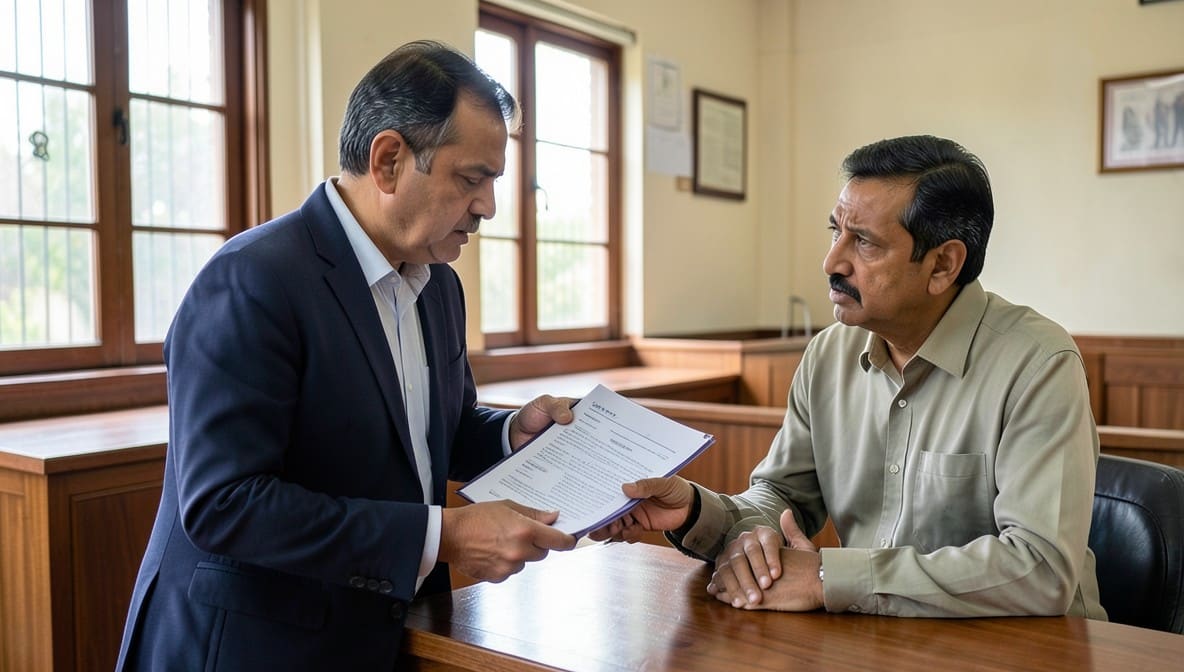
- At 4:00 p.m., the appellant’s counsel appeared and filed an application under Order 17 Rule 1 CPC stating that witness Jitendra was suffering from viral fever and could not attend
- The application was unsupported by medical records or affidavits
- The trial court dismissed the suit under Order 17 Rule 3 CPC on the same day
Procedural History
- 17.06.2013: Suit filed before the trial court
- 27.01.2016: Plaintiff’s evidence closed; court granted one-time opportunity to lead evidence subject to cost of Rs. 2,000
- 04.11.2016: Case fixed for evidence
- 02.12.2016: Case listed for evidence at 10:00 a.m., 1:00 p.m., and 4:00 p.m.; plaintiff and witnesses absent throughout
- 02.12.2016: Counsel filed application under Order 17 Rule 1 CPC at 4:00 p.m.; suit dismissed under Order 17 Rule 3 CPC
- 02.12.2016: Final order passed by trial court
- 18.01.2017: First Appeal No. 180 of 2017 filed before the High Court
- 23.06.2026: Judgment delivered by the High Court
Relief Sought
The appellant sought setting aside of the trial court’s order dated 02.12.2016 dismissing the suit, restoration of the suit for adjudication on merits, and exemption from costs or minimal costs.
The Legal Issue
The central question was whether a suit may be dismissed under Order 17 Rule 3 CPC when the plaintiff’s counsel appears and files a bona fide application under Order 17 Rule 1 CPC seeking adjournment due to the unavailability of a key witness, even if the application lacks supporting documentation.
Arguments Presented
For the Appellant
Counsel argued that the dismissal was harsh and mechanical. The counsel appeared on the day of hearing and filed an application disclosing a plausible reason - witness illness - which warranted consideration under Order 17 Rule 1 CPC. The appellant had already borne the cost of Rs. 2,000 for a prior adjournment and had not wilfully delayed proceedings. The court must exercise discretion under Order 17 Rule 1 before resorting to dismissal under Rule 3.
For the Respondent
The respondent contended that the appellant was an indolent litigant who had repeatedly failed to lead evidence despite multiple opportunities. The application filed at 4:00 p.m. was vague, unsupported by medical evidence, and filed too late to justify adjournment. The trial court was justified in dismissing the suit under Order 17 Rule 3 CPC to prevent abuse of process and ensure timely disposal.
The Court's Analysis
The High Court acknowledged the appellant’s prior delays but emphasized that dismissal under Order 17 Rule 3 CPC is an extreme remedy reserved for cases of deliberate neglect or contumacious conduct. The court noted that the counsel appeared on the day of hearing and filed an application under Order 17 Rule 1 CPC, which is a statutory mechanism designed to allow flexibility in procedural compliance.
"The dismissal of a suit under Order 17 Rule 3 CPC cannot be a reflexive response to non-appearance when the party or counsel is present and seeks adjournment on a stated ground, however imperfectly documented."
The court held that the trial court erred in not considering the application under Rule 1 before invoking Rule 3. The absence of medical proof does not automatically render the application frivolous; it merely affects the weight to be accorded, not its admissibility. The court further observed that the respondent had not demonstrated any prejudice beyond delay, which was already mitigated by the prior cost imposition.
The court distinguished this case from those involving repeated, unexplained absences, noting that this was the first instance where counsel appeared and formally sought relief. The spirit of Order 17 Rule 1 is to facilitate justice, not to penalize procedural lapses without inquiry.
The Verdict
The appeal was allowed. The High Court set aside the trial court’s order dated 02.12.2016 dismissing the suit under Order 17 Rule 3 CPC. The suit was restored to the trial court’s file for fresh adjudication. The appellant was directed to pay costs of Rs. 10,000 to respondent No. 1 within 30 days of appearance before the trial court. The trial court was directed to ensure the appearance of all respondents before proceeding to decide the suit on merits.
What This Means For Similar Cases
Adjournment Applications Must Be Considered, Not Dismissed Outright
- Practitioners must file applications under Order 17 Rule 1 CPC even if documentation is incomplete
- Courts are obligated to examine the substance of the application, not merely its form
- Absence of medical certificates does not equate to mala fides; the court must assess plausibility
Dismissal Under Order 17 Rule 3 CPC Is Not Automatic
- Dismissal is a last resort, not a default remedy
- Courts must distinguish between inadvertent delay and deliberate neglect
- Prior delays may be relevant but cannot justify dismissal if a genuine application is made on the day of hearing
Procedural Fairness Trumps Technical Compliance
- The court’s duty is to decide suits on merits where possible
- Rule 3 cannot be invoked to circumvent the procedural safeguards under Rule 1
- Litigants are entitled to one meaningful opportunity to present evidence, even after prior delays