The Orissa High Court has clarified that the extraction of earth for commercial infrastructure projects, even when reused on-site, attracts royalty liability under the Odisha Minor Mineral Concession Rules, 2016, irrespective of claims of domestic use. The judgment reinforces that statutory exemptions for bona fide domestic consumption do not extend to commercial undertakings, even when the mineral is not sold or transported off-site.
Background & Facts
The Dispute
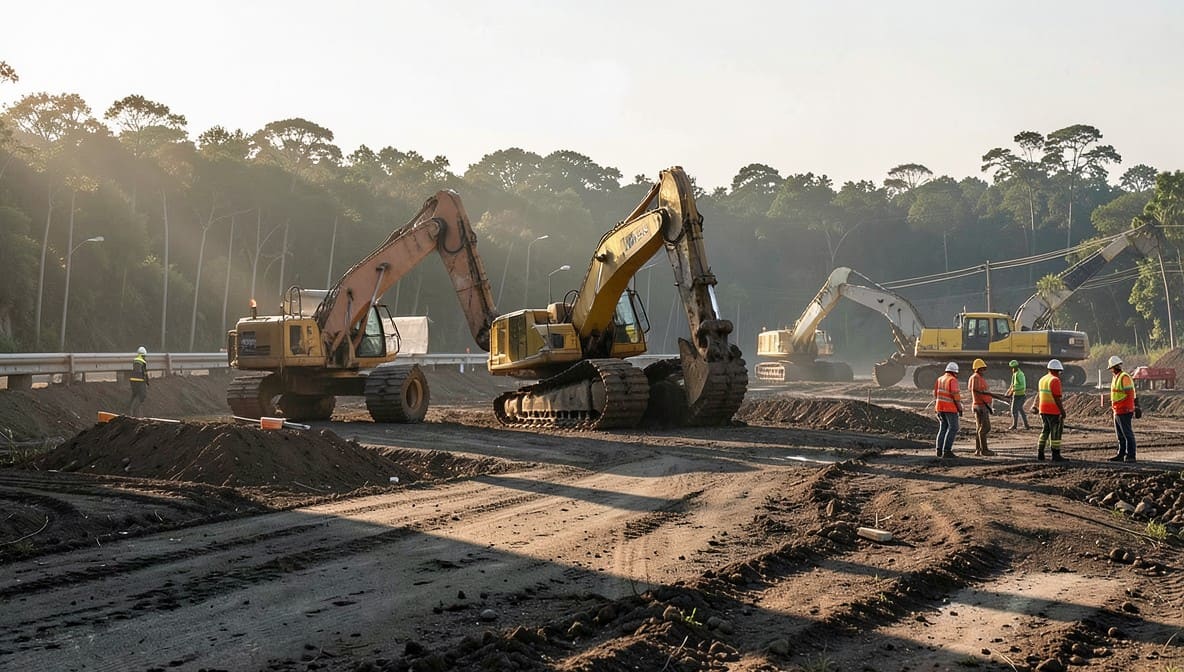
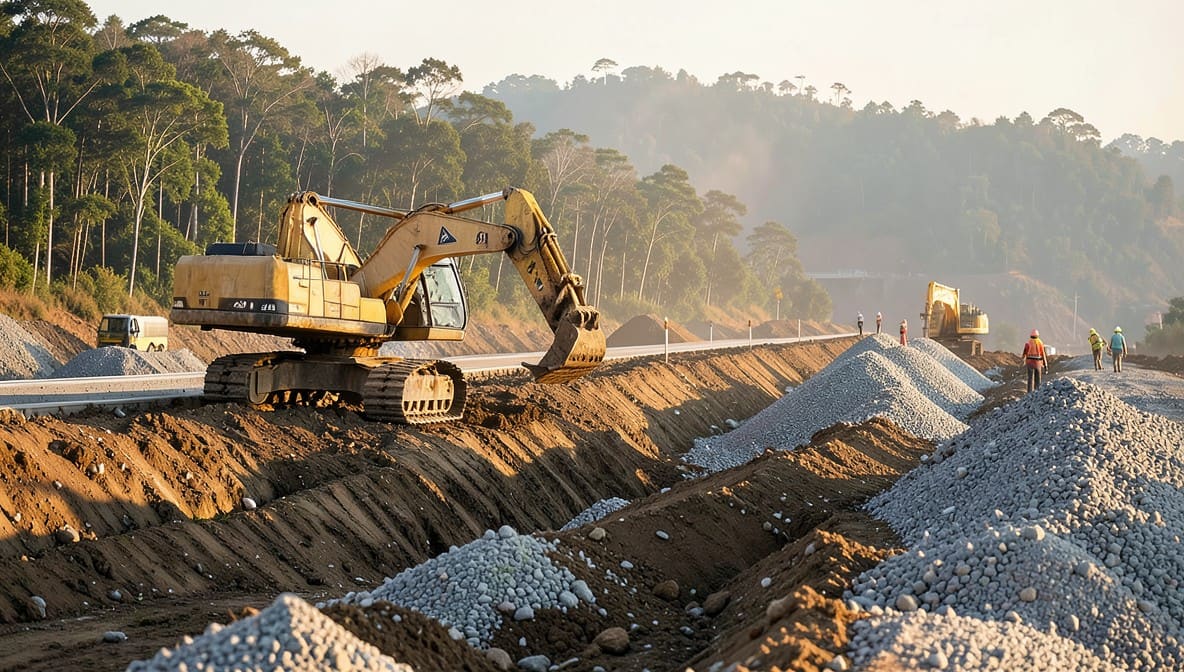
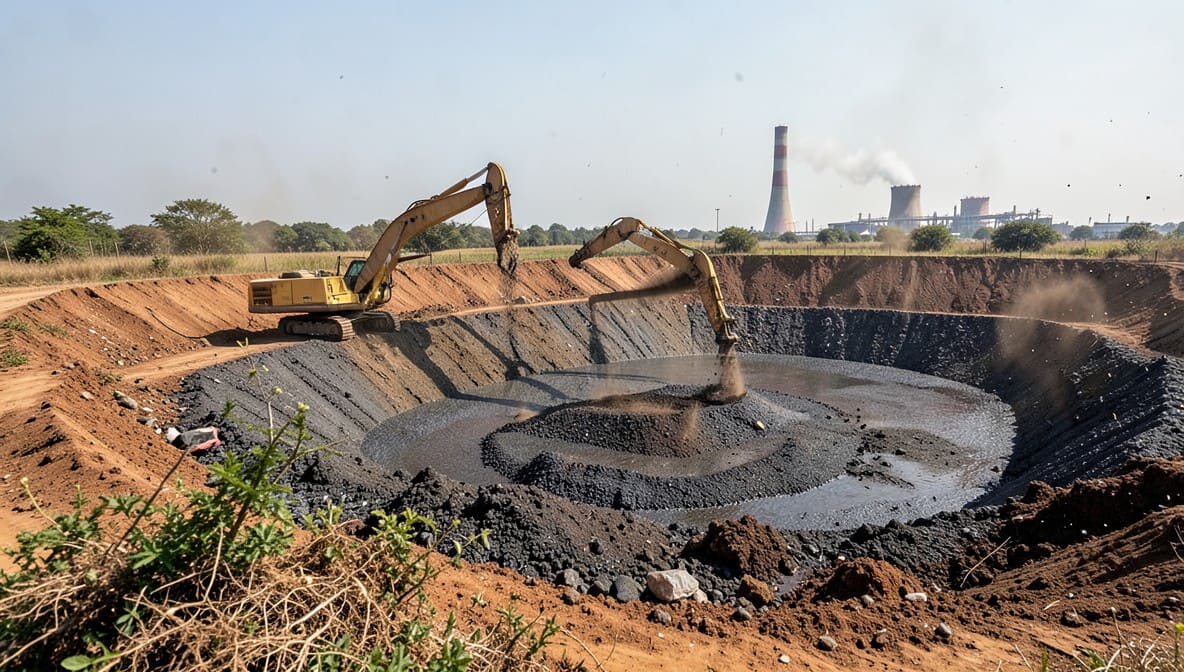
The petitioner, Shree Balaji Engicons Private Limited, a private construction company, was awarded a contract by Odisha Power Generation Corporation Ltd. (OPGC), a government undertaking, to construct an ash pond for its 2X660 MW thermal power plant at Tilia village, Jharsuguda. The petitioner extracted earth from the leased land of OPGC to form the embankment (bundh) of the ash pond. The State authorities, through the Tahasildar of Lakhanpur, issued a demand notice for royalty on the extracted earth, which OPGC then withheld from the petitioner’s running account bills. The petitioner challenged this deduction, asserting that the earth was used solely for internal construction purposes and not for commercial sale or trade, and therefore fell under the exemption for "bona fide domestic consumption" under Rule 3 of the Odisha Minor Mineral Concession Rules, 2016.
Key Facts
- The land on which the ash pond was constructed was leased to OPGC by the State Government under Order No. 2224 dated 02.03.2016 for the establishment of an industry - the thermal power plant.
- The petitioner was selected as the contractor through a Request for Proposal dated 23.11.2016 and executed the contract with OPGC on 21.12.2016.
- The contract’s Appendix-D required the petitioner to obtain permits for the "usage of earth" from the competent authority.
- Clause 1.2.6 of the contract defined "Applicable Laws" to include all statutes, rules, and regulations in force at the time of performance, including the Odisha Minor Mineral Concession Rules, 2016, which came into force on 15.12.2016.
- Clause 5.1.4 of the contract required the petitioner to provide an exemption certificate from the relevant authority if claiming exemption from statutory deductions, including royalty.
- The petitioner did not obtain any quarry permit or exemption certificate.
- The earth extracted was mechanically dug from within the leased area and redeployed to construct the embankment of the ash pond - no earth was transported off-site or sold.
- The Ministry of Mines and Minerals, Government of India, by Notification dated 03.02.2000, declared "ordinary earth" used for filling or levelling in construction of embankments as a "minor mineral".
- Rule 3 of the Odisha Minor Mineral Concession Rules, 2016, prohibits any person from undertaking quarrying operations for minor minerals without a quarry permit, except for extraction for "normal agricultural operations or other bona fide domestic consumption".
- Rule 2(w) defines "quarry permit" as a permit for extraction, collection, and/or removal of minor minerals.
- Rule 32(2) imposes liability on the lessee (or contractor acting on behalf of the lessee) to pay royalty for any minor mineral removed or consumed from the leased area.
Procedural History
- 23.11.2016: Petitioner submitted bid for construction of ash pond.
- 21.12.2016: Contract executed between petitioner and OPGC.
- 17.02.2017: OPGC communicated that royalty for earth used inside the pond area was not payable, but for outside area it was.
- 15.03.2018: Tahasildar issued demand notice for royalty on extracted earth.
- 15.03.2018: Petitioner objected to deduction, citing Rules, 2004 and claiming exemption.
- 23.03.2018: Tahasildar issued formal Demand Notice (Annexure-9) for Rs. 1,05,35,000.
- 14.04.2018: Petitioner applied for exemption certificate from Tahasildar - no response received.
- 18.04.2018 & 24.05.2018: Petitioner wrote to OPGC requesting cessation of royalty deductions - ignored.
- 01.08.2019: Writ Petition filed before Orissa High Court (W.P.(C) No. 9272 of 2018) - dismissed with liberty to approach arbitrator.
- 08.11.2019: Supreme Court set aside the High Court’s order and remanded the matter for adjudication on merits.
- 11.02.2026: Final hearing concluded before Division Bench of Orissa High Court.
- 06.05.2026: Judgment delivered.
The Parties' Positions
For the Petitioner:
- Argued that extraction and redeployment of earth within the same leased area for internal construction of an ash pond constituted "bona fide domestic consumption" under Rule 3(1) proviso.
- Contended that since the earth was not sold, transported, or commercially exploited, it did not amount to "quarrying operation".
- Relied on Promoters and Builders Association of Pune v. State of Maharashtra (2015) and State of Odisha v. Union of India (2001) to argue that reuse of excavated material for project purposes negates royalty liability.
- Asserted that the contract did not explicitly mention royalty, and the cost was inclusive of all charges.
For the Respondents (State and OPGC):
- Argued that the term "domestic consumption" refers to personal, non-commercial, household use - not industrial infrastructure.
- Emphasized that the ash pond was an integral part of a commercial thermal power plant, making the entire activity commercial.
- Cited Rule 32(2) to assert that any contractor extracting minor minerals from leased land is liable for royalty, regardless of whether the material is reused on-site.
- Highlighted that the petitioner failed to obtain a quarry permit as required under Rule 2(w) and Rule 3.
- Pointed to Clause 5.1.4 of the contract, which placed the burden on the petitioner to prove exemption - which it failed to do.
- Relied on State of Odisha v. Union of India (2001) SC, which held that even the Railway Administration, a government entity, was liable for royalty when extracting earth for railway line construction.
Relief Sought
The petitioner sought:
- A declaration that royalty is not leviable on extraction of earth for construction of the ash pond.
- A direction to refund all royalty amounts already deducted from its running account bills (totaling Rs. 1,05,35,000).
- A prohibition on future deductions of royalty.
The Legal Issue
The central question was whether the extraction and redeployment of ordinary earth from leased land for construction of an ash pond - an integral component of a commercial thermal power plant - qualifies as "bona fide domestic consumption" under Rule 3(1) of the Odisha Minor Mineral Concession Rules, 2016, thereby exempting it from royalty liability, or whether such activity constitutes a "quarrying operation" requiring a permit and attracting royalty under Rule 32.
Arguments Presented
For the Appellant/Petitioner
The petitioner relied on the proviso to Rule 3(1) of the Rules, 2016, which exempts extraction for "bona fide domestic consumption" from the requirement of a permit. It argued that since the earth was not sold, transported, or commercially exploited, and was used solely for internal construction of the ash pond - a facility for the power plant’s own operation - it fell within the exemption. The petitioner cited Promoters and Builders Association of Pune v. State of Maharashtra (2015) 12 SCC 736, where the Supreme Court held that excavation of earth for laying foundations and reuse within the same site did not attract royalty under Maharashtra law. It further contended that the contract did not explicitly mention royalty, and the cost was inclusive of all charges. The petitioner emphasized that the term "domestic" should be interpreted as "non-commercial" and that the State’s interpretation would render the exemption meaningless.
For the Respondent/State
The State and OPGC countered that "domestic consumption" refers to personal, household, or non-industrial use - not industrial infrastructure projects. They argued that the ash pond was not for personal use but for the commercial operation of a power plant, making the entire activity commercial. They relied on State of Odisha v. Union of India (2001) 1 SCC 429, where the Supreme Court held that even the Railway Administration, a government entity, was liable for royalty when extracting earth for railway line construction, because the use was not "domestic". They emphasized that Rule 32(2) imposes liability on the lessee (and by extension, its contractor) for any minor mineral removed or consumed from the leased area, regardless of reuse. They also pointed to the petitioner’s failure to obtain a quarry permit under Rule 2(w), which was mandatory, and its failure to produce an exemption certificate under Clause 5.1.4 of the contract.
The Court's Analysis
The Court undertook a detailed statutory interpretation of the Odisha Minor Mineral Concession Rules, 2016, and examined the nature of the activity in light of precedent. It began by affirming that "ordinary earth" is a minor mineral under the Central Government’s 2000 Notification and Rule 2(gg) of the Rules, 2016. The Court then examined the definition of "quarrying operation" under Clause (v) of Rule 2, which includes any operation undertaken for the purpose of "winning" any minor mineral - a term interpreted by the Supreme Court in Bhagwan Dass v. State of U.P. (1976) to mean "extracting" or "obtaining".
The Court rejected the petitioner’s argument that reuse of earth on-site negates commercial exploitation. It held that the purpose of extraction, not the destination of the material, determines liability. The Court observed:
"The use of the excavated earth is not for personal, household, or non-commercial purposes. It is for the construction of an ash pond, which is an integral component of a commercial thermal power plant. The petitioner, a private company, undertook this work for commercial gain under a contract with a government undertaking."
The Court distinguished Promoters and Builders Association of Pune on the grounds that the Maharashtra case involved construction for private residential buildings, whereas here the end-use was industrial and commercial. It emphasized that the Supreme Court in State of Odisha v. Union of India (2001) had already settled the principle that even government entities are liable for royalty when extracting minerals for infrastructure projects, unless the use qualifies as "domestic consumption" - a term the Court interpreted narrowly as personal, non-industrial use.
The Court further held that the proviso to Rule 3(1) is an exception to a general prohibition, and exceptions must be strictly construed. It cited Mannalal Khetan v. Kedar Nath Khetan (1977) to affirm that negative language in statutory provisions like "no person shall undertake" is mandatory and prohibitory. The Court noted that the petitioner had not obtained a quarry permit as required under Rule 2(w), nor had it produced any exemption certificate as mandated by Clause 5.1.4 of the contract.
The Court also examined Rule 32(2), which explicitly imposes liability on the lessee (and by implication, its contractor) for royalty on any minor mineral removed or consumed from the leased area. It held that the petitioner, as the contractor, was acting on behalf of OPGC, the lessee, and therefore fell within the scope of liability. The Court concluded:
"The petitioner’s activity constitutes a quarrying operation under Rule 2(v). The exemption under Rule 3(1) proviso does not apply because the use is commercial, not domestic. The failure to obtain a permit renders the extraction unlawful. The liability under Rule 32(2) is triggered by consumption of the mineral from the leased area, irrespective of whether it is reused on-site."
The Verdict
The writ petition was dismissed. The Court held that the petitioner is liable to pay royalty on the extraction of earth for the construction of the ash pond under Rule 32(2) of the Odisha Minor Mineral Concession Rules, 2016. The Court directed that the amount of Rs. 1,05,35,000 already deducted by OPGC and deposited with the State shall stand as valid payment, subject to verification by the Tahasildar. No refund shall be granted. The petitioner shall not claim exemption from future royalty demands for similar activities without obtaining a quarry permit or valid exemption certificate. There shall be no order as to costs.
What This Means For Similar Cases
Commercial Use Overrides Domestic Exemption
- Practitioners must now recognize that "bona fide domestic consumption" under mineral rules applies only to personal, household, or non-industrial use - not to infrastructure projects, even if the material is reused on-site.
- Construction contractors working on power plants, dams, roads, or industrial facilities cannot claim exemption merely because the extracted earth is not sold or transported off-site.
- The end-use of the mineral, not its physical movement, determines liability.
Permit Requirement Is Absolute
- The absence of a quarry permit under Rule 2(w) renders extraction unlawful, regardless of intent or reuse.
- Contractors must proactively apply for permits before commencing excavation, even if the project owner claims responsibility.
- Contractual clauses requiring contractors to obtain permits (e.g., Clause 5.1.4) are enforceable and shift liability to the contractor.
Royalty Liability Extends to Contractors
- Rule 32(2) imposes liability on the lessee, but contractors acting on behalf of the lessee are equally bound if they extract and consume the mineral.
- Contractors must review contracts to identify royalty obligations and factor them into bids - costs cannot be assumed to be "inclusive" unless explicitly stated.
- Failure to obtain exemption certificates as required by contract terms will result in automatic liability.
Statutory Interpretation Favors Strict Compliance
- Negative statutory language (e.g., "no person shall") is mandatory and not directory.
- Exemptions are exceptions and must be strictly construed - courts will not stretch their meaning to avoid statutory obligations.
- Precedents like State of Odisha v. Union of India (2001) remain binding and apply even when the lessee is a government entity.