The Allahabad High Court has delivered a significant judgment on the maintainability of special appeals against non-speaking orders passed by a Single Judge. The Court held that when a Single Judge fails to record reasons in an order, it violates the principles of natural justice, thereby allowing a special appeal under Chapter VIII Rule 5 of the Allahabad High Court Rules, 1952. This ruling underscores the necessity of reasoned judicial orders and provides a critical exception to the general bar on special appeals in writ proceedings.
Background & Facts
The Dispute
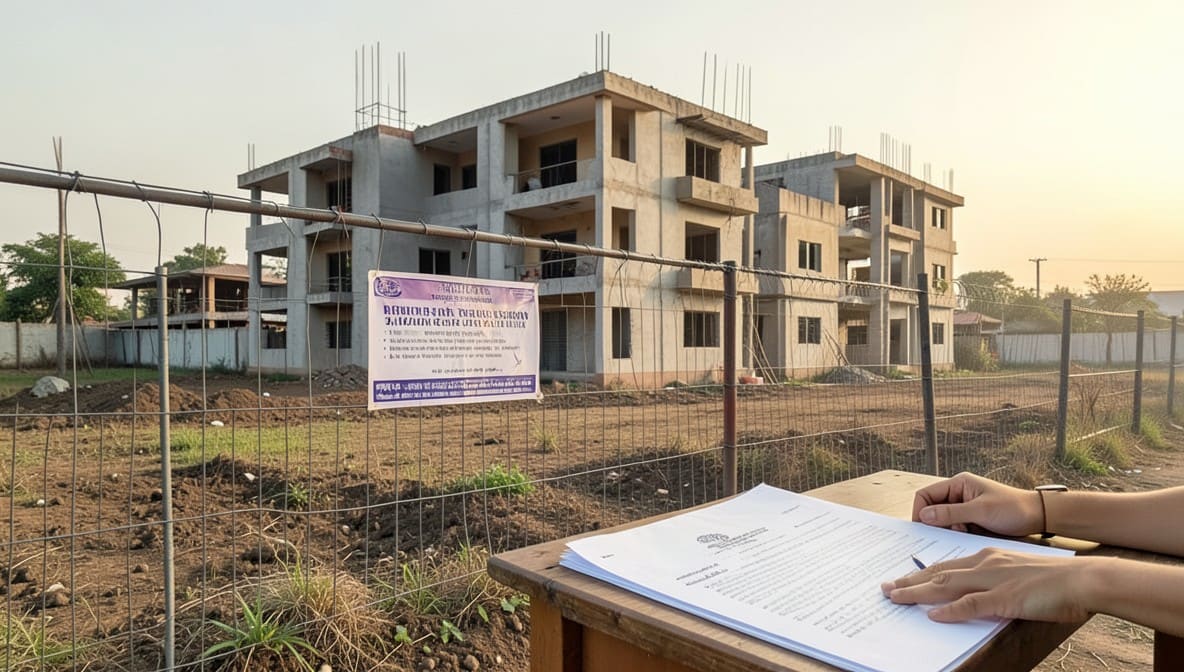
The case revolves around the cancellation of registration of a society under Section 12-D(1)(c) of the Societies Registration Act, 1860. The Deputy Registrar, Agra, passed an order on 12.03.2019 cancelling the registration of the society. The appellate authority, Commissioner Agra Division, Agra, dismissed the appeal on 18.09.2025 and the review application on 09.10.2025.
Key Facts
- The respondent-Committee of Management, through its President Shri Niwas, challenged the Deputy Registrar's order dated 12.03.2019 before the appellate authority
- The appellate authority dismissed the appeal on 18.09.2025 and the review application on 09.10.2025
- The respondent filed a writ petition (Writ-C No. 140 of 2026) before the Allahabad High Court challenging these orders
- The Single Judge, relying on the judgment in Laljimal Dharamshala Society and another v. The Commissioner Agra Division Agra and others, set aside the appellate and review orders and remitted the matter back for fresh consideration
Procedural History
- 12.03.2019: Deputy Registrar cancels the society's registration under Section 12-D(1)(c) of the Societies Registration Act, 1860
- 18.09.2025: Appellate authority dismisses the appeal
- 09.10.2025: Appellate authority dismisses the review application
- 24.02.2026: Single Judge sets aside the appellate and review orders and remits the matter for fresh consideration
- 29.04.2026: Special Appeal (No. 400 of 2026) filed before the Division Bench of Allahabad High Court
- 01.07.2026: Division Bench allows the appeal, sets aside the Single Judge's order, and restores the writ petition for fresh hearing
The Parties' Positions
For the Appellant (State of U.P. and others):
- Argued that the Single Judge's order was non-speaking and failed to record reasons, making it unsustainable
- Contended that the appeal was maintainable despite the bar under Chapter VIII Rule 5 of the Allahabad High Court Rules, 1952, as the order violated natural justice
- Relied on the Supreme Court judgment in Abhishek Gupta v. Dinesh Kumar and others to argue that the bar under Rule 5 must yield to principles of natural justice
For the Respondent (Committee of Management):
- Raised a preliminary objection that the special appeal was not maintainable under Chapter VIII Rule 5 of the Allahabad High Court Rules, 1952
- Relied on judgments in Vajara Yojna Seed Farm v. Presiding Officer, Labour Court II and Committee of Management v. State of U.P. to argue that the appeal was barred
Relief Sought
The appellant sought the setting aside of the Single Judge's order dated 24.02.2026 and the restoration of the writ petition for fresh hearing and disposal.
The Legal Issue
The central question before the Court was whether a special appeal under Chapter VIII Rule 5 of the Allahabad High Court Rules, 1952 is maintainable against a non-speaking order passed by a Single Judge in a writ petition, where the Single Judge failed to record reasons for the decision.
Arguments Presented
For the Appellant
- The Single Judge's order was ex facie non-speaking, containing no discussion on facts, impugned orders, or the judgment relied upon
- The order did not indicate whether the writ petition was allowed or disposed of, violating the principles of natural justice
- Reliance was placed on the Supreme Court judgment in Abhishek Gupta v. Dinesh Kumar and others, which held that the bar under Rule 5 must yield to the principles of natural justice
- The necessity of a speaking order was emphasized, citing Kranti Associates Private Limited v. Masood Ahmed Khan, which laid down the parameters for reasoned orders
For the Respondent
- Argued that the special appeal was not maintainable under Chapter VIII Rule 5 of the Allahabad High Court Rules, 1952, as it barred appeals against orders passed by a Single Judge in writ proceedings
- Relied on judgments in Vajara Yojna Seed Farm v. Presiding Officer, Labour Court II and Committee of Management v. State of U.P. to contend that the appeal was barred
The Court's Analysis
The Court undertook a detailed analysis of Chapter VIII Rule 5 of the Allahabad High Court Rules, 1952, which bars special appeals against orders passed by a Single Judge in writ proceedings under Article 226 of the Constitution where an appellate or revisional order is under challenge. The Court noted that on a plain reading of the rule, the present appeal would be barred.
However, the Court relied heavily on the Supreme Court judgment in Abhishek Gupta v. Dinesh Kumar and others, which carved out an exception to the bar under Rule 5. The Supreme Court held that the bar must yield to the foundational principles of natural justice, namely the right to be heard and the right to a fair hearing. The Supreme Court observed:
"In the circumstances before us, the bar created by Rule 5 must yield to the foundational principles of natural justice, namely, the right to be heard and the right to a fair hearing. It is trite law that the principle of non-joinder, though originating from the Code of Civil Procedure, 1908, applies with equal force to writ proceedings. An order passed in writ jurisdiction without impleading an affected or necessary party is liable to be invalidated on that ground alone. Since the courts exist to administer justice, the rigours of Rule 5 would not apply and stand relaxed in a case of the present nature where the order under challenge is one, passed by a Single Judge on a petition under Article 226 of the Constitution, adversely affecting the rights of a party who was not a party-respondent before the Single Judge."
The Court also emphasized the necessity of speaking orders, citing the Supreme Court judgment in Kranti Associates Private Limited v. Masood Ahmed Khan, which laid down comprehensive parameters for reasoned judicial orders. The Court observed:
"Summarizing the above discussion, this Court holds: (a) In India the judicial trend has always been to record reasons, even in administrative decisions, if such decisions affect anyone prejudicially. (b) A quasi-judicial authority must record reasons in support of its conclusions. (c) Insistence on recording of reasons is meant to serve the wider principle of justice that justice must not only be done it must also appear to be done as well. (d) Recording of reasons also operates as a valid restraint on any possible arbitrary exercise of judicial and quasi-judicial or even administrative power. (e) Reasons reassure that discretion has been exercised by the decision maker on relevant grounds and by disregarding extraneous considerations."
Applying these principles, the Court held that the Single Judge's order was non-speaking and failed to meet the requirements of a reasoned order. The Court noted that the order did not discuss the facts of the case, the impugned orders, or the judgment relied upon, nor did it indicate whether the writ petition was allowed or disposed of. Consequently, the Court held that the appeal was maintainable despite the bar under Rule 5, as the order violated the principles of natural justice.
The Verdict
The Allahabad High Court allowed the special appeal, setting aside the order dated 24.02.2026 passed by the Single Judge in Writ-C No. 140 of 2026. The writ petition was restored to its original file and number, and the Court directed that it be heard and decided afresh by the Single Judge in accordance with law. The matter was listed for fresh hearing on 14.07.2026.
What This Means For Similar Cases
Non-Speaking Orders Are Unacceptable
- Courts must ensure that all judicial and quasi-judicial orders are speaking orders, containing clear, cogent, and succinct reasons
- Failure to record reasons violates the principles of natural justice and renders the order vulnerable to challenge
- Practitioners should scrutinize orders for compliance with the parameters laid down in Kranti Associates Private Limited v. Masood Ahmed Khan
Special Appeal Maintainable Against Non-Speaking Orders
- The bar under Chapter VIII Rule 5 of the Allahabad High Court Rules, 1952 is not absolute and must yield to the principles of natural justice
- If an order adversely affects a party and is non-speaking, a special appeal may lie, as held in Abhishek Gupta v. Dinesh Kumar and others
- This exception provides a critical remedy for parties aggrieved by unreasoned orders
Judicial Accountability and Transparency
- The judgment reinforces the importance of judicial accountability and transparency in decision-making
- Reasons in judicial orders are essential for sustaining litigants' faith in the justice delivery system and for facilitating appellate review
- Courts must ensure that discretion is exercised on relevant grounds and not arbitrarily
This judgment serves as a strong reminder to judicial officers at all levels to adhere to the principles of natural justice and to record reasons in their orders, failing which such orders may be set aside on appeal.