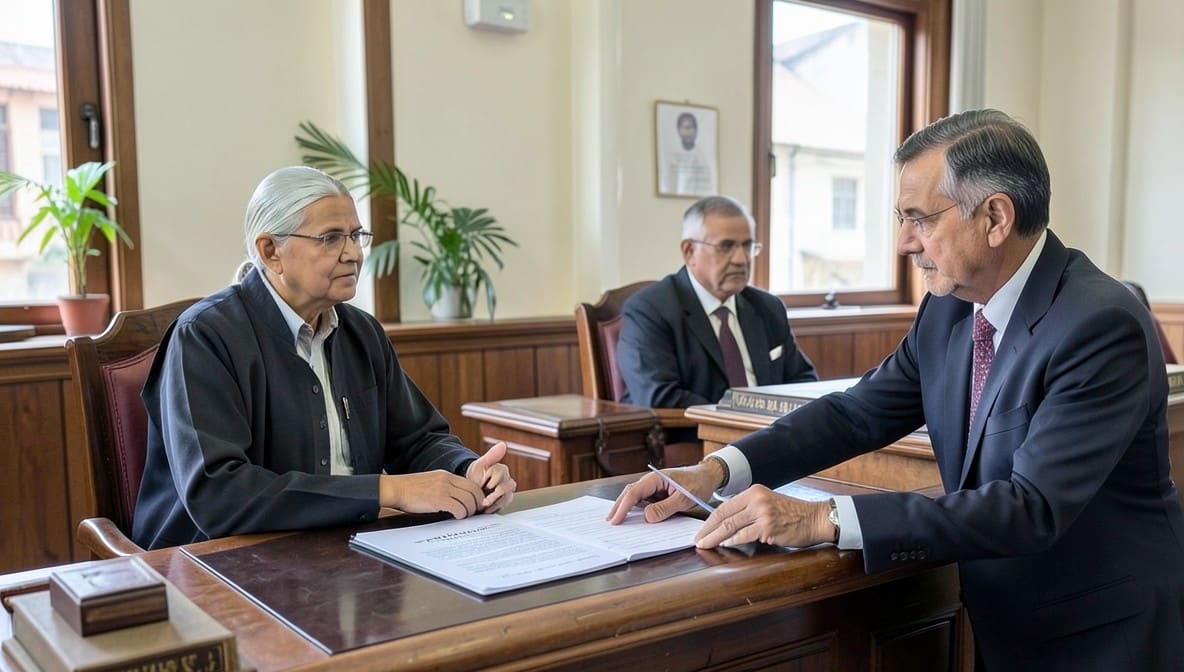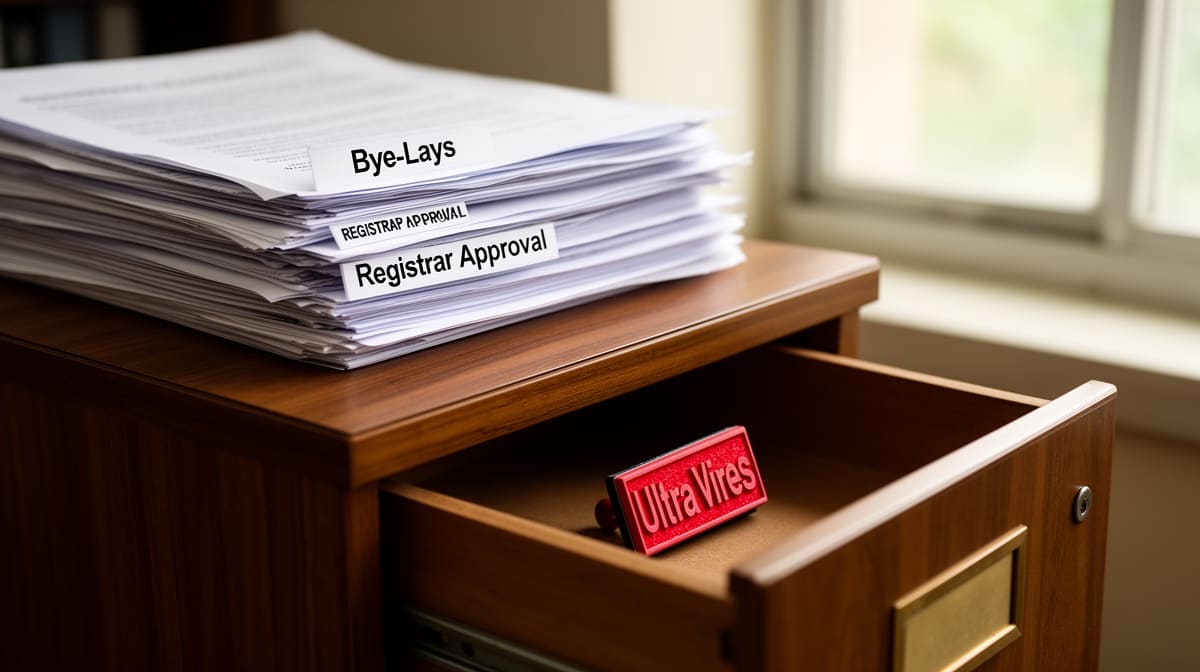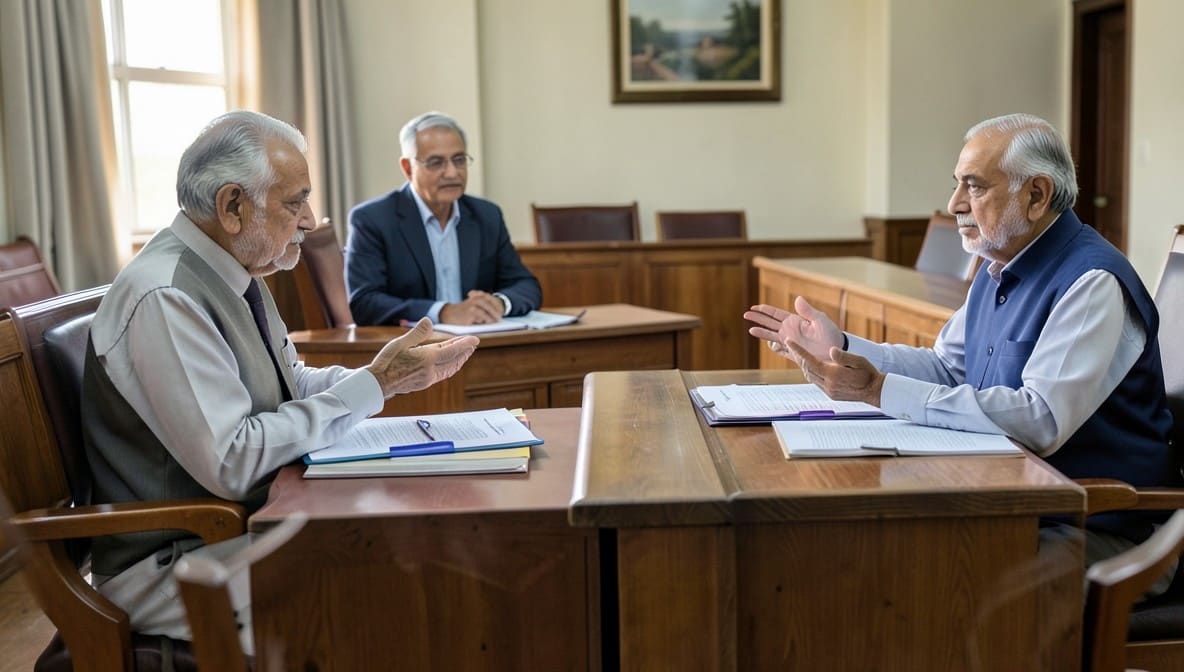
The Allahabad High Court has delivered a significant judgment on the maintainability of appeals under the Societies Registration Act, 1860. The Court held that no appeal lies against orders passed under Section 25(2) or Section 4-B of the Act, as these provisions do not provide for appellate remedies. The judgment clarifies the scope of 'purported exercise of jurisdiction' under the Allahabad High Court Rules, 1952, and reinforces that jurisdiction cannot be conferred by consent or acquiescence.
Background & Facts
The Dispute
The dispute revolves around the Committee of Management of Arya Kanya Pathshala Samiti, a society registered under the Societies Registration Act, 1860. The Assistant Registrar, Jhansi Division, passed a composite order dated 13.06.2025 under Section 25(2) and Section 4-B of the Act. Under Section 25(2), the Society was declared defunct/time-barred, while under Section 4-B, a list of 20 members of the General Body was declared valid.
Key Facts
- The Society was registered under the Societies Registration Act, 1860
- 13.06.2025: Assistant Registrar passed a composite order under Section 25(2) (declaring the Society defunct) and Section 4-B (validating a list of 20 members)
- 19.07.2025: An appeal was filed before the Commissioner, Jhansi Division, challenging the order dated 13.06.2025
- 13.02.2026: The Commissioner allowed the appeal, setting aside the Assistant Registrar's order and declaring a list of 10 members as valid. The Assistant Registrar was directed to proceed with elections based on this determination
- Writ Petition No. 8732 of 2026: Filed before the Allahabad High Court challenging the Commissioner's order dated 13.02.2026
- 13.03.2026: The learned Single Judge disposed of the writ petition, setting aside the Commissioner's order and remanding the matter to the Commissioner to decide the appeal only qua the order passed under Section 25(2). The Single Judge observed that for the order under Section 4-A, the private respondents could avail legally available remedies
Procedural History
- 13.06.2025: Assistant Registrar passed composite order under Section 25(2) and Section 4-B
- 19.07.2025: Appeal filed before the Commissioner
- 13.02.2026: Commissioner allowed the appeal, setting aside the Assistant Registrar's order
- Writ Petition No. 8732 of 2026: Filed before the High Court
- 13.03.2026: Single Judge disposed of the writ petition, remanding the matter to the Commissioner for deciding the appeal qua Section 25(2)
- Special Appeal No. 371 of 2026: Filed by Dr. Keshbhan Singh and another challenging the Single Judge's order
- Special Appeal Defective No. 337 of 2026: Filed by the Committee of Management Arya Kanya Pathshala Samiti challenging the Single Judge's order to the extent it held the appeal under Section 4-B as not maintainable
The Parties' Positions
For the Appellants (Dr. Keshbhan Singh and another)
- Contended that no appeal lies against an order passed under Section 25(2) or Section 4-B of the Act
- Argued that the Commissioner had no jurisdiction to entertain the appeal, and thus, the special appeal challenging the Single Judge's order is maintainable
- Relied on precedents such as Sheet Gupta vs. State of U.P. and others, Kamleshwar Singh vs. District Inspector of Schools and another, and Mahendra Pratap Bhatt vs. Saroj Mahana
For the Respondents (Committee of Management Arya Kanya Pathshala Samiti)
- Raised a preliminary objection regarding the maintainability of the special appeal, arguing that the writ petition arose from an appellate order passed under the Societies Registration Act, 1860, and thus, the special appeal is barred under Chapter VIII Rule 5 of the Allahabad High Court Rules, 1952
- Contended that the appeal under Section 4-B is maintainable due to amendments made by the Societies Registration (U.P. Amendment) Act, 2021
Relief Sought
Special Appeal No. 371 of 2026
- Setting aside the Single Judge's order dated 13.03.2026 to the extent it remanded the matter to the Commissioner
- Setting aside the Commissioner's order dated 13.02.2026 as without jurisdiction
Special Appeal Defective No. 337 of 2026
- Challenging the Single Judge's observation that the appeal against the order under Section 4-B is not maintainable
The Legal Issue
The central legal questions before the Court were:
-
Whether a special appeal under Chapter VIII Rule 5 of the Allahabad High Court Rules, 1952, is maintainable against an order passed by a Single Judge in a writ petition challenging an appellate order that was itself without jurisdiction under the Societies Registration Act, 1860?
-
Whether an appeal lies against an order passed under Section 4-B of the Societies Registration Act, 1860, as amended by the Societies Registration (U.P. Amendment) Act, 2021?
Arguments Presented
For the Appellants
- Maintainability of Special Appeal: Argued that since the Societies Registration Act, 1860 does not provide for an appeal against orders passed under Section 25(2) or Section 4-B, the Commissioner's exercise of appellate jurisdiction was without authority. Thus, the special appeal challenging the Single Judge's order is maintainable
- Precedents Cited:
- Sheet Gupta vs. State of U.P. and others: Held that special appeal is maintainable where the appellate authority lacked jurisdiction
- Kamleshwar Singh vs. District Inspector of Schools and another: Held that if the appellate authority ceases to have jurisdiction, the special appeal is maintainable
- Mahendra Pratap Bhatt vs. Saroj Mahana: Held that if the Single Judge lacked territorial jurisdiction, the special appeal is maintainable
For the Respondents
- Maintainability of Special Appeal: Contended that the special appeal is barred under Chapter VIII Rule 5 of the Allahabad High Court Rules, 1952, as the writ petition arose from an appellate order passed under the Societies Registration Act, 1860
- Appeal Under Section 4-B: Argued that the Societies Registration (U.P. Amendment) Act, 2021 inserted Section 4(1-A), providing for an appeal against orders under Section 4, and since Section 4-B is part of Section 4, the appeal is maintainable
The Court's Analysis
Maintainability of Special Appeal
The Court undertook a detailed analysis of Chapter VIII Rule 5 of the Allahabad High Court Rules, 1952, which bars special appeals against orders passed in the exercise or purported exercise of appellate jurisdiction under any U.P. or Central Act. The Court examined whether the Commissioner's exercise of appellate jurisdiction could be considered a 'purported exercise' where the statute itself does not provide for an appeal.
"Words ‘purported exercise’ appearing in Rule 5 of Chapter VIII are of quite significance, particularly when contention has been raised that even if an authority sitting in appellate/revisional jurisdiction, does not have power/jurisdiction to pass any order, the exercise undertaken by it would be covered by ‘purported exercise’ of power and, therefore, the special appeal would not be maintainable."
The Court relied on the judgment in Sardar Mohammad Ansar Khan vs. State of U.P. and others, where a Co-ordinate Bench held that if an authority exercises power beyond its jurisdiction, such exercise cannot be termed as 'purported exercise' of jurisdiction. The Court distinguished the judgment in Azimunnisa vs. Deputy Custodian, where the Supreme Court had interpreted the word 'purport' in the context of a deeming provision under the Administration of Evacuee Property Act, 1950.
The Court observed that the language of Rule 5 is plain and does not qualify the words 'purported exercise' with any further stipulations. Thus, if an authority entertains an appeal without statutory provision, the exercise of power cannot be termed as 'purported exercise' of appellate jurisdiction.
Jurisdiction of the Commissioner
The Court examined Section 25(2) and Section 4-B of the Societies Registration Act, 1860, and noted that neither provision provides for an appeal. The Court reproduced Section 25(1)(d), which provides for an appeal against orders passed under Section 25(1), but clarified that the appeal before the Commissioner was against a composite order under Section 25(2) and Section 4-B, which are distinct from Section 25(1).
"Although, in the present case, title of the appeal preferred before the Commissioner, as reflected from his order, indicates Section 25 (d), mere such indication does not make it a competent appeal under the said provision keeping in view the nature of order which was assailed before the Commissioner."
The Court held that the Commissioner lacked inherent jurisdiction to entertain the appeal, and jurisdiction cannot be conferred by consent or acquiescence. It relied on several Supreme Court judgments, including United Commercial Bank Limited vs. Their Workmen, Kiran Singh vs. Chaman Paswan, and Karnal Improvement Trust vs. Prakashwati, to emphasize that an order passed without jurisdiction is a nullity.
Appeal Under Section 4-B
The Court examined the Societies Registration (U.P. Amendment) Act, 2021, which inserted Section 4(1-A) providing for an appeal against orders under Section 4. The respondents argued that since Section 4-B is part of Section 4, the appeal is maintainable. However, the Court held that Section 4(1-A) clearly confines the appeal to orders under Section 4 and does not extend to Section 4-B, which deals with the list of members of the General Body and is independent of Section 4.
The Court relied on its earlier judgment in Abhishek Pandey vs. State of U.P. and others, where it was held that no appeal lies against an order under Section 4-B as the statute does not provide for it.
The Verdict
-
Special Appeal No. 371 of 2026 is allowed. The order dated 13.03.2026 passed by the learned Single Judge, to the extent it remanded the matter to the Commissioner, is set aside. The order dated 13.02.2026 passed by the Commissioner is also set aside as without jurisdiction.
-
Special Appeal Defective No. 337 of 2026 is dismissed. The delay in filing the appeal is condoned, but the challenge to the Single Judge's observation that the appeal under Section 4-B is not maintainable fails.
-
The Court left it open for the aggrieved parties to avail remedies before the appropriate forum against the Assistant Registrar's order dated 13.06.2025.
What This Means For Similar Cases
Jurisdiction Cannot Be Conferred by Consent
- Orders Without Jurisdiction Are Nullities: Courts and authorities cannot entertain appeals or pass orders where the statute does not provide for such remedies. Any order passed without jurisdiction is a nullity and cannot be validated by consent or acquiescence
- Practitioners Must Challenge Jurisdiction: Lawyers must raise objections regarding the lack of appellate jurisdiction at the earliest stage. If an authority entertains an appeal without statutory provision, the order is vulnerable to challenge in higher courts
Legislative Intent Must Be Strictly Interpreted
- Amendments Do Not Automatically Extend Appeal Provisions: The insertion of Section 4(1-A) providing for an appeal against orders under Section 4 does not extend to Section 4-B, which remains a distinct provision. Practitioners must carefully analyze the scope of amendments to determine maintainability of appeals
- Composite Orders Require Separate Analysis: Where an authority passes a composite order under multiple provisions, each provision must be examined independently to determine if an appeal lies. Mere indication of a provision in the appeal title does not confer jurisdiction
Special Appeals Are Maintainable Against Orders Without Jurisdiction
- Special Appeals Lie Where Appellate Authority Lacks Jurisdiction: The judgment reinforces that special appeals under Chapter VIII Rule 5 of the Allahabad High Court Rules, 1952, are maintainable where the appellate authority lacks jurisdiction. This provides a crucial remedy for parties aggrieved by orders passed without statutory authority