The National Green Tribunal Southern Zone has clarified that an isolated, promptly rectified incident of effluent discharge, without evidence of ongoing violation, does not constitute a continuing environmental offense. This judgment reinforces the principle that environmental enforcement must be grounded in sustained non-compliance, not transient lapses.
Background & Facts
The Dispute
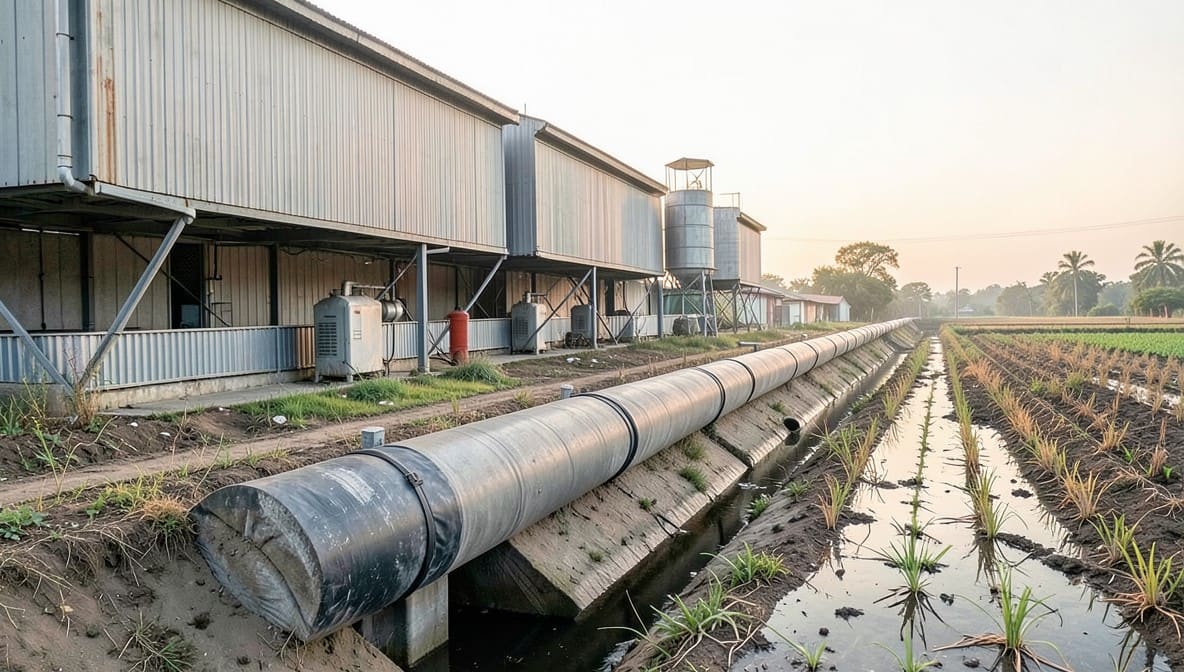
The Applicants, six residents of Edapalayam Village in Gummidipoondi Taluk, Thiruvallur District, filed an Original Application before the National Green Tribunal Southern Zone alleging that M/s. Emerald Resilient Tyre Manufacturers (P) Ltd. was discharging industrial effluent into agricultural lands and emitting harmful air pollutants, causing environmental degradation and health hazards to the local population.
Key Facts
- The industrial unit is located at Plot No.79 and 80, EPIP, S IPC OT Industrial Complex, Gummidipoondi, Thiruvallur District.
- The Applicants are agriculturists whose lands lie adjacent to the industrial complex.
- On 14.06.2024, a complaint was lodged by Mr. Iyyappan alleging discharge of effluent from the unit onto nearby farmland.
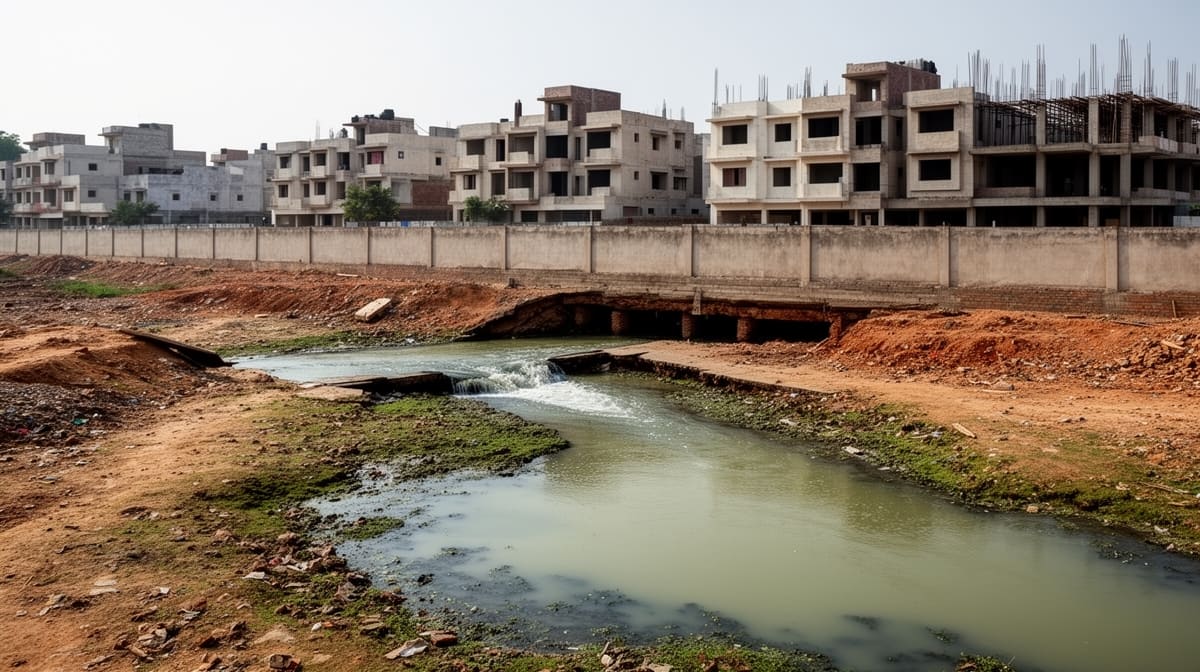
- On the same day, the District Environmental Engineer (DEE), TNPCB, conducted an inspection and observed gunny bags containing carbon black dumped outside the premises, with boiler blowdown water mixed with the same and flowing through a breach in the compound wall.
- A water sample was collected and analyzed; the Report of Analysis dated 01.07.2024 confirmed that the sample met TNPCB’s prescribed standards.
- The unit submitted a reply on 01.07.2024 explaining that the discharge occurred due to continuous rainfall causing overflow through a damaged portion of the compound wall, which was immediately sealed.
- No further discharge was observed in subsequent inspections on 26.11.2024 and 15.04.2025.
- The unit holds a valid Consent to Operate (CTO) issued on 14.11.2024, valid until 31.03.2026.
- The unit operates a Sewage Treatment Plant (STP), treats all sewage for reuse in gardening, and collects boiler blowdown for internal reuse.
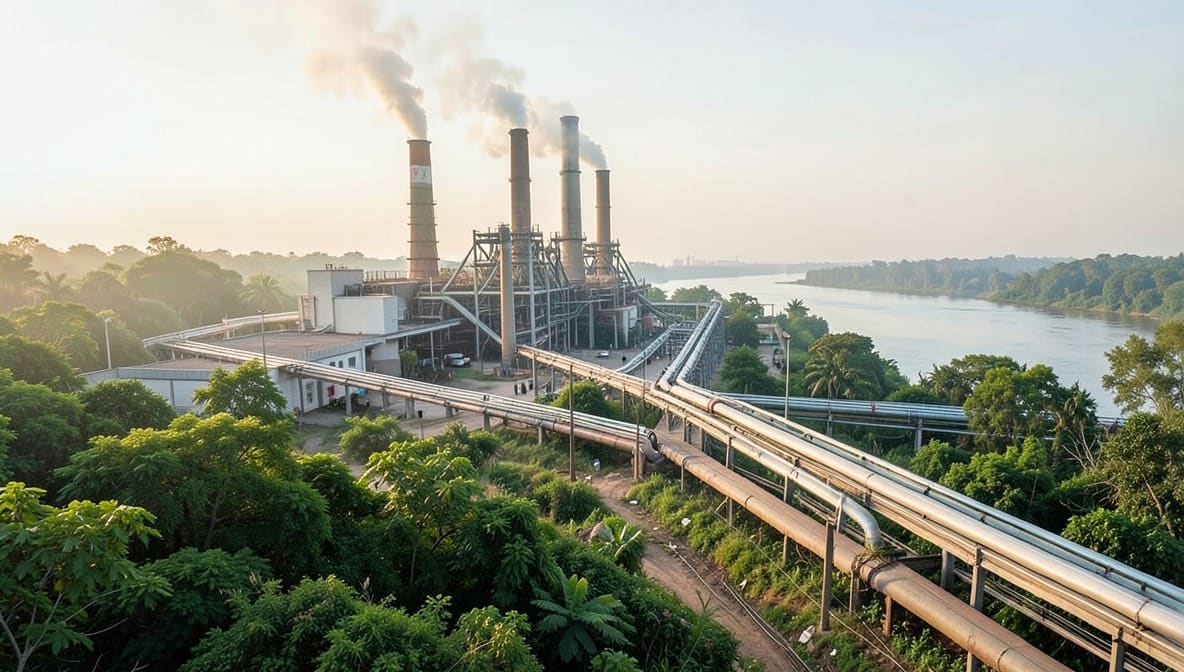
- Air pollution control systems including dust collectors, dust extraction systems, and stack monitoring are installed and operational.
- Ambient Air Quality Monitoring conducted by TNPCB on 12.07.2024 at five locations showed all parameters within National Ambient Air Quality Standards (NAAQS).
- Stack monitoring results confirmed emissions from boilers and DG sets were within prescribed limits.
- The Applicants filed no scientific or technical evidence contradicting TNPCB’s findings.
Procedural History
- 14.06.2024: Complaint received by TNPCB regarding effluent discharge.
- 14.06.2024: Inspection conducted by DEE, TNPCB; sample collected.
- 15.06.2024: Show Cause Notice issued to the 7th Respondent.
- 01.07.2024: Unit’s reply submitted; water analysis report received confirming compliance.
- 17.07.2024: Complaints filed by Applicants (S. Sumathi and others) with TNPCB.
- 18.07.2024: TNPCB responded, informing that issue was resolved and no violation found.
- 26.11.2024: TNPCB inspection confirmed STP and air control systems operational.
- 15.04.2025: TNPCB inspection confirmed continued compliance with CTO conditions.
- 02.01.2025: Original Application No.02 of 2025 (SZ) filed before NGT Southern Zone.
- 20.03.2026: Judgment reserved.
- 24.03.2026: Judgment delivered.
The Parties' Positions
Applicants’ Position: Alleged continuous discharge of effluent and air pollution causing harm to agriculture and health. Claimed TNPCB failed to enforce compliance despite repeated complaints. Asserted that the unit’s CTO should be suspended or revoked.
Respondents’ Position: TNPCB and the unit contended that the discharge was an isolated incident caused by heavy rainfall, promptly rectified. All pollution control systems were functional and compliant. No continuing violation existed. Ambient air and water quality data confirmed adherence to standards.
Relief Sought
The Applicants sought:
- Immediate closure of the unit.
- Cancellation of the Consent to Operate.
- Compensation for environmental damage to agricultural land.
- Direction to install Online Continuous Emission Monitoring System (OCEMS).
- Mandatory periodic monitoring by TNPCB.
The Legal Issue
The central question was whether an isolated, temporary discharge of effluent, promptly rectified and confirmed to be within permissible standards by scientific analysis, constitutes a continuing violation of environmental law warranting punitive or prohibitive orders under the National Green Tribunal Act, 2010.
Arguments Presented
For the Appellant/Petitioner
The Applicants argued that repeated complaints and the mere occurrence of effluent discharge, regardless of its duration or remediation, demonstrates systemic negligence. They relied on the principle that environmental harm is irreversible and that preventive action must precede proof of ongoing damage. They cited M.C. Mehta v. Union of India to argue that the polluter pays principle applies even to transient violations. They contended that the absence of OCEMS rendered monitoring inadequate and that TNPCB’s inspections were reactive, not proactive.
For the Respondent/State
The Respondents, including TNPCB and the unit, argued that the discharge was an accidental, one-time event caused by extreme weather, not operational negligence. They presented documentary evidence of compliance: valid CTO, functional STP, reuse of effluent, air pollution control systems, and multiple inspection reports confirming no recurrence. They emphasized that the water sample met prescribed standards and ambient air quality was within NAAQS. They contended that punitive measures are unwarranted where no continuing violation exists and that the Tribunal must rely on scientific data, not allegations.
The Court's Analysis
The Tribunal conducted a rigorous review of the evidence submitted by TNPCB and the unit, contrasting it with the Applicants’ unsubstantiated claims. It noted that the Applicants had not produced any independent water or air quality reports, nor any medical or agricultural damage assessments.
"The incident was isolated, has been rectified and no continuing violation is established."
The Tribunal emphasized that environmental law does not impose strict liability for every minor or transient breach. Instead, it requires proof of persistent non-compliance or systemic failure. The fact that the unit had acted promptly to seal the breach, submitted a detailed explanation, and demonstrated compliance through subsequent inspections and laboratory analysis was decisive.
The Tribunal distinguished this case from those involving repeated violations or deliberate circumvention of pollution controls. It held that the issuance of a Show Cause Notice and its subsequent withdrawal upon compliance is a legitimate administrative process under the Water (Prevention and Control of Pollution) Act, 1974, and does not indicate negligence.
Regarding air pollution, the Tribunal noted that ambient monitoring at five locations and stack emission data were conclusive. The presence of dust collectors, extraction systems, and stack monitoring confirmed adherence to technical standards. The absence of contrary scientific evidence rendered the Applicants’ allegations speculative.
The Tribunal also rejected the demand for OCEMS, noting that the unit’s existing stack monitoring and periodic inspections were sufficient under current guidelines, and that OCEMS is not mandatorily required for all units under the current regulatory framework.
The Verdict
The Original Application was dismissed. The Tribunal found no continuing violation of environmental norms. However, to ensure future compliance, the following directions were issued:
- The unit shall ensure no effluent is discharged outside its premises under any circumstances.
- The Sewage Treatment Plant and effluent management systems shall be continuously maintained in proper working condition.
- All air pollution control measures shall be operated efficiently at all times.
- TNPCB shall conduct periodic inspections and monitoring to ensure compliance with environmental standards.
- If any future violation is noticed, TNPCB shall take action in accordance with law.
No compensation, closure, or penalty was imposed. The Consent to Operate remains valid.
What This Means For Similar Cases
Isolated Incidents Do Not Equal Systemic Failure
- Practitioners must now demonstrate a pattern of non-compliance, not a single rectified incident, to seek closure or penalties.
- Environmental petitions must be supported by scientific data - allegations alone are insufficient.
- TNPCB’s inspection reports and lab analyses carry significant evidentiary weight in NGT proceedings.
Compliance Documentation Is Critical
- Industrial units must maintain and produce records of inspections, maintenance logs, and analysis reports.
- Prompt corrective action, documented with photographs and reports, can prevent escalation to litigation.
- The withdrawal of a Show Cause Notice upon compliance is a legally recognized closure of the matter.
Proactive Monitoring Trumps Reactive Enforcement
- The Tribunal’s directive for periodic TNPCB inspections sets a precedent for preventive oversight.
- Units should proactively upgrade monitoring systems even if not mandated, to preempt allegations.
- NGOs and residents must engage technical experts before filing applications to avoid dismissal on evidentiary grounds.