The Chhattisgarh High Court has clarified that possession of an intermediate quantity of cannabis under the NDPS Act does not invoke the stringent bail restrictions of Section 37, even after a charge sheet is filed. This decision reinforces the principle that prolonged pre-trial detention without necessity violates the right to liberty and must be balanced against procedural progress in the case.
Background & Facts
The Dispute
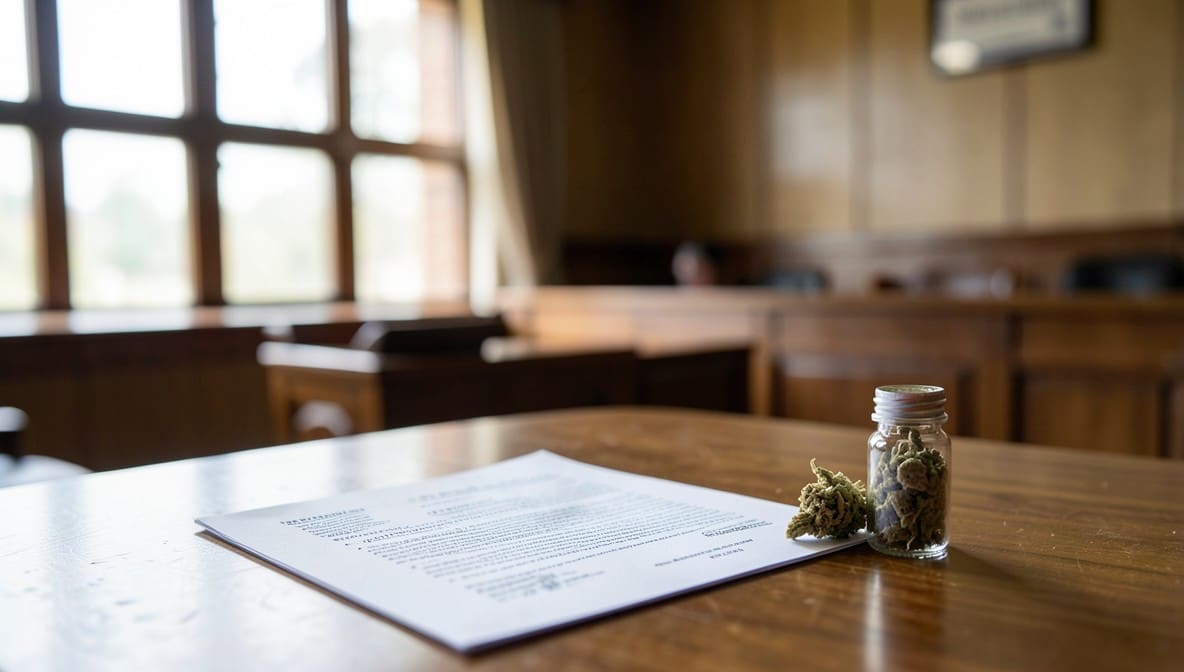
The applicant, Hardeep Kumar S/o Pritam Chand Bogal, aged 36, was arrested in connection with Crime No. 356/2025 registered at Police Station Amanaka, Raipur, Chhattisgarh. The case pertains to the alleged possession of a controlled substance under Sections 21(B) and 29 of the Narcotic Drugs and Psychotropic Substances Act, 1985 (NDPS Act). The prosecution alleges that during a raid, police seized 34.60 grams of cannabis (ganja) from the joint possession of the applicant and a co-accused.
Key Facts
- The seized quantity of cannabis was 34.60 grams, jointly possessed by the applicant and a co-accused.
- The commercial quantity of cannabis under Schedule I of the NDPS Act is 20 kilograms or more.
- The seized quantity falls well below the threshold for commercial quantity and is classified as an intermediate quantity under the Act.
- The applicant has no prior criminal antecedents.
- The applicant has been in judicial custody since 03.11.2025.
- The charge sheet has been filed in the case.
- The trial is ongoing, with no indication of imminent conclusion.
Procedural History
- 03.11.2025: Applicant arrested and remanded to judicial custody.
- Date unspecified (prior to 23.03.2026): Charge sheet filed in Crime No. 356/2025.
- 23.03.2026: First Bail Application filed under Section 483 of the Bharatiya Nagarik Suraksha Sanhita, 2023 before the High Court of Chhattisgarh.
The Parties' Positions
For the Applicant
The applicant’s counsel contended that:
- The seized quantity of 34.60 grams of cannabis is an intermediate quantity, not commercial, and therefore does not trigger the stringent conditions of Section 37 of the NDPS Act.
- The charge sheet has been filed, indicating the investigation is complete.
- Custodial interrogation is no longer required, as confirmed by judicial remand.
- The applicant has no criminal history.
- The trial is likely to take a prolonged period, making continued detention unjustified.
For the Respondent
The State’s counsel opposed bail on the grounds that:
- A charge sheet has been filed.
- The applicant was found in possession of a prohibited substance.
- No specific legal argument was advanced to counter the classification of the seized quantity as intermediate.
Relief Sought
The applicant sought regular bail under Section 483 of the Bharatiya Nagarik Suraksha Sanhita, 2023, with conditions to ensure his presence during trial.
The Legal Issue
The central question was whether an accused in possession of an intermediate quantity of cannabis under the NDPS Act, with no criminal antecedents, and after the filing of the charge sheet, is entitled to regular bail despite the general rigors of Section 37.
Arguments Presented
For the Appellant/Petitioner
The applicant’s counsel relied on the distinction between intermediate and commercial quantities under the NDPS Act. They argued that Section 37, which imposes stringent conditions for bail in cases involving commercial quantities, does not apply to intermediate quantities. The counsel cited the fact that 34.60 grams is less than 1% of the commercial threshold of 20 kg, and therefore, the applicant does not fall within the ambit of Section 37. They further emphasized that the investigation is complete, custodial interrogation is unnecessary, and prolonged detention without trial violates Article 21 of the Constitution.
For the Respondent/State
The State did not dispute the quantity classification but opposed bail on the general ground that a charge sheet had been filed and the accused was involved in a narcotics offence. No specific legal precedent or statutory provision was cited to justify denial of bail under these circumstances.
The Court's Analysis
The Court undertook a statutory interpretation of the NDPS Act, particularly the classification of quantities under Schedule I. It noted that the commercial quantity of cannabis is fixed at 20 kilograms, and any quantity below that is categorized as intermediate. The Court held that Section 37 of the NDPS Act, which mandates stringent conditions for bail, applies only when the quantity seized is of a commercial nature. Since the seized quantity of 34.60 grams is manifestly below the commercial threshold, the applicant is not subject to the bar under Section 37.
"The quantity of cannabis seized from the possession of the applicant i.e. a total of 34.60 grams of Cannabis from the joint possession of the present applicant and the co-accused... falls within the intermediate category and does not attract the rigors of Section 37 of the NDPS Act."
The Court further observed that the charge sheet has been filed, indicating the completion of investigation. Judicial remand since 03.11.2025 confirms that no further custodial interrogation is required. The Court emphasized that the right to liberty under Article 21 must be balanced against the need for detention, and in the absence of any risk of tampering or flight, continued incarceration serves no legitimate purpose.
The Court also noted the applicant’s clean record and the likely prolonged duration of the trial, reinforcing the necessity of granting bail to prevent undue pre-trial detention.
The Verdict
The applicant succeeded. The High Court granted regular bail to Hardeep Kumar in Crime No. 356/2025. He is to be released upon furnishing a personal bond with two local sureties of like sum, subject to the following conditions: (i) He shall not seek adjournments when witnesses are present; (ii) He must appear before the trial court on all dates, personally or through counsel; (iii) If a proclamation is issued under Section 84 of BNSS and he fails to appear, proceedings under Section 209 of BNSS shall be initiated; (iv) He must appear personally for the opening of the case, framing of charge, and recording of statement under Section 351 of BNSS. Failure to comply with any condition may be treated as abuse of bail and result in cancellation. The trial court is directed to receive a certified copy of this order forthwith.
What This Means For Similar Cases
Intermediate Quantity Excludes Section 37 Rigors
- Practitioners must now argue that any possession below the statutory commercial threshold under the NDPS Act automatically excludes the application of Section 37, regardless of charge sheet status.
- The burden shifts to the prosecution to prove the seized quantity qualifies as commercial before invoking Section 37.
Post-Charge Sheet Detention Requires Justification
- Once the charge sheet is filed, continued custody must be justified on grounds other than investigation needs.
- Courts are expected to consider the length of custody, trial duration, and absence of criminal history as decisive factors in bail decisions.
Conditions on Bail Are Procedural, Not Punitive
- The conditions imposed are procedural safeguards, not punitive measures.
- These conditions are enforceable but do not negate the fundamental right to bail when statutory thresholds are not met.
Practical Takeaways for Practitioners
- Always calculate the exact quantity seized against Schedule I thresholds.
- File bail applications under Section 483 BNSS immediately after charge sheet filing in intermediate quantity cases.
- Emphasize the absence of custodial interrogation needs and the right to speedy trial under Article 21.