The Rajasthan High Court has reaffirmed that prolonged pre-trial incarceration, compounded by procedural violations in drug seizure protocols, can justify bail even in cases involving commercial quantities under the NDPS Act. This ruling reinforces the constitutional primacy of personal liberty and the presumption of innocence, particularly when the state fails to adhere to mandatory timelines.
Background & Facts
The Dispute
The petitioners, Kalu Lal and Tarachand, were arrested in connection with FIR No. 257/2024 filed at Nimbahera Police Station, Chittorgarh, under Sections 8 and 15 of the Narcotic Drugs and Psychotropic Substances (NDPS) Act. The prosecution alleged recovery of contraband above commercial quantity. Both petitioners have no prior criminal antecedents.
Procedural History
- 25 May 2024: Alleged recovery of contraband
- 23 July 2024: Samples sent to Forensic Science Laboratory (FSL) - a delay of over two months
- 10 July 2025: First bail applications dismissed with liberty to file afresh after recording of Seizure Officer’s statement
- 25 February 2026: Co-accused Arjun Ram and Sanwara granted bail by the same court
- 9 March 2026: Second bail applications filed after Seizure Officer’s statement was recorded
Relief Sought
The petitioners sought release on bail, arguing that continued incarceration violated their right to life and personal liberty under Article 21, given the inordinate delay in investigation, non-compliance with procedural mandates, and the fact that only one of 19 prosecution witnesses had been examined after nearly two years in custody.
The Legal Issue
The central question was whether inordinate delay in forwarding samples to the FSL, combined with non-compliance with mandatory procedural timelines under Standing Order No. 1/1988 and prolonged pre-trial detention without substantive progress in trial, can justify the grant of bail under Section 439 CrPC despite the recovery of contraband above commercial quantity under Section 37 of the NDPS Act.
Arguments Presented
For the Petitioner
Counsel relied on Rabi Prakash v. State of Odisha, Mohd Muslim @ Hussain v. State (NCT of Delhi), and Balwinder Singh v. State of Punjab to argue that:
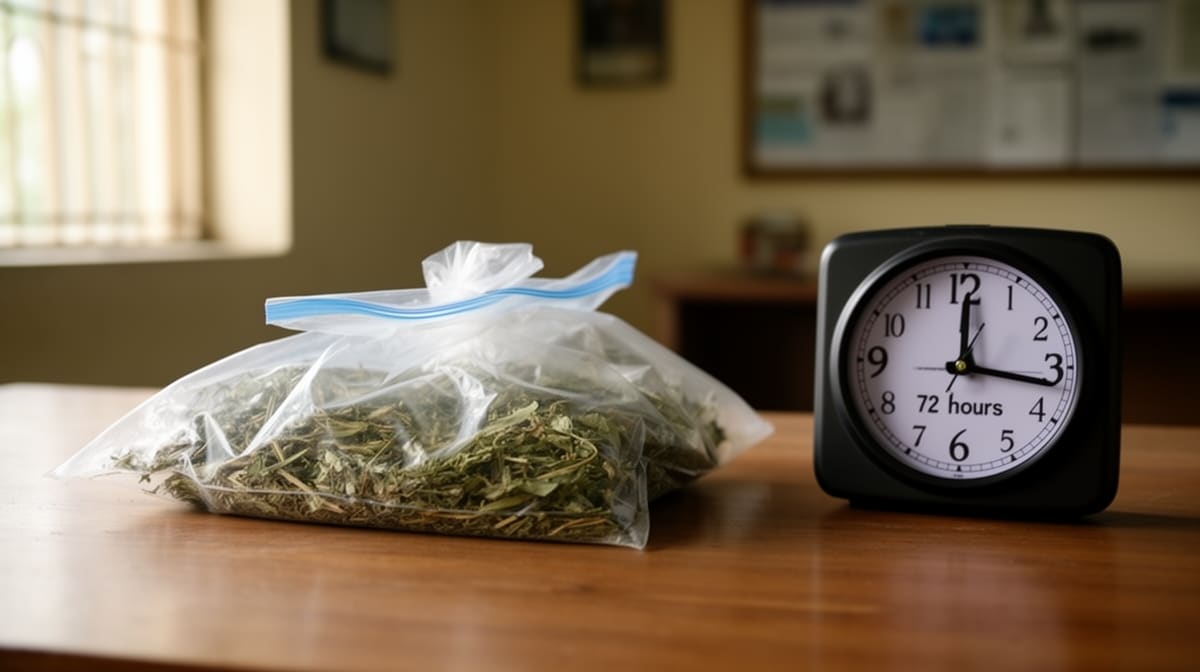
- The two-month delay in sending FSL samples violated Clause 1.13 of Standing Order No. 1/1988, which mandates submission within 72 hours
- The Seizure Officer admitted in his statement that inventory preparation was delayed by two months
- Only one of 19 prosecution witnesses had been examined after 21 months in custody
- Co-accused had already been granted bail
- The presumption of innocence and bail as a rule under criminal jurisprudence must prevail
For the Respondent
The Public Prosecutor conceded that there were no prior antecedents and that only one witness had been examined. However, he opposed bail on the ground that the contraband recovered was above commercial quantity, invoking the stringent conditions of Section 37 NDPS Act. He did not dispute the procedural lapses but argued that gravity of offence alone warranted denial of bail.
The Court's Analysis
The Court examined the interplay between Section 37 of the NDPS Act, which imposes a restrictive bail regime, and the fundamental right to liberty under Article 21. It held that while Section 37 creates a presumption against bail, it does not extinguish the constitutional right to liberty.
"The purpose behind keeping an accused behind the bars during trial would be to secure his presence on the day of conviction... Otherwise, it is the rule of Criminal Jurisprudence that he shall be presumed innocent until the guilt is proved."
The Court emphasized that procedural compliance is not a mere technicality but a safeguard against arbitrary detention. The two-month delay in FSL submission, coupled with the Seizure Officer’s admission of delayed inventory preparation, undermined the integrity of the prosecution’s case. The Court further noted that six co-accused had already been released, and the trial’s pace indicated it would extend for years.
Citing Balwinder Singh, the Court observed that the trial process itself must not become the punishment. The prolonged incarceration - nearly two years - with minimal evidentiary progress, rendered continued detention unjustified. The Court declined to evaluate the merits of the case, stating that bail decisions at this stage must be guided by procedural fairness and constitutional rights, not speculative guilt.
The Verdict
The petitioners won. The Court held that inordinate delay in forensic testing, non-compliance with mandatory procedural timelines, and prolonged pre-trial incarceration without substantial trial progress override the restrictive bail conditions under Section 37 NDPS Act. The petitioners were granted bail on personal bond of ₹1,00,000 and two sureties of ₹50,000 each.
What This Means For Similar Cases
Procedural Lapses Can Override Section 37 Restrictions
- Practitioners must now systematically document delays in FSL submission, inventory preparation, and witness examination in NDPS cases
- A delay exceeding 72 hours in sending samples to FSL, without credible justification, becomes a strong ground for bail
- Courts are increasingly treating procedural violations as indicators of weak prosecution, not mere technicalities
Pre-Trial Delay as a Ground for Bail
- Incarceration beyond 18 - 24 months with fewer than five prosecution witnesses examined is now a recognized threshold for bail consideration
- The burden shifts to the prosecution to explain why trial progress is so slow
- Courts will no longer defer to the gravity of offence when liberty is being extinguished without due process
Co-Accused Bail as a Relevant Factor
- Grant of bail to co-accused in the same FIR creates a presumption of parity
- Denial of bail to one accused without distinguishing facts may violate Article 14
- Practitioners should cite co-accused bail orders as persuasive authority in bail applications