The Rajasthan High Court recently granted bail to an accused under Section 483 of the Bharatiya Nagarik Suraksha Sanhita (BNSS), equivalent to Section 439 of the CrPC, in a case involving Sections 8, 15, and 29 of the Narcotic Drugs and Psychotropic Substances (NDPS) Act. The Court emphasized that an inordinate delay of nearly three months in dispatching FSL samples, violating Standing Order No. 1/1988, weakened the prosecution's case, justifying bail despite the gravity of the offence.
Background & Facts
The Dispute
The petitioner, Balwant @ Balwant Singh, was arrested in connection with FIR No. 305/2025 registered at Pratapgarh Police Station under Sections 8, 15, and 29 of the NDPS Act and Sections 3 and 25 of the Arms Act. The FIR alleged recovery of contraband from an abandoned vehicle, with the petitioner implicated based on the statement of a co-accused, Sunder Lal.
Key Facts
- 05.07.2025: Alleged recovery of contraband from an abandoned vehicle.
- 06.07.2025: Petitioner arrested and taken into custody.
- 07.10.2025: FSL samples sent for examination, delay of nearly three months from the date of recovery.
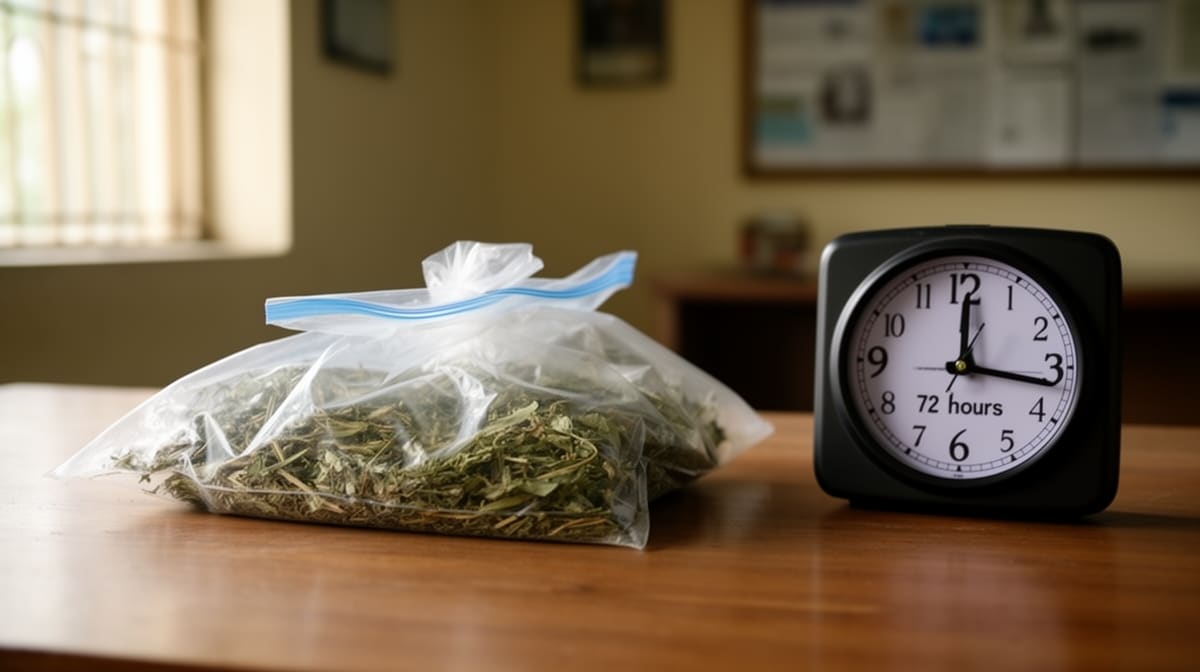
- Clause 1.13 of Standing Order No. 1/1988: Mandates dispatch of FSL samples within 72 hours of recovery.
- 08.12.2025: First bail application (S.B. Criminal Misc. Bail Application No. 9906/2025) dismissed by the High Court, with liberty to file a fresh application post-charge sheet.
- Charge-sheet filed: Second bail application (S.B. Criminal Misc. Bail Application No. 767/2026) filed thereafter.
Procedural History
- 08.12.2025: First bail application dismissed.
- Post-charge sheet filing: Second bail application filed.
- 28.03.2026: Present bail application allowed by the High Court.
The Parties' Positions
For the Petitioner
- Argued false implication in the case.
- Contended that the recovery was made from an abandoned vehicle, and the petitioner was implicated solely based on the statement of a co-accused.
- Highlighted the inordinate delay of nearly three months in sending FSL samples, violating Standing Order No. 1/1988.
- Relied on precedents:
- Rambabu v. State of Rajasthan (SLP (Crl.) No. 5648/2025 and SLP (Crl.) No. 5732/2025), where bail was granted due to delay and lack of substantive evidence.
- Wajid Ali @ Tinku v. State of Rajasthan (SLP No. 7049/2025), where the Supreme Court granted relief in similar circumstances.
- Submitted that the petitioner had been in custody since 06.07.2025, and the trial would take sufficiently long time to conclude.
For the Respondent
- Opposed the bail application, citing the petitioner's criminal antecedents under the NDPS Act.
- Could not refute the delay in dispatching FSL samples.
Relief Sought
The petitioner sought bail under Section 483 of BNSS (439 CrPC), arguing that further incarceration was unwarranted given the delay in FSL sample dispatch and the lengthy trial process.
The Legal Issue
The central question before the Court was whether an inordinate delay in dispatching FSL samples, violating Standing Order No. 1/1988, coupled with the petitioner's prolonged custody, justified the grant of bail under Section 483 of BNSS, despite the gravity of the offence and the petitioner's criminal antecedents.
The Court's Analysis
The Court observed the following key points in its analysis:
-
Delay in FSL Sample Dispatch: The Court noted that Clause 1.13 of Standing Order No. 1/1988 mandates the dispatch of FSL samples within 72 hours of recovery. The delay of nearly three months in this case was unjustified and inordinate, weakening the prosecution's case.
"Considering Clause 1.13 of Standing Order No.1/1988 dated 15.03.1988, which mandates that samples drawn ought to have been sent for FSL examination within 72 hours from recovery..."
-
Lack of Substantive Evidence: The Court emphasized that the petitioner was implicated solely based on the statement of a co-accused, and the recovery was made from an abandoned vehicle. This raised doubts about the strength of the prosecution's case.
-
Precedents: The Court relied on the judgments in Rambabu v. State of Rajasthan and Wajid Ali @ Tinku v. State of Rajasthan, where bail was granted in similar circumstances due to delay and lack of substantive evidence.
-
Prolonged Custody: The petitioner had been in custody since 06.07.2025, and the trial was likely to take a sufficiently long time to conclude. The Court held that further incarceration was not warranted in these circumstances.
-
Criminal Antecedents: While the prosecution argued that the petitioner had criminal antecedents under the NDPS Act, the Court noted that these cases were prior to 2019, and the petitioner had already been enlarged on bail in those matters.
The Verdict
The Court allowed the second bail application under Section 483 of BNSS (439 CrPC). The petitioner was ordered to be released on bail, subject to the following conditions:
- Furnish a personal bond of Rs. 1,00,000/-.
- Provide two sureties of Rs. 50,000/- each, to the satisfaction of the trial court.
- Appear before the trial court on each date of hearing and whenever called upon until the completion of the trial.
- Misuse of bail concession (e.g., remaining absent or seeking unnecessary adjournments) would entitle the prosecution to move for cancellation of bail.
What This Means For Similar Cases
Delay in FSL Sample Dispatch Can Weaken Prosecution's Case
- Standing Order No. 1/1988 mandates dispatch of FSL samples within 72 hours of recovery. Any inordinate delay can be used by defence counsel to argue weakening of the prosecution's case.
- Courts may consider such delays as procedural lapses, potentially justifying bail even in serious offences like those under the NDPS Act.
Bail Eligibility Despite Criminal Antecedents
- Criminal antecedents alone may not be sufficient to deny bail if:
- The antecedents are dated (e.g., prior to 2019).
- The accused has already been enlarged on bail in those cases.
- There are procedural lapses (e.g., delay in FSL sample dispatch) or lack of substantive evidence in the current case.
Strategic Use of Precedents in Bail Applications
- Defence counsel can rely on precedents like Rambabu v. State of Rajasthan and Wajid Ali @ Tinku v. State of Rajasthan to argue for bail in cases involving:
- Delay in FSL sample dispatch.
- Lack of substantive evidence implicating the accused.
- Prolonged custody without trial conclusion.
- These judgments establish that procedural non-compliance can outweigh the gravity of the offence in bail considerations.