The Punjab & Haryana High Court has reaffirmed that prolonged pre-trial incarceration, even in cases involving commercial quantities of narcotics, cannot be justified if it violates the fundamental right to a speedy trial under Article 21. This judgment reinforces that statutory restrictions under the NDPS Act must yield to constitutional imperatives when justice is delayed beyond reasonable limits.
Background & Facts
The Dispute
The petitioner, Kulwinder Singh @ Bindi, was arrested on 18 June 2021 after police recovered 870 tablets of tramadol hydrochloride weighing 350.6 grams from his possession. The recovery was made based on suspicious conduct at Police Station Sadar Khanna, District Khanna. The offence falls under Section 22 of the Narcotic Drugs and Psychotropic Substances Act, 1985, and the quantity recovered qualifies as a "commercial quantity" under the Act.
Procedural History
- 18 June 2021: Petitioner arrested and formal FIR No. 119 registered.
- Post-arrest: Seizure, sealing, and investigation completed; charge sheet filed.
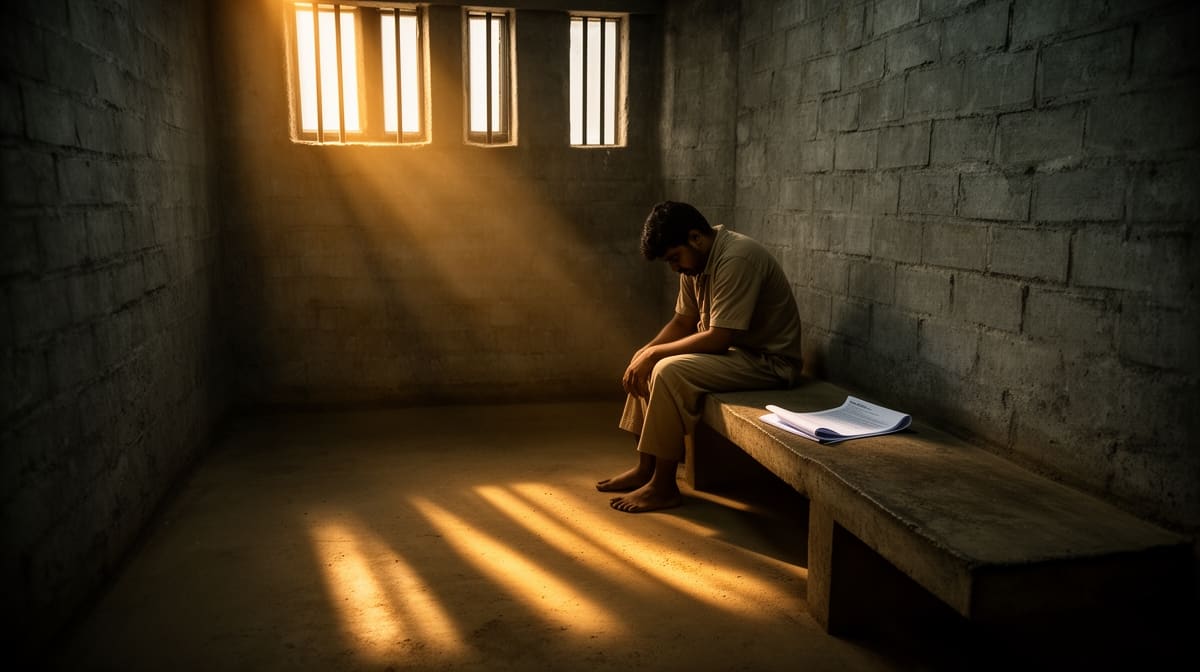
- March 2026: Petitioner had been in judicial custody for over one year and eight months.
- No trial conclusion: Only three of twelve prosecution witnesses examined; no date set for framing of charges.
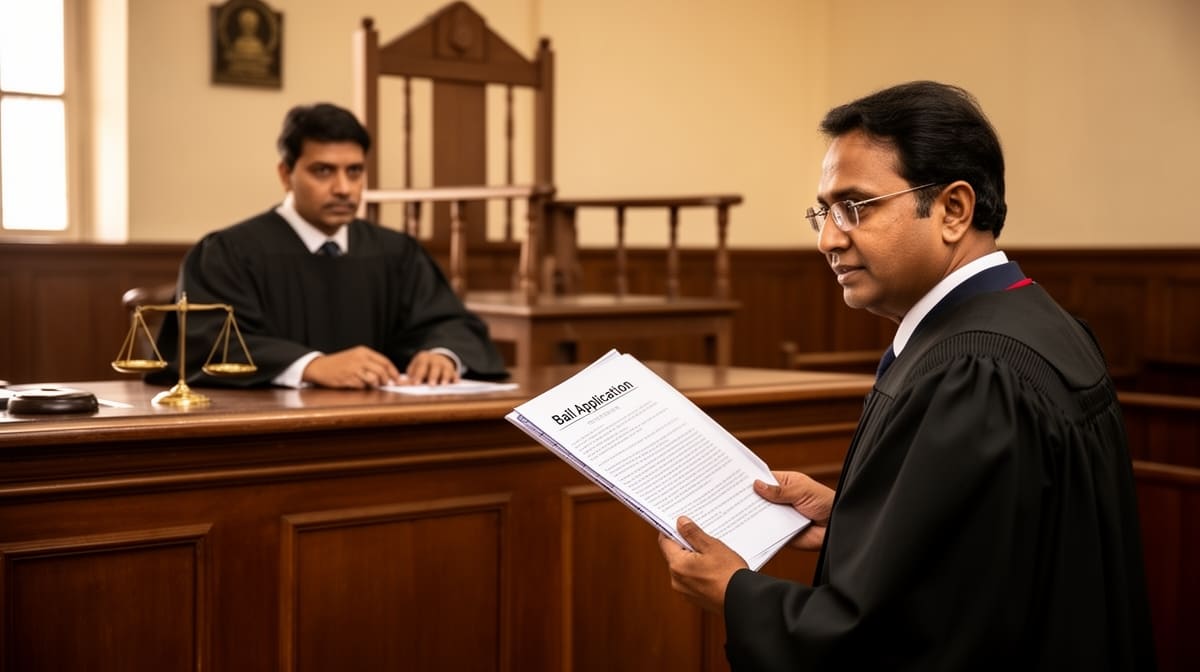
- Petition filed: Under Section 483 of the Bharatiya Nagarik Suraksha Sanhita, 2023, seeking bail.
Relief Sought
The petitioner sought release on bail, arguing that his prolonged incarceration without trial violated his right to speedy trial under Article 21 of the Constitution, and that the statutory bar under Section 37 of the NDPS Act could not override this fundamental right.
The Legal Issue
The central question was whether Section 37 of the NDPS Act absolutely bars the grant of bail in cases involving commercial quantities, even when the accused has been incarcerated for over a year without trial, and whether the constitutional right to a speedy trial under Article 21 can override this statutory restriction.
Arguments Presented
For the Petitioner
The petitioner relied on multiple judgments of the Supreme Court, including Satender Kumar Antil v. Central Bureau of Investigation (2022) 10 SCC 51, Mohd. Muslim @ Hussain v. State (NCT of Delhi) (2023 SCC OnLine SC 352), and Santosh Pawar v. State of Chhattisgarh (Criminal Appeal No. 4883/2025), to argue that prolonged incarceration without trial, irrespective of the nature of the offence, triggers the application of Section 436A of the CrPC and invokes the constitutional mandate under Article 21. It was contended that the presumption of innocence, the general rule of bail, and the low conviction rate in NDPS cases necessitate a liberal approach to bail when trial delays are inordinate.
For the Respondent
The State opposed bail, relying on the strict language of Section 37 of the NDPS Act, which prohibits bail if the court is not satisfied that the accused is not guilty and is not likely to commit an offence while on bail. It argued that the recovery of a commercial quantity of tramadol inherently indicates serious criminal intent and that granting bail in such cases would undermine the legislative intent behind stringent drug control laws.
The Court's Analysis
The Court undertook a comprehensive review of Supreme Court precedents, emphasizing that Section 37 of the NDPS Act is not an absolute bar to bail. The Court held that while the Act imposes conditions, it does not eliminate the constitutional obligation to ensure a speedy trial. The Court quoted from Satender Kumar Antil v. CBI:
"We cannot mix up consideration of a bail application, which is not punitive in nature with that of a possible adjudication by way of trial. On the contrary, an ultimate acquittal with continued custody would be a case of grave injustice."
The Court further cited Tapas Kumar Palit v. State of Chhattisgarh (2025 SCC Online SC 322), where the Supreme Court observed that incarceration of six to seven years as an undertrial prisoner constitutes a clear infringement of Article 21. The Court noted that the rate of conviction in NDPS cases is abysmally low, and that denying bail on the basis of commercial quantity alone, without regard to trial progress, amounts to punitive detention without adjudication.
The Court also emphasized that Section 436A of the CrPC, which mandates release on bail if the accused has been detained for half the maximum sentence, applies to NDPS offences. Here, the petitioner had been in custody for over 20 months, far exceeding the threshold for mandatory bail under Section 436A. The Court found no material to suggest risk of evidence tampering or flight, and noted that the investigation was complete and charge sheet filed.
The Court concluded that the statutory embargo under Section 37 must yield to the constitutional imperative of Article 21, particularly when trial delays are systemic and the accused has no criminal antecedents.
The Verdict
The petitioner won. The Court held that Section 37 of the NDPS Act cannot override the fundamental right to a speedy trial under Article 21, and that prolonged incarceration without trial justifies bail even in cases involving commercial quantities. The petitioner was ordered released on bail subject to standard conditions.
What This Means For Similar Cases
Bail Is Not Barred by Commercial Quantity Alone
- Practitioners must now argue that commercial quantity alone cannot justify denial of bail if trial delay exceeds 12 - 18 months.
- Cite Antil, Mohd. Muslim, and Santosh Pawar to show that the Supreme Court has consistently prioritized Article 21 over statutory rigidity.
- Highlight that Section 436A CrPC applies to NDPS cases and mandates release if detention exceeds half the maximum sentence.
Speedy Trial Is a Non-Negotiable Constitutional Right
- Courts must actively monitor trial progress in NDPS cases and refuse to grant extensions without justification.
- If charges are framed but trial stalls, the accused’s right to liberty must be weighed against the state’s interest in prosecution.
- Judges must record reasons for denying bail in such cases, ensuring compliance with Dataram v. State of UP (2018) and Balwinder Singh v. State of Punjab (2024).
Burden of Justifying Detention Shifts to the State
- The state must now demonstrate specific, credible grounds for continued detention - mere allegation of commercial quantity is insufficient.
- Absence of criminal antecedents, completion of investigation, and cooperation with trial are strong indicators in favor of bail.
- Failure to examine witnesses within reasonable time frames weakens the state’s case for custody.