The Bombay High Court has reaffirmed that deliberate non-participation in disciplinary proceedings by a public servant cannot later be invoked to challenge the validity of dismissal on grounds of procedural irregularity. The judgment underscores that natural justice requires opportunity, not perfection, and that an employee who abandons the process cannot claim prejudice after the fact.
Background & Facts
The Dispute
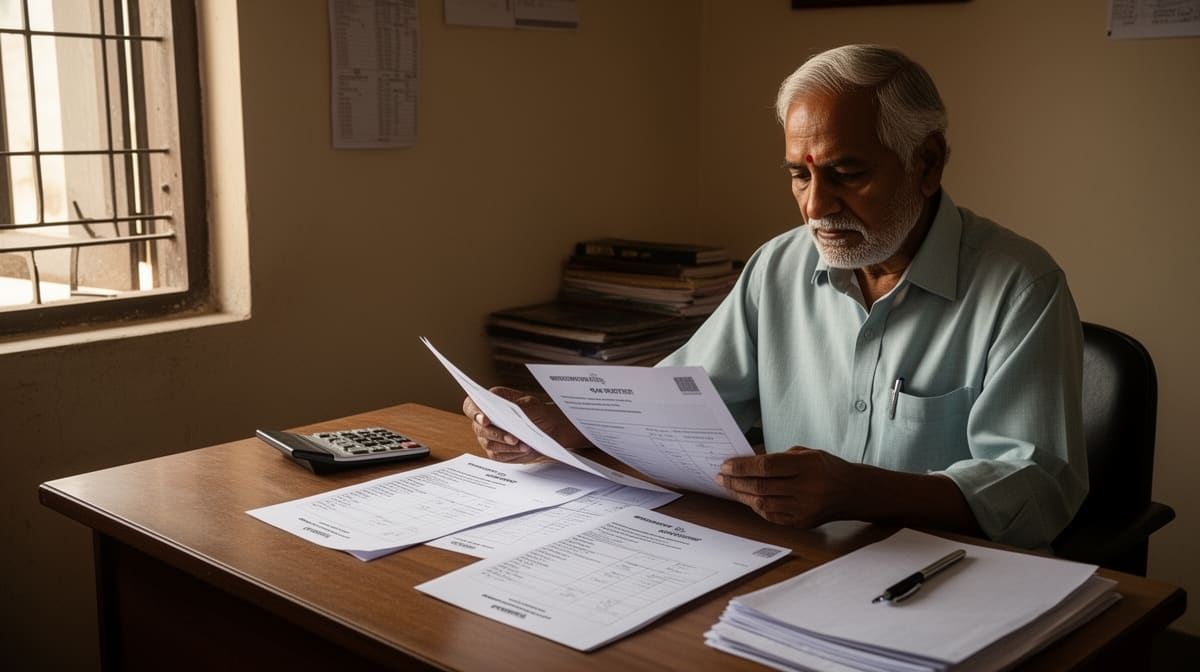
The petitioner, Raghunath s/o Namdeo Pilore, was employed as an Assistant Teacher in the New English School, Vihitgaon, Deolali, from 1982 and was promoted to Head Master in 1987. He was also functioning as Director of the respondent institution, Lokjagruti Shikshan Mandal, from 1993. In 2004, Crime No. 110 of 2004 was registered against him at Bhusawal Police Station under Sections 306 and 420 read with Section 34 of the Indian Penal Code, relating to alleged cheating, forgery, and abetment of suicide. The incident was published in a newspaper, leading to his suspension on 25 October 2004. He was released on bail on 1 March 2005 but was not permitted to resume duties.
Key Facts
- The petitioner held B.A. and B.Ed. (Physical) qualifications.
- He was suspended on 25 October 2004 following media publication of criminal charges.
- He was released on bail on 1 March 2005.
- On 30 May 2005, an Inquiry Committee was constituted.
- A charge-sheet containing 36 charges was issued on 23 July 2005.
- The petitioner attended only one meeting of the Inquiry Committee on 23 July 2005.
- He submitted no written reply to the charge-sheet or show-cause notice.
- He did not nominate any representative to the Inquiry Committee despite being invited to do so.
- The management dismissed him with effect from 20 September 2005.
- The petitioner alleged non-supply of documents, non-communication of committee members, and absence of inquiry report.
- The respondents alleged the petitioner engaged in forgery, misappropriation of provident fund contributions, fraudulent employment promises, and misuse of official position.
Procedural History
- 30 September 2004: Crime No. 110 of 2004 registered against petitioner.
- 25 October 2004: Petitioner placed under suspension.
- 1 March 2005: Petitioner released on bail.
- 4 May 2005: Show-cause notice issued via registered post and certificate of posting; petitioner did not respond.
- 30 May 2005: Management directed petitioner to nominate representative on Inquiry Committee; no response received.
- 7 July 2005: First meeting of Inquiry Committee held; petitioner absent.
- 23 July 2005: Second meeting; charge-sheet served; petitioner attended but did not submit reply.
- 8 August 2005: Petitioner applied for documents; none supplied immediately.
- 30 August 2005: Management communicated documents would be furnished in next meeting.
- 19 September 2005: Final meeting of Inquiry Committee held; petitioner absent.
- 20 September 2005: Management issued order of dismissal.
- 2005: Inquiry concluded ex parte.
- 2005: Petitioner filed appeal before School Tribunal, Nashik.
- 9 October 2009: School Tribunal dismissed appeal.
- 2011: Writ Petition filed before Bombay High Court.
- 2 April 2026: Judgment reserved.
- 16 April 2026: Judgment pronounced.
Relief Sought
The petitioner sought quashing of the dismissal order dated 20 September 2005, restoration of service, and payment of back wages and benefits. He contended the disciplinary proceedings were vitiated due to violation of Rule 37 of the Maharashtra Employees of Private Schools Rules, 1981, denial of documents, non-supply of inquiry report, and bias.
The Legal Issue
The central question was whether procedural irregularities in disciplinary proceedings, such as delayed supply of documents or non-supply of the inquiry report, vitiate the dismissal order when the delinquent employee deliberately abstains from participation and fails to avail of multiple opportunities to defend himself.
Arguments Presented
For the Petitioner
The petitioner’s counsel argued that the Inquiry Committee was improperly constituted because its Convener, Shri Uttamrao Handore, was not the President of the institution as mandated by Rule 36(2)(b)(1) of the MEPS Rules, 1981. He contended that the charge-sheet was served only after the first meeting, violating Rule 37. He further asserted that documents were not supplied promptly despite his written request on 8 August 2005, and the inquiry report was never furnished. He relied on Mohd. Irshad Ahmad v. Talha Education and Welfare Society to argue that non-compliance with Rule 37(4), (5), and (6) renders dismissal illegal. He claimed the proceedings were biased and predetermined.
For the Respondent
The respondents’ counsel countered that the petitioner was served with a show-cause notice on 4 May 2005 via registered post and certificate of posting, but failed to respond. He was given multiple opportunities to nominate a representative but declined. He attended only one meeting and thereafter remained absent. The charge-sheet was served on 23 July 2005, and documents were eventually furnished. The respondents relied on ECIL v. B. Karunakar to argue that procedural lapses do not vitiate proceedings unless actual prejudice is proven. They submitted that the petitioner’s silence amounted to implied admission and that the gravity of the allegations - forgery, cheating, and misappropriation - justified dismissal.
The Court's Analysis
The Court emphasized that the core issue was not whether procedural irregularities occurred, but whether they caused prejudice to the petitioner. It noted that the petitioner was aware of the proceedings from the outset: he received the show-cause notice, was invited to nominate a representative, attended the meeting where the charge-sheet was served, and was informed of subsequent meetings. Despite this, he chose not to participate.
"The real test is whether such delay has in fact occasioned prejudice of substantial nature to the delinquent employee."
The Court held that mere delay in supplying documents, even if proven, does not automatically invalidate proceedings. The petitioner failed to demonstrate how the delayed supply altered his defense or affected the outcome. He did not request a adjournment, did not seek time to prepare, and did not submit any explanation even after documents were eventually provided.
The Court distinguished Mohd. Irshad Ahmad on facts. In that case, the employee had actively participated and was denied his statutory right to submit a further explanation after receiving the inquiry report. Here, the petitioner never participated beyond one meeting. The Court observed:
"The factual context demonstrates not a case where an participating employee was denied final hearing despite participation, but a case where the delinquent himself abstained from participation in the proceedings from inception."
Regarding the inquiry report, the Court reiterated the settled principle from ECIL v. B. Karunakar: non-supply alone is insufficient to set aside dismissal unless actual prejudice is shown. The petitioner had full knowledge of the charges and ample opportunity to respond. His silence could not be converted into a legal grievance after the fact.
The allegation of bias was dismissed as speculative. The Court found no evidence of predetermination; instead, the record showed repeated attempts by the management to engage the petitioner. The constitution of the Inquiry Committee, even if technically flawed, did not render the proceedings void because the petitioner never challenged it during the proceedings.
The Verdict
The petition was dismissed. The Court upheld the dismissal order dated 20 September 2005 and confirmed the School Tribunal’s order dated 9 October 2009. The Court held that the disciplinary proceedings were legal, valid, and in compliance with principles of natural justice, given the petitioner’s deliberate non-cooperation. No back wages, reinstatement, or compensation were ordered. The Court discharged the rule and declined to award costs.
What This Means For Similar Cases
Non-Participation Waives Procedural Challenges
- Practitioners must advise clients that failure to respond to show-cause notices, refusal to nominate representatives, and absence from hearings will bar later claims of denial of natural justice.
- Even if procedural delays occur, courts will not interfere unless the employee demonstrates how the delay materially affected his defense.
Burden of Proving Prejudice Lies with the Employee
- In service matters, the burden is not on the employer to prove fairness, but on the employee to prove prejudice.
- Generic assertions of bias or irregularity without concrete impact on defense are insufficient.
Strategic Importance of Active Participation
- Employees must actively engage in disciplinary proceedings - even if they believe the process is unfair - to preserve legal rights.
- Non-appearance or silence may be construed as abandonment, making subsequent writ petitions unavailing.
Document Supply Must Be Timely, But Not Absolute
- While timely supply of documents is a procedural safeguard, it is not absolute.
- If documents are eventually provided and the employee still does not respond, the delay loses its legal significance.
Distinction Between Procedural Defect and Substantive Fairness
- Courts will not invalidate disciplinary outcomes for technical breaches if the overall process was fair and the employee had meaningful opportunity.
- The ECIL v. B. Karunakar standard - prejudice over procedure - remains the governing principle in all service law matters.