The Bombay High Court's judgment in Suhas Bandopant Damdhere v. Union of India underscores the fundamental principle that disciplinary proceedings against an employee must adhere strictly to the principles of natural justice. The Court quashed a compulsory retirement order, holding that the failure to furnish the inquiry report to the delinquent employee vitiated the entire disciplinary process, reinforcing the obligation of employers to ensure procedural fairness.
Background & Facts
The Dispute
The petitioner, Mr. Suhas Bandopant Damdhere, was employed as an Assistant Manager (Probationary Officer) with Maharashtra Gramin Bank (Respondent No. 3). After confirmation in 2017, he served at multiple branches. The dispute arose from two primary allegations:
- Irregularities in the Mahatma Jyotirao Phule Shetkari Karjmukti Yojana, 2019 (MJPSKY): The petitioner was accused of recommending and processing loan accounts for debt waiver contrary to guidelines while serving at the Hatta Branch.
- Sanctioning of irregular loans: While functioning as Branch Manager at Wagholi Branch, the petitioner allegedly sanctioned loans that became irrecoverable, resulting in a financial exposure of Rs. 49.78 lakh to the Bank.
Key Facts
- 10.11.2021: Petitioner placed under suspension.
- Charge-sheets served: Alleging irregularities in loan processing and debt waiver schemes.
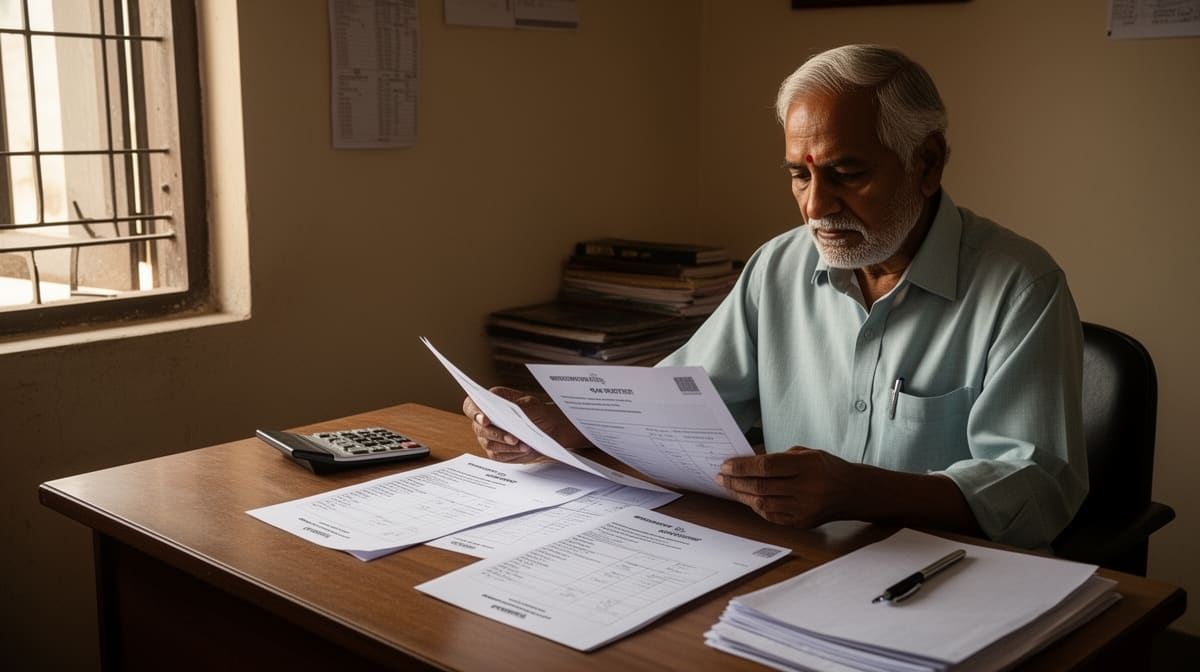
- Petitioner’s requests: Repeatedly sought inspection reports, investigation records, and documents relied upon by the Inquiry Officer to defend himself. These requests were allegedly ignored.
- 18.11.2022: Petitioner filed a complaint with Respondent No. 2 alleging procedural irregularities in the inquiry.
- 14.12.2022: Petitioner sought substitution of the Inquiry Officer, which was rejected.
- 28.07.2023: Disciplinary Authority imposed the major penalty of compulsory retirement from service.
- 24.11.2023: Appellate Authority dismissed the petitioner’s appeal, affirming the punishment.
Procedural History
- 10.11.2021: Suspension order issued.
- Post-suspension: Charge-sheets served; petitioner submitted detailed explanations denying allegations.
- Departmental inquiry: Conducted without furnishing the petitioner with the material documents relied upon by the Inquiry Officer.
- 28.07.2023: Disciplinary Authority imposed compulsory retirement.
- 24.11.2023: Appellate Authority dismissed the appeal.
- Present petition: Filed under Article 226 of the Constitution challenging the orders of the Disciplinary and Appellate Authorities.
Relief Sought
The petitioner sought the following reliefs:
- (A) Declaration that the final punishment order dated 24.11.2023 and the Disciplinary Authority’s order dated 28.07.2023 are illegal, null, and void.
- (B) Quashing of the compulsory retirement order and reinstatement with full back wages.
- (C) Quashing of the suspension order dated 10.11.2021.
- (D) Reimbursement of PLI amount, difference in subsistence allowance from 10.11.2021 to 28.07.2023, and back wages from 28.07.2023 with 12% interest.
- (E) Reinstatement with due promotion (Scale II officer cadre) under the Persons with Benchmark Disabilities (PwBD) category, treating the suspension period and post-retirement period as on duty.
- (F) Compensation for mental pain, agony, and defamation, with permission to file civil and criminal suits for damages.
The Legal Issue
The central legal question was whether the denial of the inquiry report to the delinquent employee during disciplinary proceedings constitutes a violation of the principles of natural justice, thereby vitiating the punishment imposed. Specifically, the Court examined:
- Whether the Service Regulations mandate furnishing the inquiry report to the employee before the Disciplinary Authority arrives at its conclusions.
- Whether the failure to provide the inquiry report and relevant documents prejudiced the petitioner’s defence, rendering the disciplinary proceedings unfair.
Arguments Presented
For the Petitioner
The petitioner, appearing in person, contended:
- The disciplinary proceedings were vitiated by gross procedural irregularities and violations of natural justice.
- The charges were unfounded, and the Bank’s action was a colourable exercise of power with a predetermined intent to impose a major penalty.
- The findings of the Inquiry Officer were unsupported by material evidence, and the petitioner was denied access to critical documents despite repeated requests.
- Reliance was placed on the following judgments:
- State of U.P. v. Salig Ram Sharma (AIR 1960 All 543)
- State of U.P. v. Mohd. Sharif (AIR 1982 SC 937)
- Managing Director, ECIL v. B. Karunakar (MANU/SC/1038/1996)
- Moni Shankar v. Union of India (2008) 3 SCC 484
- Anil Gilurker v. Bilaspur Raipur Kshetriya Gramin Bank (2011) 14 SCC 379
- The petitioner argued that vague and ambiguous charges deprived him of a reasonable opportunity to defend himself, violating natural justice.
For the Respondent
The learned counsel for Respondent No. 2 (Maharashtra Gramin Bank) contended:
- The disciplinary proceedings were conducted in accordance with applicable rules, and the findings of the competent authority did not warrant interference.
- The petitioner, having accepted terminal benefits, was estopped from challenging the orders.
- Reliance was placed on the following judgments:
- State of Punjab v. Krishna Nivas (1997 AIR SC 2349)
- Chairman and Managing Director, United Commercial Bank v. PC Kakkar (AIR 2003 SC 1571)
- State Bank of Bikaner and Jaipur v. Nemichand Nalvaiyya (AIR 2011 SC 1931)
- Deputy Commissioner, KVS v. JV Hussain (AIR 2014 SC 766)
- State of Punjab v. Dhanjeetsingh Sandhu (AIR 2014 SC 3004)
- Union of India v. Gunashekharan (AIR 2015 SC 545)
- State Bank of Patiala v. General Secretary Staff Union (2016 III CLR 1005 (SC))
- Sadiq Shafiq Quershi v. MD and CEO, Union Bank of India (2022 SCC OnLine Bom 651)
- United Bank of India v. Bachchan Prasad Lall (AIR 2022 SC 943)
- State Bank of India v. K. S. Vishwanath (AIR 2022 SC 2531)
- Indian Overseas Bank v. Omprakash Lal Shrivastav (AIR OnLine 2022 SC 47)
The Court's Analysis
The Court conducted a detailed examination of the principles of natural justice and the mandatory procedural safeguards under the Maharashtra Gramin Bank (Officers and Employees) Service Regulations, 2010 (hereinafter, the Service Regulations).
Violation of Natural Justice
The Court relied heavily on the Constitution Bench judgment in Managing Director, ECIL v. B. Karunakar, which held that the inquiry report must be furnished to the delinquent employee before the Disciplinary Authority arrives at its conclusions. The Supreme Court, in the said case, framed and answered the following critical questions:
“2. The basic question of law which arises in these matters is whether the report of the Inquiry Officer/authority who/which is appointed by the disciplinary authority to hold an inquiry into the charges against the delinquent employee is required to be furnished to the employee to enable him to make proper representation to the disciplinary authority before such authority arrives at its own finding with regard to the guilt or otherwise of the employee and the punishment, if any, to be awarded to him.”
The Supreme Court held:
“30. Hence the incidental questions raised above may be answered as follows: (i) Since the denial of the report of the Inquiry Officer is a denial of reasonable opportunity and a breach of the principles of natural justice, it follows that the statutory rules, if any, which deny the report to the employee are against the principles of natural justice and, therefore, invalid. The delinquent employee will, therefore, be entitled to a copy of the report even if the statutory rules do not permit the furnishing of the report or are silent on the subject. (ii) The relevant portion of Article 311(2) of the Constitution is as follows: (2) No such person as aforesaid shall be dismissed or removed or reduced in rank except after an enquiry in which he has been informed of the charges against him and given a reasonable opportunity of being heard in respect of those charges.: Thus the Article makes it obligatory to hold an inquiry before the employee is dismissed or removed or reduced in rank. The Article, however, cannot be construed to mean that it prevents or prohibits the inquiry when punishment other than that of dismissal, removal or reduction in rank is awarded. The procedure to be followed in awarding other punishments is laid down in the service rules governing the employee. What is further, Article 311(2) applies only to members of the civil services of the Union or an all India service or a civil service of a State or to the holders of the civil posts under the Union or a State. In the matter of all punishments both Government servants and others are governed by their service rules. Whenever, therefore, the service rules contemplate an inquiry before a punishment is awarded, and when the Inquiry Officer is not the disciplinary authority the delinquent employee will have the right to receive the Inquiry Officer's report notwithstanding the nature of the punishment. (iii) Since it is the right of the employee to have the report to defend himself effectively, and he would not know in advance whether the report is in his favour or against him, it will not be proper to construe his failure to ask for the report, as the waiver of his right. Whether, therefore, the employee asks for the report or not, the report has to be furnished to him. (iv) In the view that we have taken, viz., that the right to make representation to the disciplinary authority against the findings recorded in the inquiry report is an integral part of the opportunity of defence against the charges and is a breach of principles of natural justice to deny the said right, it is only appropriate that the law laid down in Mohd. Ramzan Khan’s case (AIR 1991 SC 471) should apply to employees in all establishments whether Government or non-Government, public or private. This will be the case whether there are rules governing the disciplinary proceeding or not and whether they expressly prohibit the furnishing of the copy of the report or are silent on the subject. Whatever the nature of punishment, further, whenever the rules require an inquiry to be held, for inflicting the punishment in question, the delinquent employee should have the benefit of the report of the Inquiry Officer before the disciplinary authority records its findings on the charges levelled against him.”
The Court further emphasized the prejudice caused to the petitioner due to the denial of the inquiry report:
“26. The reason why the right to receive the report of the Inquiry Officer is considered an essential part of the reasonable opportunity it the first stage and also a principle of natural justice is that the findings recorded by the Inquiry Officer form an important material before the disciplinary authority which along with the evidence is taken into consideration by it to come to its conclusions. It is difficult to say in advance, to what extent the said findings including the punishment, if any, recommended in the report would influence the disciplinary authority while drawing its conclusions. The findings further might have been recorded without considering the relevant evidence on record, or by misconstruing it or unsupported by it. If such a finding is to be one of the documents to be considered by the disciplinary authority, the principles of natural justice require that the employee should have a fair opportunity to meet, explain and controvert it before he is condemned.”
Application to the Present Case
The Court observed that Regulation 39 of the Service Regulations mandates the Disciplinary Authority to afford a reasonable opportunity to the delinquent employee to submit his explanation and defend himself. The Court held:
“The very object underlying Regulation No.39 of the Service Regulations, which obligates the disciplinary authority to furnish the charges framed in writing and to afford a reasonable opportunity to the delinquent employee to submit his explanation and defend himself, is to ensure that the employee is extended with a meaningful opportunity before any conclusion is arrived.”
The Court further noted that the disciplinary proceedings comprise two stages:
- Recording of findings by the Inquiry Officer.
- Consideration of the delinquent employee’s response by the Disciplinary Authority before arriving at a final decision on penalty.
The Court held that denial of the inquiry report at the second stage defeats the purpose of Regulation 39 and violates natural justice.
Prejudice to the Petitioner
The Court found that:
- The petitioner’s requests for documents (dated 01.12.2021 and 18.11.2022) were ignored.
- The Inquiry Officer acted as a tool of the Disciplinary Authority, failing to act independently.
- The withholding of vital documents severely prejudiced the petitioner’s right to defend himself.
- The Disciplinary Authority proceeded to impose the penalty without considering the petitioner’s defence, thereby violating procedural fairness.
The Court drew an adverse inference against the respondent Bank for failing to produce the relevant material, despite sufficient opportunity to do so.
Terminal Benefits Argument Rejected
The Court rejected the respondent’s argument that the petitioner’s acceptance of terminal benefits precluded him from challenging the penalty order:
“As far as the submissions regarding the petitioner's receipt of terminal benefits are concerned, the same would not preclude the petitioner from challenging the penalty order if it is unsustainable in law or arbitrary. There can be no waiver or acceptance of an illegal penalty, and the right to assail the order remains intact.”
The Verdict
The Court allowed the writ petition and issued the following directions:
- Quashed and set aside the orders dated 28.07.2023 (Disciplinary Authority) and 24.11.2023 (Appellate Authority).
- Reinstated the petitioner in service with all consequential benefits, including:
- Back wages from 28.07.2023 until reinstatement.
- Subsistence allowance for the suspension period (10.11.2021 to 28.07.2023).
- Treatment of suspension period and post-retirement period as on duty for all purposes, including salary increments, NPS contributions, and leave credits.
- Compliance timeline: The respondent-authorities were directed to comply with the directions within three months from the date of the judgment (22.06.2026).
- No order as to costs.
What This Means For Similar Cases
Mandatory Furnishing of Inquiry Report
The judgment reaffirms the principle that the inquiry report must be furnished to the delinquent employee before the Disciplinary Authority arrives at its conclusions. This obligation exists:
- Regardless of whether the employee requests it.
- Even if the service rules are silent or prohibit furnishing the report.
- For all types of punishments, not just dismissal, removal, or reduction in rank.
Key Takeaways for Practitioners:
- Service Regulations must be strictly complied with: Non-compliance with procedural safeguards (e.g., furnishing the inquiry report) vitiates the entire disciplinary proceeding.
- Adverse inference for non-production of documents: Courts may draw adverse inferences against employers who fail to produce relevant material during proceedings.
- No waiver of illegal penalty: Acceptance of terminal benefits does not estop an employee from challenging an illegal or arbitrary penalty order.
Prejudice Must Be Demonstrated
While the Court held that denial of the inquiry report violates natural justice, it also emphasized that prejudice must be demonstrated on the facts of each case:
“Whether in fact, prejudice has been caused to the employee or not on account of the denial to him of the report, has to be considered on the facts and circumstances of each case. Where, therefore, even after the furnishing of the report, no different consequence would have followed, it would be a perversion of justice to permit the employee to resume duty and to get all the consequential benefits.”
Practical Implications:
- Employers must ensure procedural fairness: Disciplinary authorities should document compliance with procedural requirements, including furnishing the inquiry report and considering the employee’s objections.
- Employees should exhaust remedies: Employees should repeatedly request documents and raise objections during the inquiry to demonstrate prejudice in case of non-compliance.
Scope of Judicial Review
The judgment reinforces the scope of judicial review in disciplinary matters, particularly where:
- Principles of natural justice are violated.
- Procedural safeguards under service regulations are bypassed.
- The inquiry process is tainted by bias or lack of independence.
Actionable Steps for Lawyers:
- Challenge vague or ambiguous charges: Ensure charges are specific, clear, and supported by material evidence.
- Demand production of inquiry report: Cite B. Karunakar and Moni Shankar to argue for the mandatory furnishing of the inquiry report.
- Argue prejudice: Demonstrate how the denial of documents or procedural irregularities prejudiced the employee’s defence.