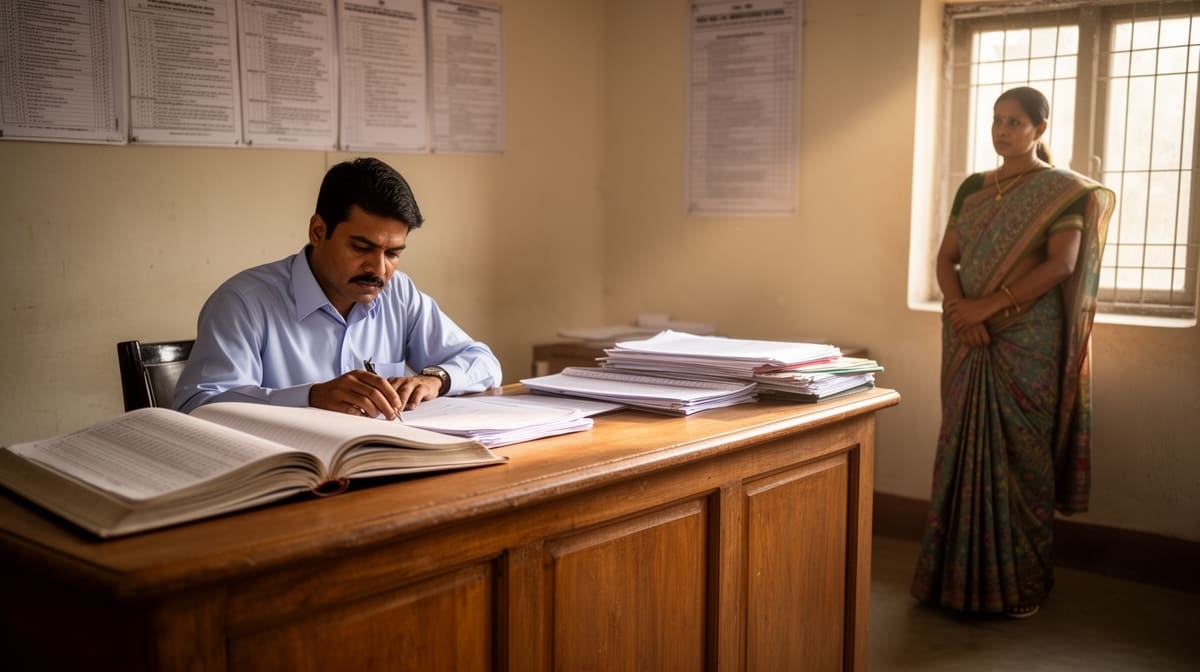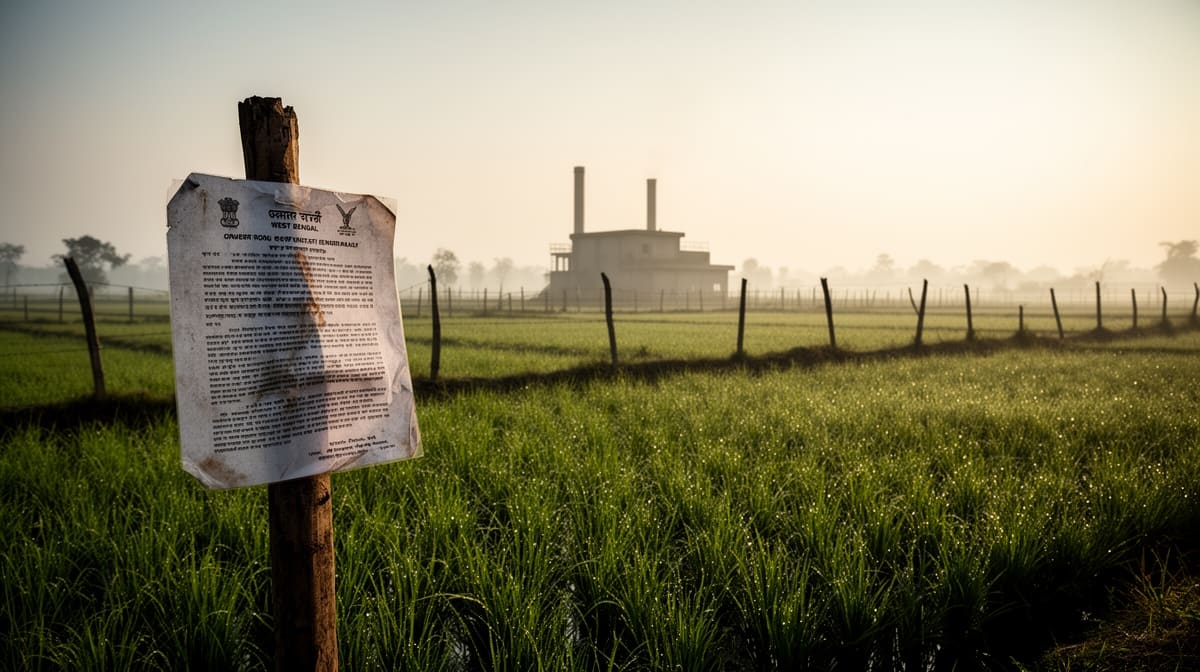
The Calcutta High Court has reaffirmed that procedural fairness is non-negotiable in land reform proceedings, particularly when determining bargadar status. The judgment underscores that even in quasi-judicial forums, the right to be heard is not a formality but a constitutional imperative.
Background & Facts
The Dispute
The petitioner claimed to be a bargadar - a cultivator entitled to a share of agricultural produce - over certain plots of land in West Bengal. In 1998, the Block Land & Land Reforms Officer (BL & LRO) recorded the petitioner as a bargadar without serving notice to the landowner, the private respondent. The landowner challenged this recording, arguing that the process violated statutory and constitutional norms of natural justice.
Procedural History
- 1998: BL & LRO recorded petitioner as bargadar without notice to the landowner.
- 2019: Appellate authority upheld the recording, relying on documents submitted by the petitioner and noting his alleged attempts to deliver produce.
- 2025: West Bengal Land Reforms and Tenancy Tribunal set aside the appellate order, holding the BL & LRO’s initial decision was non-speaking and passed without affording the landowner a hearing.
- 2026: Petitioner approached the Calcutta High Court via writ petition seeking to restore the appellate authority’s order.
Relief Sought
The petitioner sought quashing of the Tribunal’s order and restoration of the appellate authority’s decision recognizing him as a bargadar.
The Legal Issue
The central question was whether recording a person as a bargadar under the West Bengal Land Reforms Act without providing notice and opportunity of hearing to the landowner violates the principles of natural justice.
Arguments Presented
For the Petitioner
Counsel argued that the appellate authority had adequately examined documentary evidence and found the petitioner had consistently attempted to deliver his share of produce. The petitioner contended that the Tribunal erred in treating the appellate order as "non-speaking" and that the absence of a formal hearing at the BL & LRO stage was a mere technicality, not a substantive illegality.
For the Respondent/State
The State and landowner argued that the BL & LRO’s initial order was void ab initio because it was passed without notice to the affected party - the landowner. Counsel relied on the foundational principle that any adjudication affecting property rights must comply with audi alteram partem. They emphasized that the Tribunal’s direction for a fresh hearing was legally sound and necessary to ensure fairness.
The Court's Analysis
The Court examined the nature of the BL & LRO’s function under the West Bengal Land Reforms Act and concluded that the recording of bargadar status is a quasi-judicial act with direct consequences on land ownership and tenancy rights. The Court observed that the appellate authority had accepted the petitioner’s version without addressing the landowner’s position, which was never heard.
"We cannot overlook the fact that the appellate authority accepted the unilateral version of the writ petitioner as the gospel truth, without adverting to the stand taken by the land-owner/raiyat."
The Court further noted that the BL & LRO’s order was not annexed to the writ petition, making it impossible to assess whether any hearing had occurred. The Tribunal, as the last forum of fact, was entitled to find that the initial process was defective. The Court held that natural justice is not a technicality but a substantive requirement in matters affecting proprietary rights. The absence of notice to the landowner rendered the initial recording legally infirm, regardless of the petitioner’s conduct or documentary submissions.
The Verdict
The petitioner’s writ petition was dismissed. The Court upheld the Tribunal’s order, holding that recording bargadar status without notice to the landowner violates natural justice and that the matter must be re-adjudicated with proper opportunity to all parties.
What This Means For Similar Cases
Notice Is Mandatory Before Bargadar Recording
- Practitioners must ensure that all notices under the West Bengal Land Reforms Act are served on landowners before any recording of bargadar status.
- Failure to serve notice renders the order voidable, even if the bargadar has been cultivating the land for years.
Appellate Authorities Cannot Cure Procedural Defects
- Appellate forums cannot validate an initial order that was passed without hearing the affected party.
- The appellate authority’s reliance on documents submitted by one side, without considering the other’s stance, constitutes a failure of adjudication.
Tribunal’s Direction for Fresh Hearing Is Legally Sound
- Tribunals have the authority to remand matters for fresh adjudication when procedural fairness is compromised.
- Courts will not interfere with such remands unless there is clear abuse of power or perversity.