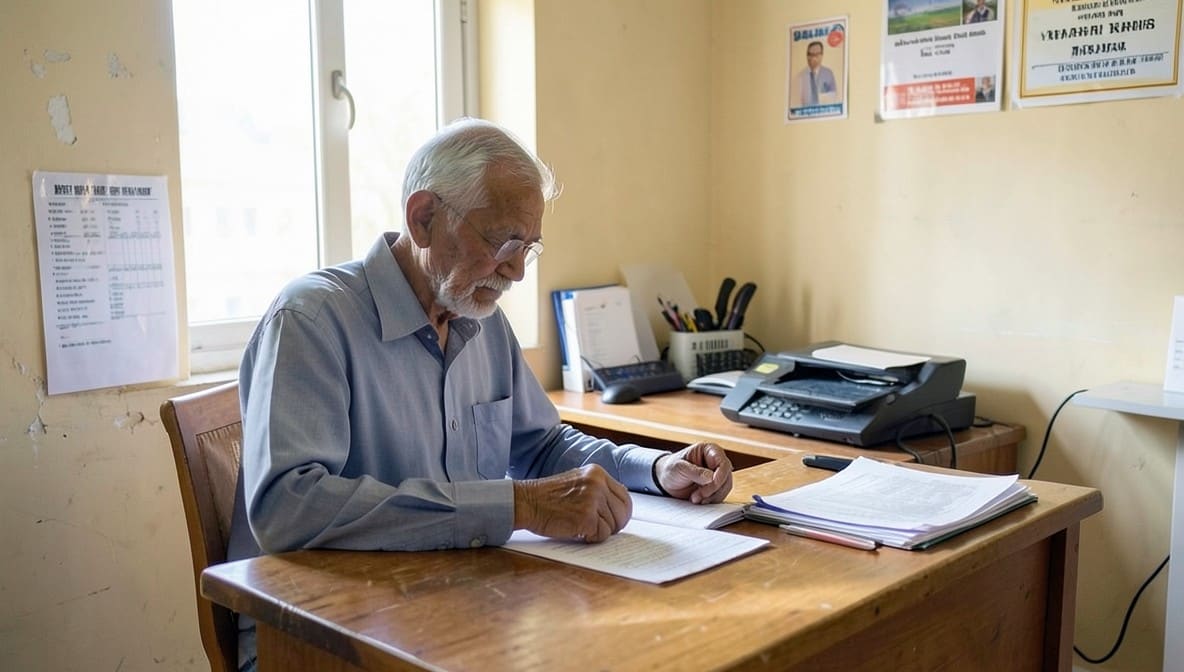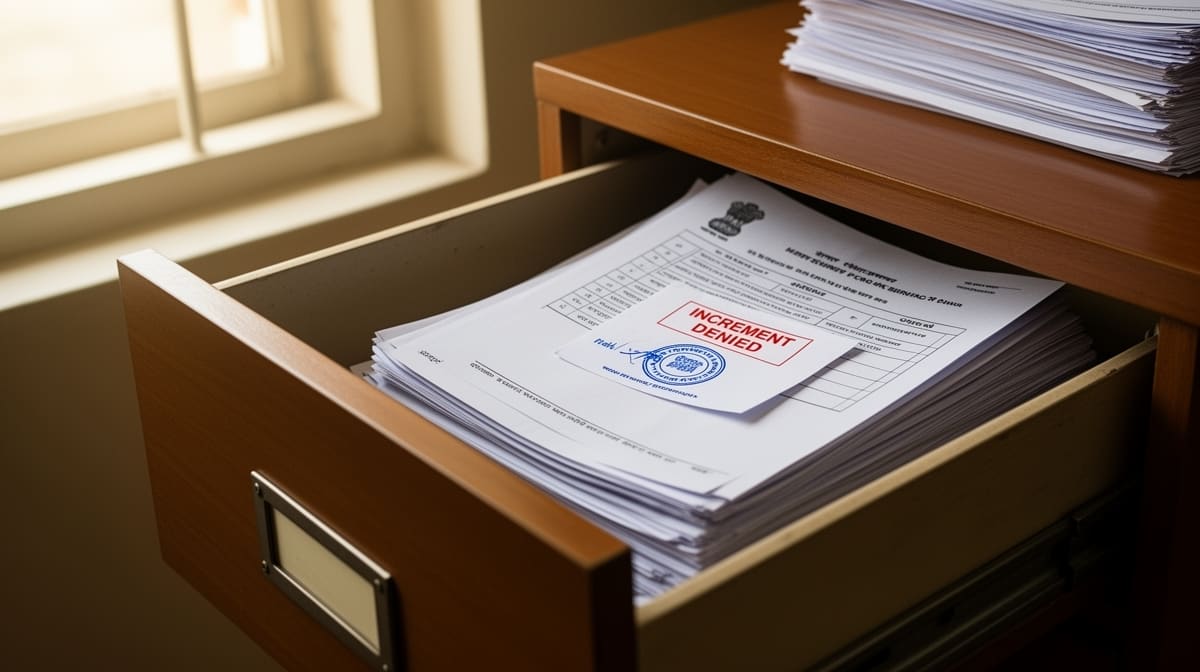
The Allahabad High Court has reaffirmed that the principle of natural justice is non-negotiable in service matters, particularly when an employee’s salary is unilaterally reduced. The judgment underscores that even in cases of alleged overpayment, procedural fairness must precede adverse action, setting a clear benchmark for administrative compliance across state departments.
Background & Facts
The Dispute
The petitioner, Jagdish Prasad @ Jagdish Prasad Sonkar, served in the Uttar Pradesh Police force, beginning as a Constable on 14.05.1982. He was subsequently promoted to Head Constable in 2014 and later to Sub-Inspector. He superannuated on 31.08.2023 after over four decades of service. On 12.03.2024, the Senior Superintendent of Police, Amethi, issued an order reducing the petitioner’s monthly salary from Rs. 66,000 to Rs. 62,200 without prior notice or hearing.
Key Facts
- The petitioner was appointed as Constable on 14.05.1982
- Promoted to Head Constable in 2014
- Promoted to Sub-Inspector at a later date (exact date not specified in judgment)
- Superannuated on 31.08.2023
- Salary reduction order issued on 12.03.2024 by Senior Superintendent of Police, Amethi
- Reduction from Rs. 66,000 to Rs. 62,200 per month
- No prior notice, inquiry, or opportunity to explain was given
- No allegation of fraud, concealment, or misrepresentation by the petitioner
- The order was challenged via writ petition filed in 2026
Procedural History
- 12.03.2024: Impugned order passed by Senior Superintendent of Police, Amethi, reducing salary
- 2026: Writ Petition (No. 4531 of 2026) filed before the Allahabad High Court, Lucknow Bench
- 04.05.2026: Judgment delivered by Hon’ble Justice Karunesh Singh Pawar
The Parties' Positions
For the Petitioner: The reduction in salary was arbitrary and violative of Article 14 and Article 21 of the Constitution. No opportunity of hearing was granted, and there was no allegation of fraud or misrepresentation. The order was passed ex parte and without application of mind.
For the Respondent (State): The petition was filed belatedly, but the Standing Counsel conceded that if any recovery or refixation adversely affects the petitioner, an opportunity of hearing ought to have been provided. No substantive defense was offered against the procedural violation.
Relief Sought
The petitioner sought quashing of the order dated 12.03.2024 and a direction to restore his salary to Rs. 66,000 per month pending a fair hearing. Alternatively, he sought a direction to conduct a proper departmental inquiry with opportunity of hearing before any recovery or refixation.
The Legal Issue
The central question was whether an administrative authority can unilaterally reduce the salary of a retired government servant without affording an opportunity of hearing, particularly in the absence of any allegation of fraud, concealment, or misrepresentation.
Arguments Presented
For the Petitioner
The petitioner’s counsel relied on the foundational principle of audi alteram partem and cited State of U.P. v. Mohd. Noor and Union of India v. Rameshwar Prasad to argue that even in cases of alleged overpayment, a pre-decisional hearing is mandatory unless fraud is established. He emphasized that the petitioner had no knowledge of the alleged error, and the order was passed without any inquiry or notice. The reduction, he argued, amounted to a punitive action without due process.
For the Respondent
The Standing Counsel did not contest the procedural lapse. While raising a limitation objection, he acknowledged that if the order resulted in adverse financial consequences, the principles of natural justice required a show-cause notice and hearing. No statutory provision or precedent was cited to justify the absence of hearing.
The Court's Analysis
The Court observed that the impugned order dated 12.03.2024 contained no reference to any inquiry, investigation, or opportunity granted to the petitioner. The record was silent on whether the petitioner was ever informed of the basis for the proposed reduction. The Court noted that mere administrative error or alleged overpayment does not absolve the authority from the obligation to hear the affected individual.
"The principle of natural justice is not a mere formality; it is a substantive safeguard against arbitrary state action. Even in cases of alleged overpayment, the employee must be given a fair chance to explain why the payment was made and why it should not be recovered."
The Court distinguished cases where fraud or misrepresentation was proven, noting that such exceptions do not apply here. The petitioner had served for over 41 years, retired on superannuation, and there was no allegation of dishonesty. The Court held that the absence of a hearing rendered the order void ab initio.
The Court further emphasized that the State cannot rely on technicalities of limitation to defeat a fundamental right when the violation of natural justice is patent. The delay in filing the writ petition, while noted, could not override the gravity of the procedural illegality.
The Verdict
The writ petition was allowed. The Court set aside the operation and effect of the order dated 12.03.2024 pending a fresh, lawful proceeding. The petitioner was directed to file a comprehensive representation before the Superintendent of Police, Amethi, by 25.05.2026. Upon receipt, the authority must issue a show-cause notice, afford the petitioner an opportunity to reply, and pass a reasoned order within two months. Until then, the salary reduction and any consequential recovery are stayed. The petitioner’s salary shall be restored to Rs. 66,000 per month during this period.
What This Means For Similar Cases
Opportunity of Hearing Is Mandatory Before Any Salary Adjustment
- Practitioners must insist on pre-decisional hearings in all cases involving salary recovery or refixation, even for retired employees
- Administrative orders that reduce emoluments without notice are voidable, regardless of the reason (overpayment, clerical error, policy change)
- The burden lies on the authority to prove fraud; mere suspicion is insufficient
Delay Does Not Waive Fundamental Rights in Service Matters
- Delay in filing a writ petition cannot be used to deny relief where a clear violation of natural justice is established
- Courts will prioritize substantive justice over procedural technicalities in service law disputes
- Representation before the authority remains a prerequisite, but the right to hearing cannot be forfeited due to delay
Administrative Orders Must Be Speaking Orders
- Orders affecting service benefits must record reasons, reference applicable rules, and indicate consideration of the employee’s perspective
- Blanket orders without reasoning or evidence are liable to be quashed under Article 14
- Departments must maintain audit trails and communication records to avoid future litigation