The Karnataka High Court has clarified that in motor accident claims, the absence of medical bills does not preclude a nominal award for hospitalization and treatment, especially when the nature and duration of injury are established. This judgment reinforces the principle that tribunals must apply equitable reasoning in assessing compensation, particularly when claimants are from economically vulnerable backgrounds.
Background & Facts
The Dispute
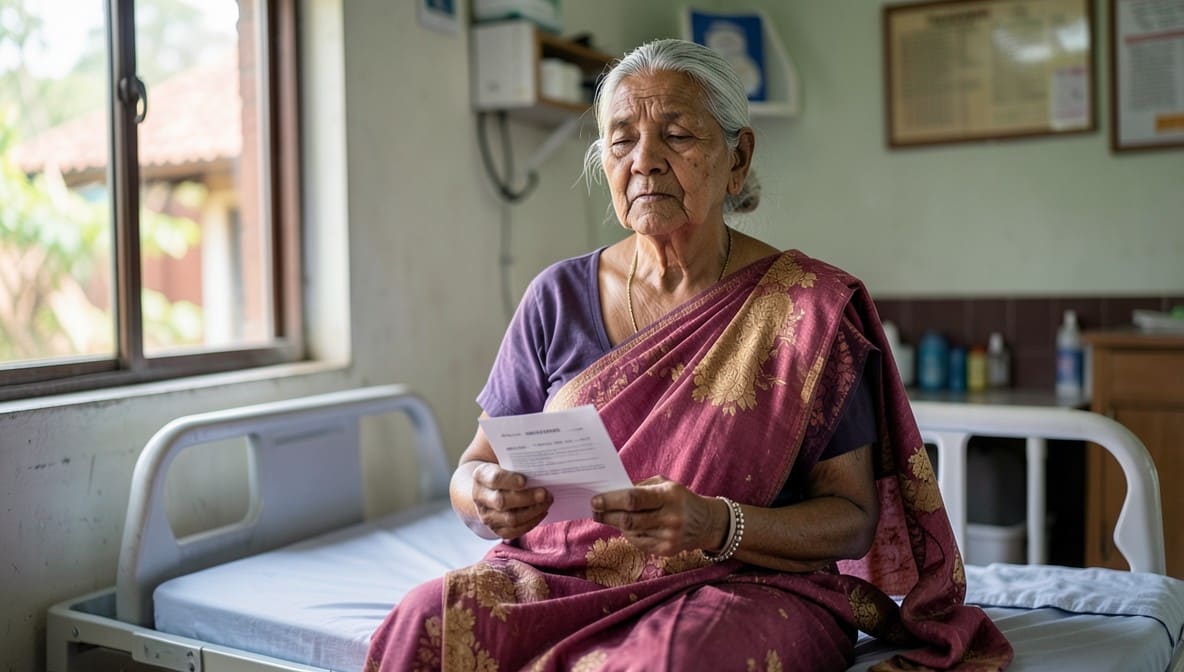
The appellant, Smt. Lakshmi @ Lakshmamma, aged 59, was involved in a road traffic accident on 23.07.2019 when she was struck by a motorcycle bearing Regn. KA-09-EE-6495, driven by Respondent No.1. The accident resulted in a fracture of both bones of the left forearm at the upper third. She was admitted as an in-patient for nine days and sustained permanent functional impairment. The claim petition was filed before the II Additional Senior Civil Judge and Motor Accident Claims Tribunal (MACT), Mandya, seeking compensation for injuries, loss of income, medical expenses, and pain and suffering.
Key Facts
- The accident occurred on 23.07.2019 at Keragodu Hobli, Mandya Taluk
- The claimant was admitted to hospital for 9 days as per Exhibit P-7 (discharge summary)
- Medical treatment was rendered but no bills were produced due to financial constraints and lack of formal documentation
- PW.2, a treating doctor, assessed the claimant’s functional disability at 33%
- The Tribunal accepted the claimant’s testimony and medical evidence but awarded no compensation for medical expenses due to absence of bills
- The claimant is a rural woman with no formal employment and relies on subsistence farming
Procedural History
- 23.07.2019: Accident occurred
- 22.07.2020: Claim petition filed before MACT, Mandya (MVC No.1110/2021)
- 02.09.2025: MACT passed award granting total compensation of Rs.3,25,280/-
- Medical expenses: Rs.0 (denied due to lack of bills)
- Loss of amenities and expectation of life: Rs.15,000/-
- Pain and suffering: Rs.40,000/-
- Nourishment: Rs.25,000/-
- Loss of income during laid-up period: Rs.42,000/-
- Loss of future earnings: Rs.2,03,280/-
- Interest: 6% p.a. from date of petition till deposit
- 02.10.2025: Appellant filed MFA No.2658/2026 before Karnataka High Court seeking enhancement
- 09.06.2026: Appeal heard and decided by Single Judge
Relief Sought
The appellant sought:
- Award of nominal medical expenses despite absence of bills
- Enhancement of compensation for loss of amenities and expectation of life from Rs.15,000/- to Rs.50,000/-
- Interest at 6% p.a. from date of petition till realization
- Costs of appeal
The Parties' Positions
Appellant (Claimant): Argued that hospitalization for nine days with a confirmed fracture necessarily incurred medical expenses, and denial of any award on technical grounds of missing bills is unjust, especially for rural claimants. Relied on State of Haryana v. Baldev Singh for equitable approach.
Respondent No.2 (Insurer): Contended that without production of medical bills, no award can be made under the principle of strict proof. Argued that the Tribunal’s award was within reasonable bounds and should not be disturbed.
Relief Sought
The appellant sought enhancement of compensation by Rs.35,000/-, specifically for medical expenses and loss of amenities, and continuation of 6% interest till realization.
The Legal Issue
The central question was whether nominal compensation for medical expenses can be awarded in a motor accident claim when medical bills are not produced, but hospitalization and injury are established by documentary evidence, and whether the Tribunal’s assessment of loss of amenities and expectation of life at Rs.15,000/- was manifestly inadequate given a 33% functional disability.
Arguments Presented
For the Appellant
Learned counsel argued that the Tribunal erred in denying any award for medical expenses solely due to non-production of bills. She cited Smt. Sushila Devi v. M/s National Insurance Co. Ltd. to emphasize that courts must adopt a liberal and humane approach in motor accident claims, especially for claimants from rural and economically disadvantaged backgrounds. The 33% disability assessed by PW.2 warranted a higher award for loss of amenities than the Rs.15,000/- granted, which was disproportionate to the nature of injury and long-term impact.
For the Respondent
Learned counsel for the insurer maintained that compensation must be supported by documentary evidence and that the Tribunal correctly applied the principle of strict proof. He submitted that the award under other heads was reasonable and that enhancement would set a precedent undermining evidentiary standards.
The Court's Analysis
The Court observed that while medical bills are preferred evidence, their absence cannot be a bar to compensation when the injury and treatment are otherwise established. The discharge summary (Ex.P-7) confirmed nine days of in-patient treatment for a compound fracture of the forearm - a condition requiring medical intervention, medication, and nursing care. The Court held that denying any award under this head would be unjust and contrary to the compensatory purpose of the Motor Vehicles Act.
"The very fact that claimant has sustained fracture and taken treatment itself indicates that she has incurred medical expenses. As the claimant has not produced any medical bills, nominal amount requires to be awarded towards medical expenses in a sum of Rs.10,000/-"
Regarding loss of amenities and expectation of life, the Court noted that the Tribunal had reduced the doctor’s 33% functional disability assessment to 11% without adequate reasoning. The Court found this reduction arbitrary and inconsistent with precedent. It held that a 33% disability, even if not total, substantially impacts daily living, mobility, and future prospects, particularly for a woman of advanced age engaged in manual labor. The award of Rs.15,000/- was therefore found to be inadequate.
The Court emphasized that compensation under this head is not merely for pain but for loss of enjoyment of life, reduced capacity for self-care, and diminished quality of life. It enhanced this head to Rs.30,000/-, aligning with awards in similar cases involving upper limb fractures with permanent functional impairment.
The Verdict
The appeal was allowed in part. The appellant is entitled to enhanced compensation of Rs.25,000/- comprising Rs.10,000/- for medical expenses and Rs.15,000/- additional for loss of amenities and expectation of life. The total compensation, including interest at 6% p.a. from the date of petition till realization, shall be paid by Respondent No.2 - the insurer - within six weeks from the date of judgment. Failure to comply shall attract interest at 9% p.a. from the expiry of six weeks until payment. The appellant is entitled to release of the entire compensation amount. No interest is awarded for the 106-day delay in filing the appeal.
What This Means For Similar Cases
Nominal Medical Expenses Are Permissible Without Bills
- Practitioners may now confidently argue for nominal medical awards (Rs.5,000 - Rs.15,000) in cases where hospitalization is documented via discharge summaries, doctor’s notes, or injury reports, even without bills
- This is especially critical for rural claimants, daily wage earners, and elderly litigants who lack access to formal medical documentation
- Tribunals must not apply rigid evidentiary standards that defeat the compensatory spirit of the MV Act
Functional Disability Assessments Must Be Reasonably Applied
- Courts will not permit arbitrary reduction of medical disability percentages without reasoned justification
- A 33% functional disability in an upper limb, even if not total, warrants compensation in the range of Rs.25,000 - Rs.40,000 depending on age, occupation, and impact on daily life
- Tribunals must explicitly state reasons for deviating from medical expert assessments
Equitable Approach Overrides Technical Deficiencies
- The judgment reinforces that motor accident claims are quasi-in rem proceedings designed for social justice
- Technicalities like missing bills or procedural delays in filing appeals must not override substantive justice
- This precedent supports a liberal interpretation of evidence in favor of vulnerable claimants