A landmark ruling by the Chhattisgarh High Court has clarified that an insurer cannot escape liability to third-party claimants merely because the premium cheque was dishonoured, unless clear evidence proves that cancellation of the policy was communicated to the insured before the accident occurred. This decision reinforces the statutory protection afforded to victims under the Motor Vehicles Act and sets a strict evidentiary standard for insurers seeking to avoid indemnity obligations.
Background & Facts
The Dispute
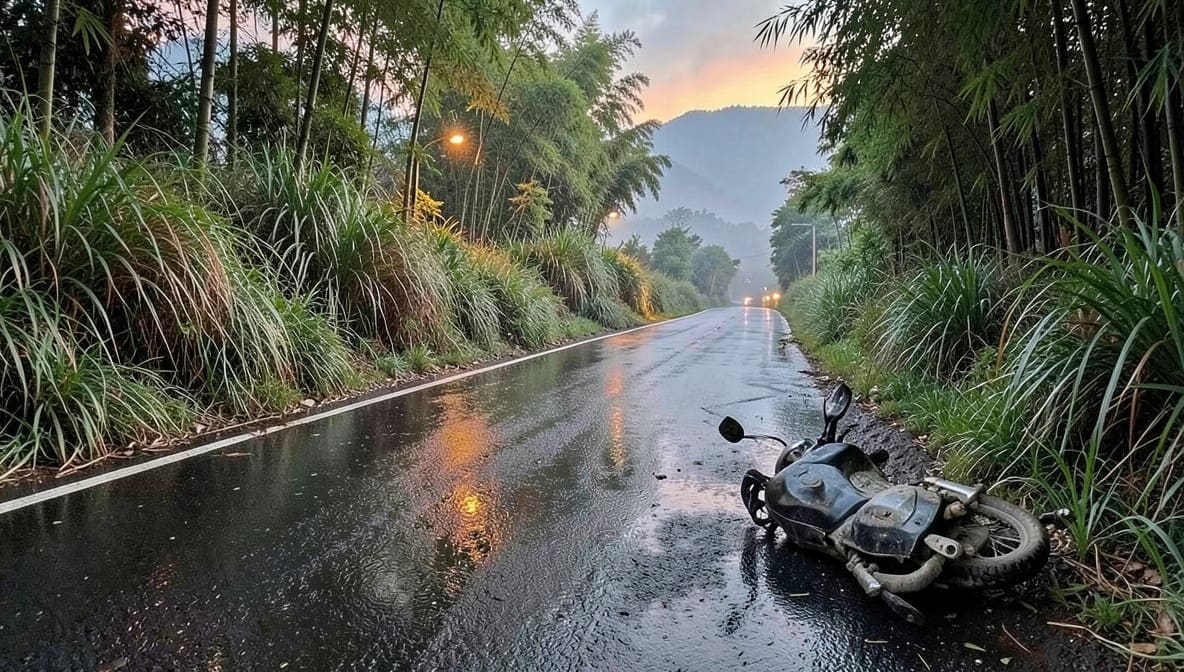
The dispute arose from a fatal road accident on the intervening night of 30-31 April 2012, when a truck bearing registration CG-18-H-0542, driven by Neharlal Sahu and owned by Ram Kumar Soni, collided from behind with a bullock cart on National Highway 16 near Dilmili Dega Aamapara. The collision resulted in the immediate deaths of two individuals, Kohrami Jaggu and Kohrami Chaitu, along with the death of two bullocks. The claimants, being the legal heirs of the deceased, filed compensation petitions under Section 166 of the Motor Vehicles Act, 1988.
Procedural History
- 30 April 2012: Fatal accident occurs.
- 29 April 2012 to 28 April 2013: Insurance policy issued by Shri Ram General Insurance Company Ltd. covering the offending vehicle.
- 30 April 2012: Premium paid via Cheque No. 013999, drawn on State Bank of India.
- May 2012: Cheque dishonoured by bank for "insufficient funds".
- 7 May 2012: Insurance company sent cancellation notice via registered post to the vehicle owner.
- 26 April 2016: Motor Accident Claims Tribunal awards compensation of Rs. 3,59,000 and Rs. 4,29,000 respectively, holding the insurer liable.
- 2026: Appeals filed by insurer before the Chhattisgarh High Court.
Relief Sought
The appellant-insurance company sought to set aside the Tribunal’s award, arguing that the policy was void ab initio due to non-payment of premium. In the alternative, it requested a "pay and recover" order, allowing it to pay claimants and later recover the amount from the insured. The claimants supported the Tribunal’s award, asserting their statutory right to compensation.
The Legal Issue
The central question was whether an insurer remains liable to pay third-party compensation under Section 147(5) and Section 149(1) of the Motor Vehicles Act, 1988, when the premium cheque is dishonoured, but no effective cancellation notice was received by the insured prior to the accident.
Arguments Presented
For the Appellant
The insurer contended that the policy was never validly in force because the premium was never actually paid. It relied on the dishonour of Cheque No. 013999 and the subsequent cancellation notice dated 7 May 2012 to argue that the policy stood cancelled from inception. It further submitted that since the insured had not paid the premium, the insurer should not bear the burden of compensating third parties, especially when the insured had not contested the claim.
For the Respondent
The claimants argued that the insurer had issued the policy and accepted the cheque, thereby creating a prima facie contract of insurance. They emphasized that the insurer’s failure to prove that cancellation notice reached the insured before the accident rendered the defence invalid. They relied on the Supreme Court’s ruling in United India Insurance Company Limited v. Laxmamma to assert that third-party rights under the Act are inviolable unless cancellation is effectively communicated before the accident.
The Court's Analysis
The Court undertook a rigorous analysis of the insurer’s defence, focusing on the statutory framework under Section 147(5) and Section 149(1), which impose absolute liability on insurers to compensate third parties for accidents involving insured vehicles. The Court noted that the insurer had issued the policy with effect from 29 April 2012, and the accident occurred on 30 April 2012 - squarely within the policy period.
"In our view, the legal position is this: where the policy of insurance is issued by an authorised insurer on receipt of cheque towards the payment of premium and such a cheque is returned dishonoured, the liability of the authorised insurer to indemnify the third parties in respect of the liability which that policy covered subsists and it has to satisfy the award of compensation by reason of the provisions of Sections 147(5) and 149(1) of the MV Act unless the policy of insurance is cancelled by the authorised insurer and intimation of such cancellation has reached the insured before the accident."
The Court critically examined the insurer’s evidence and found it wanting. The notice of cancellation was sent only after the accident, and crucially, no acknowledgment receipt of the registered post was filed. No original or photocopy of the dishonoured cheque was produced, and the bank’s status report did not link the cheque to the insured’s account. The insurer also failed to initiate any legal proceedings against the insured for cheque dishonour.
The Court held that the burden of proving effective cancellation lies squarely on the insurer. Mere issuance of a notice, without proof of receipt by the insured before the accident, is legally insufficient. The Court emphasized that the statutory purpose of the Motor Vehicles Act is to ensure prompt and assured compensation to victims, and this objective cannot be undermined by technicalities of premium payment.
The Verdict
The appellant-insurer lost on its primary defence. The Chhattisgarh High Court upheld the Tribunal’s award but modified it to direct the insurer to first pay the awarded compensation with interest within eight weeks, and then recover the amount from the vehicle owner and driver. The Court affirmed that third-party rights under the MV Act are paramount and cannot be defeated by post-accident cancellation.
What This Means For Similar Cases
Insurance Cancellation Must Be Proven with Concrete Evidence
- Practitioners must now demand proof of actual receipt of cancellation notice by the insured, not just the issuance of a letter.
- Insurers cannot rely on bank dishonour notices alone to void coverage; the burden of proof is on them to establish timely communication.
- Failure to file acknowledgment receipts or original dishonoured cheques will render the defence legally unsustainable.
Pay and Recover Is the Only Viable Alternative
- Where insurers are held liable despite premium default, the "pay and recover" mechanism is the only legally sanctioned recourse.
- Insurers should initiate recovery proceedings against the insured immediately after paying claimants to avoid limitation issues.
- Courts will not permit insurers to shift liability to claimants on grounds of non-payment by the insured.
Third-Party Rights Are Absolute Under MV Act
- Claimants need not prove the insured’s compliance with premium obligations; their right to compensation is statutory and independent.
- Defence arguments based on policy irregularities are irrelevant unless cancellation is proven to have occurred before the accident.
- This judgment reinforces the principle that the MV Act prioritizes victim compensation over insurer-internal contractual disputes.