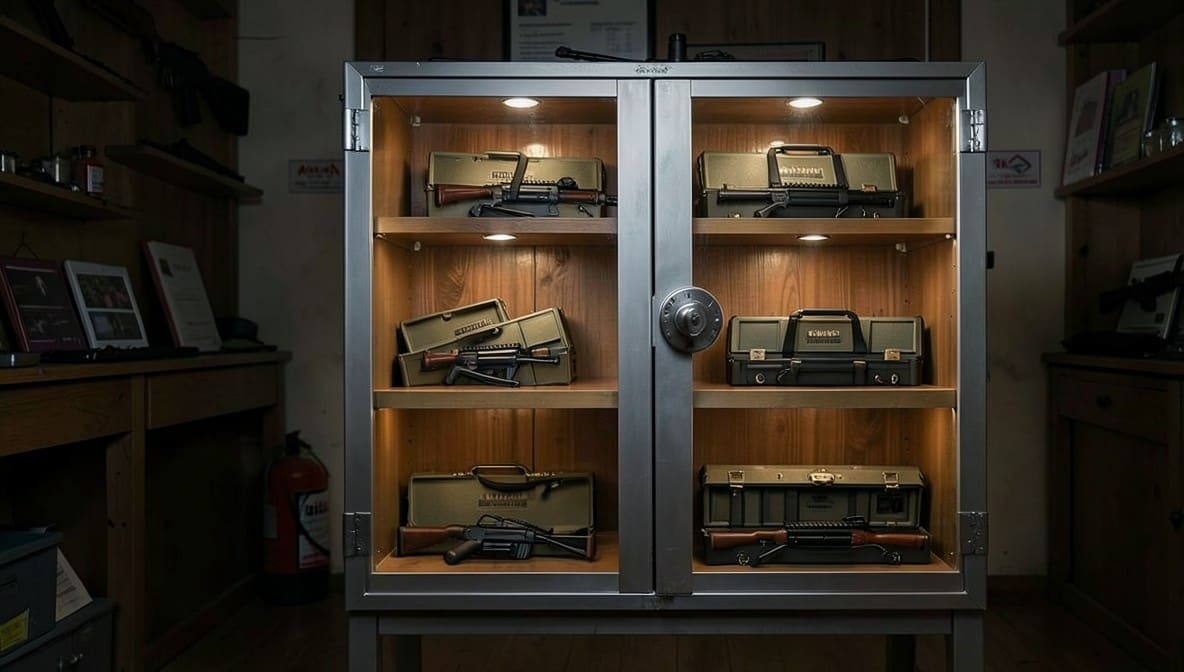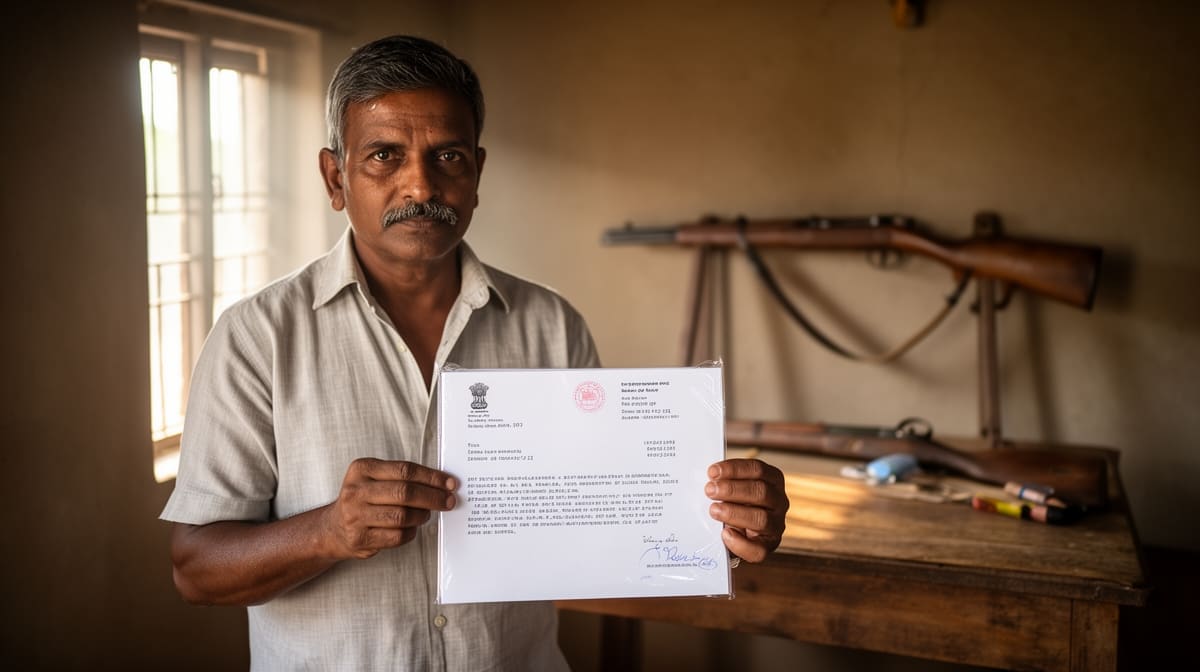
The Madhya Pradesh High Court has clarified that minors aged between 12 and 21 years, who are recognized as renowned shooters, cannot be categorically denied arms licenses for sport training solely on the basis of age. This judgment establishes a critical doctrinal shift in the interpretation of Rule 36 of the Arms Rules, 2016, affirming that statutory eligibility for training licenses must be assessed on merit and compliance, not arbitrary age thresholds.
Background & Facts
The Dispute
The petitioners, two minors aged below 21 years but above 12 years, are recognized as renowned shooters by the National Rifle Association of India and have participated in multiple national-level rifle and pistol tournaments. They applied for arms licenses under FORM-III of the Arms Rules, 2016, seeking permission to acquire, possess, and use firearms for sport shooting and target practice. Their applications were rejected by the licensing authority on the sole ground that they were under 21 years of age, rendering them ineligible under Rule 36(1).
Procedural History
- May 2025: Petitioners submitted applications for arms license in FORM-III.
- 23 July 2025: Licensing Authority rejected applications citing Rule 36(1) and directed petitioners to apply for FORM-III-A instead.
- August 2025: Writ petition filed under Article 226 challenging the rejection as legally unsustainable.
- October 2025: Petitioners completed mandatory Arms and Ammunition Safety Training and obtained Form-S-1 certificates under Rule 10.
Relief Sought
The petitioners sought quashing of the rejection order and a direction to the State to grant them arms licenses under FORM-III for sport training, arguing that Rule 36 permits such licenses for minors and that FORM-III-A is inapplicable as it is meant for retainers of exempted persons, not independent shooters.
The Legal Issue
The central question was whether Rule 36(1) of the Arms Rules, 2016 prohibits minors aged 12 - 21 years from obtaining a license under FORM-III for sport shooting, or whether it merely imposes supervisory conditions on their use of firearms, without barring them from holding a license.
Arguments Presented
For the Petitioner
Counsel argued that Rule 36(1) explicitly permits minors to use permissible arms for training under supervision, and Rule 36(2) explicitly contemplates applications for licenses under FORM-III by persons engaged in sport shooting, regardless of age. He cited Section 9(2) of the Arms Act, which permits minors to use firearms for training under prescribed conditions, and emphasized that Section 3(1) requires a license for possession but does not bar minors from obtaining one. He further relied on Form-S-1 certificates obtained during pendency and evidence of similar licenses granted to minors in other districts.
For the Respondent
The State contended that Section 9(1)(a)(i) prohibits persons under 21 from possessing firearms, and that Rule 36(1) only permits usage under supervision, not independent licensing. It argued that FORM-III-A is the only appropriate form for minors, as it is designed for retainers of exempted persons, and that granting FORM-III to minors would undermine public safety objectives.
The Court's Analysis
The Court undertook a detailed statutory interpretation of the Arms Act, 1959, and the Arms Rules, 2016, rejecting the State’s narrow reading of Rule 36. It held that Rule 36 is not merely a usage regulation but a licensing provision, as evidenced by its title, sub-clauses, and its placement within the licensing framework. The Court emphasized that Section 9(2) creates an exception to the age bar for training purposes, but does not eliminate the need for a license - rather, it presupposes one.
"The mandate in Section 3(1) is absolute and without any frills. The only exception from carrying firearms without licence is given in the proviso to Section 3(1)."
The Court distinguished FORM-III-A, which applies only to retainers of persons exempted under Section 41, and found no such exemption applicable to the petitioners. It noted that FORM-III is specifically designed for sport shooting and includes provisions for restricting use to shooting ranges and supervised training, aligning perfectly with Rule 36’s conditions. The Court further observed that Column 9 of Form I permits licensing authorities to impose usage restrictions, making age-based denial unnecessary.
The Court concluded that the licensing authority had misread the statutory scheme by conflating usage conditions with licensing eligibility. The rejection was not based on failure to meet safety, training, or conduct criteria, but on an erroneous assumption that minors cannot be licensees.
The Verdict
The petitioners won. The Court held that minors aged 12 - 21 years who qualify as renowned shooters are eligible for arms licenses under FORM-III for sport training, provided they meet all other statutory conditions. The impugned order was quashed, and the matter was remanded to the licensing authority for fresh consideration with due regard to the petitioners’ Form-S-1 certificate and the statutory scheme.
What This Means For Similar Cases
Licensing Is Not Barred by Age Alone
- Practitioners must now challenge blanket denials of FORM-III licenses to minors on age grounds alone.
- Licensing authorities must assess applications on compliance with Rule 36(2) and safety certification, not arbitrary age cutoffs.
- Denial must be grounded in failure to meet specific criteria under the Rules, not presumed incapacity.
FORM-III-A Is Not a Substitute for FORM-III
- FORM-III-A applies only to retainers of exempted persons under Section 41 - not to independent young shooters.
- Authorities cannot redirect minors to FORM-III-A as a workaround; doing so violates the statutory classification.
- Petitioners may now cite this judgment to insist on processing under the correct form.
Safety Certification Is a Valid Subsequent Compliance
- Obtaining Form-S-1 after application does not invalidate the original claim if the rejection was not based on lack of certification.
- Courts will consider subsequent compliance as evidence of eligibility, especially where the denial was procedurally flawed.
- Practitioners should proactively secure safety certificates before filing writs to strengthen claims.