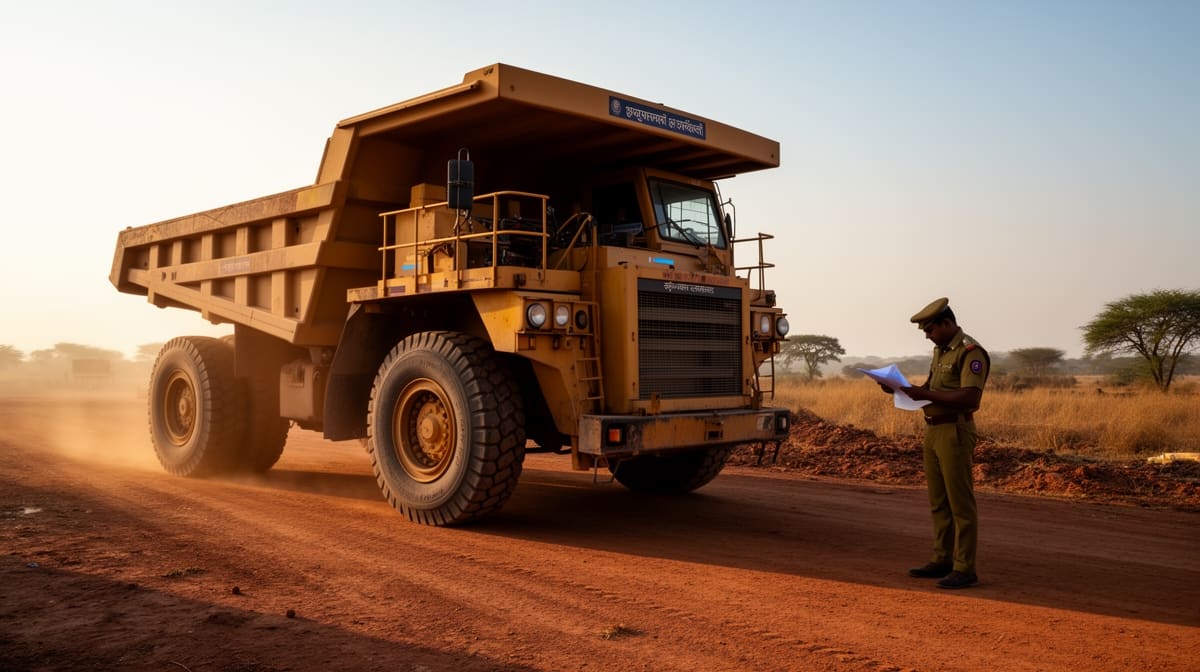
The Rajasthan High Court has clarified the legal framework governing the release of vehicles seized under mining laws, rejecting the practice of releasing such vehicles on mere undertaking (supurdaginama) without compliance with statutory confiscation or compounding procedures. This judgment resolves a recurring procedural conflict between criminal courts and mining authorities, establishing a clear hierarchy of remedies.
Background & Facts
The Dispute
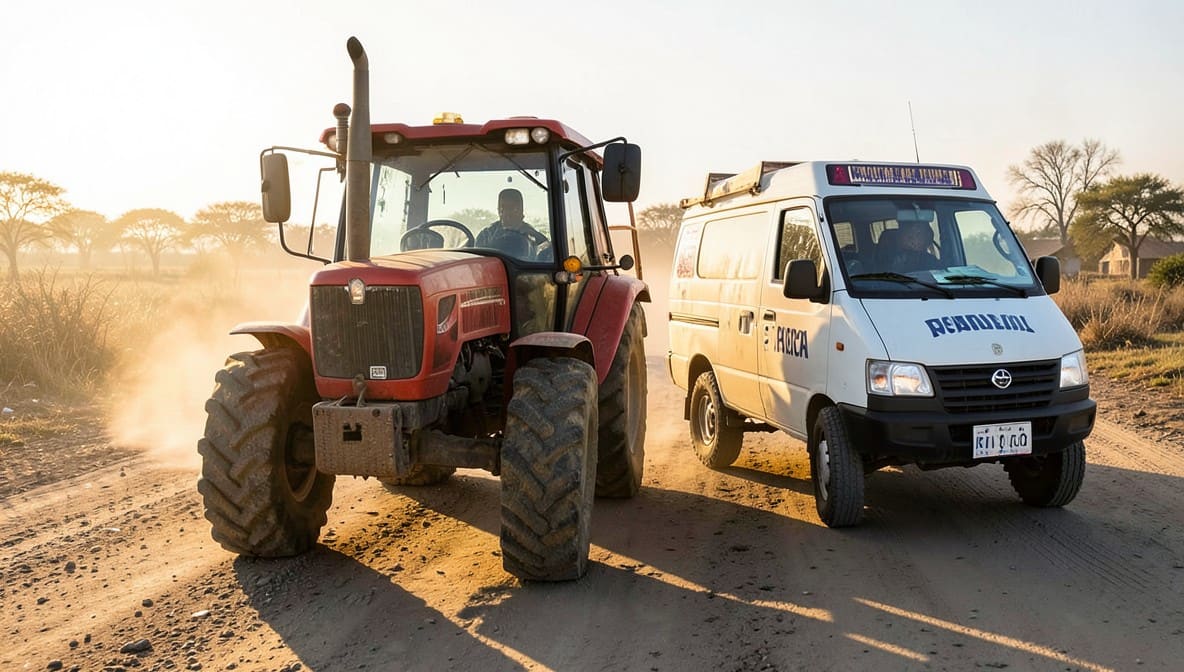
The petitioner, Narayan Singh, sought the release of his tractor (Registration No. RJ-46-RC-4176), which was seized by authorities under the Rajasthan Minor Minerals Concession Rules, 2013, for alleged illegal mining activity. He filed a Criminal Miscellaneous Petition under Section 439 CrPC before the High Court, praying for interim release on execution of a supurdaginama (undertaking). The impugned order dated 08.04.2026 by the Sessions Court had denied release, citing pending proceedings under mining law.
Key Facts
- The tractor was seized on or about 15.02.2026 during a raid conducted by the Mining Department, Jalore District
- No confiscation proceedings under Rule 22 of the Rajasthan Minor Minerals Concession Rules, 2013, had been initiated as of the date of filing the petition
- The petitioner submitted that the vehicle was not used for mining but was being transported for agricultural purposes
- The Sessions Court rejected the request for release on supurdaginama, holding that mining laws override criminal court powers in such matters
- The petitioner challenged this order as contrary to established judicial precedent
Procedural History
- 15.02.2026: Tractor seized by Mining Department during inspection
- 20.02.2026: Petitioner submitted representation for release; no response received
- 08.04.2026: Sessions Court dismissed application for release on supurdaginama
- 10.04.2026: Criminal Miscellaneous Petition (No. 3209/2026) filed before Rajasthan High Court
- 23.04.2026: Hearing before Hon’ble Mr. Justice Baljinder Singh Sandhu
Relief Sought
The petitioner sought: (i) release of tractor RJ-46-RC-4176 on execution of supurdaginama; (ii) direction to the Mining Department to initiate confiscation proceedings, if any, within a stipulated time; and (iii) costs.
The Legal Issue
The central question was whether a criminal court may release a vehicle seized under mining laws on the basis of a supurdaginama, or whether such release is permissible only after compounding of the offence or upon initiation of formal confiscation proceedings by the mining department.
Arguments Presented
For the Petitioner
Counsel relied on the principle that criminal courts retain inherent powers under Section 439 CrPC to grant interim relief, including release of seized property, pending final adjudication. He argued that since no confiscation proceedings had been initiated, the vehicle remained the lawful property of the petitioner and its continued detention by the state without due process violated Article 21. He cited State of Rajasthan v. Ram Singh (2020) to support the proposition that interim custody may be granted where no statutory proceedings are pending.
For the Respondent
The Additional Advocate General contended that mining laws are special enactments with overriding effect. He emphasized that Section 22 of the Rajasthan Minor Minerals Concession Rules, 2013, vests exclusive power of confiscation in the mining department, and that criminal courts cannot interfere by releasing seized vehicles on undertakings. He relied on the coordinate bench judgment in Chaina Ram v. State of Rajasthan (2025) to argue that the matter was no longer res integra.
The Court's Analysis
The Court observed that the issue had been authoritatively settled by a coordinate bench in Chaina Ram v. State of Rajasthan (S.B. Criminal Misc. Petition No. 597/2024, decided on 19.05.2025). The Court held that the ratio in that judgment was directly applicable and binding.
"It is held that under the mining laws, the state authorities have the powers for initiating confiscation proceedings in relation to the vehicles seized for violation of the mining laws. It is once the confiscation proceedings are initiated, the vehicle cannot be released on supurdaginama as prayed by few of the petitioners. However, the said vehicles can only be released on payment of penalty and compounding fees. Whereas, the vehicles qua which no confiscation proceedings have yet been commenced, the competent criminal Court can handover interim custody of the vehicles to its true owner as a criminal Court is not supposed to keep a vehicle detained until the confiscation proceedings are commenced and concluded by the mining department."
The Court clarified that the power of the criminal court to grant interim custody is not absolute. It is conditional upon the absence of initiated confiscation proceedings. Once such proceedings are commenced, the criminal court must defer to the statutory authority under mining law. The Court further emphasized that the state retains the right to reclaim any vehicle released on supurdaginama if confiscation proceedings are later initiated.
The Court rejected the petitioner’s argument that the absence of initiated proceedings automatically entitled him to release, noting that the law requires a structured process: either compounding (payment of penalty) or formal confiscation. The interim release on supurdaginama, while permissible in limited circumstances, cannot substitute statutory compliance.
The Verdict
The petition was allowed in part. The order dated 08.04.2026 was set aside. The petitioner is directed to file a fresh application before the competent criminal court for release of tractor RJ-46-RC-4176. The court shall decide such application strictly in accordance with the observations in Para 8 of the Chaina Ram judgment. No vehicle may be released on supurdaginama if confiscation proceedings are pending. If no such proceedings are initiated within 60 days of seizure, the criminal court may consider interim release on payment of compounding fees or upon sufficient undertaking. All pending applications are disposed of.
What This Means For Similar Cases
Supurdaginama Is Not a Right, But a Conditional Remedy
- Practitioners must now distinguish between vehicles seized before and after initiation of confiscation proceedings
- Applications for release on undertaking must be accompanied by proof that no mining department proceedings are pending
- Courts must record reasons for granting or denying supurdaginama in writing
Compounding Overrides Criminal Court Interim Orders
- Payment of penalty under mining rules takes precedence over criminal court orders for release
- If a vehicle is released on supurdaginama and later confiscated, the owner has no claim for return unless compounding is completed
- Legal notices to mining departments should be issued within 30 days of seizure to determine status of proceedings
Procedural Clarity for Criminal Courts
- Criminal courts must not retain seized vehicles indefinitely without direction from the mining authority
- The 60-day window for initiating confiscation proceedings, while not codified, is now an implied procedural standard
- Advocates should file applications for release under Section 457 CrPC, not merely Section 439, to align with property recovery procedures