The Bombay High Court clarified the scope of membership in co-operative societies under the Maharashtra Co-operative Societies Act, 1960, holding that while Respondent No.1 is entitled to membership for the basement premises admeasuring 59.02 sq.m. sanctioned as storage space, such membership must be confined to that specific portion and treated as residential for redevelopment benefits. The Court dismissed the writ petition challenging the Deputy Registrar's order granting membership but imposed a critical limitation on the extent of the premises eligible for membership.
Background & Facts
The Dispute
The petitioner, ALJ Residency Co-operative Housing Society Limited, filed a writ petition challenging the order dated 7 May 2026 passed by the Deputy Registrar, Co-operative Societies, H-West Ward, Mumbai, which granted membership to Respondent No.1, Gehlot Development Services Pvt. Ltd., in respect of basement premises allegedly purchased from the developer. The core dispute centered on whether the basement premises qualified as a 'flat' under Section 154B-1(13) of the MCS Act, thereby permitting grant of membership.
Key Facts
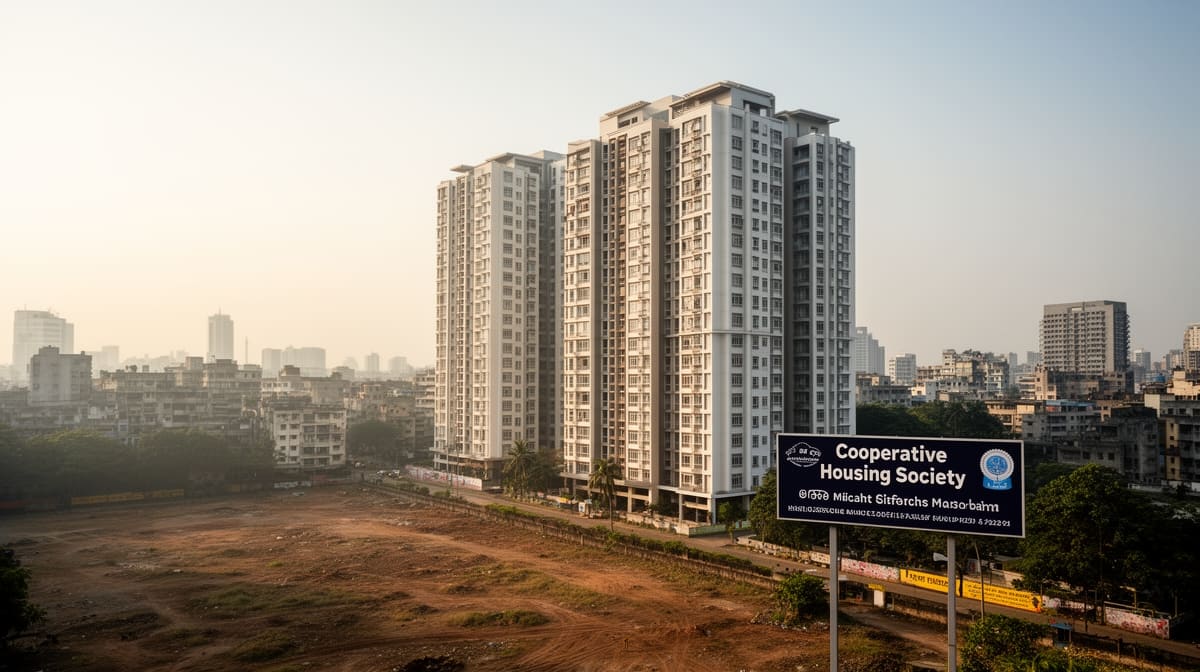
- The land bearing Plot No.49-C, Pali Mala Road, Pali Naka, Bandra (West), Mumbai was taken up for development by M/s. Bhati Homes Pvt. Ltd. (the developer)
- The Municipal Corporation for Greater Mumbai (MCGM) issued Intimation of Disapproval (IOD) on 4 August 1994 and granted Commencement Certificate (CC) upto plinth level for Phase-I
- On 16 October 1998, MCGM sanctioned the building plans by issuing the commencement certificate, sanctioning a basement below ground level
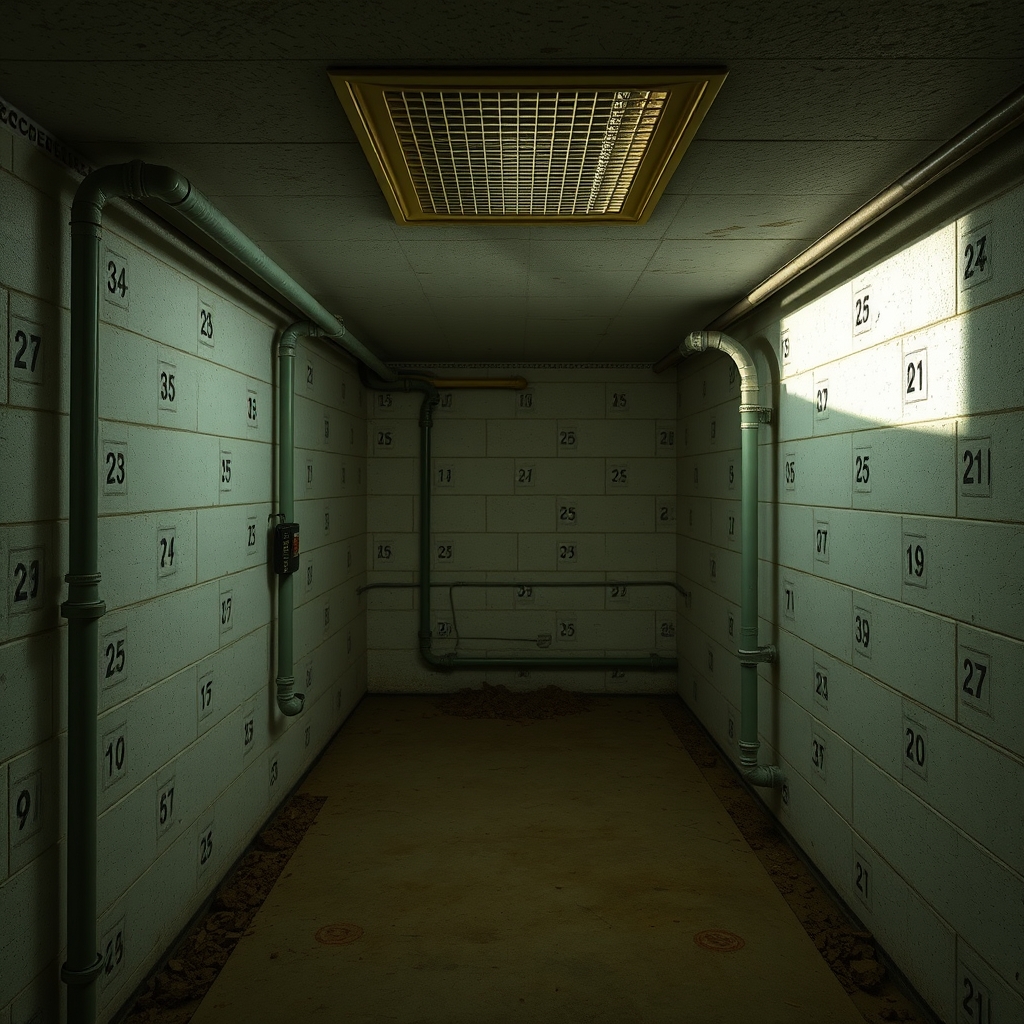
- In the sanctioned plan dated 16 October 1998, an area admeasuring 59.02 sq.m. in the basement was sanctioned as 'storage space', while the rest was sanctioned for parking of vehicles
- The plans were sanctioned for construction of the building only upto 5th floor, but the developer allegedly constructed upto 7th floor
- Respondent No.1 claims to have purchased premises admeasuring 250.83 sq.m. (equivalent to 2700 sq.ft.) in the basement vide Agreement for Sale dated 2 August 2004 executed with M/s. Bhati Homes Pvt. Ltd.
- At the time of the agreement, it was unregistered; the developer failed to complete construction of the building (constructed upto 7th floors) and did not obtain Occupation Certificate (OC)
- Construction of the basement was left incomplete by the developer, lacking any ramp or staircase for access
- Flats on the 6th and 7th floors were sold by the developer, and their purchasers formed and registered the Petitioner-society
Procedural History
- 7 February 2009: Respondent No.1 applied to the society for membership in respect of the basement premises allegedly purchased from the developer
- 21 August 2009: Deputy Registrar allowed the application under Section 22(2) of the MCS Act and granted deemed membership to Respondent No.1; the society complied and issued Share Certificate No.21 on 14 October 2009
- 8 January 2018: Petitioner-society filed Revision Application No.93/2018 before the Divisional Joint Registrar challenging the Deputy Registrar’s order dated 21 August 2009
- 20 July 2022: Divisional Joint Registrar dismissed the revision on merits
- 14 November 2025: This Court (in Writ Petition No. 1057 of 2023) set aside the orders dated 21 August 2009 and 20 July 2022, remanded proceedings to the Deputy Registrar for re-adjudication, and directed examination of whether the premises claimed by Respondent No.1 have the character of a 'flat' as defined under the statute, to be completed within four months
- 7 May 2026: On remand, the Deputy Registrar allowed the application of Respondent No.1, holding that as per the plan dated 25 April 2008, the premises were sanctioned as a 'Data Processing Unit' (DPU) and directed the society to complete proceedings for grant of membership
- Present writ petition filed: Challenging the Deputy Registrar’s order dated 7 May 2026
- Judgment pronounced: 07 October 2026
Relief Sought
The petitioner sought quashing of the Deputy Registrar’s order dated 7 May 2026, restoration of the Court’s order dated 14 November 2025, and a direction for re-adjudication in accordance with the remand.
The Legal Issue
The central question was whether the Deputy Registrar, on remand, violated the remit of remand by relying on an unsanctioned plan (dated 25 April 2008) and a NOC from the Chief Fire Officer to classify the basement premises as a 'Data Processing Unit' (DPU), rather than examining whether the premises qualified as a 'flat' under Section 154B-1(13) of the MCS Act based solely on the sanctioned plan dated 16 October 1998.
Arguments Presented
For the Petitioner
The petitioner contended that the Deputy Registrar exceeded the scope of remand by considering the plan dated 25 April 2008 (which was merely an approval from the Chief Fire Officer, not a sanctioned plan) and the Fire NOC, thereby committing a jurisdictional error. It argued that the sanctioned plan dated 16 October 1998 showed the basement area as storage space/parking, constituting a common amenity, and thus could not be treated as a 'flat' for membership. The petitioner emphasized that its conduct in participating in the regularization process (including issuing NOCs for TDR loading and electricity connection) was relevant to estoppel, as it had previously consented to regularization of the basement for Respondent No.1’s benefit. It relied on judgments such as Dr. Vasant P. Jain vs. Secretary/Chairman Suvarna - Sapna CHS Ltd. and Nook CHSL vs. Pyramid Developers to assert that quasi-judicial authorities cannot travel beyond the limit set by the remanding court.
For the Respondent
Respondent No.1 countered that the petitioner had not exhausted the alternate remedy of revision, as it had done previously for the 2009 order, and had suppressed material facts, including the existence of a common regularization application for basement, 6th, and 7th floors. It argued that the basement premises were capable of being regularized as a DPU, citing the plan dated 25 April 2008 and the Fire NOC, and that the premises qualified as a 'flat' under Section 154B-1(13) of the MCS Act since a 'godown' is included in the definition when sanctioned by the planning authority (referring to Ashwini Heights CHSL vs. Jyoti Nitin Lunia). Respondent No.1 further contended that the petitioner could not discriminate between occupants of unauthorized flats on the 6th and 7th floors and itself, as the society had granted membership to those occupants despite lack of sanction, and relied on judgments such as Kamla Spaces Premises Co-op Society Ltd. vs. Divisional Joint Registrar and Uday Dalal and Ors. vs. Divisional Joint Registrar to argue for similar treatment.
The Court's Analysis
The Court began by noting that the petitioner had filed the writ petition without exhausting the statutory remedy of revision under Section 154 of the MCS Act, but proceeded to hear it on the petitioner’s insistence, as the matter involved a pure question of law and alternate remedy was not mandatory per precedents like Shireen Sami Gadiali and Anr. vs. Spenta CHSL.
On the merits, the Court examined the order of remand dated 14 November 2025, which had directed the Deputy Registrar to:
"record a clear finding on these aspects. They were duty bound to determine whether the premises described in the sale deed fall within the statutory definition of a flat in Section 2(a-1) of the Maharashtra Ownership Flats Act and Section 154B-1-(13) of the MCS Act, 1960. They were also required to decide whether such premises form part of the common areas and facilities."
The Court found that the Deputy Registrar had not violated the remit of remand. It held that the Deputy Registrar had, in fact, examined the sanctioned plan and layout, contrary to the petitioner’s claim. The Court observed:
"The Deputy Registrar has taken into consideration the document dated 25 April 2008 for holding the premises of Respondent No.1 as a ‘flat’. [...] The same is an approval issued by the Chief Fire Officer of MCGM to the proposed amended plan in which the basement was proposed to be regularised as storage space and staircase was proposed to be constructed for accessing the basement."
However, the Court clarified that the document dated 25 April 2008 was not a sanctioned plan but merely one of the documents required for processing sanction. Despite this, the Court proceeded to evaluate the substance.
The Court turned to the sanctioned plan dated 16 October 1998, which showed an area admeasuring 59.02 sq.m. in the basement sanctioned as 'storage space'. It held that this sanctioned storage space was akin to a godown and, relying on Ashwini Heights CHSL vs. Jyoti Nitin Lunia, concluded that such a space could be treated as a 'flat' under Section 154B-1(13) of the MCS Act when sanctioned by the planning authority:
"Section 154B-1(13) of the Maharashtra Co-operative Societies Act, 1960 provides that ‘Flat’ means a block, chamber, dwelling unit, tenement, office, showroom, shop, godown, premises, suite, gala, unit or by any other name, that is to say, a separate and self-contained group, of any immovable property, comprising one or more rooms or enclosed spaces, situated in a building or on a plot of land, on one or more floors or on any part thereof, which is used or intended to be used for any residential or commercial use such as residence, office, shop, showroom or godown, or for carrying on any trade, business, profession or calling, or for any other kind of ancillary use incidental to the specified purposes."
The Court further noted that the total constructed basement admeasured only 230.30 sq.m. (equivalent to 2478.02 sq.ft.), meaning the claimed area of 2700 sq.ft. did not even exist in reality. Therefore, it held that grant of membership to Respondent No.1 could not be for the entire claimed area but must be restricted to the sanctioned portion:
"Considering these peculiar circumstances, in my view, grant of membership to Respondent No.1 is required to be restricted to premises admeasuring 59.02 sq.m. which is equivalent to about 637 sq.ft."
To avoid disputes in the redevelopment process, the Court directed that this 59.02 sq.m. portion be treated as residential premises for the purpose of granting redevelopment benefits, noting that the petitioner had itself shown willingness to regularize the entire basement as a commercial IT user during the regularization process.
The Verdict
The petitioner failed. The Court confirmed the Deputy Registrar’s order dated 7 May 2026 granting membership to Respondent No.1 but restricted such membership to premises admeasuring 59.02 sq.m. (equivalent to 637 sq.ft.), which shall be considered as residential premises for the purpose of granting redevelopment benefits. No costs were awarded, and the request for a stay of the judgment for 8 weeks was rejected.
What This Means For Similar Cases
Sanctified Plan Is Paramount
The determination of whether premises qualify as a 'flat' under Section 154B-1(13) of the MCS Act must be based exclusively on the sanctioned plan issued by the planning authority. Unsanctioned plans, proposals, or NOCs from other departments (like the Fire Department) cannot override the sanctioned plan. Practitioners must insist on examining the sanctioned plan first and foremost when advising clients on membership eligibility in co-operative societies, particularly for basement or atypical spaces.
Partial Sanction Supports Limited Membership
Where only a portion of the claimed premises is sanctioned (e.g., 59.02 sq.m. out of a claimed 2700 sq.ft.), membership may be granted but must be strictly confined to that sanctioned portion. This prevents overreach and ensures that membership rights align with the actual regulatory approval. In redevelopment scenarios, the sanctioned portion must be allocated consistently - here, as residential premises - to maintain equity among all members.
Conduct in Regularization Process Is Relevant
A co-operative society’s prior conduct in participating in regularization processes (such as issuing NOCs for TDR loading or construction access) is relevant to estoppel arguments and cannot be disregarded when the society later challenges membership granted pursuant to that process. Such conduct undermines claims of illegality or suppression of facts and must be factored into membership disputes, especially where the society benefited from the regularization efforts of the member seeking admission.