The Madhya Pradesh High Court has affirmed that the classification of land for stamp duty purposes may be based on revenue records and physical inspection, even where the sale deed describes the land as agricultural. This judgment reinforces the Collector’s discretionary authority under Section 47-A of the Indian Stamp Act, 1899, to determine market value based on objective, fact-driven criteria rather than mere assertions in conveyance documents.
Background & Facts
The Dispute
The petitioner, Gulshan Dabar, purchased a plot of land measuring 0.022 hectare (22,008.17 square meters) situated within the municipal limits of Guna, near Vandana Convent School, from Jaswant Singh, Jeevan Singh, Sulkhan Singh, and Baldev Singh via a sale deed dated 21.09.1999. The sale deed described the land as agricultural. However, the Sub-Registrar, upon registration, noted apparent undervaluation and referred the matter to the Collector of Stamps, Guna, under Section 47-A(1) of the Indian Stamp Act, 1899.
Key Facts
- The land was recorded in revenue records as "other than agriculture".
- The sale deed executed on 21.09.1999 declared the land as agricultural.
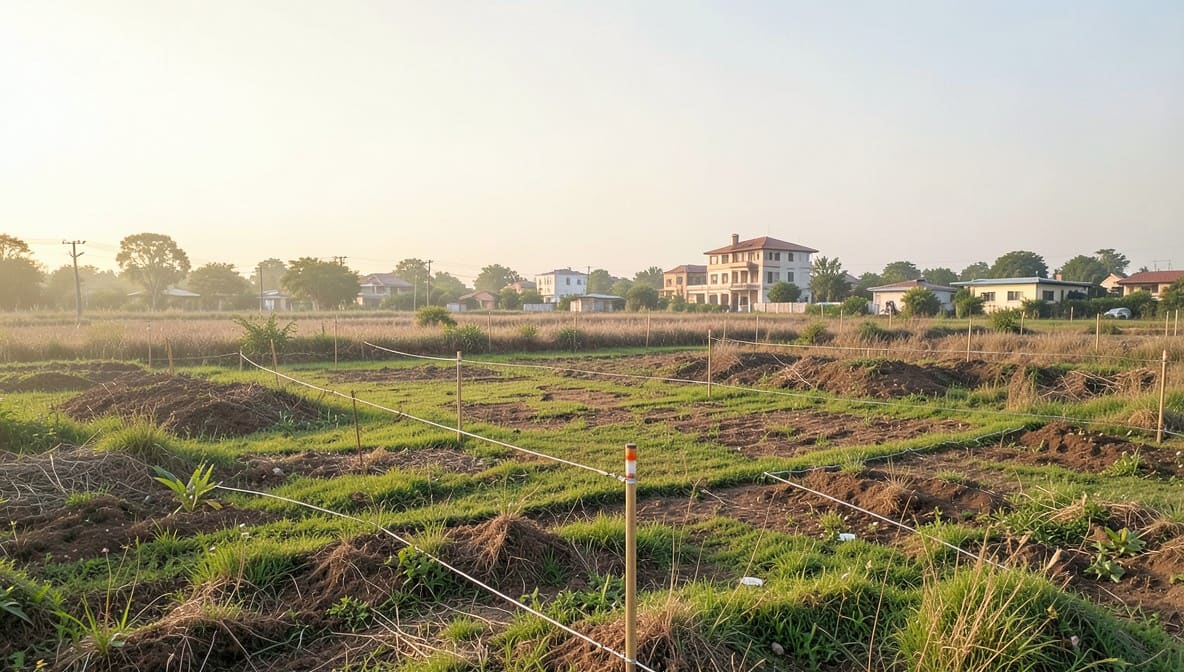
- The Collector of Stamps, Guna, conducted a spot inspection on 04.01.2006 and found permanent constructions in the vicinity, proximity to the Agra-Bombay Road, and developed surroundings.
- The Collector relied on certified copies of sale deeds of adjacent plots (Document No. 215 dated 17.04.1993, Document No. A-1/2464 dated 14.09.1999, and Document No. A-1/2634 dated 11.10.1999), all transacted at Rs. 50 per square foot.
- Based on these factors, the Collector determined the market value at Rs. 50 per sq. ft., totaling Rs. 11,82,000, and levied a deficit stamp duty of Rs. 1,05,723 and registration fee of Rs. 8,576, aggregating Rs. 1,14,299.
- The petitioner challenged this order before the Additional Commissioner, Gwalior Division, who allowed the appeal on 31.03.2006, setting aside the Collector’s order.
- The State filed a second appeal before the Board of Revenue, M.P., Gwalior, which was filed beyond the limitation period.
- The Board condoned the delay on 06.11.2008 after hearing both parties.
- The second appeal was allowed on 21.12.2011, restoring the Collector’s order.
- The petitioner filed a civil suit (Case No. 54A/2007) seeking return of the sale deed, which was allowed on 16.05.2008 and modified on 11.09.2008 by the first appellate court.
- The sale deed was returned to the petitioner after he furnished an undertaking.
- The petitioner later challenged the Board’s order dated 21.12.2011 via the present writ petition.
Procedural History
- 21.09.1999: Sale deed executed, describing land as agricultural.
- 04.01.2006: Spot inspection conducted by Collector of Stamps.
- 20.01.2006: Collector’s order levying deficit stamp duty of Rs. 1,14,299.
- 31.03.2006: Additional Commissioner allows petitioner’s appeal and sets aside Collector’s order.
- 16.05.2008: Civil suit (54A/2007) decided in petitioner’s favor; sale deed to be returned.
- 11.09.2008: First appellate court modifies civil judgment; sale deed returned upon undertaking.
- 26.09.2008: Board of Revenue hears parties on condonation of delay application.
- 06.11.2008: Board condones delay in second appeal.
- 16.06.2009: Petitioner proceeded ex-parte before the Board.
- 21.12.2011: Board allows second appeal, restores Collector’s order.
- 18.03.2026: Writ petition dismissed by High Court.
The Parties' Positions
Petitioner’s Position: The land was and remains agricultural, as confirmed by statements of seller and purchaser. Revenue records stating "other than agriculture" are not conclusive. The Collector ignored evidence of surrounding agricultural use. The Board erred in proceeding ex-parte on 13.10.2009 and condoning delay without hearing.
Respondent’s Position: Revenue records classify the land as non-agricultural. The Collector’s assessment was based on spot inspection, adjacent sale deeds, and statutory guidelines. The delay in second appeal was properly condoned after hearing. The petitioner was proceeded ex-parte on 16.06.2009, not 13.10.2009, and failed to challenge that order.
Relief Sought
The petitioner sought quashing of the Board’s order dated 21.12.2011, restoration of the Additional Commissioner’s order dated 31.03.2006, and cancellation of the deficit stamp duty demand of Rs. 1,14,299.
The Legal Issue
The central question was whether the Collector of Stamps could lawfully classify land as residential for stamp duty purposes based on revenue records and spot inspection, despite the sale deed describing it as agricultural, and whether the Board of Revenue erred in condoning delay and proceeding ex-parte.
Arguments Presented
For the Petitioner
The petitioner relied on the sale deed’s description and oral statements before the Collector to assert the land’s agricultural character. He contended that revenue records are not conclusive under Section 47-A and that the Collector failed to apply Rule 5 of the M.P. Prevention of Undervaluation of Instruments Rules, 1975, which requires consideration of multiple factors including crop patterns and irrigation. He argued that the Board’s condonation of delay was procedurally flawed because he was not heard, and that he was erroneously proceeded ex-parte on 13.10.2009, a date he considered formal. He also cited sale deeds of adjacent plots (Annexures P/10 and P/11) showing similar agricultural classification, which were ignored by authorities.
For the Respondent
The State contended that the Collector’s determination was based on objective criteria: revenue records, adjacent sale deeds at Rs. 50 per sq. ft., physical inspection revealing residential development, and proximity to major roads. It submitted that Annexure R/1 proved the delay was condoned after hearing both parties on 26.09.2008. It further argued that the petitioner was proceeded ex-parte on 16.06.2009, not 13.10.2009, and that he never sought to set aside that ex-parte order. The petitioner’s later-produced adjacent sale deeds were not part of the record before the Collector and could not be considered in writ jurisdiction.
The Court's Analysis
The Court conducted a detailed review of the procedural and factual record. It found that the petitioner’s claim of being heard on 13.10.2009 was factually incorrect. The Board’s proceedings (Annexure P/8 and R/1) clearly showed that the delay was condoned after hearing on 26.09.2008, and that the petitioner was proceeded ex-parte on 16.06.2009, not 13.10.2009. The Court held that the petitioner’s failure to challenge the ex-parte order on 16.06.2009 precluded him from raising it as a ground for setting aside the final order.
Regarding the merits, the Court examined Rule 5 of the M.P. Prevention of Undervaluation of Instruments Rules, 1975, which mandates consideration of multiple factors including classification in settlement records, value of adjacent land, proximity to roads, and nature of surrounding development. The Collector had considered all these: revenue records, adjacent sale deeds at Rs. 50 per sq. ft., spot inspection revealing residential structures, and location within municipal limits.
The Court relied on its own precedent in Hajjin Salma Begum wd/o Shaukat Hussain v. State of M.P., where it held that market value determinations by the Collector based on factual findings are not subject to interference under writ jurisdiction unless perverse or illegal. The Court observed:
"The findings arrived at by the Collector are pure findings of fact and are not required to be interfered with while exercising writ jurisdiction."
The Court further noted that the petitioner did not produce any documentary evidence before the Collector to rebut the revenue classification or the market value based on adjacent transactions. The sale deeds cited by the petitioner (Annexures P/10 and P/11) were not part of the record before the Collector and could not be introduced for the first time in writ proceedings.
The Court concluded that the Collector’s valuation was neither arbitrary nor contrary to statutory norms. The Board’s affirmation of the Collector’s order was therefore legally sound.
The Verdict
The writ petition was dismissed. The Court upheld the Board of Revenue’s order dated 21.12.2011, affirming the Collector’s order dated 20.01.2006. The petitioner is directed to pay the deficit stamp duty of Rs. 1,05,723 and registration fee of Rs. 8,576, totaling Rs. 1,14,299, within 30 days from the date of judgment. All pending applications stand disposed of.
What This Means For Similar Cases
Revenue Records Carry Weight in Stamp Duty Assessments
- Practitioners must treat revenue records as prima facie evidence of land use in stamp duty disputes, even if sale deeds state otherwise.
- Oral assertions or unverified statements before the Collector are insufficient to override official records.
Spot Inspection and Adjacent Transactions Are Valid Bases for Valuation
- Collectors may rely on physical inspection and sale deeds of nearby properties to determine market value under Section 47-A.
- The absence of a formal valuation report does not invalidate the assessment if the methodology aligns with Rule 5.
Procedural Defects Must Be Challenged Promptly
- Ex-parte orders must be challenged by application for setting aside; failure to do so waives the right to raise the defect later.
- Delay condonation is valid if the record shows both parties were heard, even if the petitioner later claims ignorance.
New Evidence Cannot Be Introduced in Writ Petitions
- Documents not placed before the original authority cannot be relied upon in writ jurisdiction under Article 226.
- Practitioners must ensure all relevant documents are submitted during administrative proceedings.