
The Supreme Court has reaffirmed a foundational principle of civil litigation: courts cannot substitute a decree for mandatory injunction with an order for monetary compensation when the plaintiff has never sought damages. This judgment reinforces the sanctity of pleadings and the limits of judicial discretion in civil suits.
Background & Facts
The Dispute
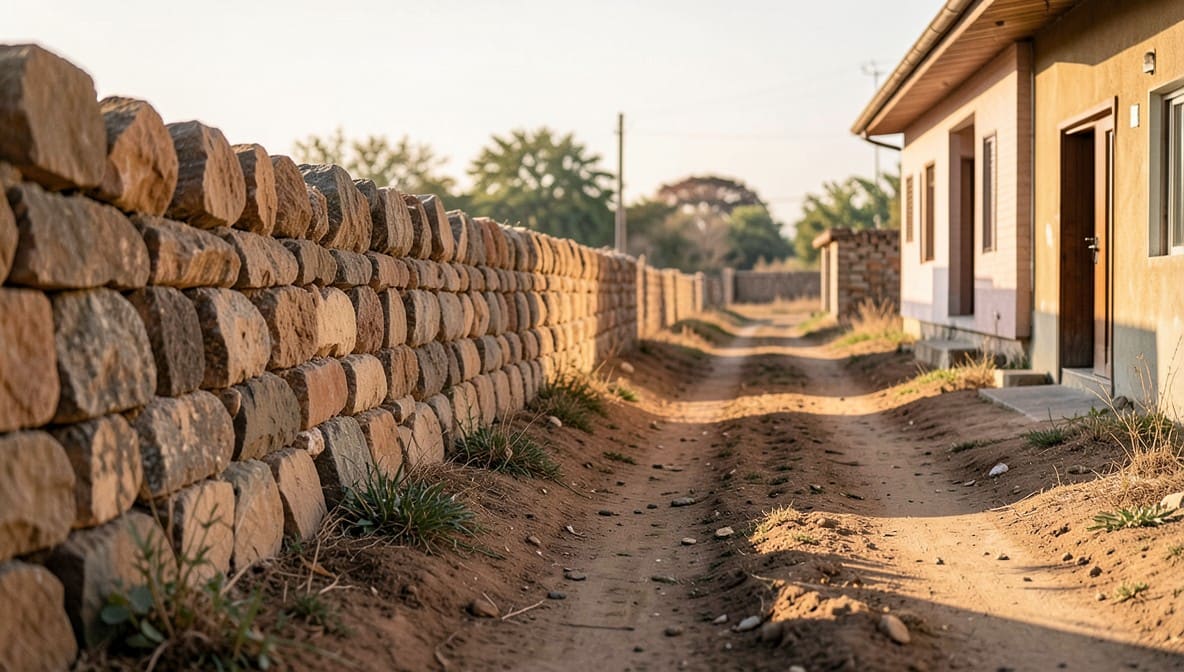
The original plaintiff, Om Parkash, filed two civil suits against the respondents - S.D. Adarsh Jain Kanya Mahavidyalaya and others - seeking mandatory injunctions to remove illegal constructions encroaching upon his property. The first suit, Civil Suit No.426 of 1996, sought removal of a wall constructed on common open space beyond his house, alleging obstruction of air, light, and drainage. The second suit, Civil Suit No.148 of 2000, sought removal of a lintel erected by the respondents on the wall of his house. In both suits, the plaintiff sought only removal of the structures and restraint from future construction. No claim for damages or monetary compensation was pleaded in either suit.
Key Facts
- The wall in Civil Suit No.426 of 1996 was constructed on land claimed by the plaintiff as common open space
- The lintel in Civil Suit No.148 of 2000 was affixed directly onto the plaintiff’s wall without consent
- The plaintiff had no title or ownership over the land where the wall was built, but claimed exclusive right to use the common space
- No valuation report was ever filed by either party in either suit
- The plaintiff never amended his pleadings to include a claim for compensation
Procedural History
- 1996: Civil Suit No.426 filed seeking mandatory injunction for removal of wall
- 2000: Civil Suit No.148 filed seeking removal of lintel
- 08.11.2004: Trial Court decreed Civil Suit No.148, ordering removal of lintel and restraint from future construction
- 06.02.2006: Trial Court decreed Civil Suit No.426, ordering removal of wall and restraint from further construction
- 05.09.2007: First Appellate Court dismissed both appeals filed by defendants, upholding both decrees
- 25.11.2011: Punjab and Haryana High Court allowed Second Appeals (RSA No.363/2008 and RSA No.364/2008), set aside both decrees, and directed payment of ₹7,000 and ₹10,000 respectively with 12% interest as compensation, treating the structures as "common"
- 13.09.2013: Supreme Court set aside the 2011 High Court judgments, holding that no substantial questions of law were framed and the High Court had not examined merits
- 02.05.2016: On remand, the High Court again set aside the trial decrees and directed the Executing Court to assess the value of the structures for compensation
- 23.04.2019: Respondents ceased appearing in proceedings
- 19.06.2026: Supreme Court heard appeals filed by legal heirs of Om Parkash
Relief Sought
The appellants, legal heirs of Om Parkash, sought restoration of the trial court decrees directing removal of the encroachments, setting aside the High Court’s order imposing monetary compensation, and a direction to the High Court to decide the appeals on merits under Section 100 of the Code of Civil Procedure.
The Legal Issue
Can a High Court, in a second appeal under Section 100 of the Code of Civil Procedure, set aside a decree for mandatory injunction and substitute it with an order for monetary compensation when no such relief was prayed for by the plaintiff and no consent was obtained from the plaintiff’s heirs?
Arguments Presented
For the Appellant/Petitioner
Ms. Sangeeta Kumar, counsel for the appellants, argued that the High Court exceeded its jurisdiction under Section 100 of the Code by reappreciating evidence and introducing a new remedy not pleaded. She relied on the settled principle that courts cannot grant relief not sought, citing Sardar Amarjit Singh Kalra v. Pramod Gupta. She emphasized that the trial court’s findings on illegal encroachment were unchallenged on substantial questions of law, and the High Court’s substitution of injunction with compensation was a procedural violation that prejudiced the plaintiff’s right to exclusive possession.
For the Respondent/State
No appearance was made on behalf of the respondents since 23.04.2019. The Court proceeded ex parte and relied solely on the record.
The Court's Analysis
The Supreme Court held that the High Court’s intervention was legally impermissible on multiple grounds. First, the High Court had no jurisdiction to introduce a new cause of action - monetary compensation - when the plaintiff had never sought it. The Court observed:
"In absence of any such relief sought by the original plaintiff, the decree passed in his favour could not have been set aside by the High Court by compelling his legal heirs to accept compensation that was directed to be assessed by a valuer."
Second, the Court noted that once a decree for mandatory injunction is set aside, there is no operative decree left for execution. Directing the Executing Court to assess the value of the structure was therefore legally incoherent, as no decree would exist to execute. The Court emphasized:
"Once the decrees passed by the Trial Court in favour of the plaintiff were set aside, there would be no occasion for the Executing Court to proceed with the execution proceedings since there would be no decree holding the field for being executed."
Third, the Court found that the High Court had committed the same error twice - first in 2011, which was set aside by this Court, and again on remand. The Court condemned this repetition as a failure to comply with its earlier directions. The Court also corrected the factual misstatement by the High Court that the trial court had found the wall to be "common," noting that the trial court had in fact found it to be an illegal encroachment.
Finally, the Court held that the High Court had not properly framed substantial questions of law under Section 100, and its judgment appeared to be based on a new, unpleaded prayer. This violated the principles of natural justice and the adversarial system.
The Verdict
The Supreme Court allowed the appeals and set aside the High Court’s judgment dated 02.05.2016 in RSA No.363 of 2008 and RSA No.364 of 2008. The Court directed the Punjab and Haryana High Court to re-adjudicate both second appeals afresh under Section 100 of the Code of Civil Procedure, strictly on substantial questions of law, and within a reasonable time. No costs were awarded.
What This Means For Similar Cases
Relief Must Be Plead, Not Imposed
- Practitioners must ensure that pleadings explicitly state all forms of relief sought - whether injunction, damages, or declaratory relief
- Courts cannot grant relief beyond the scope of the plaint, even if it appears "equitable"
- A plaintiff’s silence on compensation cannot be construed as implied consent to monetary substitution
Execution Cannot Precede Decree
- No execution proceedings can be initiated on a non-existent decree
- Valuation or compensation orders must be part of the final decree, not imposed post-decree
- Executing Courts lack jurisdiction to assess value unless explicitly directed by a valid decree
Second Appeals Are Not Fact Re-trials
-
High Courts in second appeals must confine themselves to substantial questions of law
-
Reappreciation of evidence without framing substantial questions renders the judgment void
-
Reversal of trial court findings without legal basis constitutes a miscarriage of justice
-
Always verify whether the trial court’s findings were challenged on substantial questions of law
-
Never assume that monetary compensation is a default remedy for encroachment disputes
-
File appropriate applications for amendment of pleadings if compensation is intended to be claimed





