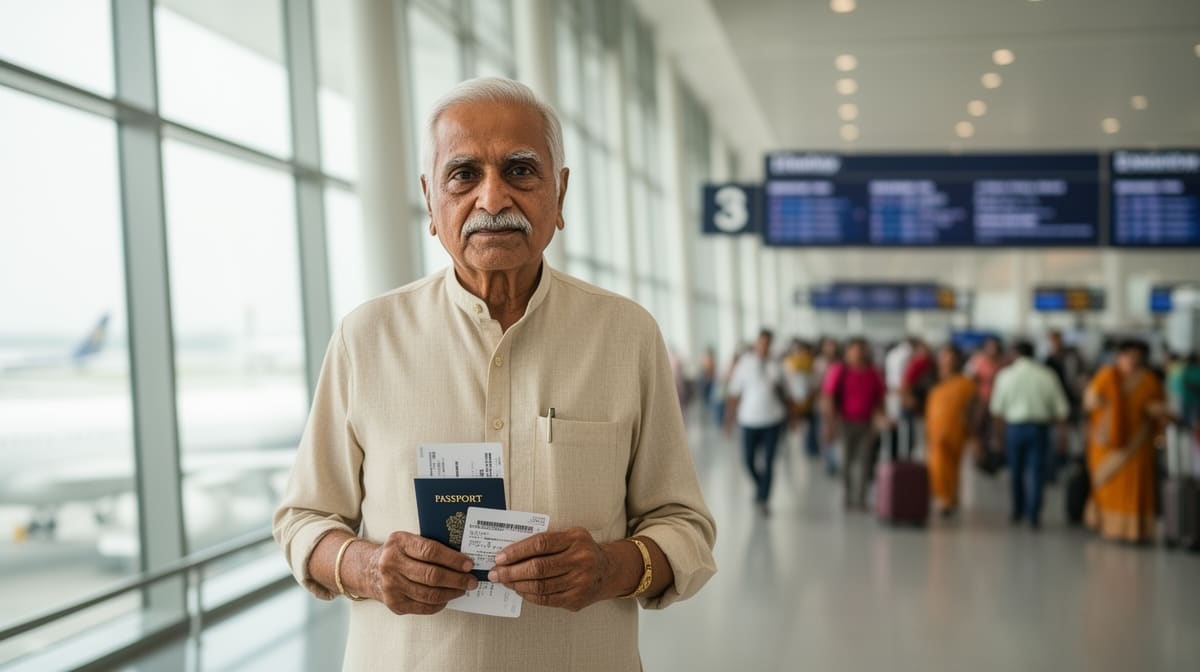
The Bombay High Court has reaffirmed that the issuance of a Look Out Circular (LOC) is not a routine administrative tool but a serious infringement on personal liberty. In a landmark ruling, the Court quashed an LOC against an 89-year-old former director of a company under investigation, emphasizing that mere allegations, without evidence of flight risk or obstruction, cannot justify restricting constitutional rights.
Background & Facts
The Dispute
The petitioner, Baldevraj Topan Ram Taneja, an 89-year-old permanent resident of Pune, was named in an investigation by the Serious Fraud Investigation Office (SFIO) into alleged financial irregularities at M/s. ISMT Limited, a company he formerly chaired. The SFIO alleged violations of Section 166 and Section 448 of the Companies Act, 2013, relating to false financial disclosures and fraudulent conduct. The petitioner resigned from the board in March 2022, after the company had completed a debt resolution and settled all outstanding liabilities with its lenders.
Procedural History
- October 2020: SFIO initiated investigation into ISMT Limited
- February 2021: LOC issued against petitioner by Respondent No.1 without notice or hearing
- April 2022: Petitioner detained at Mumbai airport while attempting to travel abroad
- November 2022 & November 2025: Court granted conditional travel permissions, which petitioner strictly complied with
- March 2024: SFIO submitted final investigation report, but no chargesheet filed
- 2022: Writ petition filed under Article 226 and Section 482 CrPC seeking quashing of LOC
Relief Sought
The petitioner sought quashing of the LOC on grounds of violation of Article 21, disproportionate restriction, and absence of any credible threat of absconding. He also requested that his right to travel for medical and familial reasons be restored.
The Legal Issue
The central question was whether the issuance of a Look Out Circular against a cooperative, non-arrested, elderly individual with deep roots in India, who has never violated court-imposed travel conditions, constitutes a reasonable restriction under Article 21 of the Constitution.
Arguments Presented
For the Petitioner
Counsel relied on Arnesh Kumar v. State of Bihar and Siddharth v. State of U.P. to argue that LOCs must be proportionate and justified by concrete risk factors. He emphasized that the petitioner had never been arrested, consistently cooperated with investigators, and complied with all prior court orders permitting travel. The LOC, he contended, was issued in mechanical compliance with procedural norms without individualized assessment, violating the principle of proportionality.
For the Respondent
The State argued that the gravity of the alleged offences under Section 448 warranted preventive measures. It submitted that the LOC was issued under the Office Memorandum dated 22.02.2021 and was necessary to ensure the petitioner’s availability during future proceedings. It did not dispute the petitioner’s cooperation but claimed that the nature of corporate fraud justified precautionary restrictions.
The Court's Analysis
The Court conducted a rigorous proportionality analysis under Article 21, rejecting the State’s blanket reliance on the seriousness of the alleged offence. It held that the right to travel abroad is an essential facet of personal liberty, and any restriction must satisfy the four-fold test: legality, legitimate aim, necessity, and proportionality.
"The fact that the Petitioner has never absconded, has cooperated fully, and has adhered to every condition imposed by this Court over three years, negates any reasonable apprehension of flight. The LOC, in these circumstances, is not a preventive measure - it is punitive in effect."
The Court distinguished State of Maharashtra v. Suresh where LOCs were upheld due to active flight attempts and destruction of evidence. Here, no such conduct existed. The Court noted that the SFIO had not sought arrest despite ample opportunity, indicating that the petitioner’s physical presence was not essential for investigation. The Court further observed that the LOC’s issuance in 2021 - before any chargesheet was filed - was premature and lacked judicial oversight.
The Court also rejected the State’s suggestion to impound the passport as an alternative, noting that such a measure would still constitute an unreasonable restriction absent a judicial order based on specific risk assessment.
The Verdict
The petitioner prevailed. The Court held that a Look Out Circular cannot be sustained against a cooperative, non-arrested individual with no history of non-compliance, even in serious financial fraud cases. The LOC was quashed, and the petitioner’s right to travel was restored without conditions.
What This Means For Similar Cases
LOCs Require Individualized Risk Assessment
- Practitioners must challenge LOCs issued without evidence of flight risk, obstruction, or prior non-cooperation
- Mere allegations or the nature of the offence (e.g., corporate fraud) are insufficient to justify an LOC
- Courts must apply the proportionality test rigorously before upholding such restrictions
Cooperation and Compliance Are Defenses Against Preventive Measures
- Consistent cooperation with investigation, even without formal immunity, weighs heavily in favor of liberty
- Compliance with prior court-ordered travel conditions creates a strong presumption against absconding risk
- Petitioners should document all instances of cooperation and court compliance to build a rebuttal
Age and Social Ties Are Relevant Factors
- Advanced age and deep community roots in India are material considerations under Article 21
- Courts must weigh the impact of LOCs on quality of life, especially for elderly petitioners seeking medical or familial travel
- The absence of arrest, even after years of investigation, signals that the state does not view the individual as a flight risk