The Bombay High Court recently granted temporary travel permission to a 69-year-old senior citizen despite Look-Out Circulars (LOCs) issued by banks, emphasizing the balance between investigative interests and humanitarian considerations. The judgment underscores the necessity of prior permissions from competent criminal courts and sets a precedent for conditional travel approvals in similar cases.
Background & Facts
The Dispute
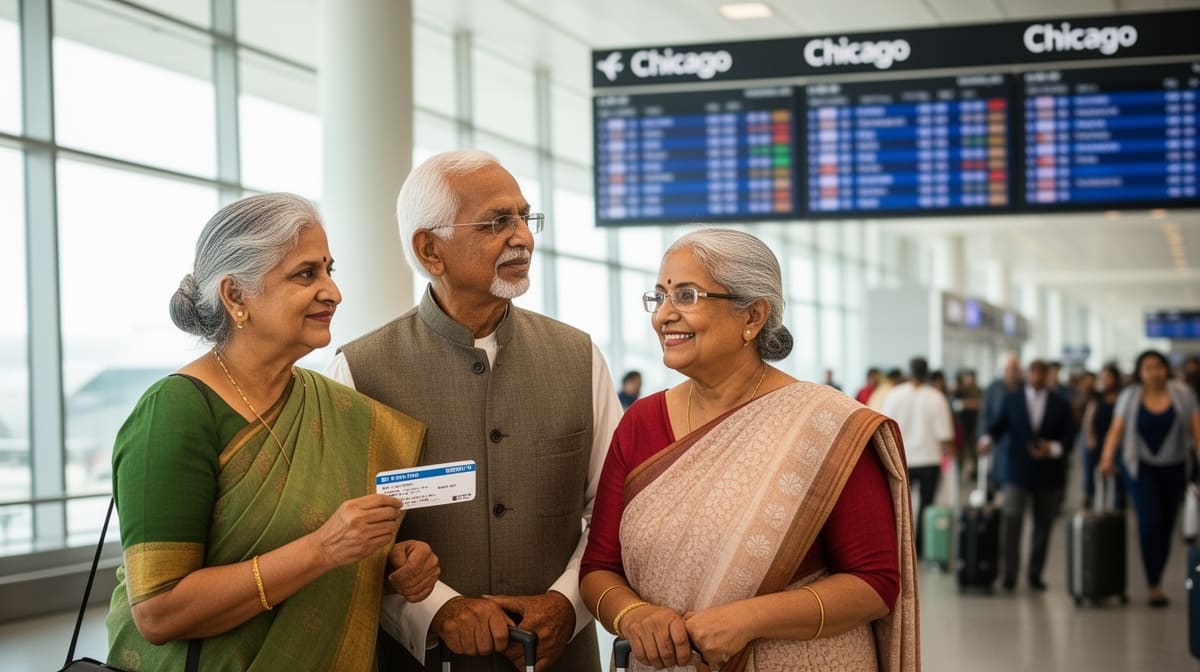
The applicant, a 69-year-old Chartered Accountant residing in Mumbai, sought permission to travel to the United Kingdom, Norway, and Denmark from 17th July 2026 to 21st August 2026 to visit his daughter and granddaughter. However, his travel was restricted due to Look-Out Circulars (LOCs) initiated by State Bank of India (Respondent No. 1) and Indian Bank (Respondent No. 4) in connection with pending criminal proceedings.
Key Facts
- The applicant is a senior citizen with his wife and son residing in Mumbai
- He sought travel permission to meet his daughter and 8-year-old granddaughter
- Look-Out Circulars (LOCs) were issued by State Bank of India and Indian Bank
- The applicant had previously traveled abroad (from 28th September 2023 to 20th October 2023) under court permission and complied with all conditions
- Four criminal prosecutions are pending against him before the Additional Chief Judicial Magistrate, 3rd Court, Esplanade, Mumbai
- Bail orders dated 2nd November 2023 and 27th July 2024 imposed conditions restricting overseas travel without prior court permission
- The Additional Chief Judicial Magistrate granted permission for the current travel on 3rd July 2026 with similar conditions in four separate orders
- Two Enforcement Directorate (ED) proceedings are pending: ECIR/MBZO-II/07/2019/1318 and Special Case No. 101020/2025 (cognizance not yet taken)
- A Writ Petition (No. 2849 of 2026) is pending before the Bombay High Court challenging the LOCs
Procedural History
- 20th September 2023: Bombay High Court permitted travel to the UK (IA(L) No. 25332/2023)
- 2nd November 2023: Bail granted in criminal prosecution with travel restrictions
- 27th July 2024: Another bail order with similar travel restrictions
- 3rd July 2026: Additional Chief Judicial Magistrate granted permission for current travel in four separate orders
- 12th August 2024: Supreme Court directed petitioners in similar cases to seek High Court permission for travel (SLP (C) Nos. 17194-17230/2024)
- 10th July 2026: Present Interim Application (Lodging) No. 21448 of 2026 filed before Bombay High Court
Relief Sought
The applicant sought:
- Permission to travel to United Kingdom, Norway, and Denmark from 17th July 2026 to 21st August 2026
- Stay on the operation of Look-Out Circulars issued by State Bank of India and Indian Bank during the travel period
The Legal Issue
The central question was whether a Look-Out Circular (LOC) issued by banks could override prior permissions granted by a competent criminal court for overseas travel, particularly when the applicant is a senior citizen with strong roots in India and humanitarian grounds for travel.
Arguments Presented
For the Applicant
- The applicant is a 69-year-old senior citizen with family and property in Mumbai
- He had previously traveled abroad under court permission and complied with all conditions
- The Additional Chief Judicial Magistrate had already granted permission for the current travel in four separate orders
- No impediment existed from criminal prosecutions, as cognizance was not yet taken in ED proceedings
- A Division Bench of the Bombay High Court had previously set aside LOCs in similar cases (order dated 23rd April 2024), though the matter was pending before the Supreme Court
- Humanitarian grounds justified travel permission, as he sought to visit his daughter and granddaughter
For the Respondents (Banks)
- While opposing the application, the banks did not object to conditional permission if the court deemed it appropriate
- They requested imposition of strict conditions to ensure the applicant’s return and compliance with legal proceedings
The Court's Analysis
The Court carefully balanced investigative interests with humanitarian considerations, noting:
-
Prior Compliance: The applicant had previously traveled abroad under court permission and returned without violating conditions.
-
Competent Court Permissions: The Additional Chief Judicial Magistrate had already granted travel permission in four separate orders, indicating no legal impediment from criminal proceedings.
-
Roots in India: The applicant had family, property, and professional ties in Mumbai, reducing the risk of flight.
-
Humanitarian Grounds: As a senior citizen, his request to visit his daughter and granddaughter carried significant weight.
-
Pending Supreme Court Proceedings: While the Bombay High Court’s earlier order setting aside LOCs was under challenge before the Supreme Court, the applicant’s case was not part of that batch. However, the Court aligned its decision with the Supreme Court’s directive requiring High Court permission for travel.
"We have considered these submissions and in particular, we have taken into account the fact that a Competent Criminal Court has granted him permission to travel abroad. In addition, learned Counsel for the Applicant has rightly relied on the previous order passed by a Division Bench of this Court referred to hereinabove, wherein he was permitted to travel to United Kingdom. He has returned back to India without violating any condition. He has roots in India. He has family and property in Mumbai. He is a 69 year old senior citizen and he wants to meet his daughter and grand-daughter. Therefore, on humanitarian ground also we are inclined to grant permission to the Applicant."
The Court also perused the conditions imposed by the Additional Chief Judicial Magistrate and ensured they were exhaustive and binding on the applicant.
The Verdict
The Bombay High Court allowed the application with the following directions:
-
The applicant was permitted to travel to United Kingdom, Norway, and Denmark from 17th July 2026 to 21st August 2026.
-
He was required to adhere to the itinerary annexed to the application (Exhibit-B).
-
In case of changes in address or contact numbers, he must inform the respective banks.
-
On his return to India, he must inform the banks (Respondent No. 1 and Respondent No. 4) within two weeks.
-
The order pertained only to the LOCs issued by State Bank of India and Indian Bank and did not affect LOCs from other agencies.
-
The operation of the LOCs issued by the two banks was stayed during the travel period.
-
Officers of the Bureau of Immigration were directed to act on the authenticated copy of this order.
What This Means For Similar Cases
Look-Out Circulars Are Not Absolute
- Courts may override LOCs if competent criminal courts have already granted travel permission.
- Humanitarian grounds (e.g., senior citizen status, family visits) can tip the balance in favor of temporary travel permission.
- Strict compliance with prior permissions strengthens the case for future travel requests.
Conditions Are Critical
- Itinerary adherence is non-negotiable - any changes must be immediately communicated to authorities.
- Post-travel obligations (e.g., informing banks within two weeks of return) are mandatory and failure to comply may jeopardize future permissions.
- Multiple permissions (from criminal courts and High Court) may be required, especially if LOCs from multiple agencies are involved.
Pending Proceedings Do Not Automatically Bar Travel
- If cognizance has not been taken (e.g., in ED proceedings), courts may not consider it an impediment.
- Bail conditions restricting travel must be explicitly addressed - general bail orders may not suffice.
- Supreme Court directives in similar cases (e.g., requiring High Court permission) may influence outcomes even if the applicant is not part of the batch.