The Karnataka High Court has reaffirmed that compensation under the Land Acquisition Act cannot be mechanically based on judicial awards that have since been set aside. In a significant ruling, the Court emphasized that market value must be determined through independent assessment of land characteristics, contemporaneous sale deeds, and evidence of agricultural productivity, not by blind reliance on invalidated precedents.
Background & Facts
The Dispute
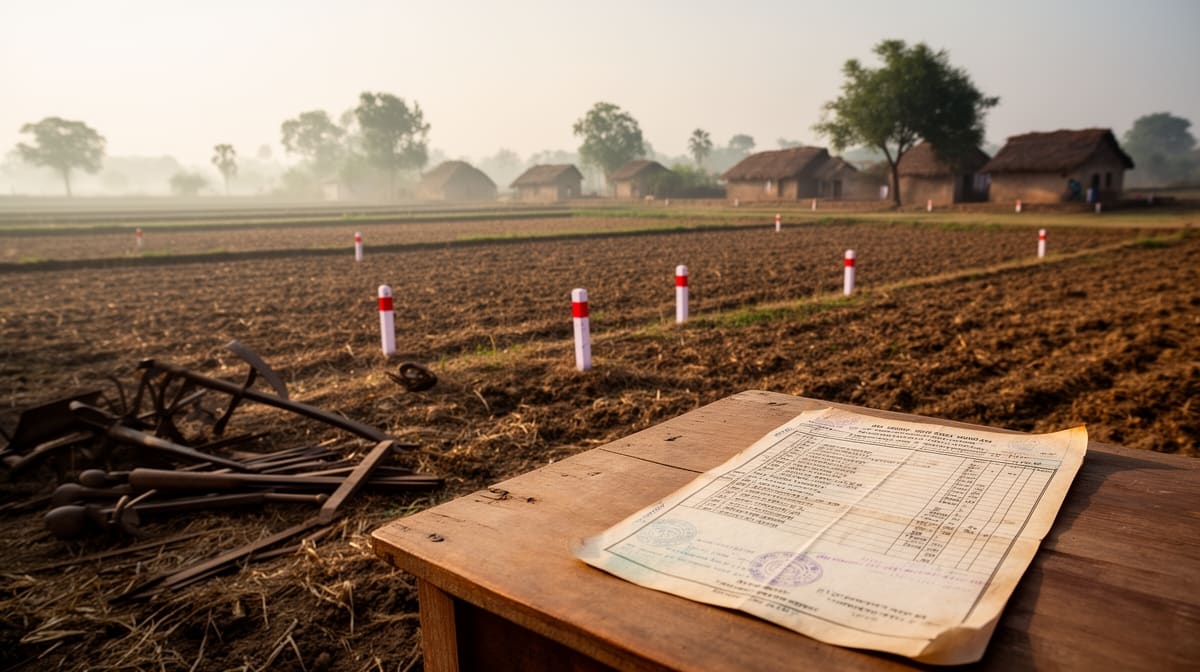
These three Miscellaneous First Appeals (MFA Nos. 1132, 1133, and 1134 of 2017) challenge the common Judgment and Award dated 06.01.2016 passed by the Principal Civil Judge, Hassan, in Reference Petitions filed under Section 18(1) of the Land Acquisition Act, 1894. The petitions sought enhanced compensation for land acquired for the Hassan - Arasikere Railway Project. The Reference Court enhanced compensation to Rs.1,00,000 per gunta, relying primarily on two prior judgments - LAC No.23/2013 and LAC No.275/2014 - which had since been set aside by higher courts.
Key Facts
-
23.12.2010 & 24.01.2011: Preliminary notifications issued under Section 4(1) of the LA Act for acquisition of land in Survey Nos. 27, 28, and 29/1 in Koravangala Village, Hassan District.
-
01.08.2011: Final notification issued under Section 6(1) for acquisition of land for the Hassan - Arasikere Railway Project.
-
24.09.2011: Special Land Acquisition Officer (SLAO) awarded compensation at Rs.1,04,800 per acre (approx. Rs.2,620 per gunta).
-
2014: Four claim petitions (LAC Nos. 252/2014 to 255/2014) filed by landowners seeking enhancement.
-
06.01.2016: Reference Court enhanced compensation to Rs.1,00,000 per gunta, relying on LAC No.23/2013 and LAC No.275/2014.
-
19.06.2023: Writ Petition No.7679/2023 set aside LAC No.23/2013, remanding for fresh adjudication.
-
16.01.2021: Division Bench set aside LAC No.275/2014 in MFA No.5460/2019.
-
24.06.2024: On remand, Reference Court re-determined compensation in LAC No.23/2013 at Rs.65,000 per gunta.
-
12.12.2022: Reference Court re-determined compensation in LAC No.275/2014 at Rs.64,490 per gunta, noting dissimilar location and purpose.
-
18.12.2024: Appellate Court upheld Rs.1,00,000 per gunta in LAC (Appl.) No.70/2017, but only on the basis of the now-invalidated judgments.
-
Claimants (respondents) are landowners in Koravangala Village: Sri. Chandrashekara (LAC 255/2014), Sri. Puttaswamy Gowda (LAC 253/2014), and Sri. Shivanna (LAC 254/2014).
-
Acquired lands: 35 guntas, 18 guntas, and 7.5 guntas respectively, all agricultural.
-
Claimants produced:
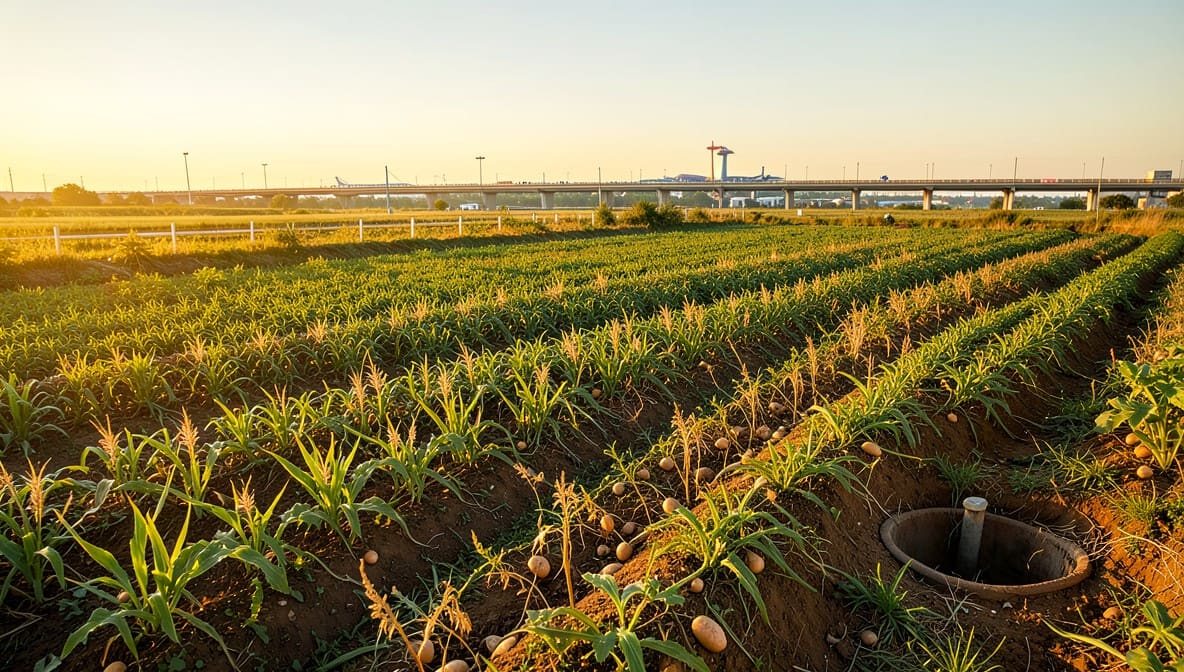
- Exhibits P5 - P7: Official letters from Horticulture, APMC, and Agriculture Departments confirming cultivation of potato, maize, ragi, hosige gram, and black til with annual yields up to Rs.10,00,000.
- Exhibits P8 - P10: Three sale deeds from 2011 - 2013 in the same vicinity, showing prices ranging from Rs.40,000 to Rs.1,07,142 per gunta.
- Exhibits P16 - P17: Judgments from LAC Nos.118/2011 and 216/2011 (Rs.81,675 and Rs.1,00,000 per gunta), but rejected by Reference Court for being from different villages.
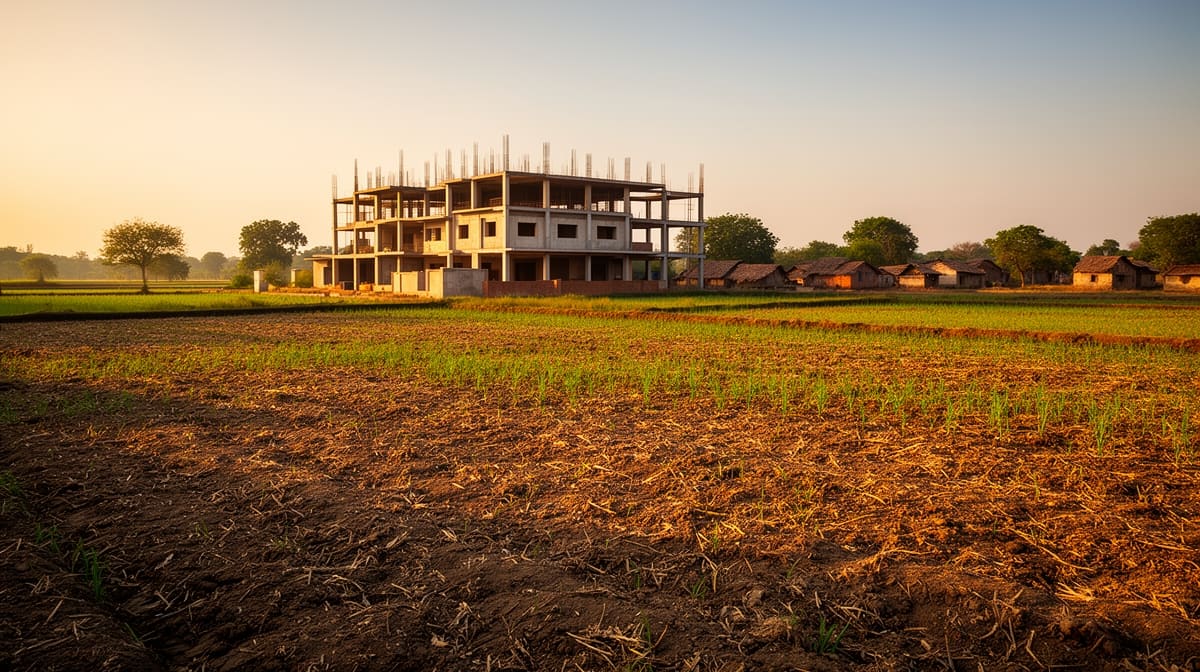
- Oral testimony (PW1 - PW4): Claimants deposed that land was fertile, near Bangalore - Mangalore Highway (0.5 - 1.5 km), 0.5 km from Hassan Airport, and adjacent to S.M. Krishna Nagara layout.
Procedural History
- 24.09.2011: SLAO issues initial award of Rs.2,620 per gunta.
- 2014: Claim petitions filed under Section 18(1) before Principal Civil Judge, Hassan.
- 06.01.2016: Reference Court enhances compensation to Rs.1,00,000 per gunta.
- 18.12.2024: Appellate Court (LAC Appl. 70/2017) upholds Rs.1,00,000 per gunta, relying on LAC No.23/2013 and LAC No.275/2014.
- 19.06.2023: Karnataka HC sets aside LAC No.23/2013 in W.P. No.7679/2023.
- 16.01.2021: Karnataka HC sets aside LAC No.275/2014 in MFA No.5460/2019.
- 24.06.2024: Reference Court re-fixes compensation in LAC No.23/2013 at Rs.65,000 per gunta.
- 12.12.2022: Reference Court re-fixes compensation in LAC No.275/2014 at Rs.64,490 per gunta.
- 07.09.2017: Karnataka HC initially dismissed these MFAs.
- 19.01.2021: MFAs restored by order.
- 25.03.2026: HC stayed execution pending final hearing.
- 02.06.2026: Present judgment delivered.
The Parties' Positions
For the Appellants (Railway Authorities)
- Contended that the Reference Court erred by mechanically adopting Rs.1,00,000 per gunta from LAC No.23/2013 and LAC No.275/2014, both of which were set aside.
- Argued that the acquired land is wholly agricultural, undeveloped, and not comparable to the lands in the relied-upon judgments, which involved developed or differently situated properties.
- Relied on Ranvir Singh v. Union of India (2005) 12 SCC 59 to assert that market value of underdeveloped agricultural land cannot be equated with developed land, even if proximate.
- Asserted that the burden of proving comparability lies on the claimant, which was not discharged.
- Highlighted that the sale deeds (Exhibits P8 - P10) were not pressed by claimants and thus ignored.
For the Respondents (Landowners)
- Argued that the land is similarly situated: same village, same notification, same project.
- Emphasized proximity to Bengaluru - Mangalore Highway, Hassan Airport, and S.M. Krishna Nagara layout, indicating non-agricultural potential.
- Cited Special Land Acquisition Officer v. Karigowda (2010) 5 SCC 708 and Lal Chand v. Union of India (2009) 15 SCC 769 to assert that contemporaneous sale deeds and local awards are preferred.
- Pointed to Exhibits P5 - P7 as proof of high agricultural productivity and Exhibits P8 - P10 as valid comparables, including a sale at Rs.1,07,142 per gunta.
- Invoked principle of parity to argue against discrimination among similarly placed landowners.
Relief Sought
Appellants sought:
- Setting aside of the Impugned Judgment dated 06.01.2016.
- Reduction of compensation to a rate commensurate with agricultural land value.
Respondents sought:
- Confirmation of Rs.1,00,000 per gunta as just and fair compensation.
- Upholding of the Reference Court’s award.
The Legal Issue
The central question was whether a Reference Court may enhance compensation by relying on judicial awards that have since been set aside by higher courts, and whether the market value of agricultural land can be determined without independent evaluation of its location, productivity, and contemporaneous sale transactions.
Arguments Presented
For the Appellant
The appellants contended that the Reference Court’s reliance on LAC No.23/2013 and LAC No.275/2014 was legally unsustainable because both judgments had been vacated by the Karnataka High Court. They argued that the Supreme Court in Lal Chand v. Union of India and Special Land Acquisition Officer v. Karigowda mandates that market value must be determined through direct, contemporaneous evidence from the same village, and that reliance on invalidated precedents violates the statutory requirement of independent assessment under Section 23 of the LA Act. They further cited Ranvir Singh to stress that agricultural land cannot be equated with developed land merely due to proximity. The appellants emphasized that the claimants failed to prove comparability and that the sale deeds were not pressed, rendering them inadmissible.
For the Respondent
The respondents argued that the land’s proximity to major infrastructure - highway, airport, urban layout - confers substantial non-agricultural potential, justifying higher valuation. They relied on Exhibits P5 - P7 to demonstrate high crop yields and Exhibits P8 - P10 to show actual market transactions at Rs.1.07 lakh per gunta. They invoked the principle of parity from Kuppegowda v. SLAO to argue that uniform compensation must be awarded to similarly situated landowners under the same notification. They contended that the Reference Court’s award, though based on now-invalidated judgments, was substantively correct due to the overwhelming evidence of land value.
The Court's Analysis
The Court undertook a meticulous review of the legal framework governing compensation under the Land Acquisition Act. It reaffirmed that the preferred method for determining market value is the comparable sales method, as held in Special Land Acquisition Officer v. Karigowda and Shaji Kuriakose. The Court emphasized that while awards from similar acquisitions may serve as guides, they cannot be mechanically adopted without independent verification of comparability.
"The learned Reference Court has enhanced the compensation to Rs.1,00,000/- per gunta primarily relying upon the relied upon judgments, including LAC No.23/2013, which pertains to an acquisition under the same Preliminary Notifications... However, this judgment in LAC No.23/2013 has been set aside by a Single Judge of this Court... Further, the judgment in LAC No.275/2014... has also been set aside by a Coordinate Bench of this Court."
The Court noted that the reliance on LAC No.23/2013 was particularly flawed because its subsequent remand and re-determination at Rs.65,000 per gunta - based on the claimant’s failure to produce evidence of crop yield or sale deeds - directly contradicted the factual matrix in the present case. Here, claimants had produced detailed documentation of agricultural productivity and three sale deeds, including one at Rs.1,07,142 per gunta.
The Court also rejected the appellants’ argument that the sale deeds were not pressed. The Reference Court’s observation that the deeds were "not being pressed" was not a legal bar to their consideration, especially where they were formally marked and formed part of the record. The Court held that the claimants’ oral testimony, corroborated by official letters and sale deeds, established a prima facie case of higher market value.
The Court further distinguished LAC No.275/2014, noting it involved acquisition for a different project (Hassan Ring Road) and a different village (Kommanahalli), with land located 8 km from Hassan city, unlike Koravangala’s proximity to the airport and highway.
The Court concluded that while the Reference Court erred in its reasoning by relying on invalidated judgments, its conclusion - enhancing compensation to Rs.1,00,000 per gunta - was substantively correct based on the evidence independently available on record. The Court declined to interfere because the outcome was justified by the claimants’ own evidence, not the flawed precedent.
The Verdict
The appeals were dismissed. The Karnataka High Court upheld the Reference Court’s award of Rs.1,00,000 per gunta as compensation for the acquired land, along with statutory solatium at 30% and interest as per the Land Acquisition Act. The Court found that although the reasoning was legally flawed, the outcome was supported by the claimants’ independent evidence, including sale deeds at Rs.1,07,142 per gunta, official yield certificates, and proximity to infrastructure. No order as to costs was made. All pending applications were disposed of.
What This Means For Similar Cases
Judicial Awards Cannot Be Blindly Cited
- Practitioners must verify the current status of any precedent cited for compensation - set-aside judgments cannot form the basis of enhancement.
- Courts must independently assess comparability; mechanical adoption of prior awards violates Section 23 of the LA Act.
- Even if a prior award is upheld by a lower appellate court, its invalidation on appeal renders it legally inoperative.
Evidence of Land Potential Trumps Classification
- Agricultural land adjacent to highways, airports, or urban layouts may be valued higher based on non-agricultural potential, even without formal change in land use.
- Official letters from Horticulture, APMC, or Agriculture Departments confirming crop yield are admissible and significant evidence under the capitalization method.
- Sale deeds within the same village or vicinity, even if not "pressed," must be considered if formally marked and relevant.
Parity Requires Substantive Similarity, Not Just Proximity
- Uniform compensation is mandated only when lands are truly comparable in location, use, and potential - not merely under the same notification.
- Claims of parity cannot override the requirement for independent valuation based on actual evidence.
- Courts must distinguish between lands acquired for different projects or with different access to infrastructure, even within the same village.