The Rajasthan High Court delivered a significant judgment on land acquisition compensation, emphasizing that market value must be determined based on comparable sale deeds rather than unexhibited reports. The Court also clarified that solatium under Section 23 of the Land Acquisition Act, 1894 applies to pending proceedings and that reference applications under Section 18 are not time-barred if no notice under Section 12(2) was issued. This ruling reinforces the primacy of documentary evidence in valuation disputes and sets a precedent for similar cases.
Background & Facts
The Dispute
The appeals arose from a land acquisition proceeding initiated by the State Government under Section 4 of the Land Acquisition Act, 1894 (hereinafter 'the Act of 1894') on 13.12.1979 for establishing the Krishi Upaj Mandi Samiti, Nathdwara. The acquisition involved multiple landowners, including the legal representatives of Dhanraj Kothari, Sushila Bai, and Sohan Prakash, whose lands were acquired for public purposes. The urgency clause under Section 17 was invoked, and a Section 6 notification was issued on 11.12.1980, followed by possession taken on 23.05.1981.
Key Facts
- Notification under Section 4: Issued on 13.12.1979 for land acquisition.
- Notification under Section 6: Issued on 11.12.1980 invoking urgency provisions.
- Possession taken: 23.05.1981.
- Draft award: Prepared on 28.07.1986 and approved by the District Collector on 05.11.1986.
- Final award: Treated as final on 17.02.1987 via note-sheet.
- Sale deeds: Exhibits 1 to 4 showed land valuation at Rs. 26,660/- per bigha, executed prior to the Section 4 notification.
- Tehsildar report: Valued land at Rs. 10,452/- per bigha but was not exhibited or cross-examined.
- Compensation payments: Deposited by the Krishi Upaj Mandi Samiti on 20.04.1988, but disbursed to claimants much later (November 1988 to July 1992), and that too under protest and upon furnishing surety.
Procedural History
- Reference applications:
- Lrs. of Dhanraj: Filed on 19.09.1987 (CMA No. 1681/2007).
- Sushila Bai: Filed on 29.06.1988 (CMA No. 297/2006).
- Lrs. of Sohan Prakash: Filed on 20.07.1988 (CMA No. 678/2006).
- Reference Court order: Dated 13.09.2004, awarded solatium at 30% and interest but did not enhance the land valuation.
- Appeals filed:
- Landowners: Challenged non-enhancement of land valuation (CMA Nos. 1681/2007, 297/2006, 678/2006).
- Krishi Upaj Mandi Samiti: Challenged solatium award and limitation of reference applications (CMA Nos. 399/2006, 670/2006, 1672/2006).
The Parties' Positions
- Landowners: Argued that the Tehsildar report was unreliable, sale deeds should be the basis for valuation, and Section 42 of the Rajasthan Tenancy Act, 1955 did not invalidate their sale deeds. They also contended that the reference applications were within limitation.
- Krishi Upaj Mandi Samiti: Asserted that the sale deeds were void under Section 42 of the Rajasthan Tenancy Act, 1955, the Tehsildar report was valid, and the reference applications were time-barred under Section 18(2) of the Act of 1894.
Relief Sought
- Landowners: Enhancement of land valuation to Rs. 26,660/- per bigha, payment of solatium and interest, and dismissal of the Samiti's appeals.
- Krishi Upaj Mandi Samiti: Quashing of the solatium award, dismissal of landowners' reference applications as time-barred, and upholding the Tehsildar's valuation.
The Legal Issue
The Court adjudicated four key questions:
- Whether the valuation of land by the Land Acquisition Officer and Reference Court was justified, considering Section 42 of the Rajasthan Tenancy Act, 1955?
- Whether the unexhibited Tehsildar report could form the basis for land valuation, and if not, how should the market value be determined?
- Whether the reference applications were barred by limitation under Section 18(2) of the Land Acquisition Act, 1894?
- Whether the amendment to Section 23 of the Act of 1894 (introducing solatium) applied to the present case?
Arguments Presented
For the Appellant-Landowners
- Market value determination: Relied on comparable sale deeds (Exhibits 1-4) showing valuation at Rs. 26,660/- per bigha. Argued that the Tehsildar report was not exhibited and the Tehsildar was not cross-examined, rendering it inadmissible.
- Invalidity of sale deeds: Contended that Section 42 of the Rajasthan Tenancy Act, 1955 did not apply as the entire interest in the land was sold, and Section 42-A allowed regularization of void sales. Asserted that the Land Acquisition Officer lacked jurisdiction to declare sales void.
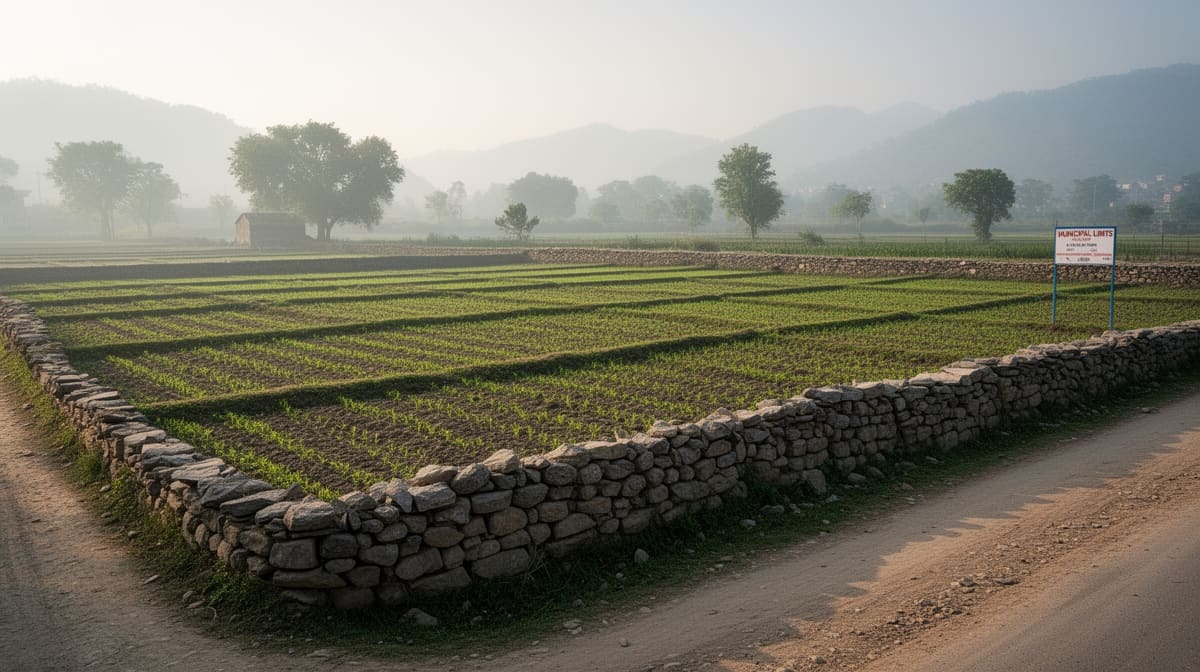
- Potentiality of land: Emphasized that the land was adjacent to a highway and municipal limits, enhancing its value.
- Limitation: Argued that no notice under Section 12(2) was issued, and compensation was paid much later, making the reference applications within limitation.
- Solatium: Cited Bhag Singh v. Union Territory of Chandigarh and Panna Lal Ghosh v. Land Acquisition Collector to argue that solatium applies to pending proceedings.
For the Respondent-Krishi Upaj Mandi Samiti
- Market value: Defended the Tehsildar report as the basis for valuation, arguing that sale deeds were void under Section 42 of the Rajasthan Tenancy Act, 1955.
- Limitation: Contended that reference applications were time-barred as they were filed beyond six weeks of the deposit of compensation on 20.04.1988.
- Solatium: Argued that solatium provisions were introduced only on 24.09.1984 and did not apply to acquisitions initiated in 1979.
The Court's Analysis
Issue No. 1: Validity of Land Valuation Under Section 42 of the Rajasthan Tenancy Act, 1955
The Court examined Section 42 and Section 42-A of the Rajasthan Tenancy Act, 1955, which restrict the sale of fragmented land. It held:
- Section 42 applies only if the land sold is less than the minimum prescribed area or not merged into a contiguous survey number. The sale deeds in question involved the entire interest of the sellers, making Section 42 inapplicable.
- Section 42-A allows regularization of void sales upon payment of a penalty, a provision ignored by the lower courts.
- The Land Acquisition Officer and Reference Court erred in declaring the sale deeds void and disregarding their valuation.
"A bare perusal of Section 42 of the Act of 1955 reveals that, for the purpose of sale to be void, it is mandatory on the part of the authority to show that the land in question was not a part of survey number and that the area which was sold was less than the minimum area prescribed under Section 53(1) of the Act of 1955... The embargo of Section 42 of the Act of 1955 would not apply to the case in hand."
Issue No. 2: Basis for Market Value Determination
The Court ruled that the Tehsildar report could not be relied upon because:
- It was not exhibited or placed on record.
- The Tehsildar was not examined to explain the basis of valuation.
- Comparable sale deeds (Exhibits 1-4) showed a higher valuation (Rs. 26,660/- per bigha) and were uncontroverted.
- The potentiality of the land (adjacent to a highway and municipal limits) was ignored by the lower courts.
The Court relied on Jaw Ajee Nagnatham v. Revenue Divisional Officer and Krishi Utpadan Mandi Samiti Sahaswan v. Bipin Kumar, which held that market value must be determined based on comparable sale deeds, not DLC rates or unexhibited reports.
"The determination of the market value of the land by the learned Courts below, based upon the report of the Tehsildar, while ignoring the valuation of a land as ascertained by the comparable sale deeds was faulty and the appellants are rather entitled for enhancement of the compensation while determining the valuation of land at the rate of Rs.26,660/- per bigha."
Issue No. 3: Limitation for Reference Applications
The Court analyzed Section 18(2) of the Land Acquisition Act, 1894, which prescribes a six-week limitation for reference applications if the claimant was present during the award or received notice under Section 12(2), and six months otherwise.
- The award was not communicated to the landowners, and no notice under Section 12(2) was issued.
- The compensation was disbursed much later (1988-1992), and that too under protest.
- The reference applications were filed in 1987-1988, well within the six-month period from the date of knowledge of the award.
The Court relied on Bhagwan Das v. State of Uttar Pradesh, which held that limitation begins only upon knowledge of the award's essential contents.
"The issue of limitation for filing a reference does not arise in the case in hand, more particularly, when the reference proceedings were initiated way back in the month of June 1987 and in some cases in the month of June 1988."
Issue No. 4: Applicability of Solatium
The Court held that the amendment to Section 23 of the Act of 1894, introducing 30% solatium, applied to pending proceedings as:
- The award was finalized in 1987, after the amendment came into force in 1984.
- The Hon'ble Supreme Court in Bhag Singh v. Union Territory of Chandigarh and Panna Lal Ghosh v. Land Acquisition Collector had already settled that solatium applies to pending proceedings.
"The issue is no longer res integra in view of the judgment passed by the Hon'ble Apex Court in the case of Bhag Singh vs. Union Territory of Chandigarh... wherein it has been held that this amendment provisions of law with regard to payment of solatium would apply to all pending proceeding."
The Verdict
The Court partially allowed the landowners' appeals and dismissed the Krishi Upaj Mandi Samiti's appeals:
- Land valuation: Enhanced to Rs. 26,660/- per bigha (from Rs. 10,453/-) based on comparable sale deeds.
- Interest: 9% per annum from 28.07.1986 (date of draft award) on the difference in valuation, and 12% per annum from the date of the judgment until payment.
- Solatium and interest: Upheld at 30% and additional 12% per annum, respectively, as awarded by the Reference Court.
- Compliance timeline: Directed payment of enhanced compensation within three months from the date of the judgment.
- Costs: No order as to costs.
What This Means For Similar Cases
Comparable Sale Deeds Must Prevail Over Unexhibited Reports
- Practitioners must argue that unexhibited reports (e.g., Tehsildar reports) cannot form the basis for land valuation unless the author is examined and cross-examined.
- Sale deeds of comparable lands executed between willing buyers and sellers are the primary evidence for determining market value.
- DLC rates or administrative reports are not conclusive and must be corroborated by documentary evidence.
Limitation Period Commences Only Upon Knowledge of Award
- Reference applications under Section 18 are not time-barred if:
- No notice under Section 12(2) was issued.
- Compensation was paid late or under protest.
- The landowner lacked knowledge of the award's essential contents.
- Land Acquisition Collectors must prove knowledge of the award (e.g., through payment receipts, possession mahazars, or acknowledgments) to argue limitation.
Solatium Applies to Pending Proceedings
- Amendments to Section 23 (introducing solatium) apply retrospectively to pending proceedings, including appeals before High Courts.
- Landowners in ongoing acquisitions can claim solatium and interest even if the original award predates the amendment.
- Practitioners should cite Bhag Singh v. Union Territory of Chandigarh and Panna Lal Ghosh v. Land Acquisition Collector to argue for solatium in pending cases.