The Kerala High Court has set aside an order rejecting a landowner's application for exclusion from the state's paddy land data bank, emphasizing that the authorised officer must independently assess the land's character and comply with statutory requirements under the Kerala Conservation of Paddy Land and Wetland Act, 2008. The Court underscored the necessity of personal inspection or satellite imagery review before excluding land from the data bank, reinforcing the procedural safeguards embedded in the statutory framework.
Background & Facts
The Genesis
The petitioner, A Udayakumar, aged 58 years, filed a writ petition challenging the order dated 04.10.2024 passed by the 2nd respondent, the Revenue Divisional Officer, rejecting his Form-5 application for removal of his land from the data bank maintained under the Kerala Conservation of Paddy Land and Wetland Act, 2008. The petitioner's land was included in the data bank, which restricts its use for non-agricultural purposes.
Key Facts
- The petitioner's land was originally purchased vide Deed No. 4121/1988 dated 23.11.1988.
- The petitioner submitted Form-5 application (No. 8/2023/539402) on 24.11.2023 seeking exclusion from the data bank.
- The authorised officer rejected the application solely based on the report of the Agriculture Officer without conducting a personal inspection or reviewing satellite imagery as mandated under Rule 4(4f) of the Kerala Conservation of Paddy Land and Wetland Rules, 2008.
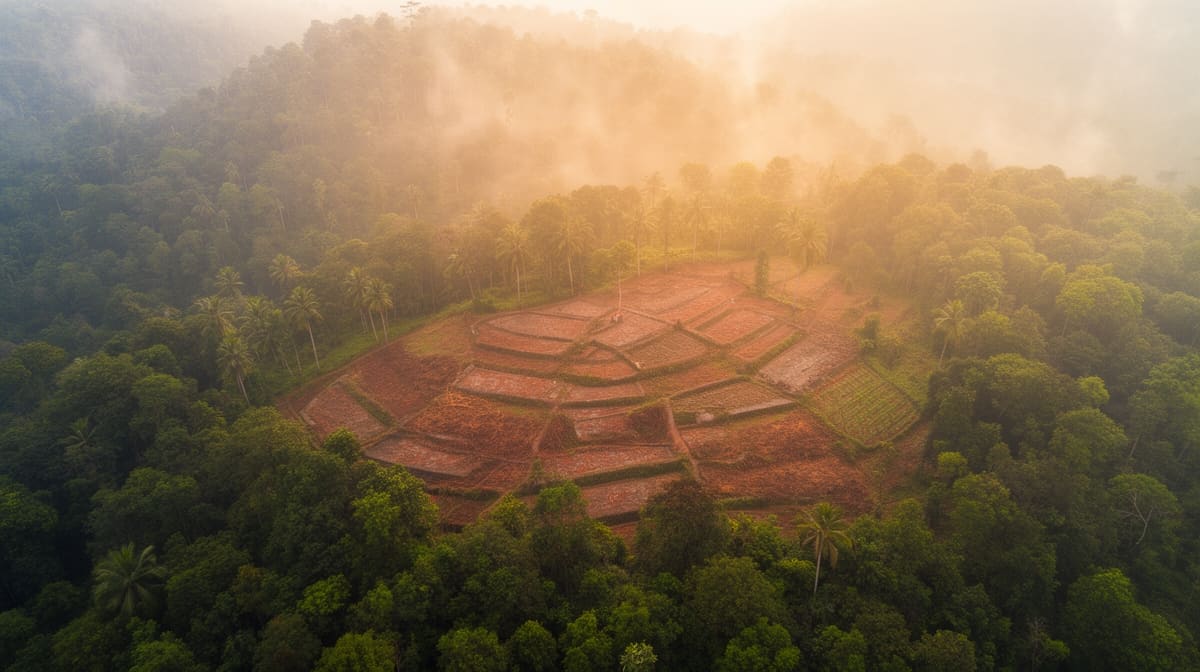
- The petitioner contended that the land, as evidenced by photographs (Exhibit P5), was not suitable for paddy cultivation and was covered with fully grown trees and other vegetation.
Procedural History
- 24.11.2023: Petitioner submitted Form-5 application before the Revenue Divisional Officer.
- 04.10.2024: 2nd respondent passed the impugned order rejecting the application.
- 21.07.2026: Present writ petition filed before the Kerala High Court.
- 21.07.2026: Court delivered judgment allowing the writ petition.
Relief Sought
The petitioner sought:
- Quashing of the impugned order (Exhibit P4) by a writ of certiorari.
- A direction to the 2nd respondent to reconsider the Form-5 application after conducting a proper and independent enquiry in accordance with the Act and Rules.
- Obtaining a report from the Kerala State Remote Sensing and Environment Centre (KSRSEC) to ascertain the exact nature and classification of the land as on 12.08.2008.
- Grant of other appropriate reliefs.
The Legal Issue
The central question was whether the authorised officer, while disposing of a Form-5 application under the Kerala Conservation of Paddy Land and Wetland Act, 2008, is required to independently assess the nature, character, and suitability of the land for paddy cultivation as on the relevant date, including through personal inspection or satellite imagery, before excluding the land from the data bank.
Arguments Presented
For the Petitioner
The petitioner argued that the authorised officer failed to comply with the mandatory statutory requirements under Rule 4(4f), which mandates either a personal inspection of the property or the calling for satellite pictures to assess the land's character. The petitioner contended that the impugned order was based solely on the Agriculture Officer's report without any independent assessment, thereby violating the principles laid down by this Court in Muraleedharan Nair R v. Revenue Divisional Officer [(2023) 4 KHC 524], Sudheesh U v. The Revenue Divisional Officer, Palakkad [(2023) 2 KLT 386], and Joy K.K. v. The Revenue Divisional Officer/Sub Collector, Ernakulam [(2021) 1 KLT 433].
For the Respondent
The respondents, represented by the learned Government Pleader, did not contest the petitioner's contentions but relied on the impugned order passed by the authorised officer. The Court noted that the respondents did not present any substantive argument to justify the impugned order's compliance with the statutory framework.
The Court's Analysis
The Court examined the statutory framework governing the exclusion of land from the data bank under the Kerala Conservation of Paddy Land and Wetland Act, 2008, and the Kerala Conservation of Paddy Land and Wetland Rules, 2008. The Court observed that the authorised officer is statutorily obligated to assess the nature, character, and suitability of the land for paddy cultivation as on the relevant date, i.e., 12.08.2008, the date of coming into force of the Act.
The Court relied on the following precedents to underscore the statutory obligations:
"The competent authority is obliged to assess the nature, lie and character of the land and its suitability for paddy cultivation as on 12.08.2008, which are the decisive criteria to determine whether the property merits exclusion from the data bank."
The Court noted that the impugned order was passed solely based on the Agriculture Officer's report without any indication of a personal inspection or review of satellite imagery as mandated under Rule 4(4f). The Court held that such an approach was impermissible and failed to comply with the statutory requirements.
The Court further observed that the authorised officer must consider whether the exclusion of the property would prejudicially affect the surrounding paddy fields, a factor that was entirely absent in the impugned order. The Court emphasized that the authorised officer's order must be a speaking order, providing clear reasons for the decision, as directed in Vinumon v. District Collector [(2025) 6 KLT 275].
The Verdict
The writ petition was allowed. The Court set aside the impugned order dated 04.10.2024. The 2nd respondent/authorised officer was directed to reconsider the petitioner's Form-5 application in accordance with the law. The authorised officer was given two options:
- Conduct a personal inspection of the property, or
- Call for satellite pictures at the cost of the petitioner, if not already called for.
The Court directed that:
- If satellite pictures are called for, the application shall be disposed of within three months from the date of receipt of such pictures.
- If the authorised officer opts for a personal inspection, the application shall be considered and disposed of within two months from the date of production of a copy of this judgment by the petitioner.
- The authorised officer must pass a speaking order, providing clear reasons for the decision, in compliance with the principles laid down in Vinumon v. District Collector.
What This Means For Similar Cases
Statutory Compliance Is Non-Negotiable
- Authorised officers must strictly comply with Rule 4(4f) of the Kerala Conservation of Paddy Land and Wetland Rules, 2008, which mandates either a personal inspection or satellite imagery review before excluding land from the data bank.
- Orders rejecting Form-5 applications must be speaking orders, providing clear reasons for the decision, and must consider the impact on surrounding paddy fields.
Precedents Reinforce Procedural Safeguards
- The judgments in Muraleedharan Nair R v. Revenue Divisional Officer, Sudheesh U v. The Revenue Divisional Officer, Palakkad, and Joy K.K. v. The Revenue Divisional Officer/Sub Collector, Ernakulam establish that the authorised officer's assessment must be independent and based on objective criteria, including the land's suitability for paddy cultivation as on the relevant date.
- Practitioners should cite these precedents to challenge orders that fail to comply with the statutory framework or rely solely on subjective reports without independent assessment.
Satellite Imagery and Personal Inspection Are Equally Valid
- The authorised officer has the discretion to choose between conducting a personal inspection or calling for satellite pictures, but the chosen method must be applied consistently and objectively.
- If satellite pictures are called for, the authorised officer must ensure timely disposal of the application within three months from receipt of the imagery.
- If a personal inspection is conducted, the application must be disposed of within two months from the date of production of the judgment copy by the petitioner.