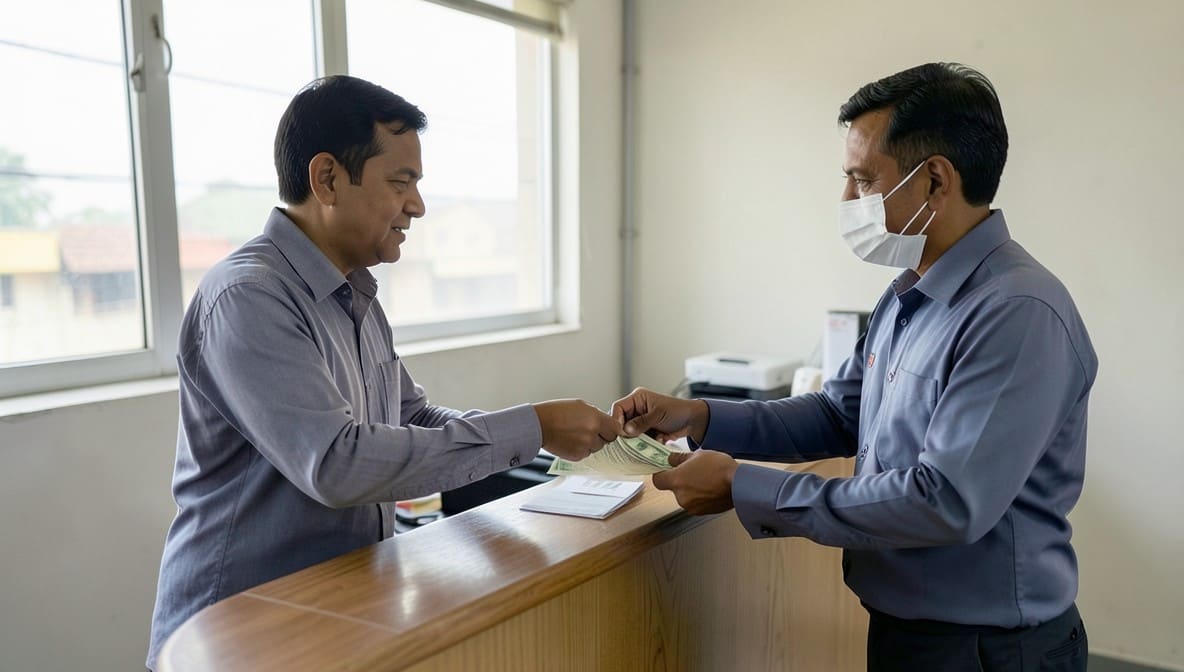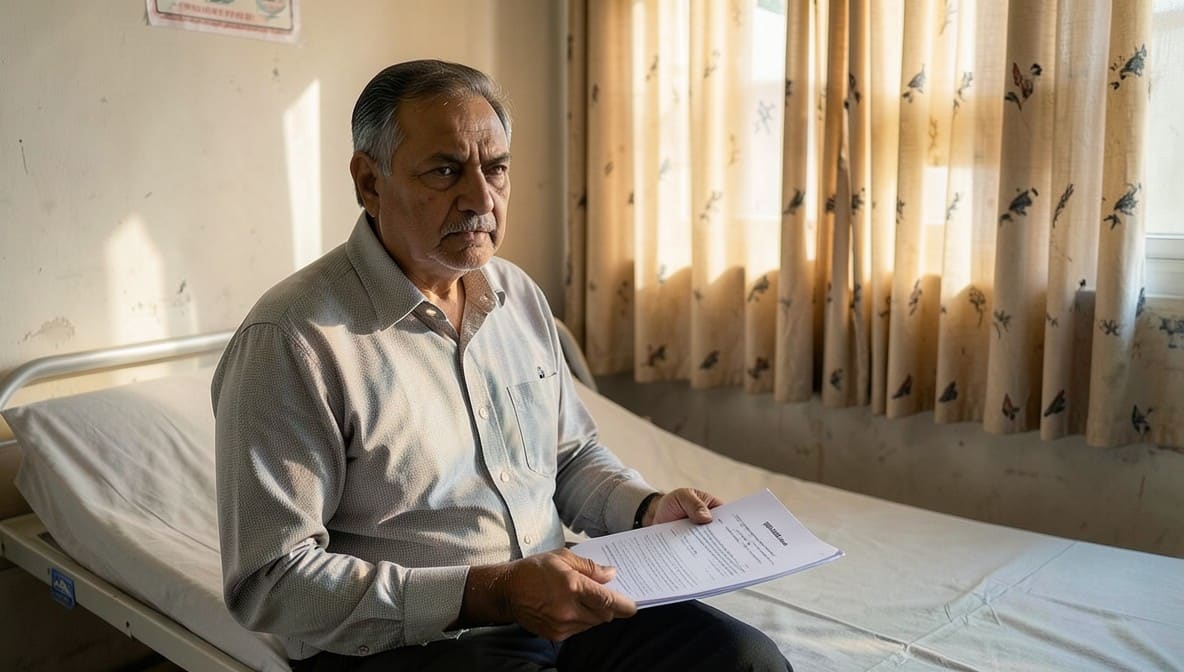
A significant precedent has been set by the Kerala High Court in recognizing medical hardship as a valid ground for restructuring co-operative loan repayments. In a compassionate yet legally grounded order, the Court permitted a petitioner facing financial distress due to her husband’s terminal illness to repay a debt in instalments, halting all coercive recovery actions.
Background & Facts
The Dispute
The petitioner, Rassiyabi C.P., a resident of Kozhikode, Kerala, availed a loan of Rs.50,000 from the Calicut City Service Co-operative Society Ltd. for the marriage of her daughter. The loan subsequently became overdue, leading to recovery proceedings under the Kerala Co-operative Societies Act, 1969. The Society initiated coercive measures to recover the outstanding amount, prompting the petitioner to approach the High Court seeking relief.
Key Facts
- The petitioner availed a loan of Rs.50,000 for her daughter’s marriage
- The outstanding liability as of 08.04.2026 stood at Rs.1,00,314, inclusive of interest, costs, and bank charges
- The petitioner’s husband, Abdul Rahman, is suffering from advanced throat cancer, as certified by the MVR Cancer Research Institute on 28.06.2024 (Exhibit P2)
- The petitioner submitted a representation to the Society on 25.03.2026 (Exhibit P3) requesting instalment-based repayment, which remained unaddressed
- An arbitration award dated 14.06.2024 (Exhibit P1) confirmed the debt amount
- The petitioner has no other means to discharge the liability in a lump sum
Procedural History
- The Society initiated recovery proceedings under the Kerala Co-operative Societies Act, 1969
- The petitioner filed this writ petition on an unspecified date prior to 08.04.2026
- The matter was listed for admission on 08.04.2026
- No prior orders from lower forums were cited, indicating direct recourse to the High Court under Article 226
Relief Sought
The petitioner sought:
- Stay of all coercive recovery proceedings
- Permission to repay the outstanding amount of Rs.1,00,314 in manageable monthly instalments
- Exemption from immediate enforcement actions due to her husband’s critical medical condition
The Legal Issue
The central question was whether a High Court, exercising its writ jurisdiction under Article 226, may permit a co-operative society debtor to repay an outstanding liability in instalments on grounds of extraordinary medical hardship, even in the absence of statutory provision for such relief.
Arguments Presented
For the Petitioner
Learned counsel submitted that the petitioner’s financial distress stems from unavoidable medical expenses incurred for her husband’s cancer treatment. The loan, originally modest, had ballooned due to compounded interest and charges. The petitioner had no assets or alternative income to clear the debt in a lump sum. Reliance was placed on the principles of natural justice and equitable relief under Article 226, arguing that enforcement would amount to cruel and disproportionate hardship.
For the Respondent
The Society, through its counsel, did not oppose the request for instalment-based repayment. It acknowledged the petitioner’s circumstances and confirmed that the outstanding amount as of 08.04.2026 was Rs.1,00,314. The Society expressed willingness to cooperate if the Court imposed safeguards against future default.
The Court's Analysis
The Court acknowledged the humanitarian dimension of the case without diluting the legal framework governing co-operative societies. It noted that while the Kerala Co-operative Societies Act, 1969, empowers societies to recover dues through coercive means, such powers are not absolute and must yield to principles of equity and proportionality when circumstances warrant.
"Having regard to the facts and circumstances of the case and taking into consideration the medical condition of the petitioner's husband, though the outstanding amount is only Rs.1,00,314/- (Rupees One lakh three hundred and fourteen only), as on today (08.04.2026), I am inclined to permit the petitioner to clear the liability in twenty equal monthly instalments."
The Court emphasized that the amount in question, though legally enforceable, was not exorbitant, and the petitioner’s inability to pay stemmed from a tragic, non-negligent circumstance. The Court further observed that the Society’s non-resistance to instalments indicated a willingness to accommodate, reinforcing the reasonableness of the proposed structure.
The Court rejected the notion that judicial intervention in co-operative recovery matters is impermissible, holding that writ jurisdiction under Article 226 permits equitable relief where enforcement would result in manifest injustice.
The Verdict
The petitioner succeeded. The Court directed the Calicut City Service Co-operative Society Ltd. to accept repayment of Rs.1,00,314 along with accrued interest, costs, and bank charges in twenty equal monthly instalments. The first instalment is due on or before 08.05.2026, with subsequent payments due on the 8th of each succeeding month. All coercive proceedings against the petitioner are stayed. In the event of default on any single instalment, the Society may resume recovery proceedings under law. The writ petition is disposed of accordingly.
What This Means For Similar Cases
Medical Hardship Can Justify Judicial Intervention in Co-operative Recovery
- Practitioners may now cite this judgment to seek instalment-based repayment in writ petitions where debtors face terminal illness, catastrophic medical expenses, or extreme financial distress
- Courts may exercise discretion under Article 226 even when no statutory provision exists for instalment plans
- The burden shifts to the creditor to demonstrate why hardship does not warrant accommodation
Coercive Recovery Must Be Proportionate
- The judgment reinforces that recovery mechanisms under co-operative laws cannot be deployed mechanically
- Courts will examine the nature of the debt, the debtor’s circumstances, and the creditor’s conduct before permitting enforcement
- This sets a precedent for similar cases involving small-ticket loans to vulnerable individuals
Institutional Flexibility Is Encouraged
- Co-operative societies are encouraged to adopt humane recovery policies, as their public service mandate underpins their legal authority
- The Society’s willingness to cooperate was pivotal; practitioners should document such willingness to strengthen petitions
- This case may prompt co-operative societies to proactively offer restructuring options to avoid litigation